

Description
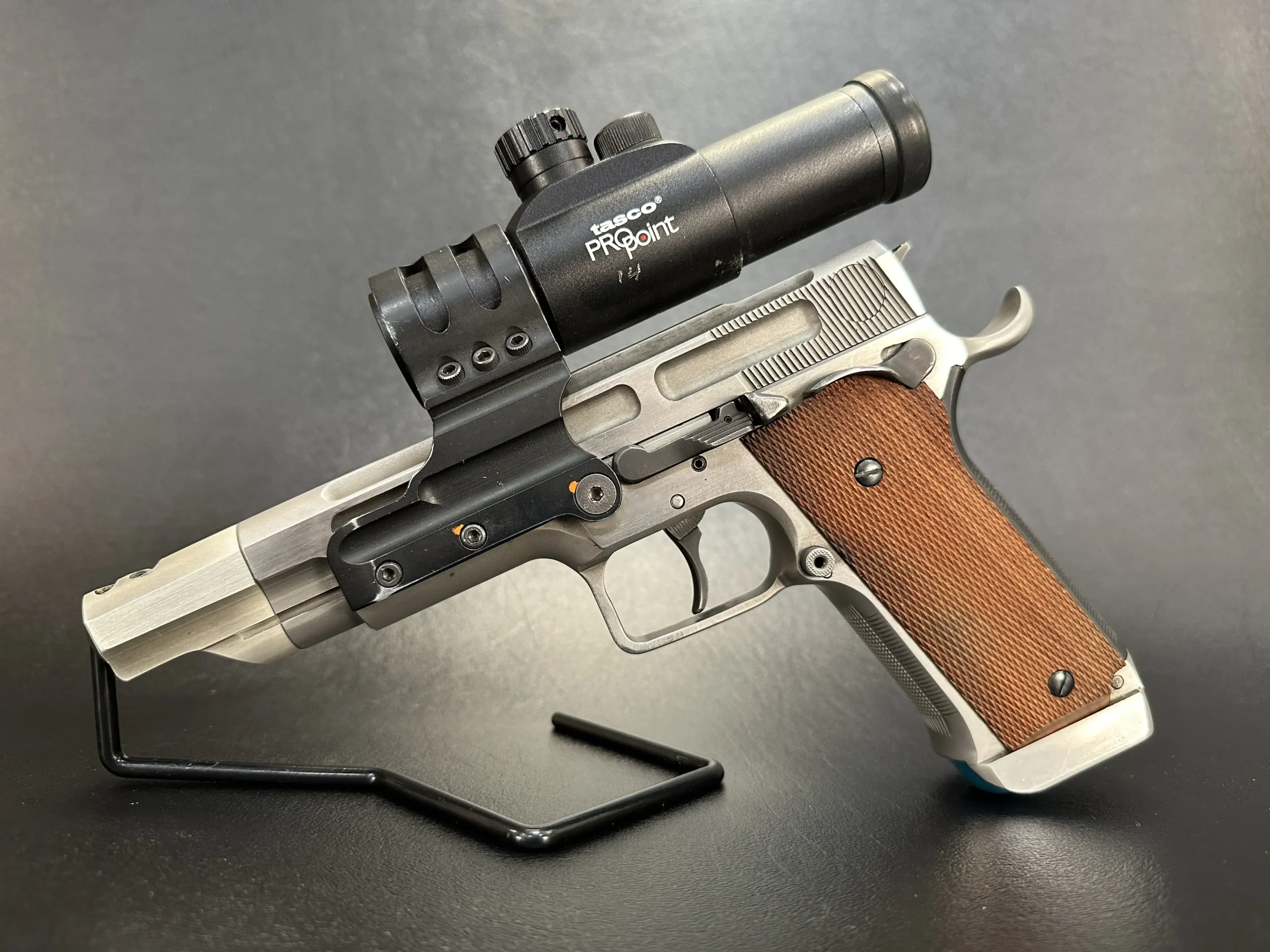
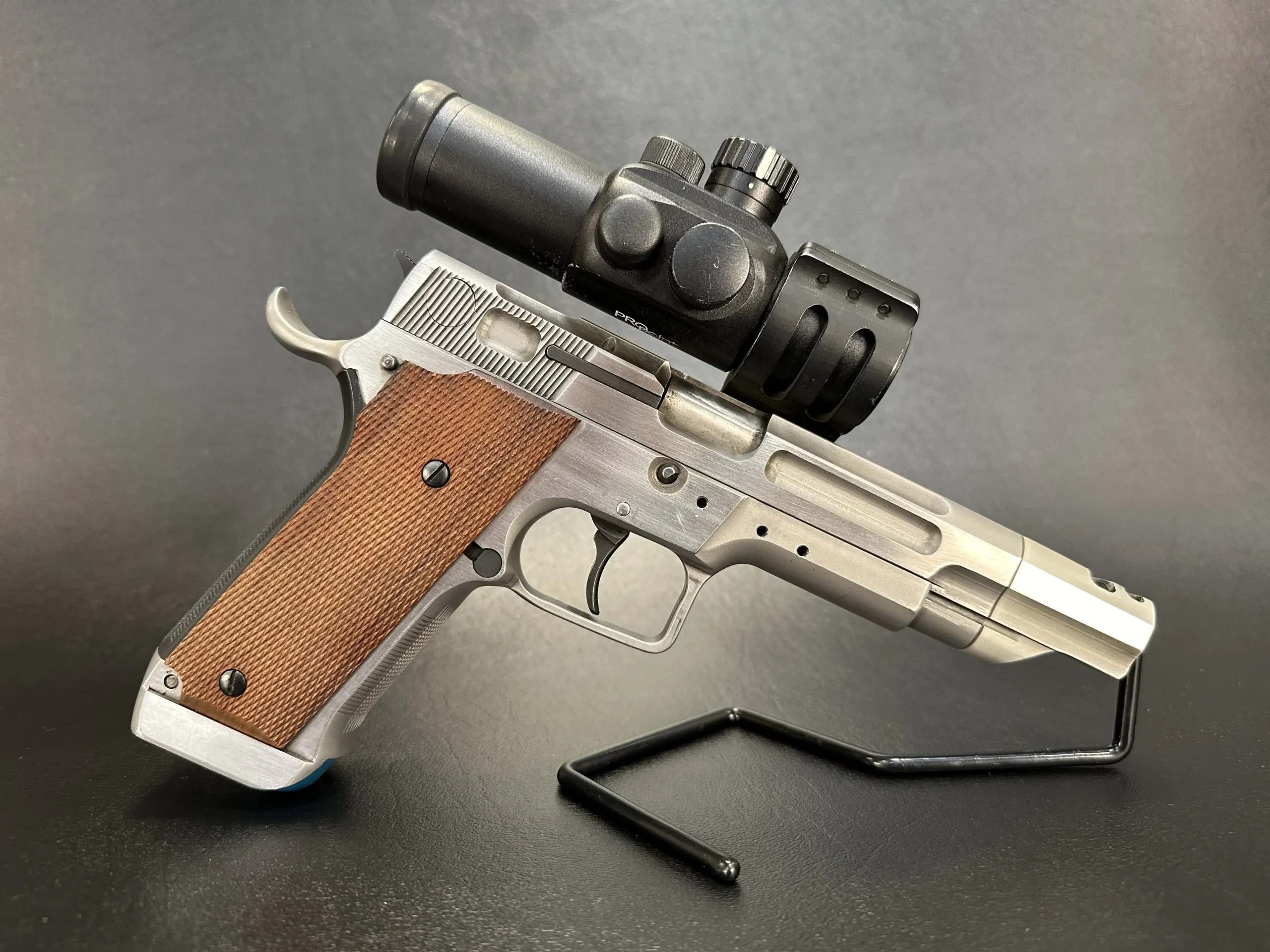
There are production firearms, and then there are pieces like this. Built well beyond the boundaries of standard catalog offerings, this Experimental Smith & Wesson Semi-Auto Competition Pistol offers a rare look at the innovation and performance-driven engineering typically reserved for prototypes, test platforms, or elite competition development.
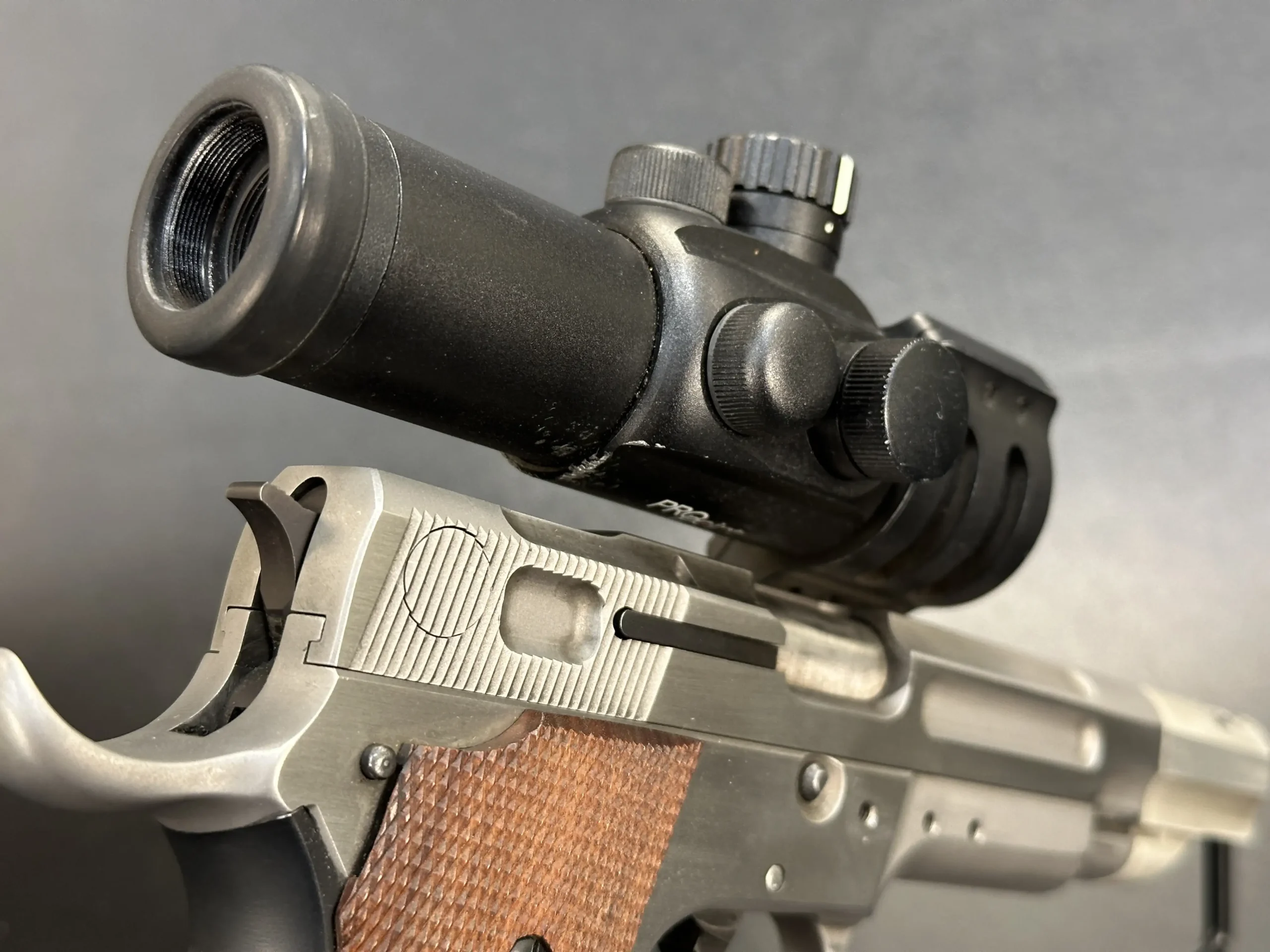
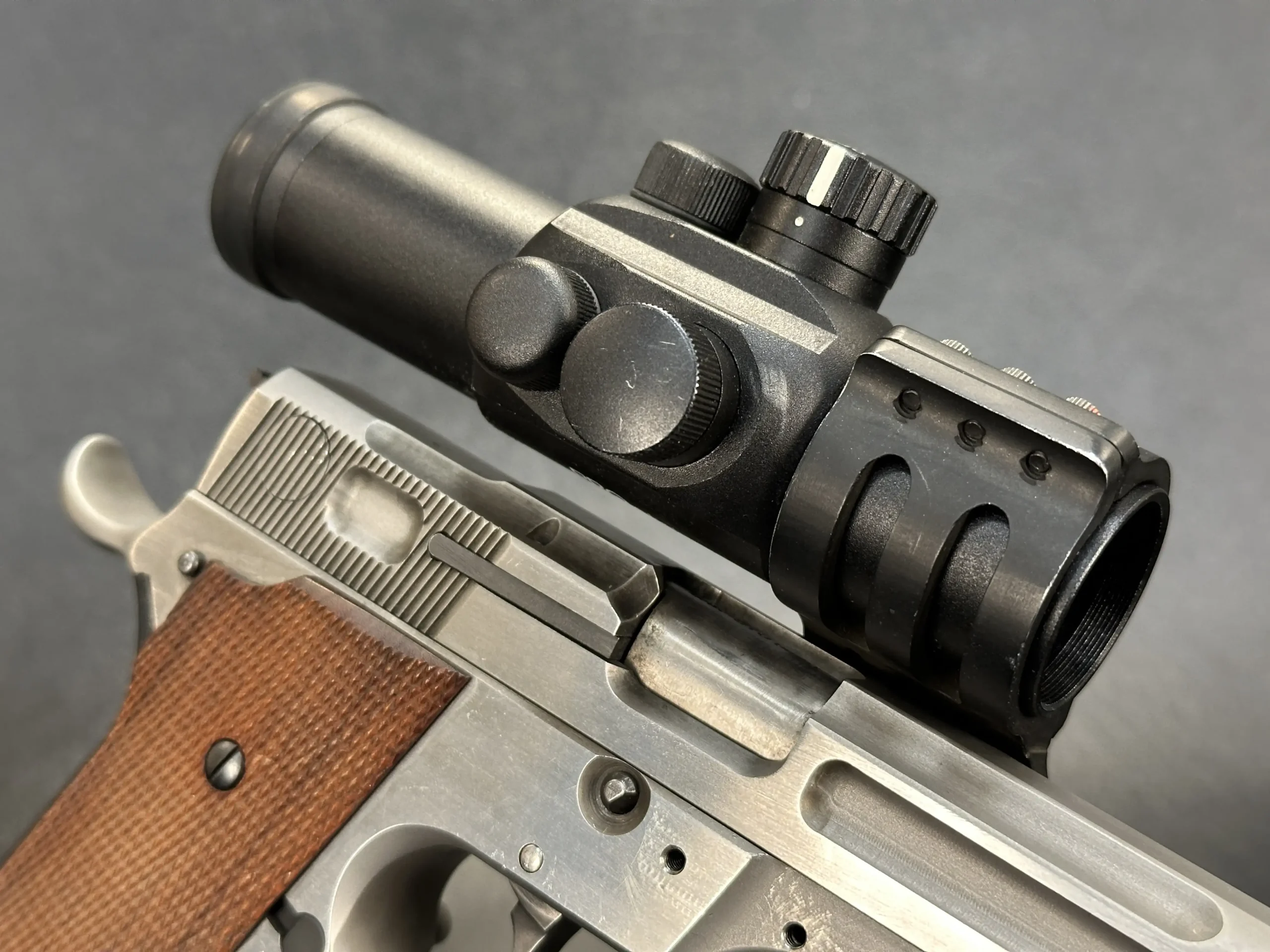
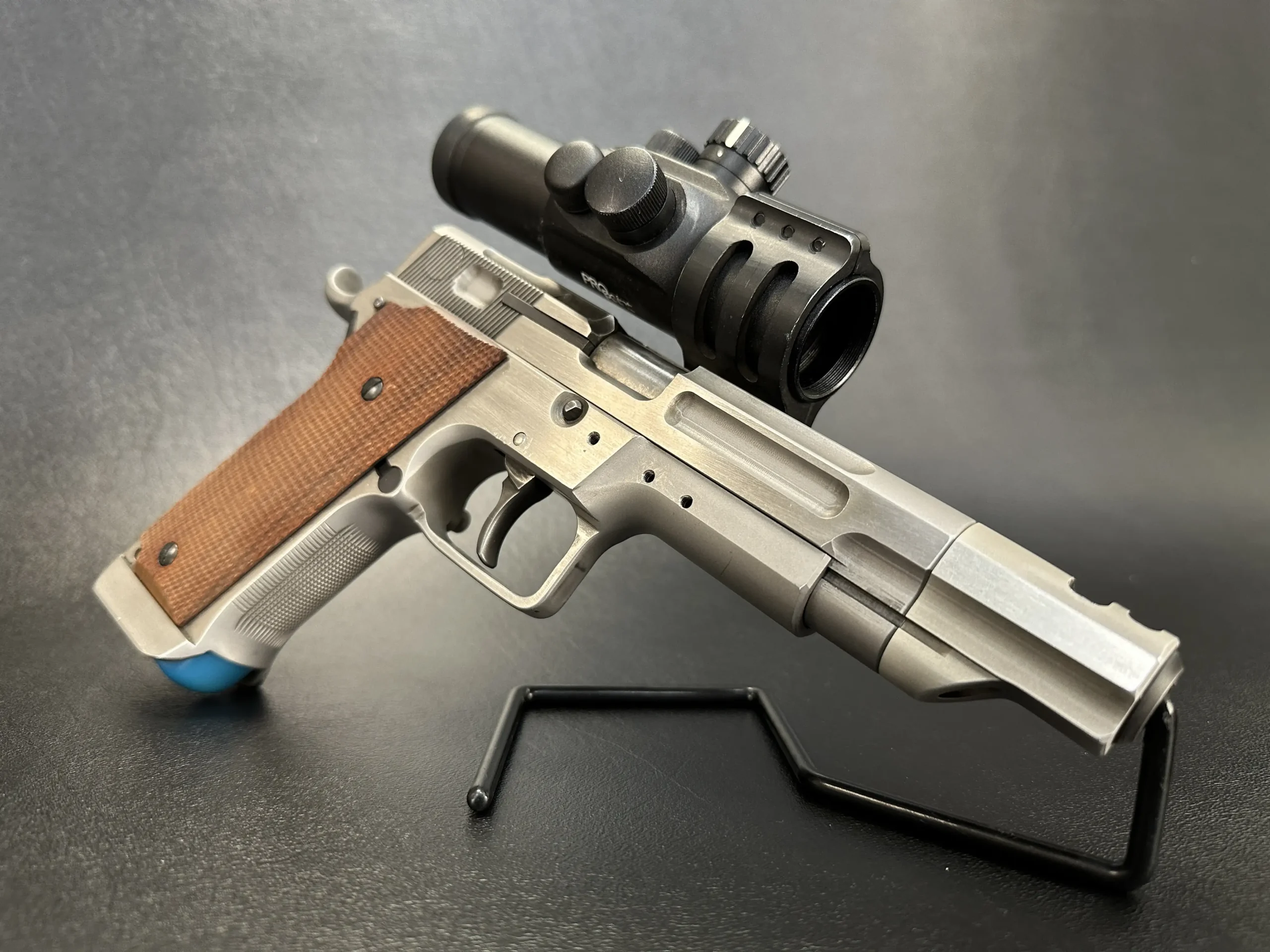
At first glance, the pistol immediately distinguishes itself with its extended, sculpted long-slide configuration, precision-machined from stainless steel and purpose-built for balance, recoil control, and sight tracking. The aggressive lightening cuts along the slide are not merely aesthetic; they reduce reciprocating mass, allowing for faster cycling and flatter shooting characteristics that competitive shooters demand.
The barrel and front-end geometry further reinforce its competition pedigree. The elongated profile and weight-forward design help mitigate muzzle rise, while the clean machining throughout reflects a level of craftsmanship rarely encountered outside of custom or experimental builds.
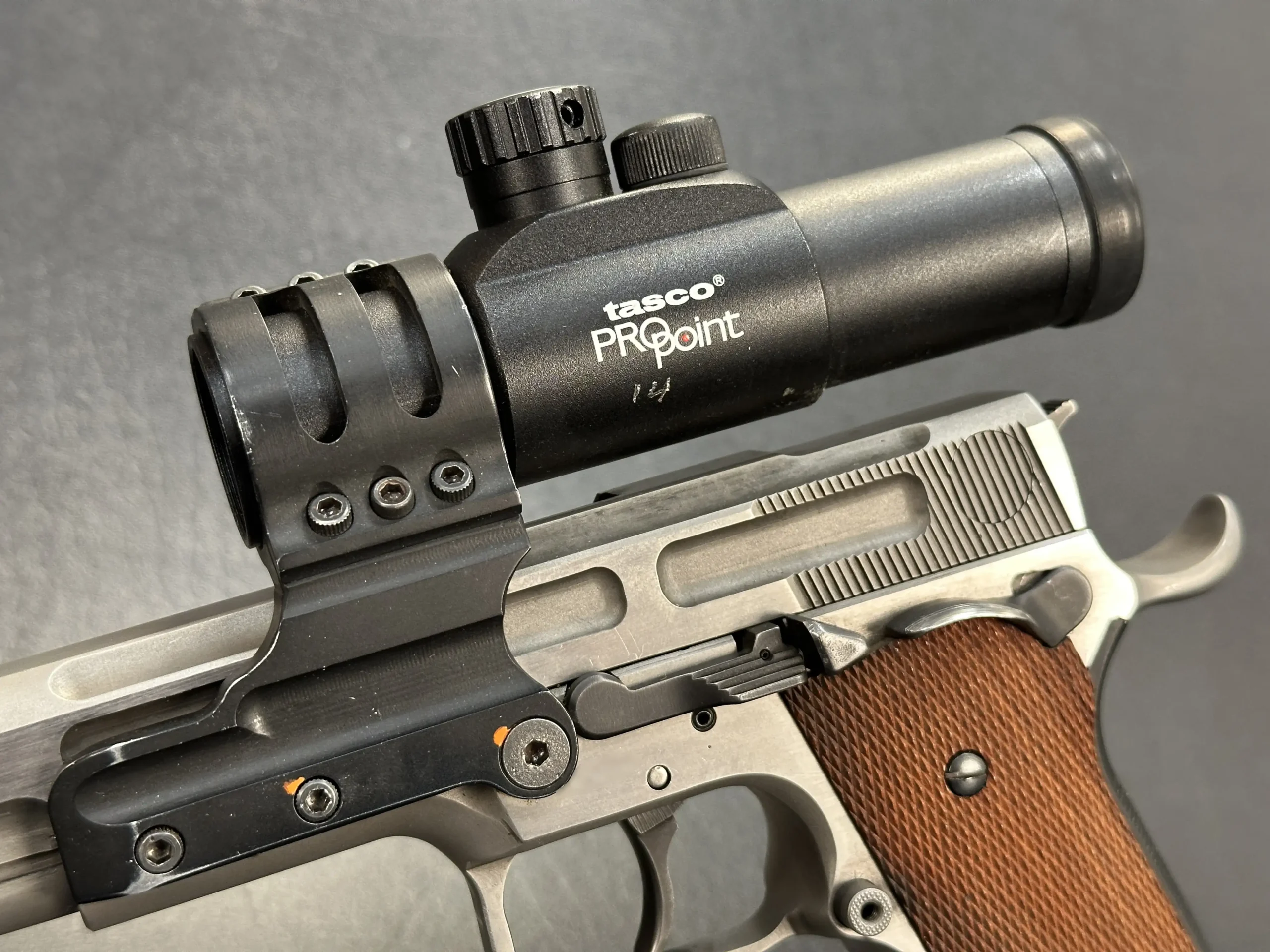
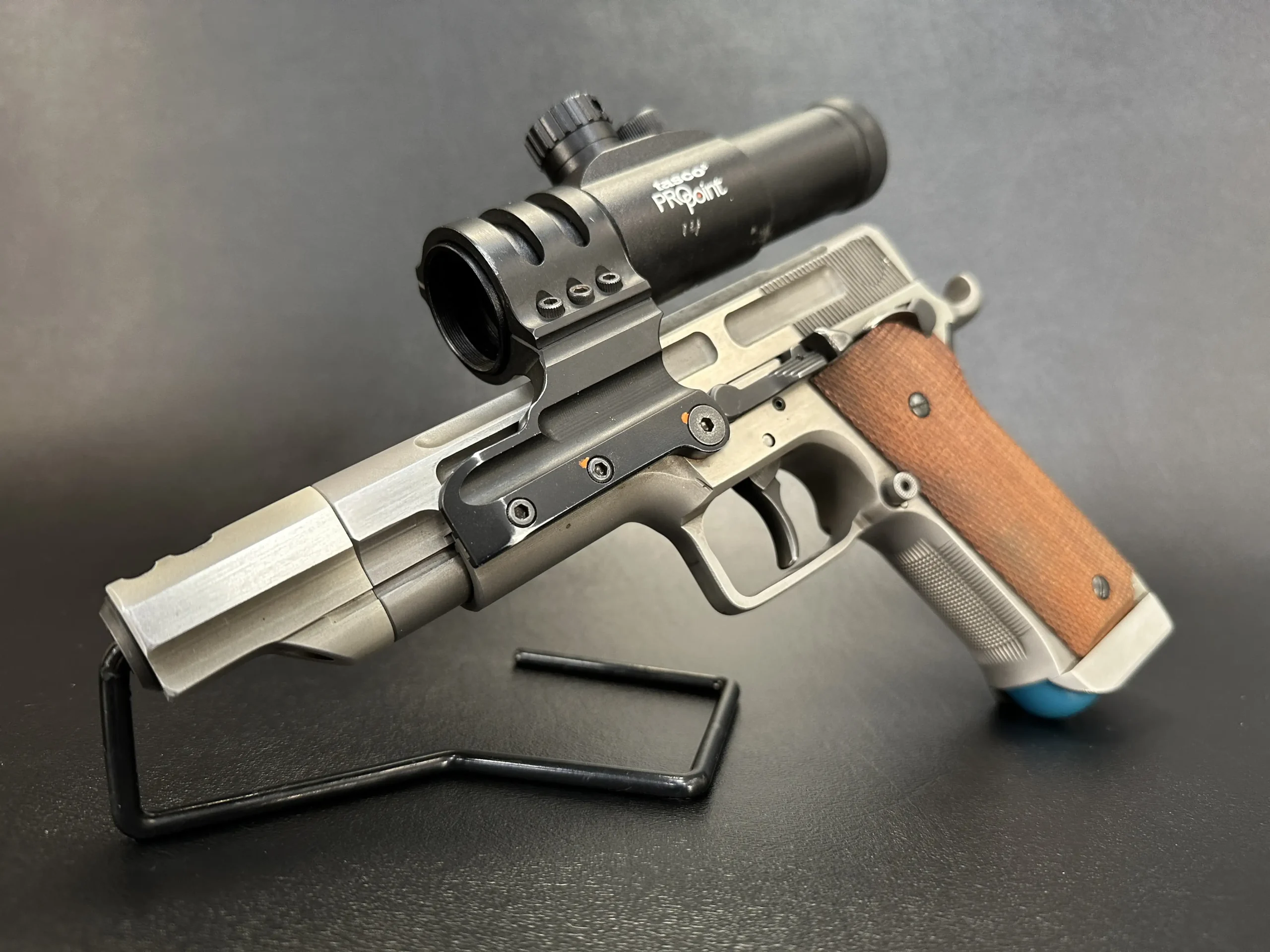
Perhaps the most striking feature is the integrated optic mounting system, paired here with a period-correct Tasco ProPoint red dot sight. This setup speaks to an early exploration of slide-mounted optics in competition shooting, well ahead of the modern widespread adoption seen today. The mounting solution itself appears purpose-built, suggesting it was never an off-the-shelf adaptation but rather a deliberate, engineered approach to performance enhancement.
Ergonomics remain firmly rooted in familiarity, with a grip angle and control layout that echo classic Smith & Wesson semi-auto design language. The checkered wood grips provide both visual warmth and functional traction, complementing the pistol’s otherwise utilitarian, competition-focused aesthetic. Subtle detailing throughout, machined contours, clean edges, and purposeful shaping, reinforce the sense that this was built with intent, not compromise.
What truly elevates this piece is its experimental nature. Firearms like this are seldom encountered on the open market, as they are often found only in factory environments, development programs, or private collections. It stands as a tangible artifact of a time when manufacturers were actively pushing the limits of semi-automatic pistol performance in competitive arenas.
For the advanced collector, this is more than a firearm; it’s a conversation piece, a research subject, and a rare glimpse into Smith & Wesson’s pursuit of innovation in the competition space.