

Description
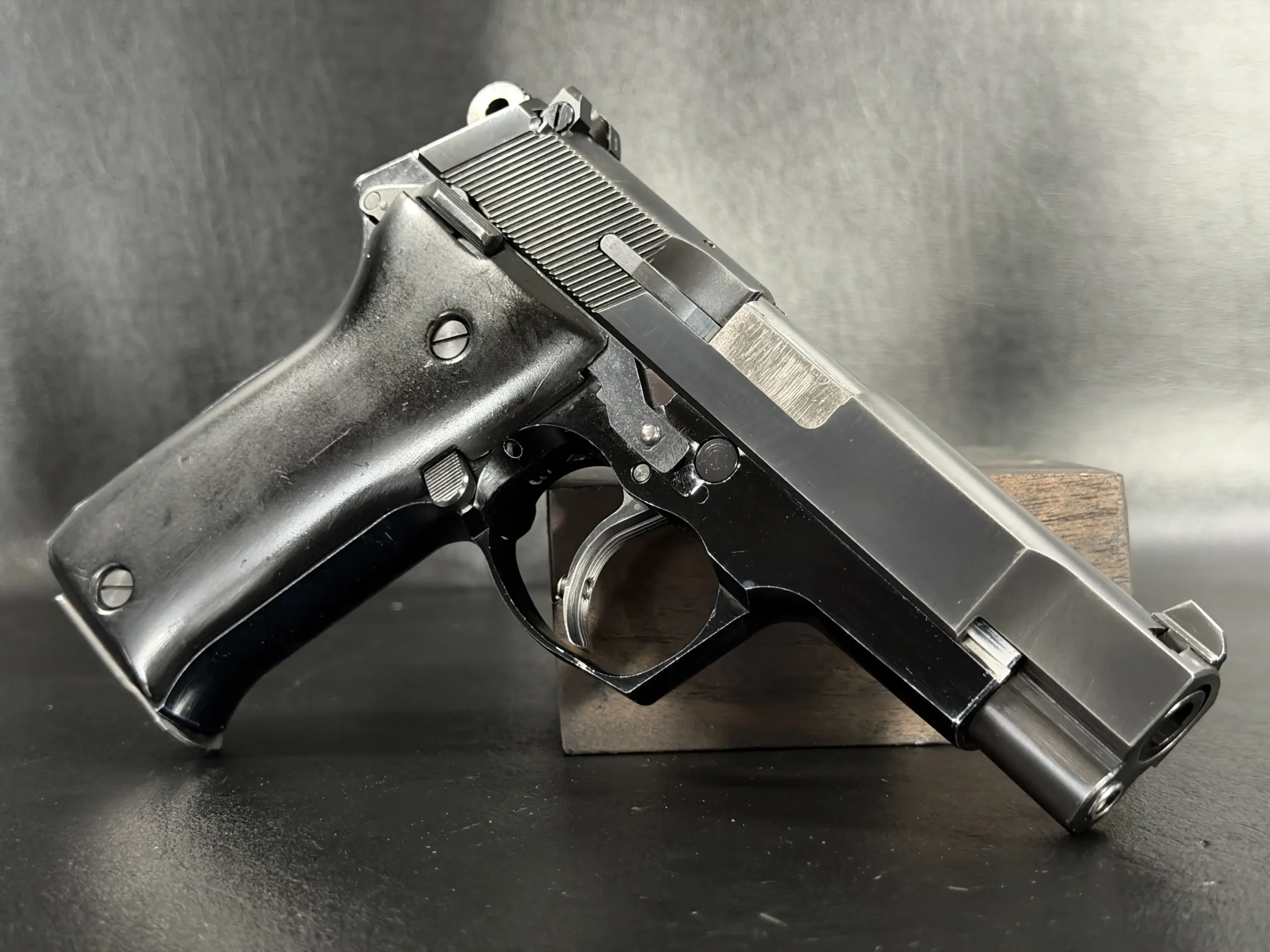
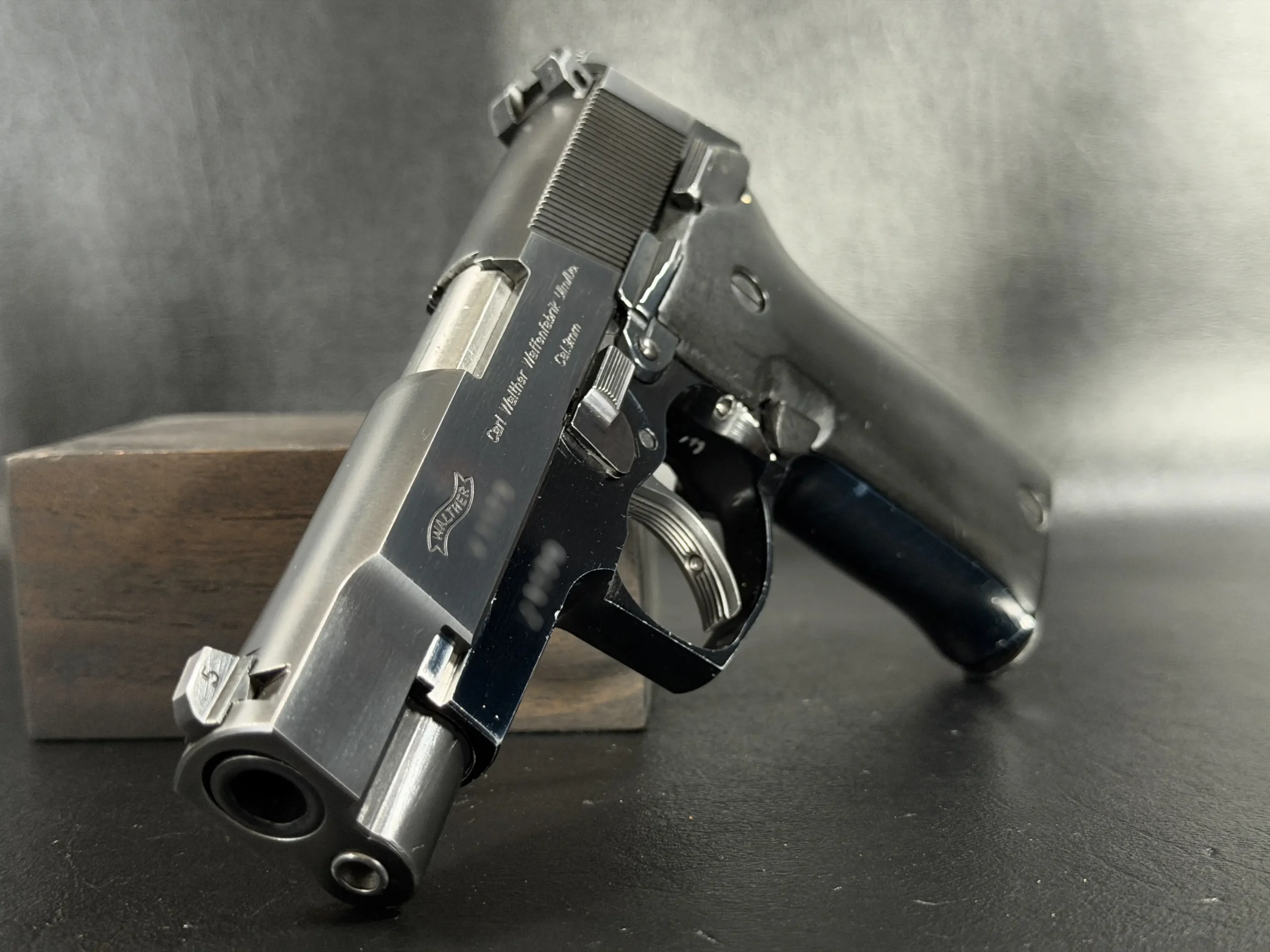
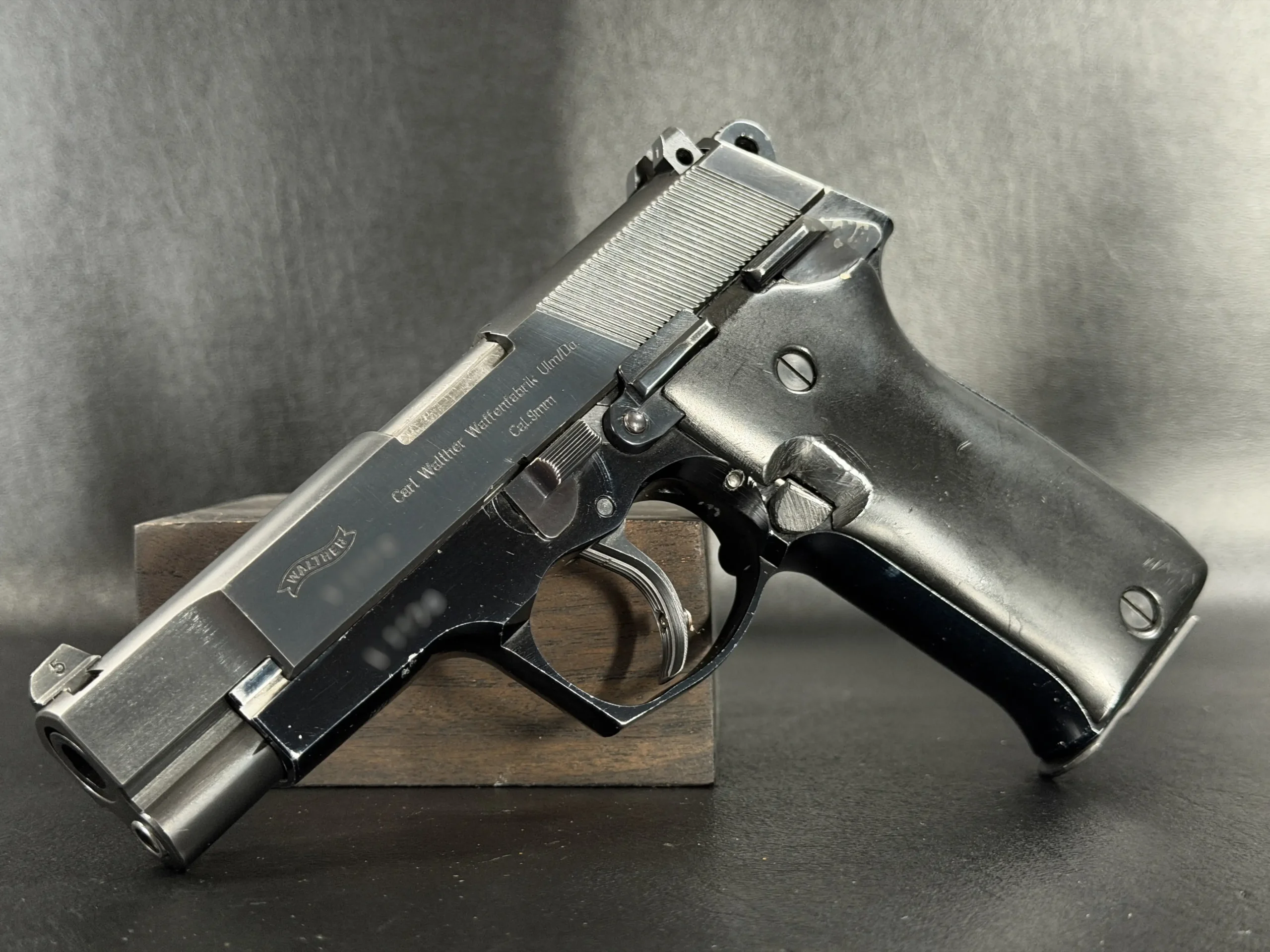
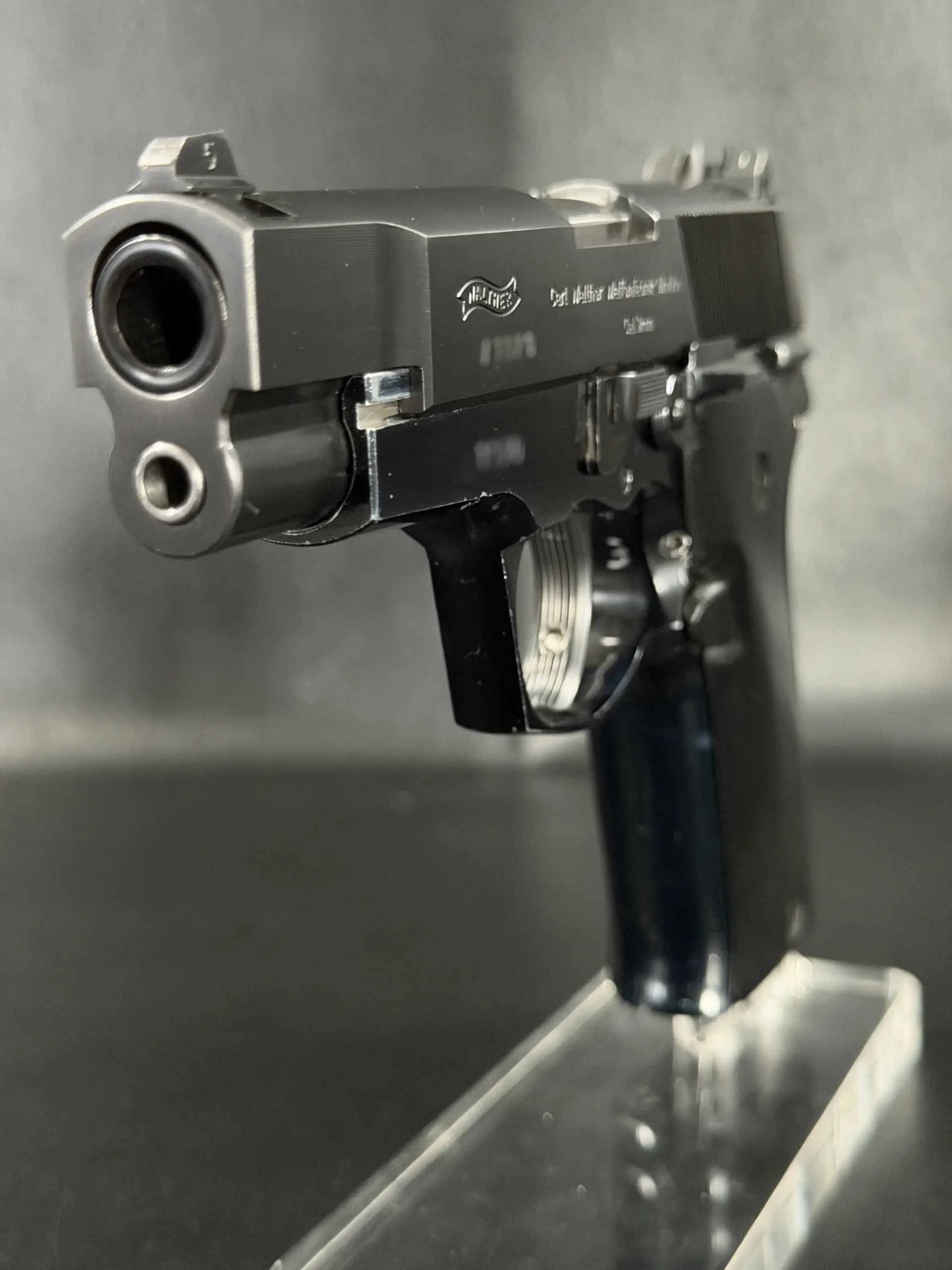
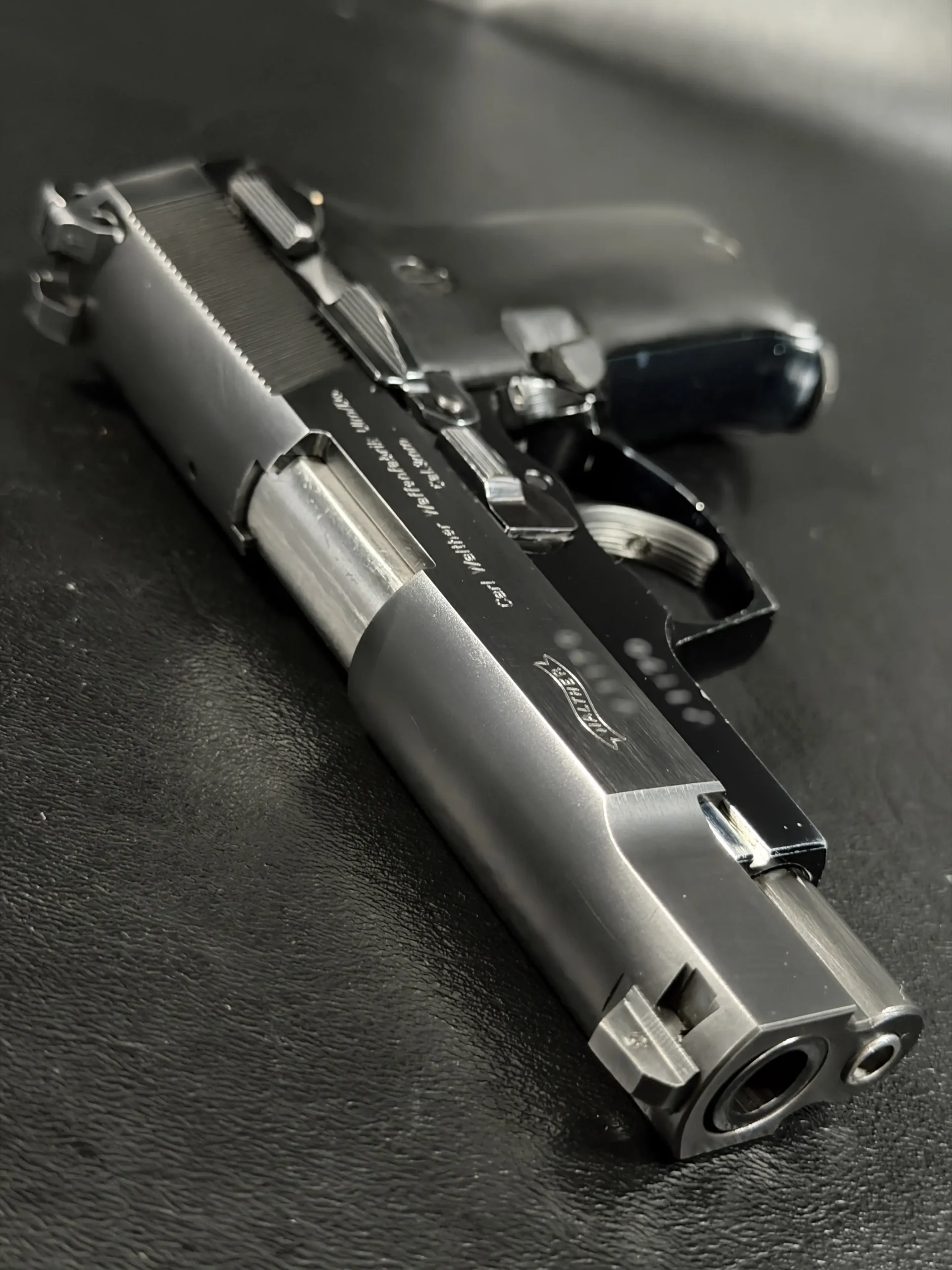
Few pistols represent Walther’s late-Cold War engineering ambition quite like the P88, and even fewer exist in true prototype form. This Walther P88 Prototype stands as a rare developmental example from one of Germany’s most respected arms makers, capturing the transitional design language that bridged traditional double-action service pistols with the refined ergonomics and performance standards that would define modern European handguns.
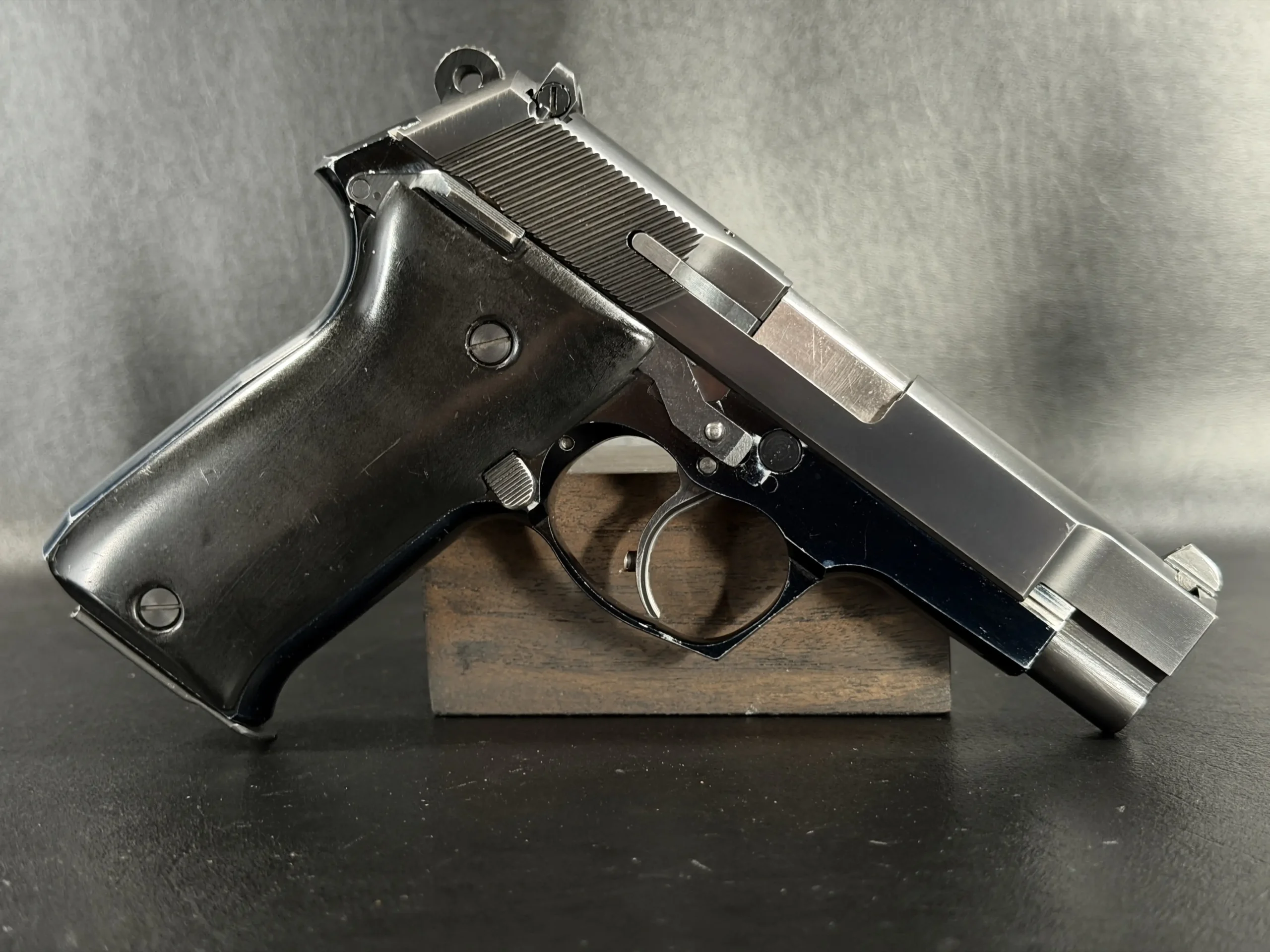
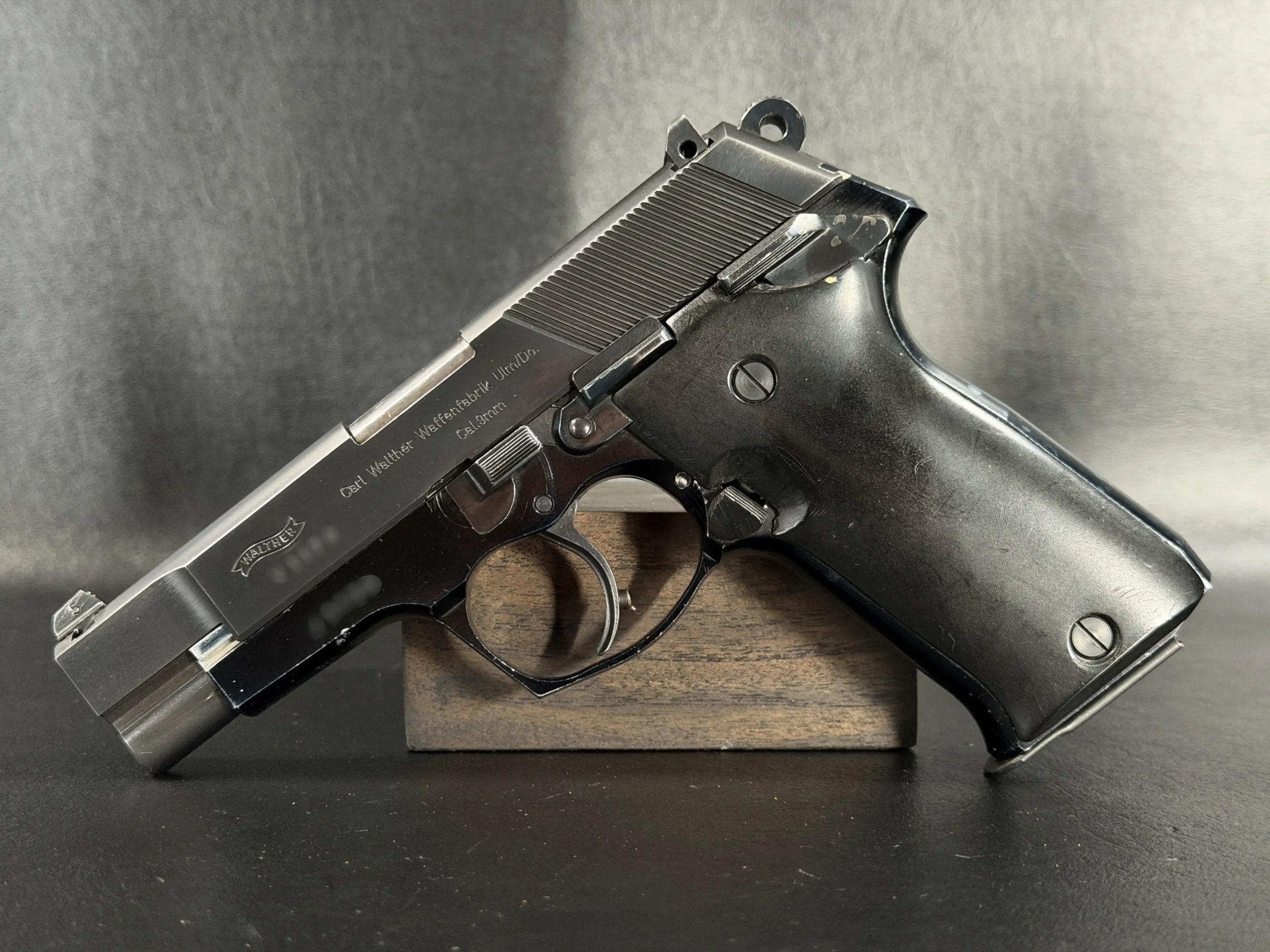
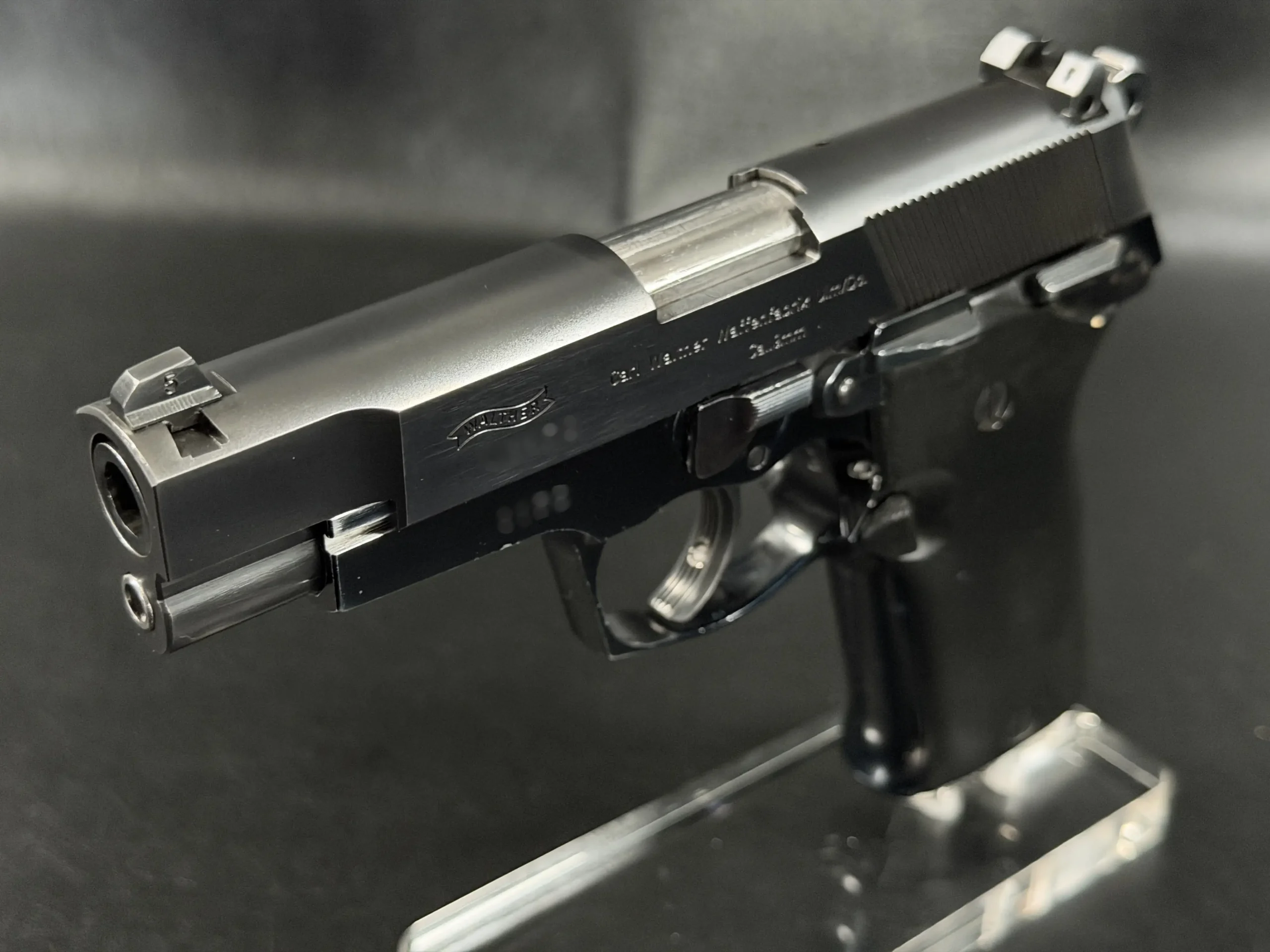
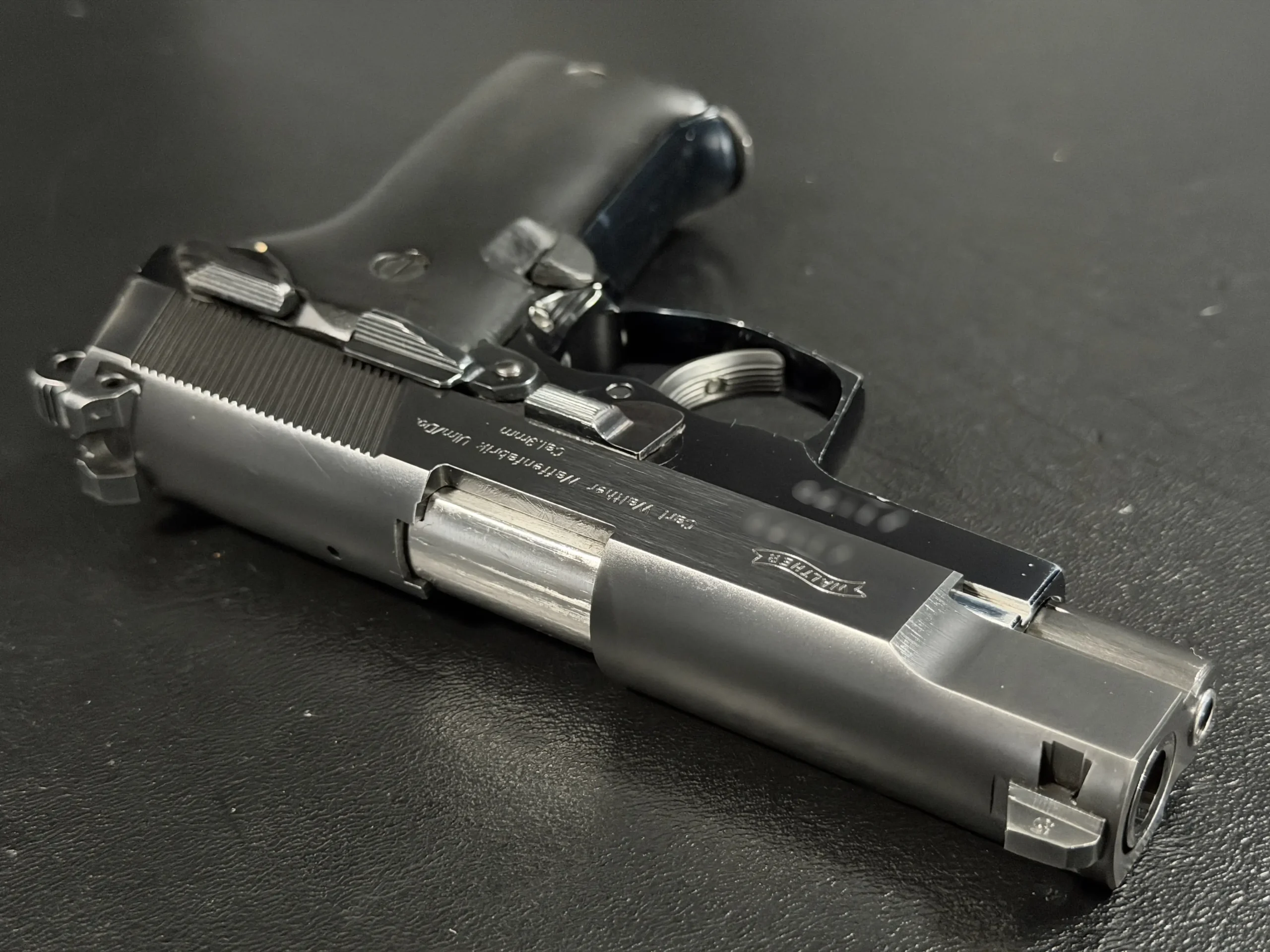
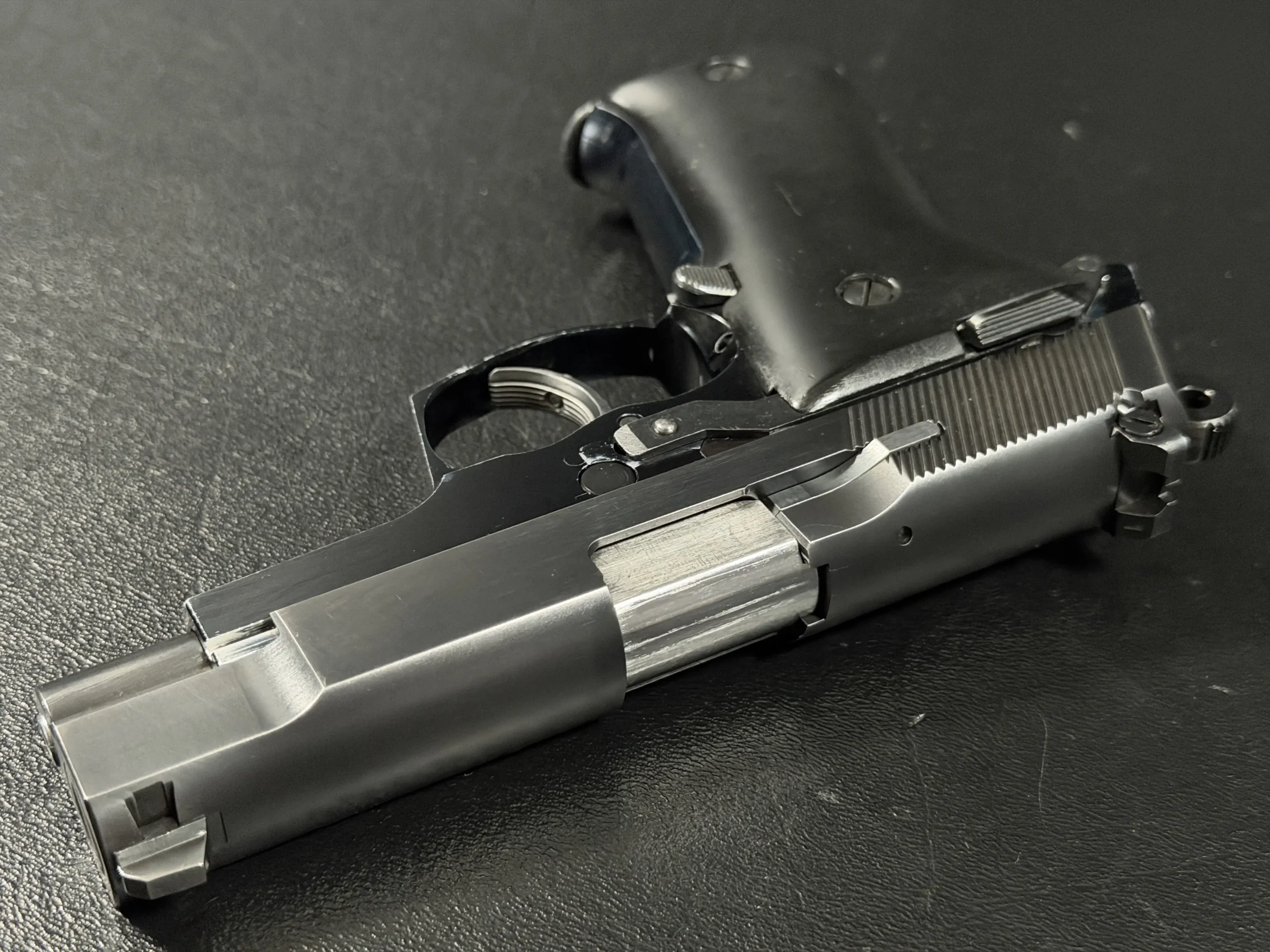
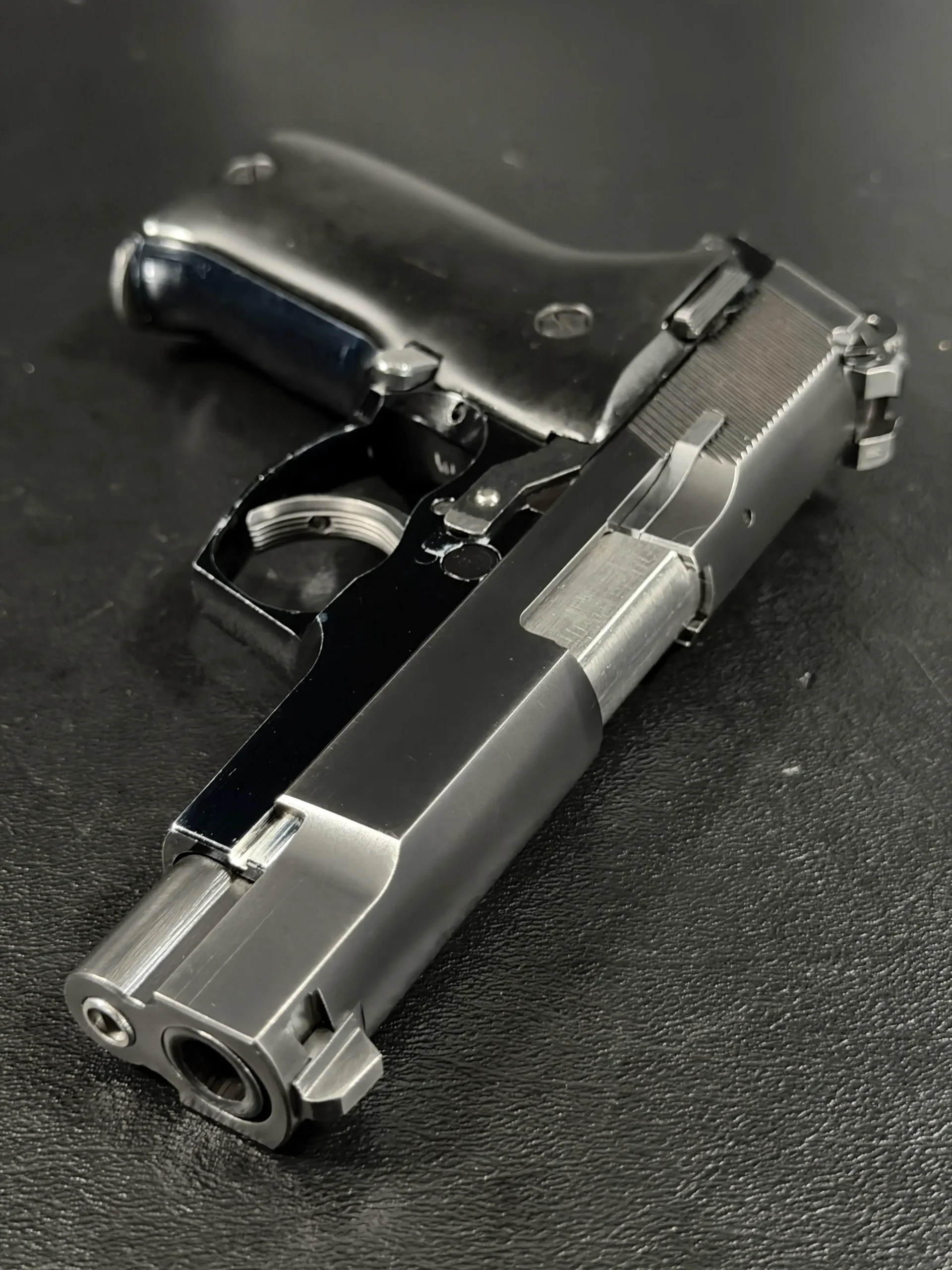
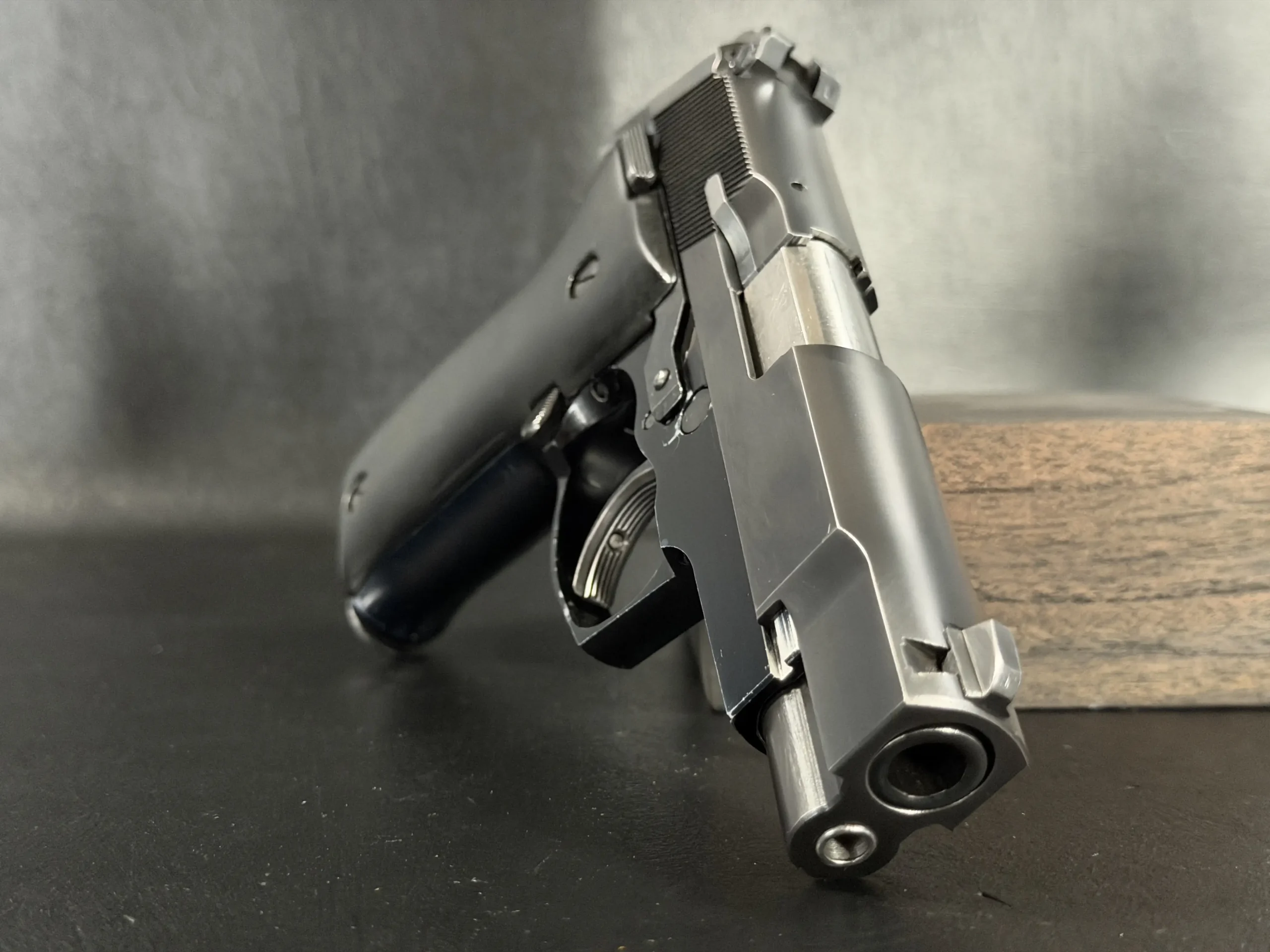
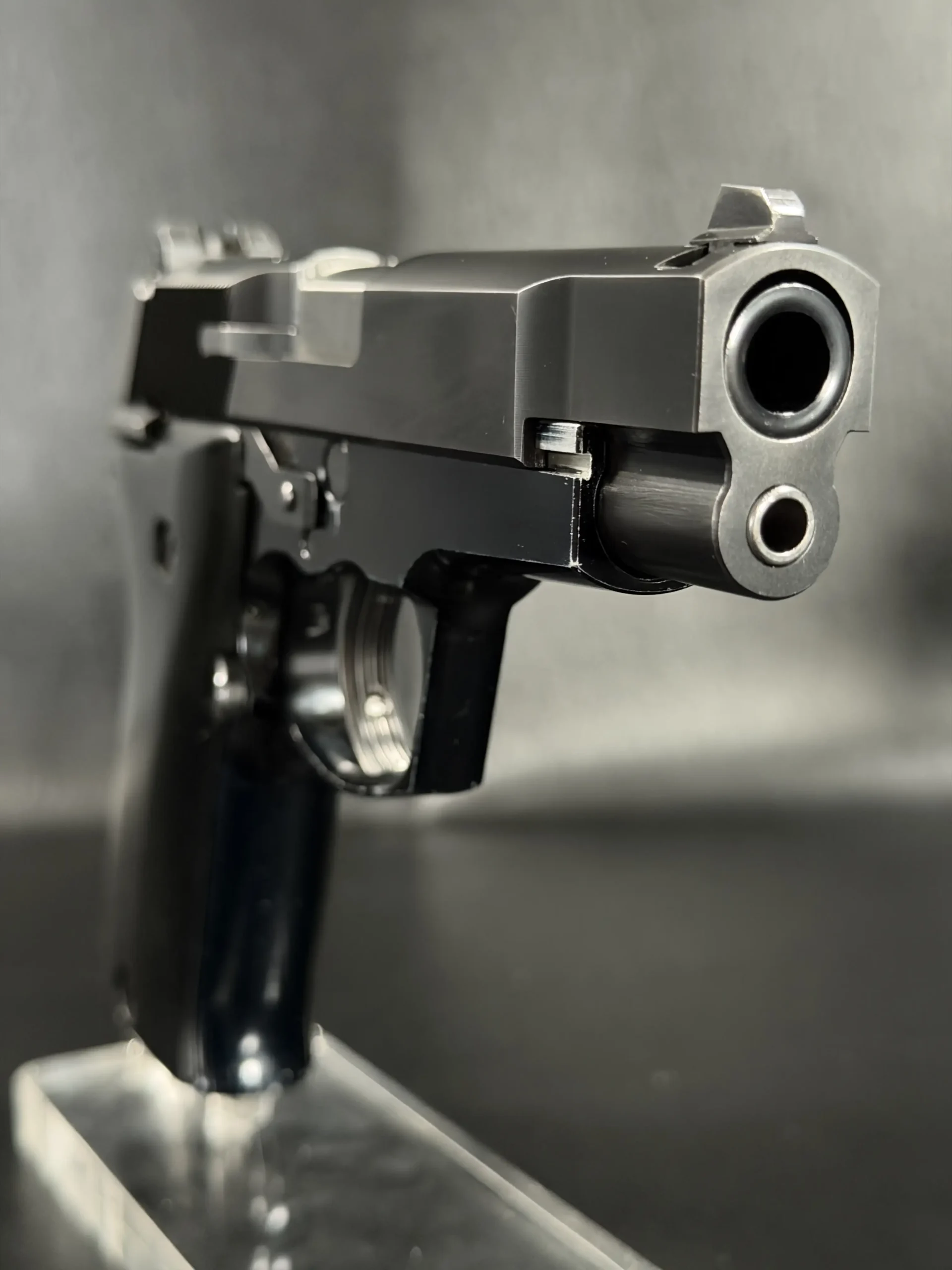
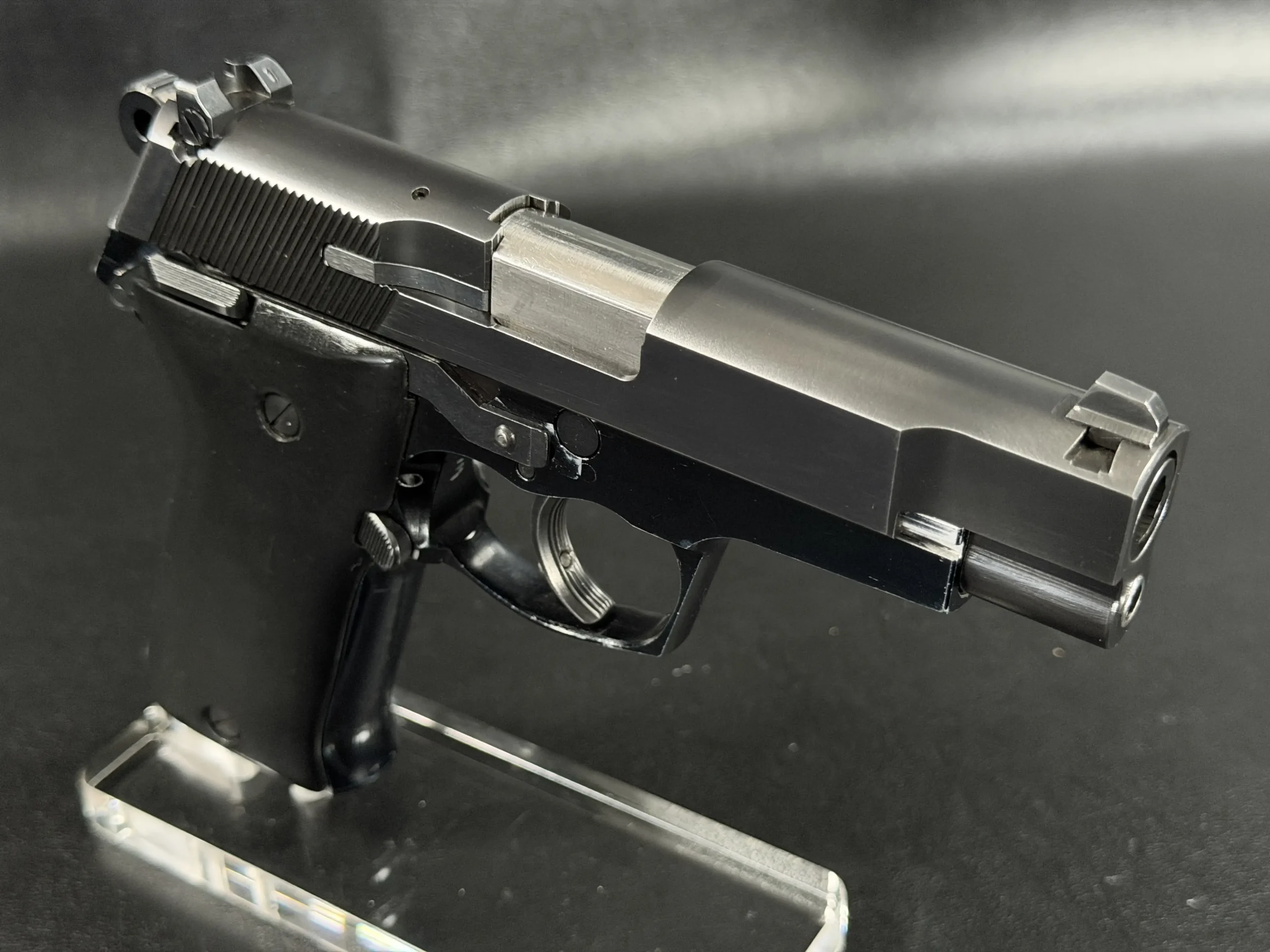
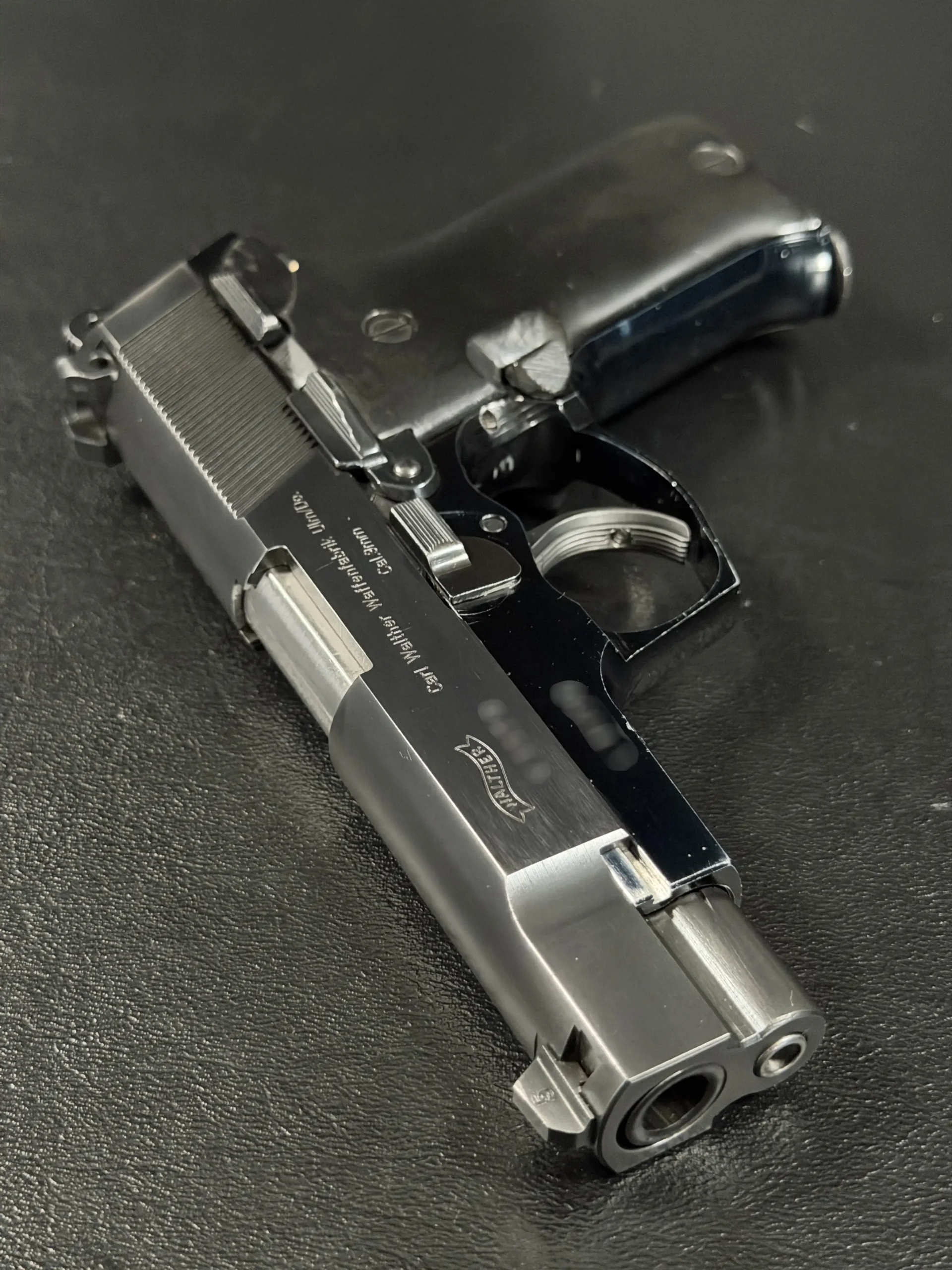
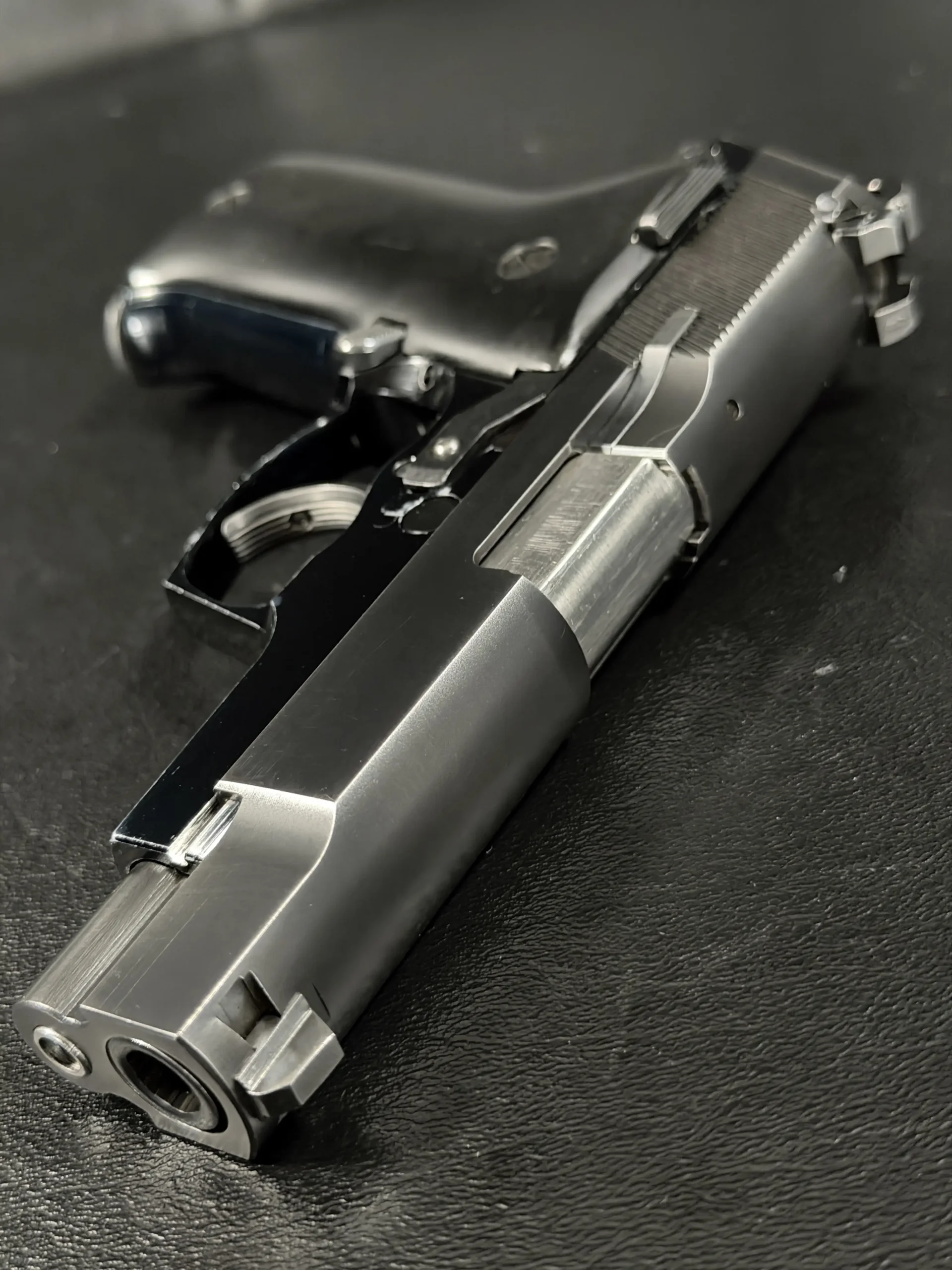
Chambered in 9mm, the pistol reflects the precision manufacturing and mechanical sophistication for which Walther earned its reputation. The slide exhibits the classic P88 profile: angular, purposeful, and deeply serrated for confident manipulation, while the frame maintains the balanced, hand-filling geometry that made the platform so highly regarded among military and law-enforcement evaluators during its development.
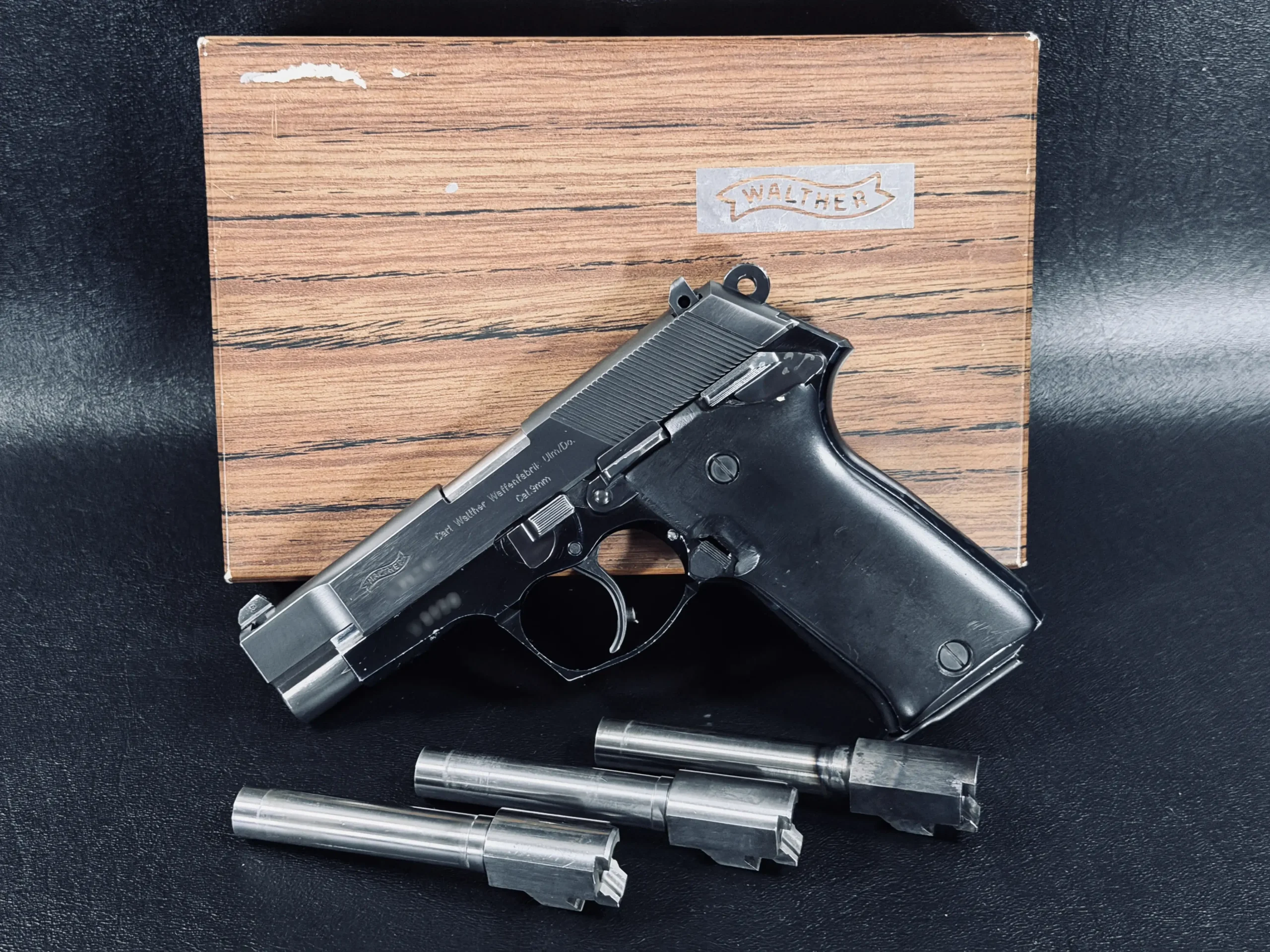
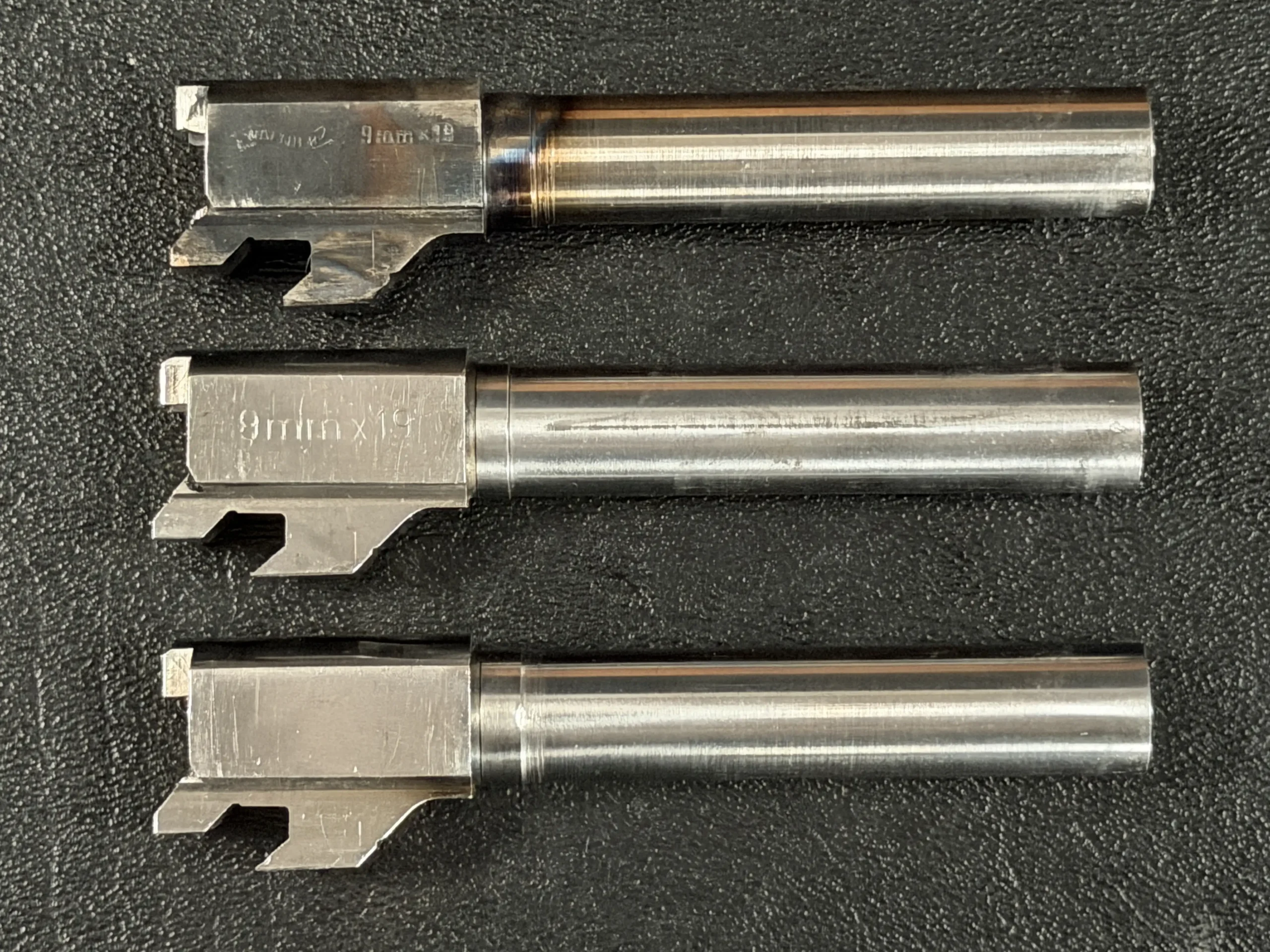
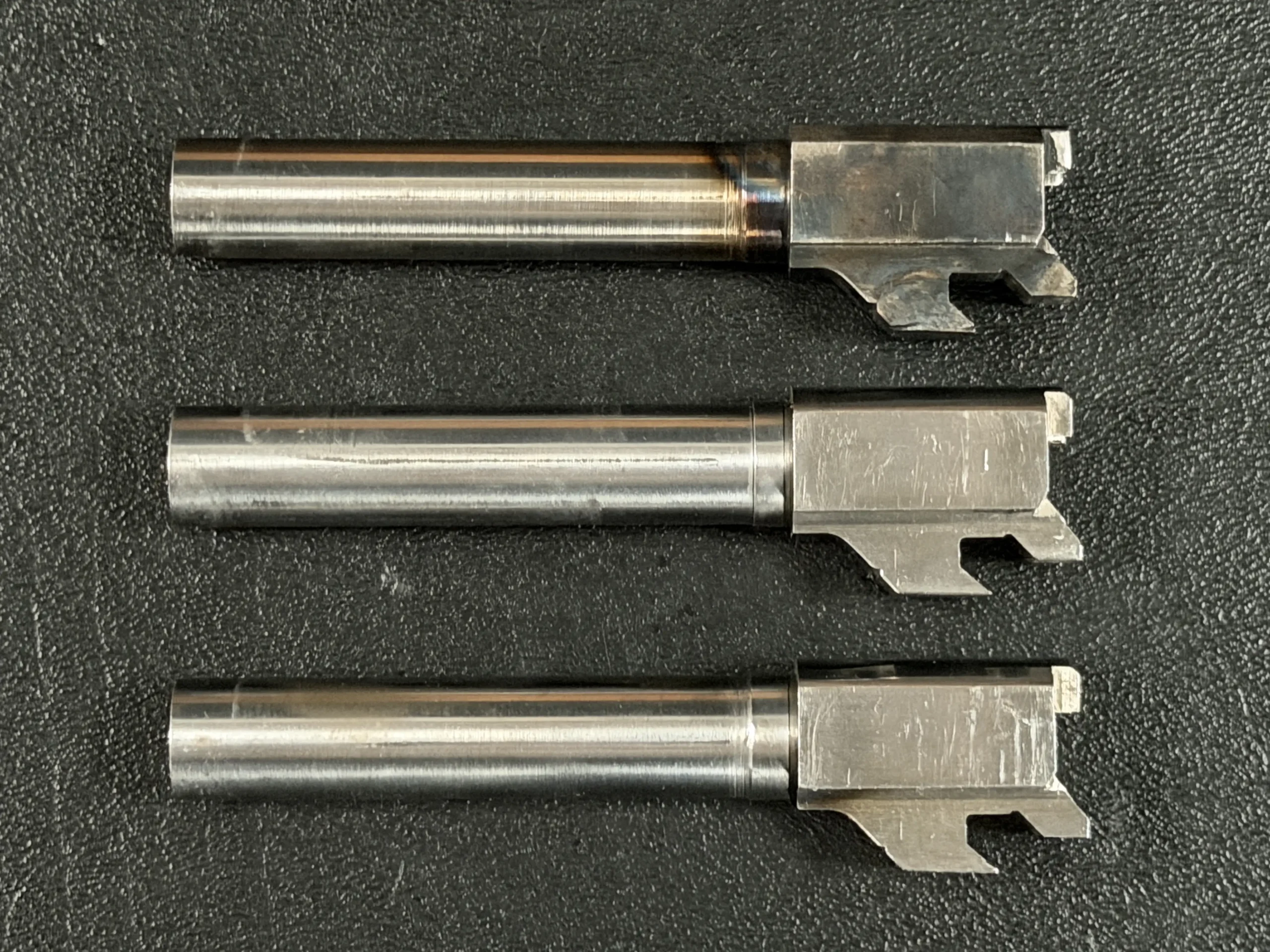
What immediately distinguishes this example is its prototype status, reinforced by its developmental features and included components. Most notably, the pistol is accompanied by multiple factory barrels, each representing experimental or evaluation configurations tied to the platform’s refinement process. These additional barrels underscore Walther’s iterative engineering approach during finalization of the P88 system, offering a rare glimpse into the company’s R&D methodology.
The pistol itself is presented in a traditional blued finish, contrasted by matte and polished steel elements that highlight its mechanical contours. Controls are arranged in the familiar P88 pattern, including the ambidextrous safety configuration, a forward-thinking feature at the time that reflected Walther’s commitment to adaptability for service use.
The P88 platform was engineered for durability, accuracy, and high-volume reliability. Its locked-breech, short-recoil operating system delivers smooth cycling, while the double-action/single-action trigger mechanism offers both duty readiness and precision shot control.
The grip frame features ergonomic shaping that makes the P88 notably comfortable compared to many of its contemporaries. Even in prototype form, the attention to human interface, reach, angle, and recoil distribution is evident.
Prototype Walthers rarely surface, particularly those tied to major service pistol programs. Developmental pistols such as this were never intended for commercial release; instead, they existed within factory testing channels, military trials, or engineering evaluation programs.
As a result, surviving examples occupy a unique space in advanced collections, not simply as firearms, but as artifacts of industrial design evolution.
The inclusion of the factory case further enhances its presentation, offering period-correct storage aligned with Walther’s late-20th-century packaging aesthetics.