
Key Takeaways:
- The best discoveries happen in person, not online. Shows like SHOT Show, SCI, and DSC are where boutique makers actually set up shop and talk to collectors face-to-face. You can research all day from your couch, but nothing replaces holding a hand-engraved sidelock and having a ten-minute conversation with the person who built it. Even Blade Show, which is technically a knife event, has a surprising crossover with the artisan firearms world.
- Forums are your early warning system. Communities like Sniper’s Hide, 1911Addicts, and AccurateShooter.com are where reputations get made and broken in real time. A promising new maker will show up in forum threads months before any publication covers them. The members post detailed range reports, macro photos, and honest assessments that no magazine review can match. If you’re not reading these threads, you’re always a step behind.
- Relationships matter more than search engines. This corner of the firearms world still runs on trust and word-of-mouth. Many of these makers don’t advertise. Some barely have websites. The collectors who find them first are the ones who consistently show up, ask good questions, and build genuine connections over time. It’s slow, but that’s the whole point. The research is part of the reward.
A comprehensive guide for firearms collectors and enthusiasts
There’s a certain kind of firearm that never shows up on a dealer’s shelf. It won’t appear in a big-box store catalog. You won’t see it reviewed on most YouTube channels. It exists in a quieter world, one built around handshakes, word-of-mouth referrals, and wait lists that stretch for years. These are the guns made by niche, high-end makers with production runs so small that most shooters have never even heard their names.
If you’re a collector or an enthusiast with a taste for the truly exceptional, tracking down these makers can feel like a treasure hunt. And honestly? That’s part of the appeal. But it also means the usual methods of researching firearms don’t always apply here. You can’t just Google your way to a comprehensive list, because many of these shops barely maintain a web presence. Some don’t have websites at all.
So how do you actually learn about them? How do you find the next Purdey, the next small family workshop turning out four or five masterpieces a year? Let me walk you through the channels that matter most.
Start Where the Makers Gather: Elite Exhibitions and Conventions
If there’s one piece of advice that comes up again and again among serious collectors, it’s this: go to the shows. Not just any shows, though. The kind of exhibitions where bespoke gunmakers actually set up tables, shake hands, and let you hold their work. There’s simply no substitute for seeing a hand-engraved sidelock in person, feeling the balance, and talking to the person who built it.
SHOT Show’s Hidden Corners
SHOT Show in Las Vegas is enormous. It’s the biggest firearms trade show in the world, and it can be overwhelming. But buried within the sprawl are sections dedicated to custom and bespoke makers. The “Custom Shop” area, along with smaller satellite booths, is where you’ll find artisans debuting new designs that might total a dozen units for the entire year. It’s easy to walk right past these booths if you’re distracted by the flashier displays from major manufacturers. Don’t make that mistake.
The trick with SHOT Show is knowing where to look and being willing to spend time in the quieter aisles. Strike up conversations. These makers are often thrilled to talk about their craft because they rarely get the foot traffic that a company like Smith & Wesson does. Some of the most interesting discoveries at SHOT come from those unhurried, ten-minute conversations at a corner booth.
Safari Club International and Dallas Safari Club Conventions
For luxury hunting arms, the Safari Club International (SCI) Convention and the Dallas Safari Club (DSC) Convention are premier destinations. These events attract makers of custom double rifles, high-grade bolt actions, and bespoke shotguns from around the world. If you’re interested in the kind of firearm that costs as much as a luxury car and takes a year or more to complete, this is your arena.
What makes SCI and DSC special is the clientele. The attendees tend to be seasoned collectors with deep knowledge. Conversations in these halls carry weight; when someone recommends a maker, it’s worth paying attention. You’ll find European houses alongside small American shops, all competing for the attention of buyers who know exactly what they want.
Blade Show and Other Craftsmanship Events
Here’s one that surprises people: Blade Show, held in both Texas and Georgia, is primarily a knife show. But there’s significant crossover between the high-end knife world and the artisan firearms world. Many engravers, stockmakers, and gunsmiths who work on tiny production runs attend these events. The craftsmanship community is tighter than you might think, and relationships formed at a Blade Show table have led more than a few collectors to their next prized firearm.
Think of it this way. The guy who engraves a $15,000 custom knife probably also engraves actions for a boutique rifle maker. Follow those threads, and you’ll find connections that don’t appear anywhere online.
Don’t Overlook Auction Houses and Estate Sales
This one catches people off guard, but auction houses are a phenomenal way to discover makers you’ve never heard of. Companies like James D. Julia, Rock Island Auction, and Bonhams regularly feature custom and bespoke firearms from tiny workshops. The detailed catalog descriptions alone are worth studying. They often include provenance, maker history, and technical specifications that you’d struggle to find anywhere else.
Estate sales can be even more revealing. When a lifelong collector’s holdings come to market, you sometimes find pieces from obscure makers who were locally famous but never gained wider recognition. A double rifle from a small Birmingham workshop that closed in the 1970s. A custom Mauser action built by a one-man shop in Wyoming. These stories emerge through auctions, and they add texture and depth to your understanding of the broader landscape.
Even if you have no intention of bidding, browsing auction catalogs is a free education. Most major auction houses publish their catalogs online with high-resolution photos. Spend a Saturday afternoon going through past sales, and you’ll come away with half a dozen new names to research.
Read What the Insiders Read: Specialized Media and Publications
General firearms magazines are fine for keeping up with the industry at large. But if you want to learn about makers who produce twenty or thirty guns a year, you need to go deeper. Specialized publications are where these artisans get their moment in the spotlight.
Gun Digest’s Custom Guns Section
Gun Digest has been around forever, and there’s a reason it persists. Their annual “Custom Guns” section is one of the few mainstream-adjacent places where individual artisans and small shops get profiled in meaningful detail. You’ll find interviews, photos of recent builds, and background information that helps you understand what sets a particular maker apart. It’s worth picking up each edition just for this section, even if you skip the rest.
Forgotten Weapons: Ian McCollum’s Deep Cuts
If you haven’t discovered Forgotten Weapons yet, you’re in for a treat. Ian McCollum’s YouTube channel and website are legendary among firearms enthusiasts, and for good reason. While much of his content focuses on historical firearms, he frequently highlights rare, high-end, and historically significant modern boutique pieces. His approach is thorough, technically informed, and genuinely enthusiastic without being salesy. When McCollum covers a small maker, the attention tends to follow.
The comment sections on his videos are also worth reading. You’ll often find other collectors and even makers themselves chiming in with additional context, corrections, and recommendations. It’s a surprisingly rich secondary resource.
The Double Gun Journal and The Firearm Blog
For anyone interested in side-by-side and over-under shotguns, The Double Gun Journal is practically required reading. It covers high-end, low-production shotguns with a level of detail that general publications can’t match. This is where you learn about the differences between a hand-detachable sidelock and a boxlock, and why certain makers command the prices they do.
The Firearm Blog (TFB) takes a broader approach but frequently tags content related to luxury and bespoke manufacturers. Their coverage skews toward news and product announcements, making it useful for tracking new releases from small makers who might otherwise fly under the radar.
Where Collectors Actually Talk: Online Forums and Communities
Here’s the thing about niche gunmakers: information about them often surfaces in forums long before it appears anywhere else. Dedicated collector communities are where reputations are built, debated, and sometimes dismantled. If you’re serious about staying informed, you need to be reading these threads.
Sniper’s Hide
For precision bolt-action rifles, Sniper’s Hide is the gold standard among online communities. The members include competitive shooters, military veterans, and serious collectors who put thousands of rounds downrange every year. When a small maker like Lone Ridge or GAP Precision builds something noteworthy, the early reviews and real-world feedback almost always show up here first.
What sets Sniper’s Hide apart is the depth of the discussion. These aren’t casual opinions. Members post detailed range reports, accuracy data, and comparisons that you simply won’t find in any magazine review. If a small-batch bolt-action maker is worth your money, this community will tell you. And if they’re not, they’ll tell you that too.
1911Addicts and the Custom Handgun World
The 1911 platform has its own dedicated universe of custom makers, and 1911Addicts is the forum where that world congregates. We’re talking about builders like Nighthawk Custom, Ed Brown, and Wilson Combat, as well as much smaller operations that produce just a handful of pistols each month. The forum members are passionate, opinionated, and incredibly knowledgeable.
You’ll find threads comparing the fit and finish of different makers down to thousandths of an inch. People post macro photos of slide-to-frame gaps and barrel bushing fits. It’s the kind of obsessive attention to detail that only a dedicated community can sustain, and it’s exactly the resource you need when trying to evaluate a maker you’ve never heard of.
AccurateShooter.com: The Benchrest and Long-Range Crowd
AccurateShooter.com caters to the benchrest and extreme long-range shooting community. If niche means a maker who builds twelve rifles a year for competitive shooters who measure groups in fractions of an inch, this is your destination. The site aggregates information on custom barrel makers, action manufacturers, and complete rifle builders serving this highly specialized market.
The people who frequent this site are obsessed with precision in a way that borders on philosophical. And that obsession makes them excellent scouts for identifying the next talented maker who’s producing exceptional work in tiny quantities.
One thing worth mentioning about all of these communities: they have long memories. If a maker produced excellent work five years ago and has since declined in quality, someone on these forums will know. Conversely, if a relatively unknown smith is quietly turning out superb rifles from a basement shop in rural Oregon, someone will have discovered them and posted about it. The collective knowledge in these forums is staggering, and it’s continuously updated in a way that no print publication can match.
Instagram, Social Media, and Going Straight to the Source
It might seem counterintuitive, but Instagram has become one of the most effective tools for discovering boutique gunmakers. Many small shops that can’t justify maintaining a full website still post regularly on Instagram. They share photos of works in progress, finished commissions, engraving details, and shop life. The platform’s visual nature is perfect for showcasing craftsmanship, and the hashtag system makes it surprisingly easy to stumble upon makers you wouldn’t find through traditional search.
Try searching hashtags like #customrifle, #bespokegunmaker, #sidelockgun, or #handmaderifle. You’ll find a mix of major names and tiny operations, sometimes with fewer than a thousand followers, posting stunning work. Follow the makers who catch your eye. Follow the accounts they follow. The algorithm will start surfacing more of this content over time, and before long, your feed will become a curated gallery of high-end firearms craftsmanship.
And here’s something that surprises many new collectors: many of these makers are remarkably approachable. Send a respectful direct message expressing genuine interest in their work, and you’ll often get a thoughtful response. Some will share details about their process, their influences, and upcoming projects that haven’t been announced publicly. This isn’t cold-calling a corporation. You’re reaching out to an artisan who cares deeply about what they do and appreciates when someone notices.
The Word-of-Mouth Network: Why Relationships Still Matter Most
Let’s be honest for a moment. All the publications, forums, and shows in the world won’t replace the value of knowing the right people. The high-end custom firearms world operates on relationships. Makers take commissions from buyers they trust. Collectors share intelligence with friends they respect. There’s a social currency at play that no amount of internet research can fully replicate.
This might sound exclusionary, and in some ways it is. But it’s also surprisingly accessible if you approach it the right way. Attend the shows. Participate in the forums. Be genuine about your interest. Ask good questions. Over time, you’ll find that people start sharing information with you that they don’t post publicly. A collector might mention a young maker in Montana who just finished his first run of custom actions. A gunsmith might tell you about an engraver in Italy who’s taking on private commissions for the first time.
These conversations happen in person, over the phone, and in private messages. They are, in many ways, the most valuable research tool you can develop.
Names Worth Knowing: A Sampling of Niche High-End Makers
To give you a sense of the landscape, here are a few makers who exemplify what we’re talking about. This isn’t an exhaustive list, and it shouldn’t be. The whole point is that new names surface regularly if you’re plugged into the right channels.
Purdey (UK) is perhaps the most famous name in bespoke shotguns and rifles. Based in London, they’ve been building guns since 1814. Their annual output is remarkably small for a company with such a storied reputation. Every piece is built to the buyer’s specifications, and the wait list can stretch for years. Purdey represents the gold standard, but they’re far from the only game in town.
AA Brown (UK) is a much smaller name but no less worthy of attention. This family-run English maker is known for the Supreme Deluxe Sidelock, and their production numbers are minuscule. Finding information about them requires exactly the kind of deep-channel research we’ve been discussing.
RFM (Italy) is a fascinating case. This family-run factory in Italy focuses on unique, one-off commissions rather than production models. They’ve been called one of the world’s most affordable paths into true custom gunmaking, which is a relative term when you’re still talking about handcrafted firearms. YouTube channels like Forgotten Weapons have helped raise their profile, but they remain well outside the mainstream.
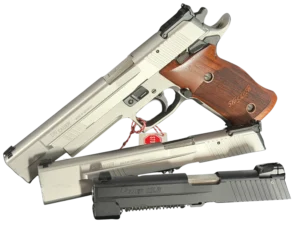
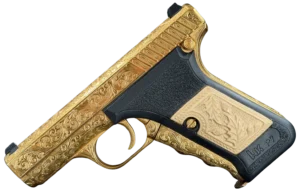
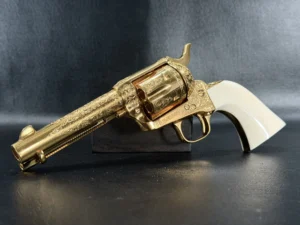
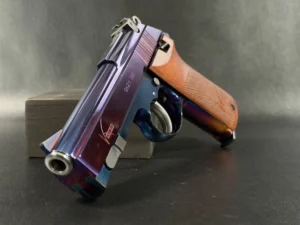
Pistol Dynamics occupies a different niche entirely, specializing in low-volume, high-precision custom handguns. Their work appeals to collectors who want something that functions as both a functional firearm and a piece of art. Production numbers are intentionally kept small, and each piece reflects serious craftsmanship.
Shiloh Rifle Company does something that’s rare and wonderful: they produce small numbers of high-quality historical reproductions, most notably the Sharps rifle. For collectors who value historical accuracy alongside modern build quality, Shiloh occupies a unique and respected position.
Patience Is Part of the Process
One thing that separates this corner of the firearms world from the rest is the timeline. You can walk into a gun store and buy a production handgun in thirty minutes. Acquiring a piece from a boutique maker might take months of research, a year or more on a waitlist, and additional months of build time. That’s not a bug. That’s the entire point.
The research itself is part of the experience. Learning about a maker’s history, understanding their design philosophy, studying previous commissions, and then engaging in the process of specifying your own piece: all of this is part of what makes collecting high-end, low-production firearms so rewarding. It’s slow. It’s deliberate. And the result is something that mass production simply cannot deliver.
I’ve spoken with collectors who spent two years researching a single maker before placing a commission. They pored over every available photo, read every forum post, and called other clients for references. By the time they finally placed their order, they knew exactly what they were getting and exactly why it mattered to them. For the right person, that level of engagement isn’t a burden at all; it’s genuinely enjoyable.
Putting It All Together: A Practical Approach
So where should you start? If I had to boil this down to a practical plan, it would look something like this.
First, pick one or two forums that align with your interests and start reading. Don’t just lurk passively. Engage with threads, ask questions, and contribute when you can. Whether it’s Sniper’s Hide for precision rifles, 1911Addicts for custom handguns, or a shotgun-focused community, getting involved is the single best way to accelerate your education.
Second, subscribe to at least one specialized publication. Gun Digest and The Double Gun Journal are excellent starting points. Read them cover to cover. Pay attention to the names that keep coming up. Those recurring references are your signposts.
Third, commit to attending at least one major event per year. SHOT Show, SCI, DSC, or even a regional gun show with a strong custom presence. Nothing replaces the experience of handling a bespoke firearm and speaking directly with its maker. The connections you build at these events will pay dividends for years.
Fourth, follow content creators who do this kind of work justice. Ian McCollum at Forgotten Weapons is the obvious choice, but there are others. Look for channels and blogs that go beyond surface-level reviews and engage with the craft, history, and people behind these firearms.
And finally, be patient. The best information in the world doesn’t come quickly. It comes through sustained interest, genuine curiosity, and the kind of relationships that take time to build. The makers themselves are patient people. They spend hundreds of hours on a single firearm. Approaching your research with the same mindset will serve you well.
The Quiet Satisfaction of Knowing What Others Don’t
There’s a particular satisfaction in owning or even just knowing about a firearm that most people will never encounter. It’s not about snobbery. It’s about appreciation. These makers pour their lives into their craft. They choose quality over quantity, reputation over revenue, and artistry over efficiency. Learning about them is a way of honoring that commitment.
The world of niche, high-end gunmaking is alive and well. It’s just not loud about it. And frankly, that’s what makes it worth exploring. The information is out there if you know where to look. The shows are running. The forums are active. The publications keep printing. And somewhere, in a workshop you’ve never heard of, a maker is finishing a firearm that will take your breath away.
You just have to go find it.
Written for firearms collectors and enthusiasts seeking the exceptional. All maker references are based on publicly available information as of early 2026.
Frequently Asked Questions
Pick one or two forums that match your interests (like Sniper’s Hide for precision rifles or 1911Addicts for custom handguns) and start reading actively. Pair that with a subscription to a specialized publication like Gun Digest or The Double Gun Journal, and you’ll build a solid foundation surprisingly fast.
You don’t strictly need to, but it’s the fastest way to make meaningful connections and see the work firsthand. Even one show per year, whether it’s SHOT Show, SCI, or DSC, can introduce you to makers and collectors you’d never encounter online.
Wait lists often stretch a year or more, and that’s before the actual build time begins. Some collectors spend months just researching a maker before they even place a commission.
Most small-shop artisans are genuinely happy to talk about their work with anyone who shows real interest. A respectful message on Instagram or a conversation at a show booth will usually get you a thoughtful response.