

Key Takeaways:
- Consecutive serial numbers aren’t just neat; they tell stories: To seasoned collectors, a string of back-to-back serial numbers means more than production order. It’s a thread connecting each piece to a specific time, place, and purpose, often adding layers of historical and personal significance that turn an ordinary gun into a collector’s gem.
- These numbers can boost both value and emotional appeal: Yes, consecutive serial numbers tend to raise market prices, especially in matched sets—but the real appeal often comes from the sense of connection, precision, and completeness they bring to a collection. They don’t just look good together—they feel right.
- The hunt is half the fun and half the challenge: Finding firearms with consecutive serial numbers isn’t easy, but that’s part of the thrill. It takes patience, sharp eyes, a bit of community savvy, and sometimes, a little luck. But when does it all line up? That’s the kind of win collectors live for.
Let’s get started…
You know what’s funny? I’ve been collecting firearms for years now, and if you’d told me when I started that I’d someday get genuinely excited about serial numbers, I would’ve laughed. Like, come on. Numbers stamped on metal? That’s the boring administrative part, right?
Wrong. So wrong.
Because here’s the thing. Condition matters, obviously. Rarity matters. Beautiful finishes matter. But sometimes there’s this other element that creeps up on you. Something most people would walk right past without a second glance.
Serial numbers that line up in perfect sequence.
When you stumble across that? Everything changes.
Look, I get how this sounds. To someone who doesn’t collect, consecutive serial numbers probably register somewhere between “mildly interesting” and “who gives a shit.” Are your guns numbered 1001, 1002, and 1003? Cool story, bro. But ask anyone who’s been deep in this hobby for a while, and they’ll tell you different. These numbers aren’t just bureaucratic trivia. They’re breadcrumbs. Little stories stamped right into the steel.
And honestly? Once you start noticing them, it’s impossible to stop.
What We’re Even Talking About
Alright, let me back up and explain what I mean by consecutive serial numbers. It’s not complicated.
Gun number 5478 is followed by 5479, which is followed by 5480. Boom. That’s it. These firearms rolled off the same production line, probably within hours or days of each other. Same factory, same workers, same batch of raw materials, same moment in history.
Simple enough, right?
But here’s where my brain always goes. When you find a matched pair (or hell, a full set) of guns with these sequential numbers intact, you’re holding something that stayed together. Think about that for a second. These guns were literally manufactured as siblings. And then, despite decades of changing hands, estate sales, wars, moves across the country, divorces, inheritance disputes, and every other chaotic thing that happens in life… they somehow found their way back to each other.
Or maybe they never got separated in the first place, which is almost more remarkable.
Why the Numbers Actually Matter
The connection itself is the thing. That’s what collectors lose sleep over.
The numbers tell you a few things. These came from the same production batch. You can date them way more precisely. They’re genuinely rare, sometimes stupidly, impossibly rare.
It’s not about the digits themselves, really. It’s about owning a frozen moment. A piece of manufacturing history you can actually hold in your hands and feel the weight of.
Why This Gets Under Your Skin
So why does any of this actually matter? Why do grown adults get borderline obsessive over what amounts to matching numbers?
Part of it is the scarcity angle, sure. Rare things are desirable. That’s basic collecting 101.
But there’s something else going on here. These serial numbers scratch this weird itch we all have for order, for connection, for stories that make sense in a world that mostly doesn’t. A collection with consecutive serials feels complete somehow. Like you put together a puzzle that most people don’t even know exists.
And that exclusivity? That matters to people.
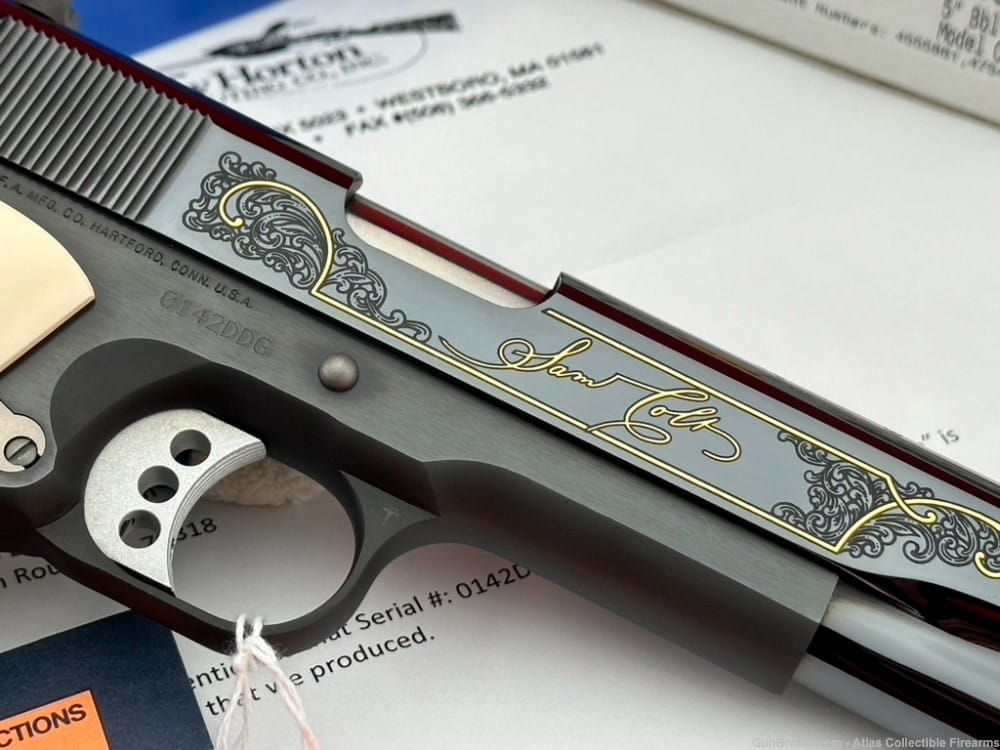
Picture this. Two Colt Single Action Army revolvers, both in gorgeous condition, serial numbers exactly one digit apart. Not close. Not “in the same range.” One. Single. Digit.
That’s not just cool. That’s the kind of thing that makes other collectors stop mid-conversation at a gun show and just stare. Everyone wants to know the story behind them. Were they issued to the same cavalry officer? Part of a military contract? Did some rancher buy them together back in 1881, and they’ve been in the same family ever since?
We’ll probably never know for certain.
You know what? That’s kind of the point. The mystery is half the appeal.
What Hooks People
Collectors get hooked on this stuff because it brings focus to themed collections. Military contracts, commemorative runs, whatever angle you’re chasing. It gives you something interesting to talk about at shows, and trust me, these conversations can get heated. The sequential numbers showcase manufacturing precision from specific eras, a form of art in its own right.
Honestly, they just look good together sitting in the case, and yeah, aesthetics matter way more than people want to admit.
The History Angle (This Is Where My Nerd Comes Out)
Okay, here’s where things get even more interesting for me. From a historical perspective, consecutive serial numbers aren’t just cosmetic. They’re actual clues. Little breadcrumbs leading you back through time.
Take wartime production. You find a bunch of rifles with back-to-back serial numbers? That could tell you about a specific military contract, a particular armory’s output during a crucial period, maybe even a shipment that went to a known regiment. Sometimes that context alone makes an otherwise common gun incredibly desirable.
Not because the firearm itself is rare, necessarily, but because its story is.
I remember reading about a set of three Springfield 1903 rifles that turned up at an estate sale in Pennsylvania, numbered something like 847216, 847217, and 847218. Turned out they were from a batch sent to Camp Perry for marksmanship training in 1919. Not particularly valuable on their own, but together? With that documented history?
That’s a different conversation entirely.
The Manufacturing Side
And here’s something most people don’t think about. The manufacturing side. Guns with consecutive numbers usually signal smooth, uninterrupted production. No defects that shut down the line for retooling. No parts cannibalized from earlier runs. Just efficient, disciplined factory work clicking along like clockwork.
Some collectors are drawn to that industrial precision as much as they are to the guns themselves. There’s an art to it, weirdly enough. A beauty in the mechanics of it all.
So when you see a group with serials like 04567, 04568, 04569? That’s not random chance or a lucky coincidence. That’s the footprint of quality-controlled craftsmanship. Proof that everything was working exactly as it should. The machinery was running clean, the workers knew their jobs, and the foreman wasn’t cutting corners.
It’s a snapshot of competence.
And in a world where competence feels increasingly rare, that means something.
Money Talks (Let’s Be Real for a Minute)
Alright, we should probably address the elephant in the room here.
Do consecutive serial numbers actually boost value?
Hell yes, they do.
A matched set of pistols or rifles with sequential serial numbers will almost always command a premium over the same guns sold separately. Sometimes a significant one. The reasons are partly rarity, partly appeal, partly that human tendency to want things that feel complete and intentional. These sets make a collection look curated. Almost artistic in a weird way.
Think about literally any other collectible market. Stamps, coins, vintage watches, comic books, whatever. A complete set carries more weight than random singles scattered across different owners. It’s just how our brains work. We want the full story, not disjointed chapters.
What Drives Up Value
What really drives up that value? The condition of all pieces matters most. One beat-up gun in rough shape can tank the whole set’s worth. Historical background or provenance is huge. Documentation is the absolute king here. The manufacturer or specific model line matters, as does how rare the actual serial number range is.
But you know what? For many collectors, resale value isn’t even the main point. It’s the personal satisfaction. The thrill of the hunt.
That feeling when you finally track down the missing number after years of casually searching, and suddenly your set is complete?
That’s the real treasure right there.
The Hunt (This Is Where Things Get Fun)
Funny enough, tracking down consecutive serial numbers is not easy at all. If it were, everyone would do it, and the whole appeal would vanish overnight.
But that difficulty? That’s exactly what makes it satisfying.
Some collectors get ridiculously lucky and stumble into a matched set at an estate sale. Someone’s grandfather collected Colt Pythons, died, and the family has no idea what they’re looking at. Others spot a rare pair at auction and have to fight tooth and nail for it, watching the bids climb way past what they planned to spend.
The really dedicated ones spend literal years piecing their finds together one by one, following leads from online forums, private collectors, and whispered tips at gun shows.
What Actually Works
Here’s what actually works. Hit auctions and estate sales regularly. You just never know what’s hiding in some random catalog listing or dusty display case. I’ve heard stories about consecutive Lugers turning up at a suburban garage sale, stuffed in a toolbox under some old wrenches.
Wild stuff.
Stay active in collector communities. Places like ColtForum or 1911 Addicts can be absolute gold mines of information if you’re patient and respectful. These communities run on reciprocity. Help someone find what they’re looking for, and people remember.
Always verify serials through reliable databases or factory letters when possible.
This is non-negotiable.
Trust But Verify
That last point is crucial. Faked serial numbers aren’t exactly common, but they’re not unheard of either, especially on high-value models. People have been known to modify numbers to create fake matches. I’ve seen it. It’s not even that hard to do if you have the tools and lack the ethics.
So take your time. Double-check the markings. Look for tool marks or inconsistencies in the stamping depth. Get documentation from the manufacturer whenever possible.
Trust but verify, as they say.
Patience genuinely pays off here. I know collectors who spent a decade tracking down a single matching gun to complete their set. Just waiting, watching auction listings, posting wanted ads in collector magazines, and networking at every show they attended.
And when they finally found it? Worth every second of the wait.
Building Something That Matters
If you’re just starting out with this, my advice is simple. Don’t stress about finding perfect consecutive sets right away. You’ll drive yourself absolutely crazy if that’s your immediate goal.
Instead, pick a niche. Maybe a manufacturer you’ve always admired. Maybe a specific war-era pistol that fascinates you. Something that genuinely interests you beyond just the investment potential.
Because here’s the secret nobody tells beginners: if you’re not actually interested in the guns themselves, collecting becomes a chore real fast.
Once you’ve got your focus, you can start actively targeting serial number sets. And here’s a tip that took me way too long to learn. Don’t be shy about networking. The collector community runs on shared information, trades, and good old-fashioned word of mouth. Make friends. Ask questions. Offer information when you have it.
People in this world absolutely love talking about their collections, and they remember who helps them out.
How Seasoned Collectors Actually Approach This
Pick a specific model, factory, or time period and stick with it (at least at first). Keep an active wishlist and share it with people you trust. Hit regional and national firearms expos whenever humanly possible. Stay on top of auction previews and catalogs from the major houses.
Also, remember this. Sets don’t always appear fully formed like some kind of miracle. More often, you find number 14752 at a show in Texas, and then five years later, completely out of the blue, number 14753 surfaces in a Pennsylvania estate sale halfway across the country.
Part of the genuine joy is connecting those dots yourself. Reuniting pieces that were separated decades ago, maybe even a century ago. Bringing them back together after all that time and chaos.
The Story You Create
Weirdly enough, that’s almost more satisfying than buying a complete set all at once. When you assemble it yourself over time, there’s a story there. Your story, woven into the guns’ stories.
Mistakes Everyone Makes (Learn From My Stupidity)
Every collector screws up, especially early on. I’ve made basically all of these mistakes at least once. The trick is learning fast and not repeating the same bone-headed move twice.
Here are the most common ones.
Close Doesn’t Cut It
Assuming close serials are the same as consecutive. Look, 1478 and 1479 are consecutive. But 1478 and 1480? Nope. There’s a whole gun missing in between. Check every single digit carefully. It matters more than you’d think.
I once drove three hours to look at what I thought was a matching pair, only to realize the seller had misread the numbers. His 1489 was actually 1439.
Infuriating.
Don’t Overpay in the Heat of the Moment
We’ve all been there. You see the gun you’ve been searching for, your heart starts racing, the adrenaline kicks in, and suddenly you’re bidding way past your budget. Do your homework beforehand. Know the market. Set a hard limit and stick to it.
Write it on your hand if you have to.
Documentation Is Everything
Skipping documentation is a huge mistake. A gorgeous gun with no paper trail is like a Ferrari with no title. Cool to look at, fun to dream about, but risky as hell to actually own. You need proof of its origin, ideally from the factory itself.
Factory letters exist for a reason.
Condition, Condition, Condition
Not scrutinizing the condition properly will bite you. A high-value gun isn’t worth much if it’s been poorly restored or mishandled over the years. I’ve seen people pay premium prices for “matching numbers” only to discover one gun had been refinished badly or had replacement parts.
Trust your gut, but back it up with facts and careful inspection.
Why This Never Gets Old (At Least for Me)
There’s something deeply satisfying about looking at a row of firearms with perfectly sequential serial numbers. Like the final chord of a song resolving exactly how it should.
Everything just clicks into place.
To someone who doesn’t collect, these numbers probably seem completely meaningless. Just random bureaucratic stamps that the government requires for tracking purposes or whatever.
But to those of us who know what we’re looking at?
They’re everything.
Consecutive serial numbers aren’t random digits at all. They’re tangible links to a specific time and place that no longer exists. They echo back to the factory floor, the hands that assembled these guns piece by piece, maybe even the people who first carried them into battle or wore them on their hip through some dusty frontier town.
In the world of collecting, few things feel more meaningful than that kind of direct connection to history.
You’re not just buying old guns. You’re preserving something. Keeping a story alive that would otherwise be lost to time, entropy, and the general chaos of existence.
So whether you’re just getting started or you’re already deep in the hunt, remember this. Sometimes the magic really is in the details that most people never notice. Sometimes the smallest things tell the biggest stories.
And sometimes, after years of patient searching, countless dead ends, and near-misses, everything lines up perfectly.
That’s when you know you’ve found something genuinely special.
Not everyone will get it.
That’s okay. They don’t have to.
Frequently Asked Questions
They’re serial numbers that run in direct order, like 1001, 1002, and 1003. When guns share these back-to-back numbers, it typically means they were made together, likely on the same day or in the same production run. It’s like a matching set, straight from the factory floor.
Simple, rarity, history, and aesthetics. Consecutive serial numbers lend a collection a more curated and complete feel. They also suggest a deeper story, often tying pieces to a specific contract, era, or moment in time. And let’s be honest, they look great lined up together.
Generally, yes. Matching sets with consecutive numbers can fetch higher prices, especially if the condition is good and the model is already in demand. But for many collectors, the emotional and historical value outweighs the financial gain.
Not at all. While older or historic guns with matching numbers often get the spotlight, even modern firearms can hold added value if they’re part of a sequential group. It’s about the story they tell and the appeal of keeping them together.
It takes some work and a bit of luck. Estate sales, auctions, gun shows, and networking with fellow collectors are your best bets. And when you spot a possible match, always verify it through reliable databases, manufacturer records, or factory letters.

2 Responses
I have been interested in firearms since I was a boy watching tv westerns with my Mattel Fanner Fifty. Cars, racing cars, airplanes and flying airplanes also have been lifelong interests. How they work and how to fix them is also a interest.
I have had many “collectable” guns and automobiles before high dollar “fan boys” knew that they were cool, so what?
Do you know that Smith +Wesson guns are not sequenced? Do you know that you can dismantle five 100 year old .38 M+P Smiths and mix up the parts in a box and make at least 4 working guns? Try that with the same number of Colt’s revolvers of the same age, you might get two guns.
Yes low serial numbers are fun but how important are they really? I bought a 3rd model Smith +Wesson #1 .22 in Youngstown Ohio. A few years later I bought the next number up from it in Beverly Hills California. Didn’t mean a thing to the nexus of the two guns, just when the frames were pulled from the bin for fitting. In reality months and hundreds of guns could have separated the two revolvers.
You are in the business of selling guns to people with more money than sense, so be it. This is always the case. People with the cash jump into a hobby jack the price up, loose interest and ruin the hobby for true enthusiast.
I tend to agree with your statements. I have a ‘matched set’ of Colts that I have been offered 7 X what they cost me.
I “MIGHT” part with them.