
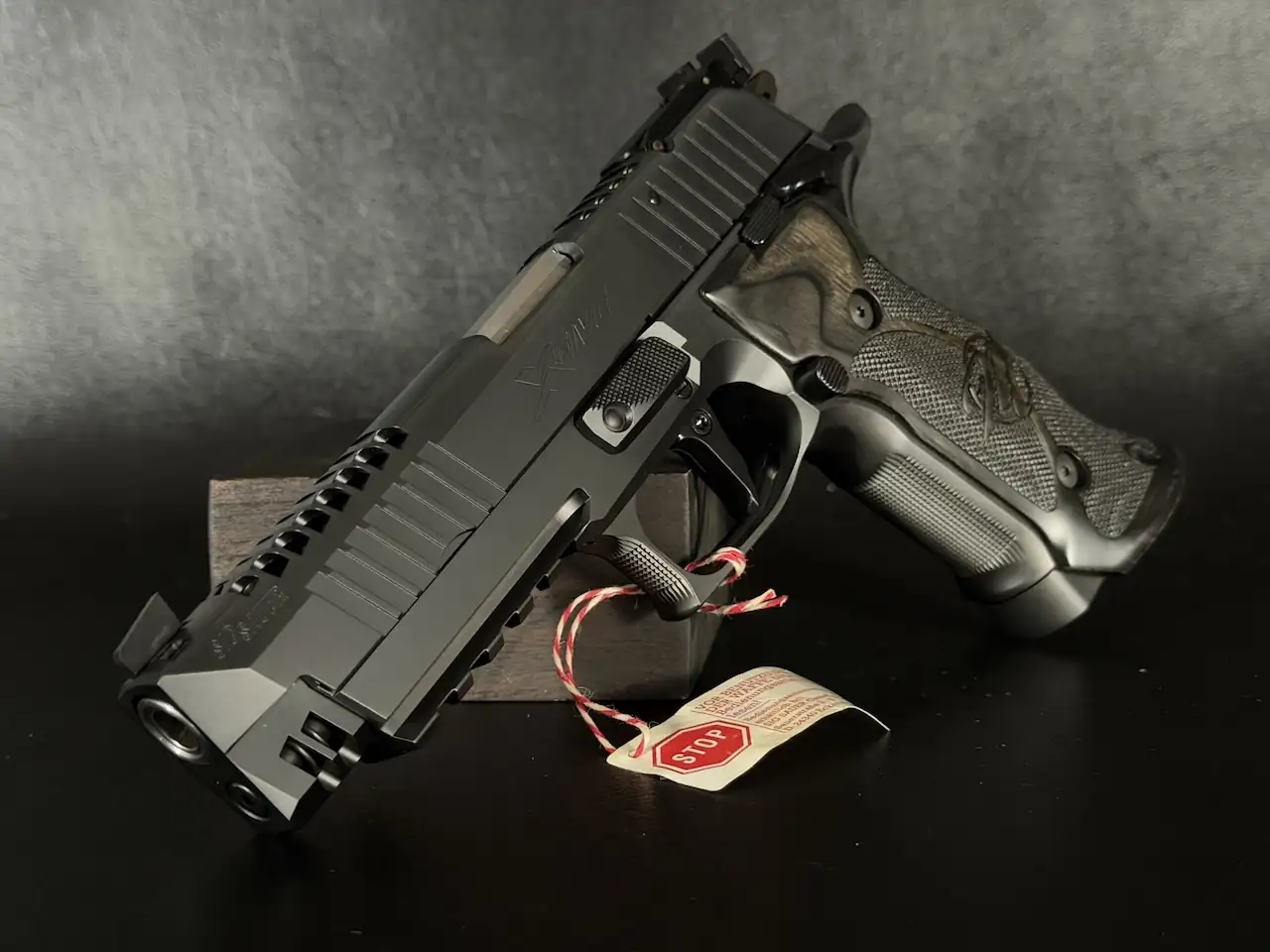
Key Takeaways:
- Define your version of “precision” before you buy anything. Precision means different things to different collectors. For some, it’s sub-MOA accuracy; for others, it’s the slide-to-frame fit on a Swiss service pistol. Writing down your personal definition gives you an anchor when temptation shows up at a gun show with a great price tag.
- A throughline turns a group of pistols into a real collection. Whether you organize around geography, era, or mechanical innovation, that connecting thread is what separates intentional collecting from impulse buying. It’s the spine of the book, and every pistol you acquire should feel like a chapter that belongs.
- Saying no to good pistols is what makes a great collection. You will find beautiful, well-priced European handguns that don’t fit your theme. Passing on them feels almost painful, but every off-theme piece dilutes the ones that actually serve the story. Discipline isn’t the enemy of passion here; it’s what gives your passion shape.
A Collector’s Guide to Curating with Purpose, History, and Mechanical Beauty
There’s a moment every firearms collector recognizes. You’re standing in front of your safe, looking at a lineup of pistols that somehow ended up together, and you think: What’s the story here? Maybe you bought one because you loved the trigger. Another reason is that you got a deal you couldn’t pass up. A third because, honestly, it just looked incredible. But together? They don’t quite tell a story. They’re a collection of pistols, sure, but they’re not a collection in the truest sense.
That distinction matters more than most people realize. A cohesive collection theme transforms a group of individual firearms into something greater. It gives your story a narrative arc. It makes every new acquisition feel intentional rather than impulsive. And when the theme revolves around precision European pistols, you’re stepping into one of the richest traditions in firearms manufacturing. We’re talking about countries that have been perfecting metal and mechanisms for centuries.
So how do you build that kind of collection? How do you go from “I like European handguns” to “This collection represents something meaningful”? Let’s walk through it.
First Things First: What Does “Precision” Actually Mean to You?
Before you spend a single dollar, you need to sit with this question. Precision is one of those words that gets thrown around a lot in the firearms world, and it can mean different things depending on who’s using it. For a competitive shooter, precision might mean sub-MOA accuracy at 25 yards. For a watchmaker-turned-collector, it might mean the tolerances in the slide-to-frame fit. For a historian, it could refer to the engineering philosophy of a specific era.
Here’s the thing: there’s no wrong answer. But your answer shapes everything that follows. If your definition of precision centers on mechanical craftsmanship, you might gravitate toward SIG Sauer P210s and early Walther PPKs. If it’s about competitive accuracy, you’ll probably end up looking at Pardini, Morini, or Hammerli target pistols. If it’s about military-grade reliability married to tight manufacturing, CZ and Beretta have decades of production experience to draw on.
Write your definition down. Seriously. Tape it to the inside of your safe if you have to. Because when you’re at a gun show and someone’s offering you a great price on something that doesn’t quite fit, that written definition is your anchor.
Choosing Your Throughline: Country, Era, or Mechanism?
Once you know what precision means to you, the next step is picking a throughline. Think of this like the spine of a book. Every pistol in your collection is a chapter, but they all need to connect back to something central.
Most successful European pistol collections organize around one of three throughlines: geography, era, or mechanical innovation. Let me break each one down.
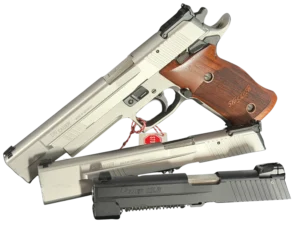
A geographic throughline means you’re collecting from a specific country or region. Swiss precision is a natural choice here. The Swiss didn’t just make good watches; they made extraordinary pistols. A collection built around Swiss firearms might include the SIG P210, widely considered one of the most accurate service pistols ever made, as well as Sphinx pistols and Hammerli target guns. There’s a philosophical consistency to Swiss manufacturing that ties these pieces together even when they serve very different purposes.
German collections offer a different flavor. You could trace the evolution from Luger P08s through Walther P38s and into modern Heckler & Koch designs. The engineering ethos shifts across those decades, but there’s an unmistakable German commitment to systematic problem-solving that connects them all.
An era-based throughline lets you capture a snapshot of what European gunmakers were doing during a particular period. The interwar years (1918 to 1939) are fascinating for this. You had Czech, Belgian, German, and Spanish manufacturers all competing, innovating, and occasionally borrowing from each other. A collection from this period might include a CZ 24, a Browning Hi-Power prototype, an early Walther PP, and a Star Model A. Each tells a different national story about the same historical moment.
Then there’s the mechanical throughline. This is where things get really fun for engineering-minded collectors. You might focus exclusively on roller-delayed blowback pistols, tracing the concept from its wartime German origins through the CZ 52 and into modern iterations. Or you could build a collection around the evolution of the single- and double-action trigger mechanisms among European makers. Mechanical throughlines tend to produce the most educational collections because each piece directly illustrates an engineering concept.
The Anchor Piece: Every Collection Needs a Cornerstone
Here’s where strategy meets passion. Every strong collection has an anchor piece. It’s the pistol that defines the standard. The one you point to when someone asks, “What’s this collection about?”
For a Swiss precision theme, your anchor might be a mint-condition SIG P210 from the 1950s. For a German military evolution theme, it could be an all-matching Luger from World War I. For a mechanical innovation theme, maybe it’s a Walther PP, the pistol that essentially invented the modern double-action semi-automatic.
The anchor piece doesn’t have to be the most expensive gun in your collection, though it often is. What it has to be is the most representative. It should embody your theme so completely that if someone saw only that one pistol, they’d understand what you’re trying to do.
I’d recommend acquiring your anchor piece early. Not necessarily first, but early. It gives you a reference point. When you’re evaluating future acquisitions, you can hold them up against the anchor and ask: Does this belong in the same conversation? Does it add to the story, or does it just take up space?
Beyond the Big Names: Finding Hidden Gems
Okay, let’s talk about something that separates good collections from great ones. It’s easy to build a collection around marquee names. Everyone knows SIG, Walther, Beretta, and CZ. These are pillars of European pistol manufacturing for good reason. But if your collection only features the obvious choices, it’ll feel a bit like a greatest-hits album. Pleasant, but predictable.
The collections that really make people stop and think are the ones that include lesser-known pieces alongside the icons. Consider Manurhin, a French cooperative that produced surprisingly well-crafted pistols for decades. Or Tanfoglio, the Italian maker whose competition pistols have won world championships but rarely get the collector attention they deserve. How about Unique, another French manufacturer whose name is almost comically on-the-nose but whose pistols featured genuinely clever engineering?
Belgian makers beyond FN Herstal also offer a rich territory. Clement, Bayard, and Pieper all produced pistols in the early 20th century that showcase remarkable craftsmanship. A collection focused on Belgian precision could include an FN Model 1910 alongside a Clement pocket pistol, demonstrating the range of what Liège’s gunmaking tradition could produce.
These hidden gems do more than add variety. They demonstrate depth of knowledge. They show that you’ve done the research, handled the pieces, and made deliberate choices. And practically speaking, they’re often more affordable than the heavy hitters, which means you can build a more interesting collection within a realistic budget.
Condition, Originality, and the Collector’s Dilemma
Now we need to have a slightly uncomfortable conversation about the condition. In a perfect world, every pistol in your collection would be 98% or better, all original, matching serial numbers, with factory grips and not a single aftermarket modification. In reality? That’s either impossible or prohibitively expensive for most of us.
So where do you draw the line? This is genuinely personal, and I’ve seen collectors take wildly different approaches, all of them valid.
Some collectors prioritize originality above all else. They’d rather have a 70% original pistol than a 95% refinished one. The logic is sound: original finish tells a story. Those handling marks, that holster wear, maybe even that one scratch on the slide, they’re evidence of history. A refinished gun is wearing a costume.
Other collectors prioritize aesthetics and function. They want pieces that look stunning in a display case and shoot well at the range. Refinished? Fine, as long as it was done correctly. Replacement grips? Acceptable, if they’re period-correct reproductions.
Honestly, the “right” approach depends on your throughline. A military history collection almost demands original condition, because provenance and authenticity are inseparable from the story you’re telling. A mechanical evolution collection can be more flexible because you’re showcasing engineering concepts, not combat histories.
Whatever you decide, be consistent. A collection that includes some museum-grade originals and others that are aftermarket rebuilds sends a confusing message. Decide on your condition standard early, and let it guide your acquisitions just like your theme does.
Documentation: The Part Nobody Wants to Talk About
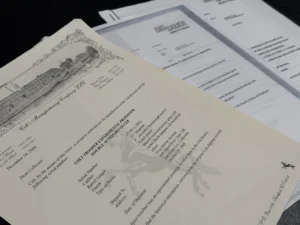
You know what? I’m going to say something unpopular. Documentation is at least as important as the pistols themselves. Maybe more important. A SIG P210 without provenance documentation is a nice pistol. A SIG P210 with original Swiss military acceptance records, a documented chain of ownership, and period-correct accessories? That’s a collectible.
For each piece in your collection, you should maintain records that include the manufacturer, model, serial number, and date of manufacture (or best estimate). You’ll want the known provenance history and any documentation that came with it: original boxes, test targets, manuals, import papers. Photographs taken at the time of acquisition are important, along with details of any modifications to the original specification.
This isn’t just about value, though proper documentation absolutely affects resale prices. It’s about the story. When you can open a binder alongside your safe and show someone the paper trail for each piece, the collection comes alive in a way that metal alone can’t achieve.
A quick practical note: scan everything and store digital copies separately from the originals. Paper deteriorates. Hard drives fail. Keep backups. This might sound paranoid, but I’ve heard too many stories of collectors losing irreplaceable documentation to water damage, fire, or simple misplacement.
The Money Question: Building Smart on a Real Budget
Let’s be honest about finances. Precision European pistols aren’t cheap. A decent SIG P210 will run you several thousand dollars. Matching-number Lugers are climbing every year. Even formerly affordable CZs from the Cold War era have seen significant price increases as collectors have recognized their quality.
But here’s the good news: a cohesive collection doesn’t have to be a wealthy collection. Some of the most respected collectors I know built their themes patiently over ten or fifteen years, picking up one piece at a time when the right example appeared at the right price.
Patience is a legitimate collecting strategy. Set price alerts on auction sites like GunBroker and Rock Island Auction Company. Build relationships with dealers who specialize in European military surplus and commercial imports. Attend regional gun shows, not just the big national events, because the best deals often happen at smaller venues where competition is lighter.
There’s also a smart sequencing strategy worth considering. Start with the more affordable pieces in your theme and work toward the expensive ones. This gives you time to learn. By the time you’re ready to drop serious money on your anchor piece, you’ll have enough handling experience and market knowledge to know exactly what you’re looking at. You’ll recognize a fair price from an inflated one, and you’ll spot refinished parts or replaced components that a less experienced buyer might miss.
One more thing on budget: factor in storage and insurance costs. A growing collection needs a proper, safe, climate-controlled space if you’re in a humid region, and adequate insurance coverage. These aren’t exciting expenses, but they’re non-negotiable if you’re serious about preservation.
Displaying and Sharing: Your Collection Deserves an Audience
A cohesive collection with a strong theme is, in a very real sense, a curated exhibit. And exhibits are meant to be seen.
How you display your collection matters. Simple felt-lined cases work well for smaller collections. For larger ones, consider a dedicated display area with proper lighting. LED strips with warm color temperatures (around 2700K to 3000K) beautifully highlight the blued steel and walnut grips without generating the heat that incandescent bulbs produce.
Labeling is an underrated element of display. A small card next to each piece listing the model, year, country of origin, and a sentence about its significance in your collection transforms a row of pistols into a narrative. You’re essentially creating museum placards, and the effect is powerful.
Sharing your collection with other enthusiasts is where the real payoff happens. Local collector groups, online forums like the CZ Forum or SIG Talk, and social media communities on platforms dedicated to firearms collecting all provide audiences who’ll appreciate what you’ve built. The conversations that come from sharing, the tips, the corrections, and the discoveries make you a better collector.
Some collectors write about their pieces. Detailed blog posts or articles about individual pistols, their history, their mechanical quirks, and how they fit into the collection theme are valuable contributions to the broader collecting community. There’s always someone earlier in their collecting journey who’ll benefit from what you’ve learned.
When to Say No: The Discipline of Theme Collecting
This might be the most important section of this entire piece. Building a cohesive collection requires saying no to good pistols.
That sounds almost painful, doesn’t it? But it’s true. You will encounter beautiful, well-priced European pistols that don’t fit your theme. A gorgeous Beretta 92 when your collection is focused on Swiss precision. A pristine Makarov when you’re building around interwar Western European designs. An incredible deal on a Spanish Astra when your throughline is German mechanical innovation.
Saying no in these moments is what separates a collection from an accumulation. Every piece that doesn’t serve the theme dilutes the ones that do. It’s like adding a jazz track to a classical album: both might be excellent music, but together they undermine each other.
That said, reasonable flexibility isn’t a weakness. If you discover that your theme naturally wants to expand in a direction you hadn’t anticipated, that’s worth exploring. Maybe your Swiss collection leads you to discover the cross-pollination between Swiss and German engineers during the Cold War, and suddenly, certain HK or SIG-Sauer (the German branch) pistols make thematic sense. Themes can evolve. They just shouldn’t drift aimlessly.
A Few Collection Themes to Get You Started
If you’re still deciding on a direction, here are some themes that work particularly well with European precision pistols.
The Swiss Perfection theme centers on SIG P210 variants, Hammerli target pistols, Sphinx systems, and Swiss military sidearms. The connecting thread is Switzerland’s relentless commitment to precision manufacturing across both military and sporting applications.
The Cold War Iron Curtain theme explores CZ 75 variants, Hungarian FEG pistols, the Polish P-64, and the East German Makarov. These pistols were built under communist systems with surprisingly high engineering standards, and they tell a fascinating story about industrial capability under political constraint.
The Brown ing Legacy theme traces John Browning’s influence across European production: FN Hi-Power variations from Belgium, Browning-design pistols from various European licensees, and the evolutionary refinements different countries applied to his fundamental designs. It’s a theme about how one American’s genius was interpreted through a dozen different European manufacturing cultures.
The Target Pistol Evolution theme follows competitive shooting pistols from early free pistols through modern electronic-trigger Morini and Pardini models. This is a deeply mechanical collection that appeals to engineers and competitive shooters alike.
Each of these themes offers enough depth for a lifetime of collecting while maintaining clear enough boundaries to keep the collection focused.
Bringing It All Together
Building a cohesive collection around precision European pistols isn’t something you do in a weekend. It’s a long game, and that’s part of what makes it rewarding. Every acquisition is a decision, not just a purchase. Every piece you add carries the weight of the ones already in the safe and the responsibility to the ones that will follow.
Start with your definition of precision. Choose a throughline that excites you. Identify your anchor piece. Research beyond the obvious names. Set your condition standards. Document everything. Be patient with your budget. Display your work with pride. And most of all, have the discipline to say no when something doesn’t fit.
The European gunmaking tradition spans centuries and dozens of countries. Within that vast landscape, there’s a collection that’s uniquely yours, waiting to take shape. The pistols are out there. You just need the theme to bring them together.
And honestly? That’s the best part of collecting. Not the individual pieces, as beautiful as they are, but the larger story they tell when you step back and see them as a whole. That story is yours to write.
Frequently Asked Questions
Start by defining what “precision” means to you personally, then choose a throughline like country, era, or mechanical innovation. That foundation keeps every future purchase intentional rather than random.
Your anchor piece should be the most representative pistol in your collection, not the priciest; it just needs to embody your theme so clearly that anyone could look at it and understand what you’re building.
Including lesser-known makers like Tanfoglio, Manufrance, or Clement alongside the big names is actually what separates a good collection from a great one. Those hidden gems show depth of knowledge and often come at friendlier prices, too.
It depends on your throughline. A military history collection almost demands original finish and matching numbers, while a mechanical evolution theme can be more forgiving since you’re showcasing engineering concepts rather than combat provenance.
Honestly, yes. A pistol with original acceptance records, a documented chain of ownership, and period-correct accessories tells a story that metal alone simply can’t.