
Key Takeaways:
- A Type 03 C&R license is a solid first step, but it’s strictly for personal collecting and won’t get you into elite circles on its own. Real access comes from building a reputation through consistent participation, specialist knowledge, and airtight legal compliance over time.
- The right events matter more than the right contacts. Specialized shows like the Mid-South Military and Civil War Show put you in the same room as serious collectors; how you carry yourself once you’re there determines whether you’re invited back into smaller, private settings.
- Knowledge isn’t just useful in this world; it’s the actual currency. Understanding the technical and regulatory details, from ATF import marking requirements to how “billboard” engravings affect value, signals immediately that you’re someone worth talking to, and eventually, worth trusting.
There’s a version of firearms collecting most people never see. Not the gun show tables piled with $200 milsurp pistols. Not the Facebook groups with blurry photos and arguments about condition grades. We’re talking about private collection viewings, serious auction previews, and quiet gatherings where someone pulls a matched pair of Prussian cavalry pistols from a velvet-lined case and the room goes silent.
These circles exist. They’re real. And getting into them is less about who you know at the start, and far more about who you become over time.
If you’re serious about moving from enthusiast to recognized collector, here’s what that path actually looks like.
First, Understand What You’re Actually Trying to Join
Let’s be clear about something: elite collector networks aren’t clubs with membership forms. There’s no application portal. No waitlist email. These are communities built on earned trust, demonstrated knowledge, and a track record of serious, legal, well-documented collecting.
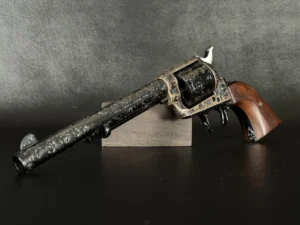
The people inside them have spent years, sometimes decades, building reputations. They’ve handled thousands of pieces. They can spot a refinished Colt Single Action Army from across a table. They know the difference between a “matching numbers” gun and one where someone just happened to find a matching-numbered replacement part.
So the question isn’t really “how do I get in?” The better question is “how do I become someone who belongs there?”
That shift in thinking matters more than any single tactical move you could make. These networks are built slowly, over years, through demonstrated expertise, legal compliance, and consistent participation in recognized associations. There are no quick routes or guaranteed outcomes. Anyone who tells you otherwise hasn’t actually been inside one of these circles.
Get Official: The Type 03 FFL and What It Actually Does
Here’s a practical first step that signals you’re serious without requiring you to know anyone yet. Apply for a Type 03 Federal Firearms License, also called a Curios and Relics (C&R) license, through the ATF. It runs $30 for three years. That’s less than a decent cleaning kit.
What does it actually do? Officially, it allows you to receive certain curio and relic firearms directly from dealers and other C&R licensees, shipped to the address listed on your license. That direct-acquisition ability streamlines a lot of the paperwork burden that comes with building a collection in these categories.
A few important limitations are worth understanding before you apply. The Type 03 FFL is strictly for personal collecting. It does not permit you to engage in the business of buying and selling firearms for profit. That distinction matters legally, and the ATF takes it seriously. Additionally, all C&R firearms must be shipped to the address on your license. If you move, you must notify the ATF and update your license accordingly.
What the license won’t do is automatically open doors in serious collector circles. No single credential does that. What it represents is one clear signal, among many you’ll need to build over time, that you’ve engaged with the regulatory side of collecting seriously. Combined with demonstrated knowledge, consistent presence at the right events, and a reputation for legal compliance, that signal accumulates meaning. Think of it as one brick in a foundation, not the whole structure.
Show Up Where It Counts: The Right Events Are Not the Ones You Think
Here’s where many newcomers go wrong. They attend large public shows, shake hands, buy a few things, and wonder why nothing deeper develops.
The problem isn’t effort. It’s targeting.
The shows and events that feed into serious collector networks tend to be specialized rather than general. The Mid-South Military and Civil War Show, scheduled for March 6-7, 2026, at the Landers Center in Southaven, Mississippi, is a good example of what that looks like in practice. Events like this draw people who have spent thirty years focusing exclusively on specific categories: Confederate firearms, Union cavalry equipment, and Pacific Theater Japanese militaria. These aren’t dabblers. And they can tell within a few minutes of conversation whether you are one.
SHOT Show 2026 runs January 20-23 in Las Vegas. Worth understanding clearly: SHOT Show is a trade-only event open exclusively to qualified industry professionals and government entities. It is not open to the general public. If you have a legitimate business credential that qualifies you for attendance, the show floor matters less than the surrounding activity. The side conversations, manufacturer range days, and off-floor dinners are where industry relationships actually form. If you don’t yet have a qualifying credential, this isn’t a venue to pursue prematurely.
Friends of NRA hosts more than 500 fundraising dinners and benefit events nationwide each year, supporting youth shooting programs through games, auctions, and community dinners. These events are broadly accessible and can be a reasonable way to meet people in the firearms community in a relaxed social setting. That said, the mix of attendees varies considerably by location and event type. Treating any single event as a reliable pipeline to elite collector networks overstates the case. The value is in consistent participation across many community touchpoints over time, not on any one occasion.
The Auction Circuit Is Its Own Education
If you can afford to participate, even modestly, make Collectors Elite Auctions and similar houses a regular part of your world. Not just as a buyer, but as a student of the market.
Attend pre-sale previews whenever possible. Handle the pieces that specialists allow you to handle. Ask questions. Watch how experienced bidders behave. Notice which lots draw knowing reactions from the regulars, and which ones attract whispered skepticism.
Over time, auction house staff will start recognizing your face and your areas of interest. That recognition has practical value. When a specialist knows what you focus on, you’re more likely to hear about consignments before they hit the catalog. You’re more likely to be introduced to a consignor with relevant material. That’s not a shortcut, it’s just the natural result of showing up consistently in a place where serious transactions happen.
Knowledge Is Not Optional, It’s the Price of Entry
You know what separates a serious collector from an enthusiast in about 90 seconds of conversation? Depth. Specificity. The ability to distinguish between a good example and an exceptional one, and to articulate why.
If you’re focusing on military surplus firearms, you need to understand import markings. Not just that they exist, but what they mean legally, how they affect value, and how to read them.
Federal regulations require that all imported firearms bear the importer’s name, city, state, and country of origin. For firearms manufactured or imported after January 30, 2002, marks must meet a minimum depth of 0.003 inches and a print size of at least 1/16 inch. These standards ensure the marks can’t be easily removed, and they’re essential for FFL holders maintaining the bound book records that law enforcement uses for tracing.
Why does this matter to collectors? Because the presence, location, and style of import marks affect value in measurable ways. Large, conspicuous engravings, sometimes called “billboards,” can reduce a high-end firearm’s value by 10 to 20 percent. Discreet importers use specialized equipment to place marks in less visible locations, such as under the barrel or inside the magazine well, thereby limiting their impact on appearance and market value.
Now, on the subject of “bring-backs”: a firearm without import marks is sometimes described as a veteran bring-back, meaning it was personally carried home by a servicemember rather than commercially imported. That’s one possibility, and it carries genuine collector interest. But it’s important to be accurate here. Unmarked firearms could also have entered the country through other legal channels before the relevant marking requirements took effect, or through import arrangements that predated the Gun Control Act of 1968. The absence of a mark doesn’t automatically establish bring-back provenance. It preserves the possibility of that story, which has value, but serious collectors approach provenance claims with appropriate scrutiny, not just romance.
Knowing all of this and being able to discuss it fluently signals immediately that you’re not wasting anyone’s time.
Joining an Accredited Association Is Slower Than You Think, and That’s Fine
Organizations focused on specific collecting categories, whether that’s Civil War firearms, World War I pistols, or early American longrifles, often have formal membership processes. Some have waiting periods. Some require sponsorship from existing members.
That’s exactly the point.
The vetting process isn’t bureaucracy for its own sake; it’s the mechanism that makes the private sub-circles within these organizations worth joining. When everyone in the room has been vouched for, conversations improve. The pieces people bring to share get more significant. The trust level that allows for genuinely open discussion about condition, value, and provenance is possible because the gatekeeping actually works.
The strategy here is patience plus genuine participation. Show up at chapter meetings. Contribute to publications if they have them. Volunteer for administrative roles nobody else wants. Ask thoughtful questions at seminars. Avoid positioning yourself as an expert before you’ve earned that label in this particular community.
Here’s the thing about expertise in collecting: it’s intensely specific. Someone can be genuinely world-class on Luger variants and still have limited knowledge of pre-war Smith and Wesson revolvers. Recognizing that, and demonstrating humility about the limits of your own knowledge, is not just a social nicety. It’s recognized as a sign of real experience.
How to Actually Behave When You Get an Invitation
Say you’ve done the work. You’ve attended the right shows, built some auction relationships, joined an association, and gotten your C&R. Someone invites you to a private collection viewing or a small gathering of serious collectors.
Don’t blow it.
Follow the host’s lead. Every collector has their own handling protocols. Some want you to ask before touching anything, while others prefer you handle only the pieces they personally offer. Many also have strict rules about where you can carry, how you open actions, and whether you wear gloves for certain items. This isn’t fussy behavior; it comes from hard‑learned lessons about protecting pieces that can’t be replaced.
Listen more than you talk. This is not the occasion to demonstrate everything you’ve learned. It’s the occasion to learn more. The people in that room have years of experience attached to every piece they own. If you’re quiet and attentive, you’ll hear things no book will ever tell you.
When you do speak, be intentional and specific. A pointed question, “Is that the 1943 production variant with the simplified grips, or the earlier type?” lands completely differently than vague enthusiasm. It signals that you’ve done the work.
And on transactions: use documented, auditable channels. Serious collector circles in 2026 prioritize legal compliance. Proper transfer documentation, correct logging for FFL holders, clear paper trails, these aren’t inconveniences. They’re what separates collections that can be insured, inherited, and sold cleanly from ones that create headaches for families decades later.
The Long Game, and Why It’s Worth Playing
Let’s be direct about the timeline: this is realistically a multi-year process before you’re moving through genuinely private circles with any regularity. That’s not discouraging; it’s accurate.
But consider what you’re actually building during those years. You’re developing a specialized expertise that most people don’t have and assembling pieces with genuine historical significance. At the same time, you’re building a reputation with real practical value: serious collectors work with people they trust, and that trust can eventually give you access to pieces that never appear on the public market.
There’s also something harder to quantify but worth naming. Serious collecting is one of the last fields where deep, almost obsessive specialist knowledge is still genuinely respected. The collector who has spent four decades focusing solely on Mauser C96 variations isn’t just a hobbyist. He’s a living library. Being welcomed into that world, over time, earned, isn’t just about the guns.
It’s about being part of a tradition of people who believed these objects, these pieces of history, deserved to be understood and preserved by someone who cared enough to learn.
Building Your Digital Presence the Right Way
Don’t overlook the online dimension. Forums like Gunboards and the CMP forums are where serious collectors still gather digitally. Your behavior on these platforms gets noticed. Are your posts accurate? Do you ask good questions? Do you help when someone needs an identification?
A reputation for accuracy and generosity with knowledge, built steadily over a year or two, can translate into real-world recognition. People remember usernames. They remember who helped them work through a tricky marking question and sometimes reach out accordingly.
Conversely, a reputation for being aggressive, sloppy with facts, or dismissive of others’ knowledge will follow you into rooms you’d rather it didn’t.
A Few Practical Moves You Can Make This Month
If you’re reading this and thinking, “Fine, but what do I actually do next week?” here’s something concrete.
Start the Type 03 FFL application process through the ATF website, and make sure you understand both its benefits and its limitations before you submit.
Look at the auction schedule for Collectors Elite Auctions and find the next preview event within driving distance.
Find the nearest chapter of a recognized collector organization tied to your area of interest and attend a meeting to observe and listen.
Check whether your professional credentials qualify you for SHOT Show 2026, running January 20-23 in Las Vegas, or look for specialized regional shows like the Mid-South Military and Civil War Show on March 6-7, 2026, in Southaven, Mississippi.
None of these moves requires knowing anyone. They’re the infrastructure you build before the relationships come. And if you keep showing up, consistently, with genuine curiosity and real knowledge, the relationships will follow.
The Honest Truth About Patience
Some people want a shortcut. Some are hoping there’s a specific person to email or a particular phrase that opens the door faster.
There isn’t. Not really.
What there is: a path that works if you walk it. It requires patience, genuine enthusiasm for the history behind the objects, a willingness to learn from people who know more than you, and the discipline to handle the legal and procedural side of collecting correctly every single time.
The collectors who built the serious networks you’re trying to access didn’t get there through hustle or clever tactics. They got there through years of showing up, being accurate, being helpful, and caring deeply about the field.
That’s the standard. And honestly? It’s a pretty good standard to hold yourself to.
Whether you’re just getting your first C&R license or you’ve been collecting for a few years and feel ready to move into more serious circles, the principles here apply at every stage. The market for rare and historically significant firearms is active, the community is more accessible than it might seem from the outside, and the knowledge you build along the way has real and lasting value.
Frequently Asked Questions
A Type 03 FFL, or Curios and Relics license, costs $30 for three years and lets you receive certain historical firearms directly from dealers shipped to your licensed address. It’s a useful credential for serious collectors, but it’s strictly for personal collecting; it doesn’t permit buying and selling firearms for profit.
A: Honestly, expect a multi-year process built on consistent participation, demonstrated knowledge, and a clean legal track record. There are no shortcuts; these networks form slowly around people who’ve earned trust over time.
Specialized shows like the Mid-South Military and Civil War Show (March 6-7, 2026) and auction preview events are far more valuable than general public gun shows. SHOT Show (January 20-23, 2026) is trade-only, so you’ll need qualifying industry credentials to attend
Large, conspicuous import markings can reduce a high-end firearm’s value by 10 to 20 percent, so yes, placement and size matter significantly to serious collectors. Discreet importers minimize this by placing marks in less-visible locations, such as under the barrel or inside the magazine well.