

Key Takeaways:
- An import mark documents a later stage in a firearm’s history but does not reconstruct its entire provenance.
- The absence of an import mark does not prove that a firearm was a military bring-back.
- No reliable universal discount applies; value should be determined using closely comparable sales.
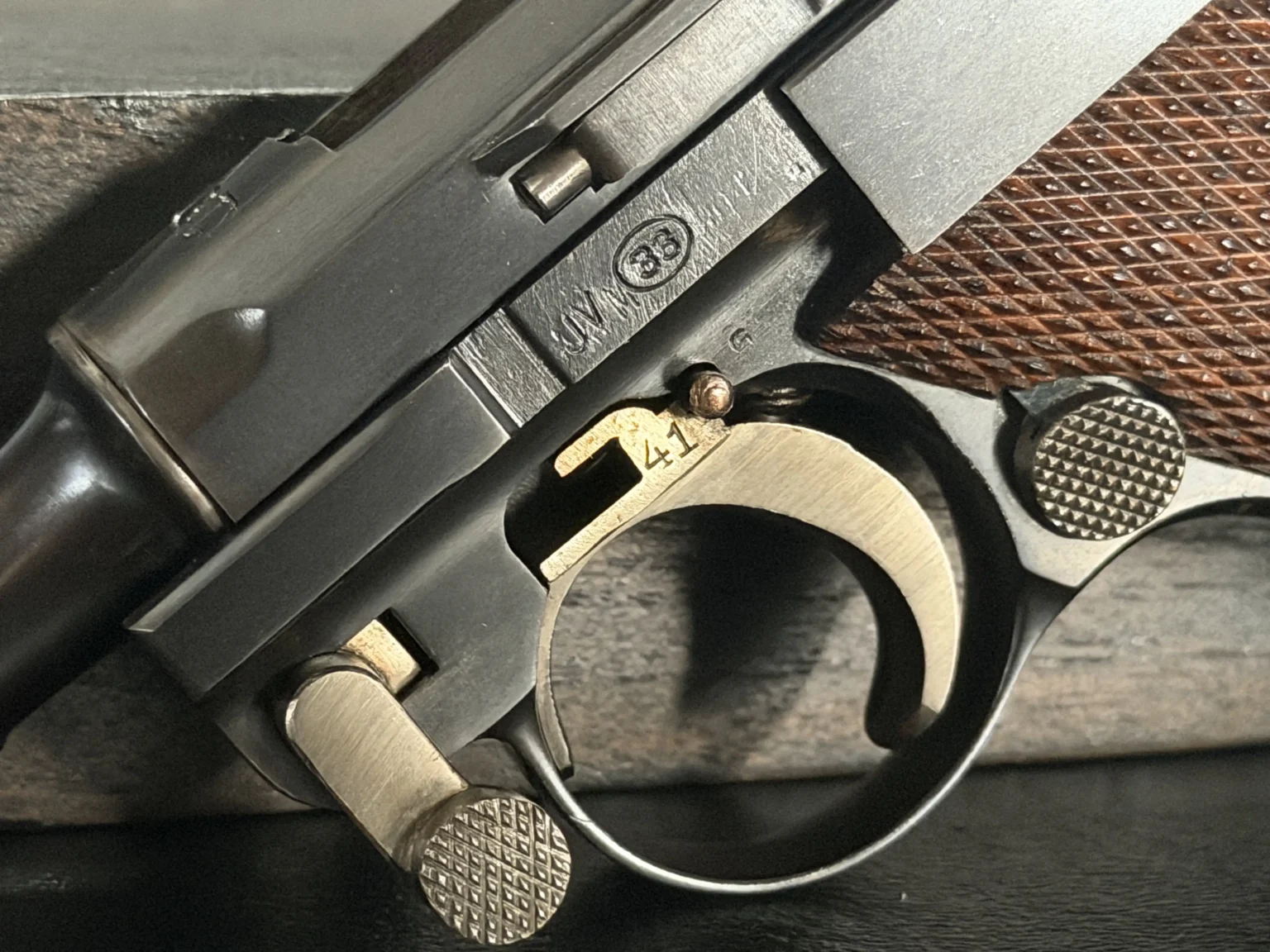
Import marks matter because collectors value originality. A later commercial marking can interrupt a firearm’s original appearance and identify an additional stage in its history. Its effect, however, must be judged firearm by firearm.
The Gun Control Act of 1968 established federal controls over the importation of firearms and required licensed importers to identify imported firearms by serial number in the manner prescribed by federal regulation.[1] Consequently, the presence of a documented commercial importer’s mark is relevant when evaluating when and how a foreign firearm entered the United States.
An import mark can undermine a claim that a firearm was brought home by a servicemember and remained continuously in the same American family. It does not necessarily disprove every possible wartime association. A firearm could have had an earlier military history, later left the United States, and subsequently returned through commercial channels. The mark establishes a later chapter; it does not reconstruct the entire chain of custody.
The absence of an import mark proves even less. It does not establish that a firearm was captured in combat or brought home by a veteran. The gun may have entered the country before the 1968 law, and an undocumented seller’s account cannot fill the evidentiary gap. A credible bring-back attribution requires records connecting the specific firearm, preferably by serial number, to the servicemember and the claimed event.
Import marks may also affect market value, but there is no reliable universal discount. Collector response depends on the firearm’s rarity, condition, originality, and the mark’s size and placement. Research on British Lend-Lease M1 Garands provides a documented example: some collectors preferred unmarked rifles in average condition to better-preserved rifles bearing conspicuous British commercial proofs, which were perceived as defacements comparable to later import marks.[2] That example demonstrates a market preference, not a percentage applicable to every firearm.
Claims that an import mark automatically reduces value by 10 or 20 percent should therefore be rejected unless supported by comparable sales of the same model and variant. A common surplus firearm and a scarce, high-condition military pistol do not respond to the same valuation formula.
Collectors should photograph and transcribe every marking before purchase, distinguish original factory and military marks from later additions, and test the seller’s provenance against period documentation. Value should be determined from comparable sales involving firearms of similar configuration, condition, originality, and marking status.
An import mark is neither automatically disqualifying nor financially irrelevant. It is physical evidence that must be incorporated into the firearm’s history and valuation. What it should never be is the basis for an unsupported formula, or ignored in favor of a better story.
Frequently Asked Questions
It provides evidence that the firearm passed through commercial importation. It does not establish the firearm’s complete history.
No. Its effect depends on the firearm’s rarity, condition, originality, and the mark’s appearance and placement.
No universal percentage is supported. Any adjustment should be based on comparable sales of the same model and variant.
No. A credible bring-back claim requires documentation connecting the specific firearm to the servicemember and asserted history.
Yes. The firearm may have had an earlier military history before subsequently entering the United States through commercial channels.
Sources
- U.S. Congress, Gun Control Act of 1968, Public Law 90-618, October 22, 1968.
- Bruce N. Canfield, “Garands in the King’s Service,” American Rifleman.

One Response
Good article! Timing couldn’t have been better. I was just explaining this to a young man just entering the collectible firearms market. I am sharing this with him!