
- Age alone does not establish a rifle’s rarity, originality or historical importance.
- Factory records may confirm original specifications, but they do not prove later ownership or use.
- “Antique firearm” and “curio or relic” are separate federal classifications with different criteria.
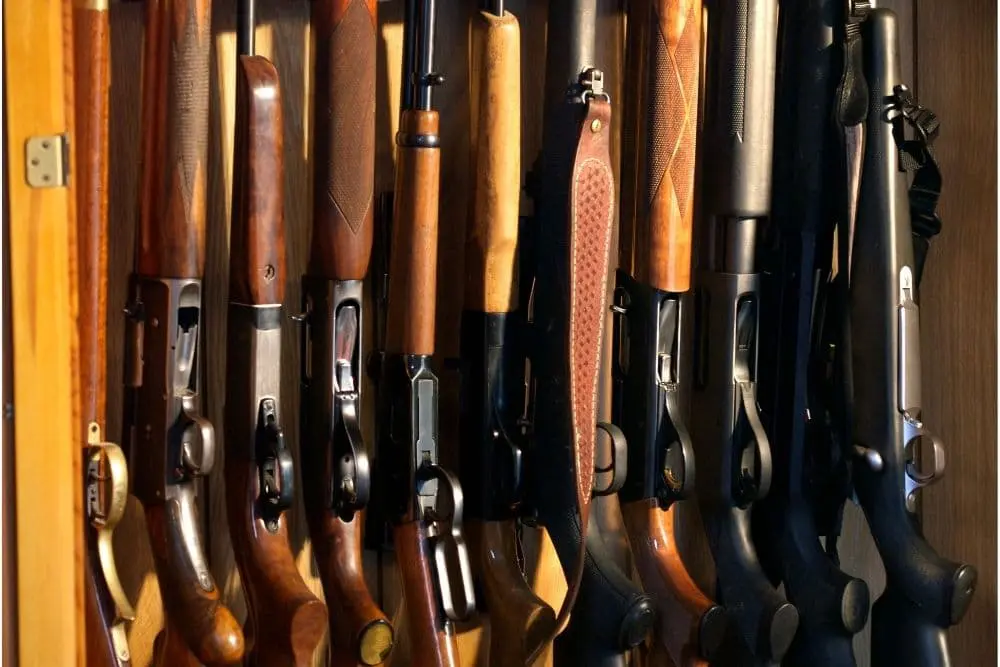
A collectible rifle is not important merely because it is old. Its significance depends on evidence: who manufactured it, when it was produced, whether its present configuration is historically correct, and whether any claimed ownership or use can be documented.
Rarity, condition, originality, and provenance all matter, but none should be evaluated in isolation. A scarce variant may have limited collector appeal if it has been extensively altered. A more common rifle may become historically important when reliable records connect it to a particular person, organization, or event.
Establishing Rarity
Production quantity is only one measure of rarity. Collectors must also consider manufacturer, production period, configuration, and the number of surviving examples.
A widely produced rifle can include scarce variations distinguished by caliber, barrel length, stock design, sights, markings, finish, or contract specifications. Conversely, a low production figure does not automatically make a rifle desirable or historically significant.
Production and serial-number references must also be interpreted carefully. The National Park Service describes its published M1903 serial-number ranges as approximate and instructs researchers to identify the manufacturer before using those ranges.[1] That distinction matters because Springfield Armory, Rock Island Arsenal, Remington Arms, and Smith-Corona produced rifles within the M1903 family at different times.[1]
Claims that a rifle is “one of only a few known” require credible documentation. Without reliable production records, surviving-firearm surveys, or recognized archival research, such statements should be treated as unverified.
Evaluating Condition and Originality
Condition involves more than outward appearance. An informed examination considers the bore, metal surfaces, stock, markings, finish, mechanical components, and evidence of corrosion or damage. It should also identify refinishing, sanding, replacement parts, modern repairs, and alterations.
Originality is model-specific. A component may be correct for a particular rifle type without being original to the individual firearm. Replacement parts installed during documented military maintenance may also be historically legitimate, even though they differ from the components fitted when the rifle was manufactured.
The M1903 demonstrates why this distinction matters. Springfield Armory began producing the rifle in 1903, and the design underwent numerous changes during its service life. The armory produced more than one million M1903 rifles through 1936, while Rock Island Arsenal manufactured approximately another third of a million.[2] Later M1903-family production included rifles made by Remington and Smith-Corona.[1]
Accordingly, a proper M1903 evaluation must consider the manufacturer, serial range, production period, and specific variation. There is no single configuration against which every surviving M1903 can be judged.
The same caution applies to “matching-number” claims. Manufacturers did not number the same components in the same manner, and practices could change during production. Before treating matching numbers as proof of originality, a collector must determine which parts were originally numbered and whether the markings are consistent in style, placement, and application.
Provenance Must Be Documented
Provenance is the documented history of a rifle’s ownership or use. Strong evidence may include factory records, government documents, military inventories, dated correspondence, photographs, bills of sale, or records from established collections.
An inherited story may offer a useful research lead, but it does not by itself prove that a rifle belonged to a particular soldier, lawman, public figure, or military unit. Wear, initials, rack numbers, and informal inscriptions are likewise not self-authenticating.
Factory documentation can sometimes confirm a firearm’s original configuration or shipping history. The Cody Firearms Records Office holds surviving records for manufacturers including Winchester, Marlin, Savage, A.H. Fox, L.C. Smith, Ithaca, and Lefever. Available Winchester records may identify caliber, barrel type, trigger configuration, special-order features, and shipping information, although the surviving information varies by model and serial number.[3]
A factory letter has defined limits. It may establish what company records say about a firearm when it was manufactured or shipped, but it does not prove every later claim about ownership, use, or modification. A credible provenance file preserves the original records and distinguishes documented facts from seller statements and family tradition.
Historically Significant Collecting Fields
Some rifle models attract sustained interest because their histories involve military service, industrial development, technological change, or the expansion of commercial firearms manufacturing.
Winchester Model 1873
The Winchester Model 1873 occupies a prominent place in the history and popular imagery of the American West. The familiar description “the gun that won the West,” however, should be understood as a promotional slogan, not evidence that an individual rifle saw frontier use.
Surviving Winchester ledgers provide configuration information for many firearms manufactured from 1873 to approximately 1906. Depending on the available record, researchers may be able to confirm features such as caliber, barrel type, trigger, and special-order configuration.[3]
Those records make the Model 1873 a productive subject for archival research, but they do not establish the later ownership or use of every rifle. A claimed association with a rancher, lawman, outlaw, or historical event still requires independent evidence.
U.S. Model 1903 Springfield
The U.S. Army developed the M1903 after evaluating shortcomings encountered during the Spanish-American War. Its design incorporated an action based substantially on the Mauser system. The adopted rifle used a 24-inch barrel, allowing a common pattern to serve infantry and cavalry requirements.[2]
Its long manufacturing history produced numerous variations. Changes in heat treatment, materials, sights, stocks, and other components make serial-range and manufacturer research essential.[1] Military rebuilds further complicate efforts to determine whether a surviving rifle remains in its factory configuration.
M1 Rifle
The M1 also presents a broad and technically demanding collecting field. The National Park Service identifies the M1 as a .30-caliber U.S. semiautomatic service rifle in the Springfield Armory collection.[4]
As with other military arms, individual M1 rifles may contain components replaced during maintenance or rebuilding. A mixture of parts does not, by itself, prove improper civilian alteration. Determining when and why those parts were installed requires examination of their markings, production periods, and any surviving documentation.
A Disciplined Research Process
Before purchasing a collectible rifle, record its complete serial number, manufacturer’s markings, caliber designation, proof and inspection marks, and physical configuration. Obtain clear photographs of the receiver, barrel markings, sights, stock, buttplate, and any numbered components.
Compare the rifle with factory records, government production information, period manuals, catalogs, and documented museum examples. Determine whether its components and markings are consistent with its manufacturer, serial range, and production period.
Claims of rarity, originality, or historical ownership should be verified independently. A seller’s description can identify matters requiring further investigation, but it should not be treated as conclusive evidence.
Original documentation should remain with the rifle’s permanent record. Factory letters, invoices, correspondence, earlier catalog descriptions, and photographs can preserve information that may otherwise disappear when ownership changes.
Federal Classifications
Collectors must distinguish between an “antique firearm” and a “curio or relic.” These are separate federal classifications.
Under 27 C.F.R. § 478.11, the federal definition of an antique firearm generally includes firearms manufactured in or before 1898, along with specified replicas and muzzleloading firearms.[5] The definition contains qualifications, so the date alone should not be applied without reviewing the complete regulation.
Federal regulations define curios or relics as firearms of special interest to collectors because of qualities beyond their intended sporting, defensive, or offensive use. A firearm may qualify if it was manufactured at least 50 years before the current date, excluding replicas; if an appropriate museum curator certifies it as being of museum interest; or if rarity, novelty, unusual character, or historical association accounts for a substantial part of its value.[6]
Curio-or-relic status does not mean that a firearm is legally equivalent to an antique firearm. Collectors should identify the correct classification before acquiring, transferring, shipping, or disposing of a rifle.
Collecting historically significant rifles is ultimately a practice of evidence-based judgment. The strongest collections are built around firearms whose identity, configuration, condition, and history have been researched carefully, and described without exaggeration.
Frequently Asked Questions
Collectibility generally depends on rarity, condition, originality, documented provenance, and historical significance. These factors must be evaluated together.
No. Rarity depends on production, configuration, and the number of comparable examples known to survive.
Provenance is the documented history of a firearm’s ownership or use. Family stories and seller claims are not proof without supporting records.
Usually not. It may confirm original configuration or shipping information, but later ownership requires separate documentation.
No. They are separate federal classifications, and collectors should review the applicable legal definition before a transaction.
Sources
- Springfield Armory National Historic Site, National Park Service, “U.S. Springfield Model 1903 Production.”
- Springfield Armory National Historic Site, National Park Service, “The 1903 Springfield Rifle.”
- Cody Firearms Records Office, Buffalo Bill Center of the West, “Winchester Factory Records.”
- Springfield Armory National Historic Site, National Park Service, “The Federal Armories.”
- Bureau of Alcohol, Tobacco, Firearms and Explosives, “27 C.F.R. § 478.11—Meaning of Terms.”
- Bureau of Alcohol, Tobacco, Firearms and Explosives, “Questions and Answers: Curios or Relics.”