
Three key takeaways
- Document the exact edition and its original case and accessories. [1][2]
- Evaluate certificates by their wording and connection to the individual pistol. [3]
- Support ownership claims with records identifying the specific firearm. [3]
Kimber’s 2024 45th Anniversary 1911 was specified with a certificate of authenticity, a Negrini custom case, an anniversary coin, and two eight-round TAC-MAG magazines. These items belong in a description of the edition’s original package. [1]
Identifying the Edition
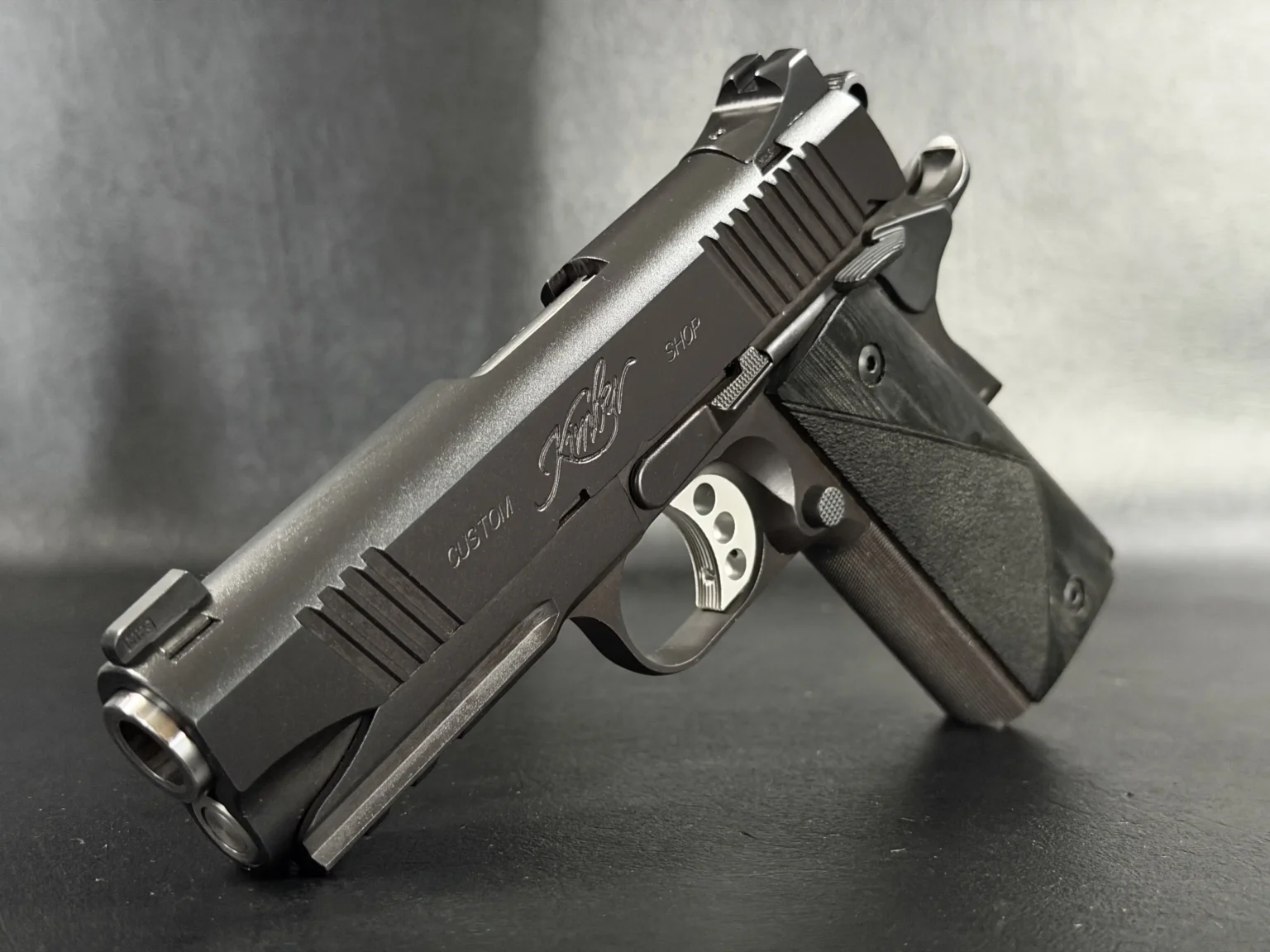
Kimber describes the 45th Anniversary as Raptor-based, with distressed bluing, black buffalo horn grips and “45th Anniversary Edition” slide engraving. The factory lists product number 3700841 and a production limit of 2,024 units. [1] The slide also carries the anniversary dates 1979 and 2024. [2]
A collection record should preserve the full edition name and product number alongside the individual pistol’s serial number. The factory’s stated limit should be recorded as an edition ceiling, without turning it into a claim about how many examples survive or retain their original contents.
Documenting the Original Package
Kimber’s earlier 1911 Centennial Edition had a different presentation package. A September 2010 description identified a Government-size .45 ACP pistol with a color case-hardened frame and charcoal-blue slide. Its fitted case combined wood and leather, with a brass plate, maker’s label and green velvet interior. The announced edition limit was 250 pistols. [3]
A useful inventory identifies the case and records its contents individually. For a 45th Anniversary example, the comparison begins with Kimber’s specified certificate, coin and two magazines. [1] Photographs of the case, labels, and accompanying documents should sit alongside photographs of the pistol and its identifying markings.
Certificates and Ownership History
The certificate deserves a precise description: its issuer, the edition named, the statement being certified and any identifying number actually printed on it. Any serial number on the document should agree with the pistol. Historical attribution depends on connecting the paperwork to the particular firearm, usually through its serial number or distinctive identifying features. [4]
An edition certificate should be evaluated within the scope of its wording. Previous ownership requires documents linking that firearm to the people named in its history. Dated records supporting successive transfers establish connections that an edition name alone cannot supply. [4]
A historical factory letter based on original factory records may identify the shipped configuration, shipment date, and original purchaser, often a distributor. [4]
Frequently Asked Questions
Kimber specified a certificate of authenticity, a Negrini custom case, an anniversary coin and two eight-round TAC-MAG magazines.
Kimber specified a limit of 2,024 units. That announced ceiling should not be treated as a count of surviving examples or complete sets.
The fitted case combined wood and leather, with a brass plate, maker’s label and green velvet interior.
A certificate should be evaluated according to its wording and connection to the pistol. Ownership claims require records linking that individual firearm to the named owner.
Record the full edition name, product number, serial number, case, accessories and certificate details. Keep dated ownership records with the original materials.
Sources
[1] Kimber. “45th Anniversary.” Kimber, n.d.
[2] Sagi, Guy J. “Kimber America’s 45th Anniversary.” Shooting Illustrated, September 5, 2024.
[3] Sweeney, Patrick. “Kimber Centennial Edition 1911.” Handguns, September 24, 2010.
[4] Supica, Jim. “Pieces of History: A system for evaluating historically attributed firearms.” NRA Museums, n.d.