

Key Takeaways:
- Serial numbers tell a story, but only if you ask the right questions: A serial number by itself doesn’t magically reveal everything about a firearm. It’s a starting point, not a conclusion. To get meaningful answers, you need to know the manufacturer, the model, and the context in which that numbering system was used. Colt, Smith & Wesson, and Winchester all handled serialization differently, often restarting sequences, adding prefixes or suffixes, or overlapping numbers across models. The real value lies in understanding how those systems evolved and knowing when a serial number provides an estimate and when it can be backed up with archival evidence.
- Approximate dates are expected; certainty comes from factory records. Most serial number lookups provide educated ranges rather than exact dates. That’s not a flaw; it’s simply the reality of historical manufacturing and record-keeping. Reference books, online databases, and collector forums are excellent tools for narrowing down timeframes. Still, when precision matters, authentication, insurance, resale, or serious provenance, the only proper authority is a factory or archival letter. Shipment dates, configuration details, and special orders often exist only in original records, and those documents are what separate informed estimates from documented history.
- Good documentation preserves both history and value: Serial number research doesn’t end once you find a date. The real payoff comes from documenting what you learn, factory letters, photos, notes, correspondence, and reference sources, then keeping that information organized and accessible. A firearm with clear documentation carries greater historical weight, credibility, and often greater monetary value than one without it. For collectors, that paperwork isn’t just admin work; it’s part of preserving the firearm’s story so it doesn’t get lost when the gun changes hands or generations.
Have you ever picked up an old firearm at an estate sale or gun show and wondered about its story? Where it’s been, who carried it, maybe even what year it rolled off the production line? That’s where serial numbers come in, and honestly, they’re like tiny time capsules stamped right into the metal.
For collectors of classic American firearms, especially pieces from Colt, Smith & Wesson, and Winchester, serial number lookups aren’t just some bureaucratic exercise. They’re the key to understanding what you’ve actually got in your hands. Is that Colt Single Action Army from the Wild West era or a later production run? Was your Smith & Wesson revolver made during the company’s golden years? These questions matter, both for historical significance and, let’s be real, for valuation purposes.
Why Serial Numbers Are More Than Just Numbers
Here’s the thing about firearms’ serial numbers: they weren’t always standard practice. Early American gunmakers didn’t see much need for them. But as production ramped up during the 19th century, manufacturers realized they needed a system to track inventory, handle warranty claims, and maintain accurate production records.
What started as an internal bookkeeping tool became invaluable to modern collectors. Serial numbers let us date firearms with reasonable accuracy, verify originality, and sometimes even trace fascinating historical connections. I’ve met collectors who discovered their Winchester rifle was shipped to a specific Army fort or that their Colt was part of a commercial order that went overseas. That kind of information transforms a firearm from a mechanical object into a tangible piece of history.
The challenge? Each manufacturer developed their own system. Colt did things differently from Smith & Wesson, and Winchester marched to its own drummer entirely. There’s no universal decoder ring, which is why understanding these systems matters.
Colt: When Hartford Made History
Colt Manufacturing has been around since 1836, and their serial number systems are… well, let’s just say they’ve evolved quite a bit over nearly two centuries. Samuel Colt’s original factory in Paterson, New Jersey, used relatively simple numbering before the company reorganized in Hartford, Connecticut.
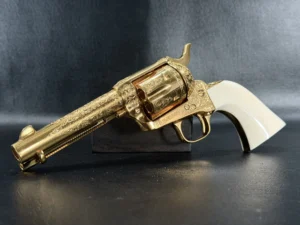
For collectors focusing on classic Colt models, you’re probably dealing with several distinct numbering systems. The Colt Single Action Army, that iconic “Peacemaker” that won the West, has a particularly interesting evolution worth understanding. The original First Generation production ran from 1873 to 1940, using plain numerical serial numbers with no letters. These guns reached serial numbers in the upper 300,000 range by the time production paused, though exact ranges have nuances and exceptions that dedicated reference guides detail.
When production resumed in 1956, Colt introduced what collectors call the Second Generation. These firearms used an “SA” suffix after the number (like 12345SA). Later, the Third Generation shifted to an “SA” prefix format (SA00001). It’s not quite as simple as numbers just picking up where they left off; these generational changes reflect manufacturing restarts and help collectors identify when a particular gun was made.
The thing about Colt is that different models had different serial number ranges, and here’s where it gets tricky: some serial numbers actually appear on multiple gun models. That same number might appear on a different Colt model entirely, so you need to identify the model first before the serial lookup gives you accurate information. It’s not like they just numbered everything consecutively across all models, which would’ve been too easy, right?
Finding Colt Serial Numbers
On most Colt revolvers, you’ll find the serial number on the frame, typically on the bottom of the grip frame or on the side of the frame near the cylinder. Semi-automatic pistols usually have the number on the frame near the slide, often visible when you field strip the gun. Some Colts also have matching numbers on internal parts; the cylinder, barrel, and grip frame may all carry corresponding digits, though only the officially recorded serial number is used for dating and authentication.
To actually look up a Colt serial number, you’ve got several options. Colt maintains an official online serial number lookup service where you can enter your number and get approximate manufacturing details, which is pretty handy for quick reference. For more detailed information, Colt’s customer service can provide archive letters documenting your firearm’s original specifications and delivery information based on their factory records.
Several reference books exist for specific models; R.L. Wilson’s work on Colt firearms is considered the gold standard among collectors. His serialization guides include detailed production ranges matched with manufacturing periods. Online databases help, too, though you should cross-reference information when possible. Sites dedicated to Colt firearms often have user-contributed data that fills gaps in official records. Gun forums can be surprisingly helpful; veteran collectors who’ve spent decades studying specific models often share their knowledge freely.
Smith & Wesson: Tracking Springfield’s Legacy
Smith & Wesson, founded in 1852, takes a slightly different approach to serial numbers. They’ve generally used model-specific numbering, at least compared to Colt’s maze of overlapping sequences. But “straightforward” is relative when you’re talking about a company with over 170 years of production history.
Early Smith & Wesson revolvers used sequential numbering by model. Their first model, the Model 1, started at number 1 (naturally) in 1857. As new models were introduced, they’d start new serial number sequences. The famous Model 10, the Military & Police revolver that became a law enforcement staple, began its numbering in 1899.
What makes Smith & Wesson interesting is its use of prefixes and suffixes, which began in the 1940s and became more common later. You might see something like “C123456” or “123456S.” These letter codes help identify model variations, production plants, or special orders. Post-1968, when the Gun Control Act mandated better federal record-keeping requirements, documentation improved industry-wide, though collectors still often rely on compiled serial number lists from private research rather than a single comprehensive official table.
Decoding Smith & Wesson Numbers
You’ll typically find the serial number on a Smith & Wesson revolver on the bottom of the grip frame, visible when you open the cylinder or remove the grips. On their semi-automatic pistols, check the frame near the slide or on the side. There are rare exceptions to these locations depending on the model and era, but these are the standard spots.
Smith & Wesson actually maintains excellent customer service resources for serial number inquiries through the Smith & Wesson Historical Foundation. You can contact them directly, and for a fee, they’ll send you a historical letter documenting your firearm’s production details and original configuration. This is incredibly useful for insurance purposes and authentication. It’s about as official as documentation gets, and when precise dating matters, say, for a valuable collector piece, these letters provide authoritative verification rather than estimates.
Reference books on Smith & Wesson exist, too. Roy Jinks’ “History of Smith & Wesson” includes extensive information on serial numbers. Supica and Nahas wrote the “Standard Catalog of Smith & Wesson,” which is another essential reference. These books aren’t cheap, but serious collectors consider them worthwhile investments. Keep in mind that even with these resources, definitive dates usually require archival research or factory letters, since there’s no single published table covering every model and variation across the company’s entire history.
The Smith & Wesson forum community is also remarkably helpful. Enthusiasts there have compiled supplementary data that extends beyond published references. Just remember to verify information when dealing with valuable firearms.
Winchester: The Gun That Won the West
Winchester Repeating Arms Company, established in 1866, gave us some of the most iconic American rifles ever made. The Winchester Model 1873, Model 1892, and Model 1894 are highly sought after in collecting circles. Their serial numbering reflects the company’s long, sometimes complicated history.
Winchester used model-specific serial number sequences, similar to Colt’s approach. When they introduced the Model 1866, it started at serial number 1. The Model 1873 began its own sequence at 1 in 1873. This pattern continued with each major model introduction. Production numbers for popular models like the 1894 reached into the millions, while limited-production models might only have a few thousand units.
The Winchester factory in New Haven, Connecticut, kept detailed records, many of which survived the company’s various ownership changes. That’s good news for collectors, though accessing that information requires knowing where to look.
Winchester Serial Number Resources
Winchester rifles typically display their serial numbers on the lower tang (the metal below the lever) or on the receiver. Location varies by model, so you might need to check multiple spots. Some models also have assembly numbers on parts that should match the main serial number.
The Cody Firearms Records Office at the Buffalo Bill Center of the West in Cody, Wyoming, houses the original Winchester factory records. For a fee, they’ll research your firearm and provide a factory letter detailing its original specifications, manufacturing date, and sometimes even the shipping address. These letters are considered authoritative documentation in the collecting world and provide verified information rather than approximations.
George Madis wrote several books on Winchester firearms, including comprehensive serial number listings and production data. “The Winchester Book” is particularly useful. More recently, the “Winchester Dates of Manufacture” guides provide quick-reference tables for dating various models, though completeness varies across models and production periods.
Online resources have expanded significantly as well. Several websites maintain Winchester serial number databases, though the quality varies. The Winchester Collector forum is active and knowledgeable, with members who’ve studied specific models for decades.
Practical Tips for Serial Number Research
Let me share some lessons learned from years of helping folks research their firearms. First, write down everything you see. The serial number itself, obviously, but also any proof marks, inspector stamps, or other markings. Take clear photos from multiple angles. This documentation helps when consulting experts or posting questions online.
Second, be patient with official sources. Companies like Colt, Smith & Wesson, and the Cody Firearms Records Office provide excellent information, but they’re dealing with historical records that weren’t always perfectly maintained. Sometimes records are incomplete or ambiguous. That’s frustrating but not uncommon with firearms manufactured 50, 100, or even 150 years ago.
Third, cross-reference multiple sources when possible. If one reference book says your Colt was made in 1885 and another says 1887, look for additional data points. Check barrel markings, examine the finish and wear patterns, and research when specific features were introduced or discontinued. Building a case from multiple pieces of evidence gives you more confidence in your conclusion. Remember, too, that the manufacturing date and shipment date aren’t always the same; a gun made in December might not ship until January of the following year, which can create confusion when you’re trying to nail down exact dates.
Understanding Approximations and Certainty
Here’s something important to understand: without an official factory letter or archival documentation, most serial-number dating provides only an approximate timeframe, not an exact date. Reference books and online databases compile known serial ranges and estimate where your gun falls, but there are gaps, exceptions, and variations. That’s perfectly normal and doesn’t diminish the value of the research; it just means you should be honest about the level of certainty when discussing or documenting your firearm.
For casual collecting, approximate dates work fine. For serious authentication or high-value transactions, invest in official documentation. The cost of a factory letter is minimal compared to the peace of mind and accurate information you receive.
Watch Out for These Common Issues
Serial numbers can be difficult to read on old firearms. Wear, rust, and refinishing can obscure digits. Sometimes you’re squinting at a number, trying to decide whether it’s a “3” or an “8.” Good lighting and magnification help. If you’re really stuck, carefully rubbing chalk or crayon over the stamped area, then wiping it clean, can make worn numbers more visible (test on an inconspicuous spot first).
Unfortunately, altered or fake serial numbers exist. If you’re considering a valuable purchase, have an expert examine the gun in person. They can spot signs of tampering that photos don’t reveal. Numbers that look freshly stamped on an otherwise aged gun should raise questions. Mismatched numbers on parts that should match are another red flag.
Some firearms had their serial numbers removed or altered by previous owners for various reasons. In the U.S., removing or altering serial numbers on firearms is illegal under federal law, and possessing such a firearm can create serious legal problems even if you weren’t involved in the alteration. If you encounter a firearm without visible serial numbers, consult an attorney before proceeding.
Beyond Just the Date: What Serial Numbers Reveal
Dating your firearm is just the starting point. Serial number research can uncover surprising details. Military contract guns often have documentation showing which units received them. Police department trade-ins sometimes have records connecting them to specific agencies. High serial numbers in a limited production run might indicate your gun was among the last made before the model was discontinued.
Factory letters sometimes reveal special features of a particular order. Maybe your Winchester left the factory with upgraded wood or non-standard sights. That Colt might have been finished in nickel instead of standard bluing. These variations affect both historical interest and market value. Collectors pay premiums for documented special features, but only if you can prove they’re original.
Connection to famous owners or historical events adds immense value, but documentation is crucial. Anyone can claim their Colt once belonged to Wyatt Earp or that their Winchester saw action in the Indian Wars. Research into serial numbers combined with historical records might actually support such claims, but extraordinary claims require extraordinary evidence.
Keeping Your Own Records
Once you’ve researched your firearms, document everything. Keep copies of factory letters, reference materials, and correspondence in a safe place. I recommend a fireproof safe or safety deposit box for particularly valuable documentation. Scan or photograph everything, and keep digital backups as well.
Create a simple inventory spreadsheet listing each firearm with its make, model, serial number, date of manufacture (or approximate range), special features, and the location of its documentation. Add purchase information, insurance values, and photos. This sounds tedious, but if you ever need to file an insurance claim, prove ownership, or value your collection for estate purposes, you’ll be glad you did the work.
Share this information appropriately. If firearms will pass to family members, make sure someone knows where to find your documentation. An unlabeled box of old guns in an estate sale loses much of its historical and monetary value. Proper documentation preserves that value for future generations.
The Joy of Discovery
There’s something deeply satisfying about tracing a firearm’s history. You start with cold metal and stamped numbers, and through research, you uncover a story. Maybe it’s a Colt shipped to a Wells Fargo office in 1882. Perhaps it’s a Smith & Wesson service revolver carried by a police officer for 30 years. Or a Winchester that fed a farming family during the Depression.
These connections to the past matter. They remind us that firearms aren’t just mechanical devices; they’re artifacts that participated in human history. The cowboy era, westward expansion, world wars, law enforcement history, all these narratives live in the firearms that survived.
Serial number research is detective work, really. You’re piecing together clues, consulting experts, and eliminating possibilities until you reach a conclusion. Sometimes the trail goes cold. Records are lost, or they never existed, or you hit a dead end. But even partial information helps place your firearm in its proper historical context.
Where to Go From Here
If you’re new to collecting classic American firearms, start with the major reference books. Invest in good references for whichever manufacturer interests you most. Join online forums and don’t be afraid to ask questions; most collectors love sharing their knowledge with people who show genuine interest.
Handle firearms at gun shows and shops to develop an eye for originality and condition. Ask dealers what they look for when evaluating firearms. Most are happy to explain how they spot restored parts, mismatched finishes, or other issues that affect value.
Consider joining collector organizations. The Colt Collectors Association, Smith & Wesson Collectors Association, and Winchester Arms Collectors Association all provide resources, publications, and networking opportunities. Regional gun collecting shows often feature educational programs and expert panels.
Remember that collecting should be enjoyable. Yes, serial number research can get technical, and authentication can be stressful when significant money is involved. But at its heart, collecting classic firearms is about preserving history and appreciating craftsmanship. Those serial numbers are your gateway to understanding what you own and connecting with the broader story of American firearms manufacturing.
So next time you’re examining an old Colt, Smith & Wesson, or Winchester, take a moment to really look at that serial number. It’s not just an identifier, it’s an invitation to explore history. And that’s what makes collecting these firearms endlessly fascinating.
Frequently Asked Questions
Sometimes, but not always. Most serial number lookups provide an approximate manufacturing range rather than an exact date. Manufacturers didn’t always record production on a day-by-day basis, and in many cases, surviving records track shipment dates rather than when a firearm was actually completed. If you need precise documentation, a factory or archival letter is the only reliable way to get it.
Because they’re often working from different datasets or assumptions, reference books and online databases are built from known serial ranges, observed examples, and partial records. Gaps, overlaps, and exceptions exist, especially with older firearms. When two sources disagree, the correct approach isn’t to pick the answer you like best, but to gather more context: model variations, markings, finish types, and factory features that help narrow the timeframe.
Yes, particularly with Colt. Serial numbers were often reused across different models, meaning the same number can exist on entirely different guns. That’s why identifying the exact model is essential before attempting any lookup. A serial number without a model attached can easily lead to incorrect conclusions.
Usually, but not always. Colt, Smith & Wesson, and Winchester each had typical serial number locations, but exceptions exist depending on model, production era, and design changes. Internal assembly numbers, inspector marks, and partial numbers can also appear on components, which can confuse newer collectors. The legally recognized serial number is the one assigned to the frame or receiver.