

Description
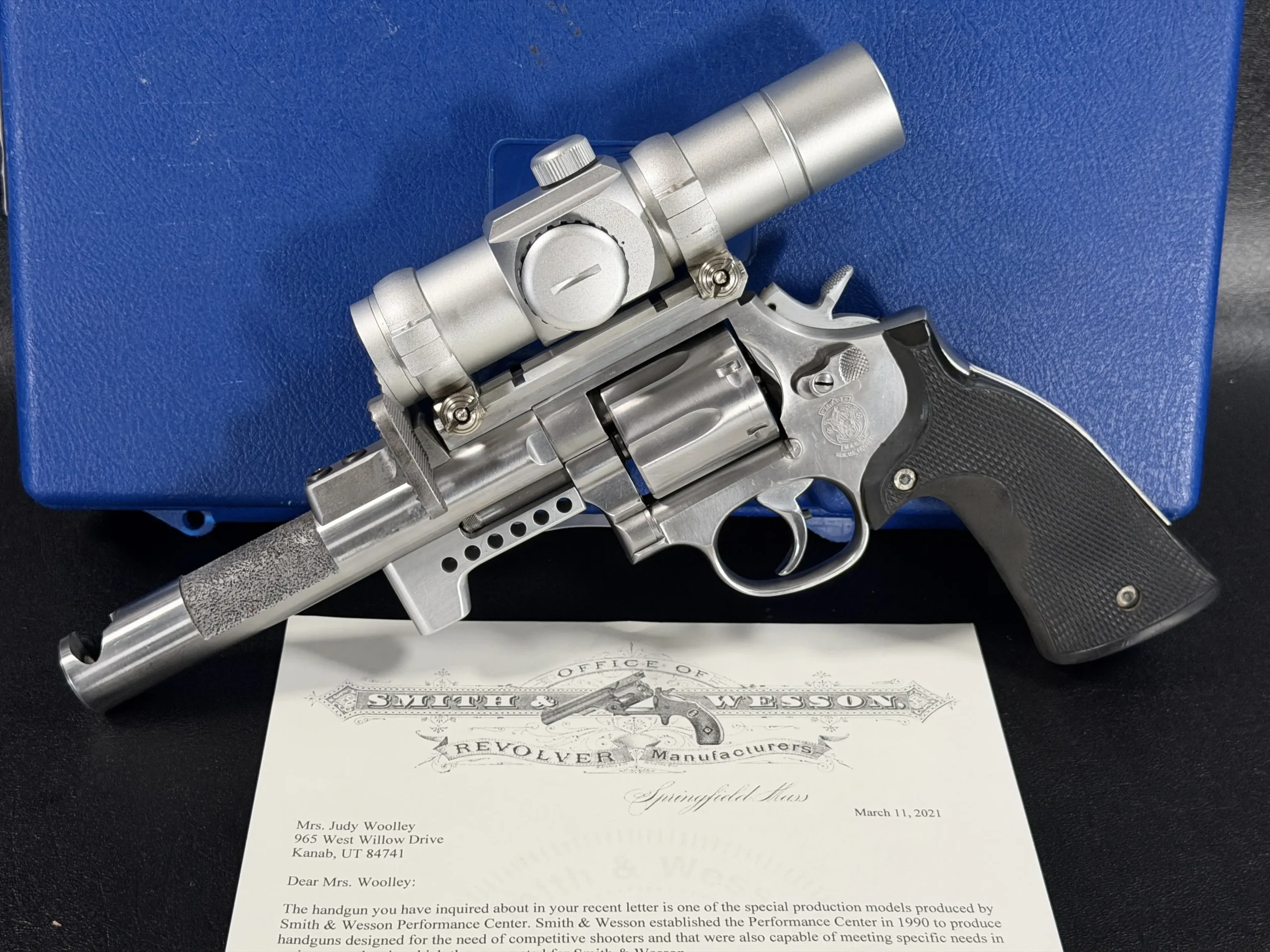
Few firearms illustrate the connection between elite competition and custom engineering as clearly as this extraordinary Smith & Wesson Performance Center prototype revolver, built specifically for champion shooter Judy Woolley. Designed during the early years of the Performance Center, this revolver represents a rare moment in Smith & Wesson history when experimental competition guns were created to meet the demanding requirements of top-level match shooters.
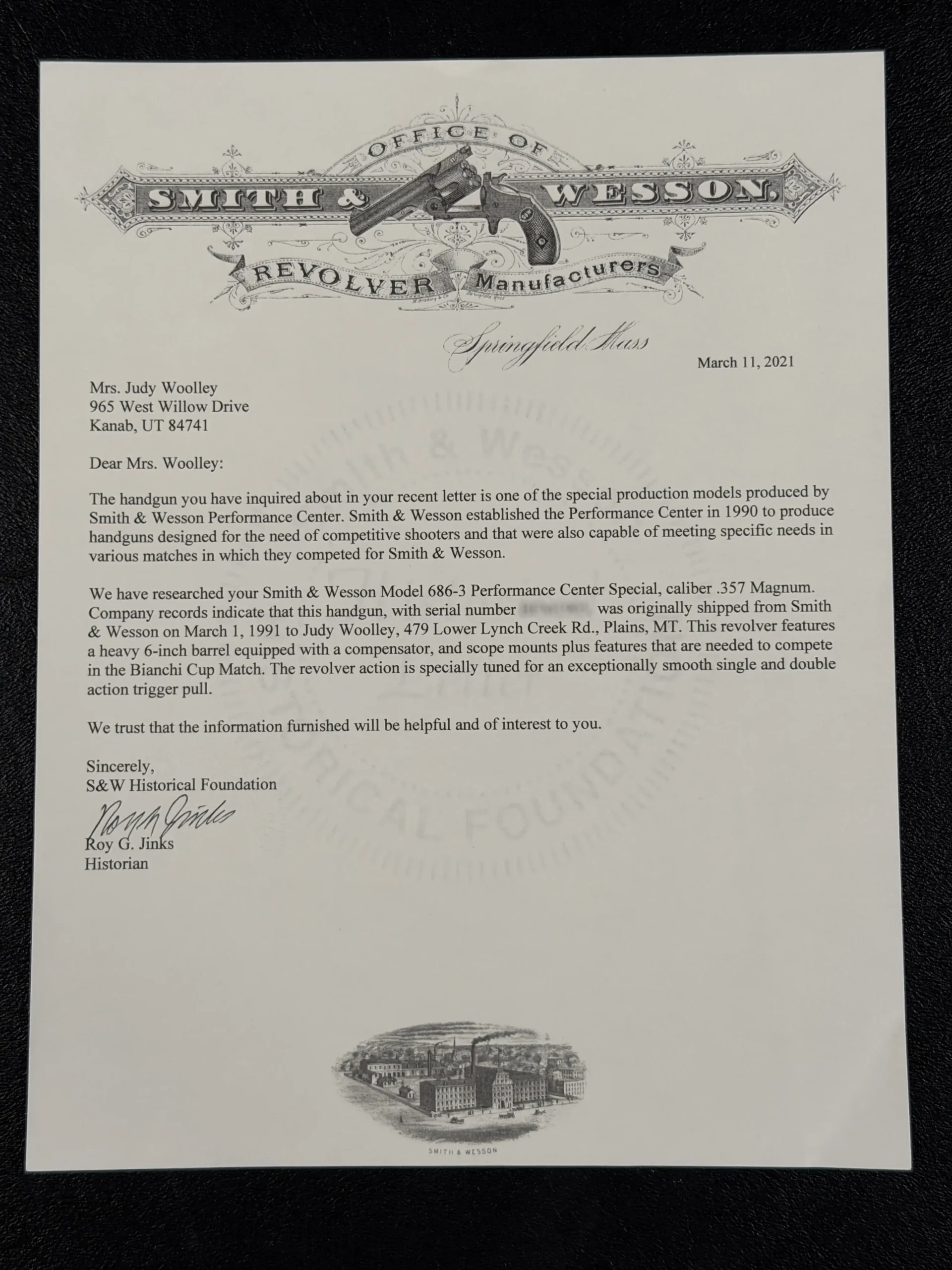
The Smith & Wesson Performance Center, established in 1990, was formed to build specialized firearms that pushed beyond standard production models. These handguns were often tailored to professional competitors whose feedback directly influenced design improvements. This particular revolver was part of that philosophy, engineered as a purpose-built match revolver capable of excelling in demanding competitive environments such as the Bianchi Cup, one of the most prestigious handgun competitions in the world.
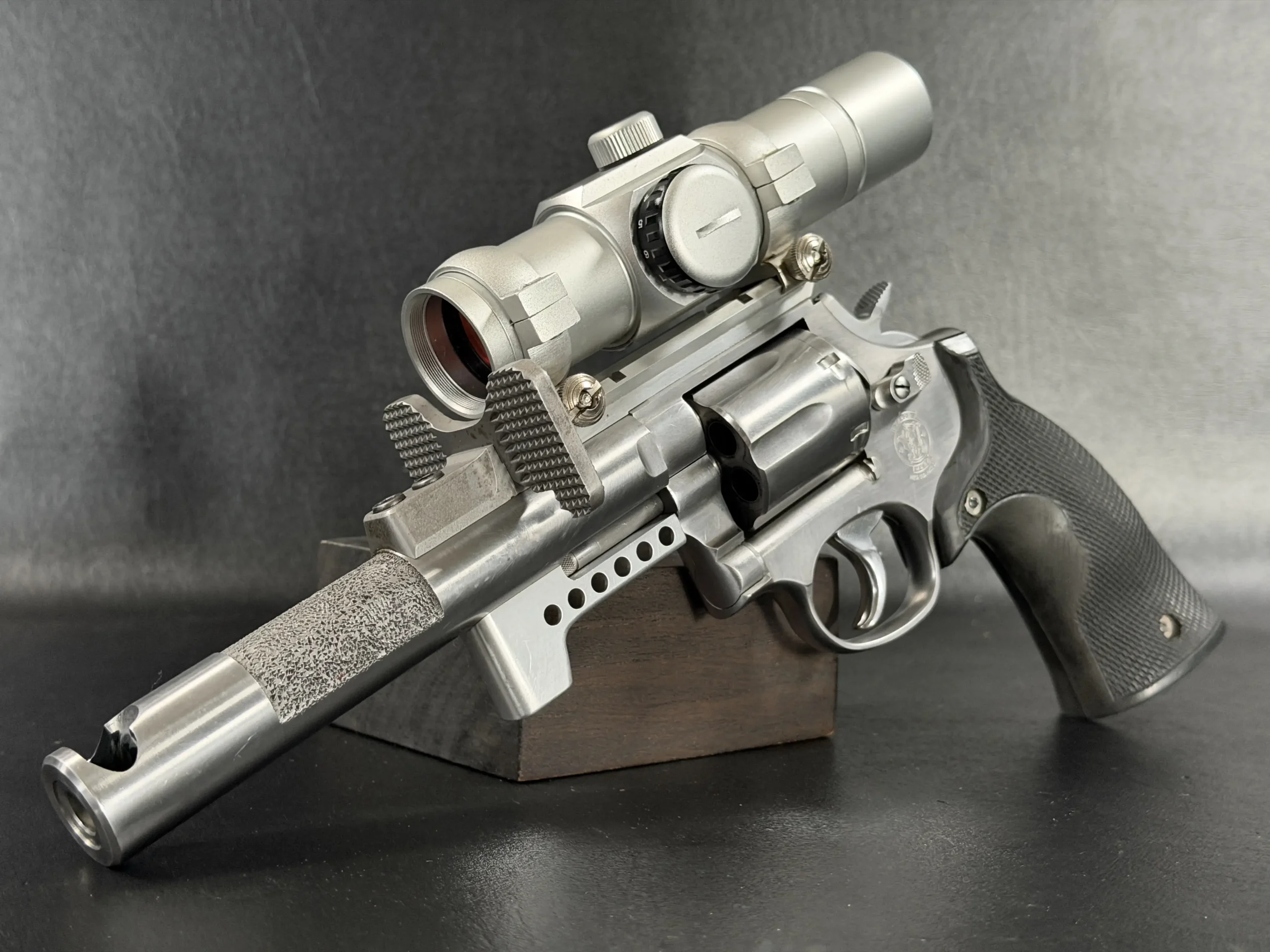
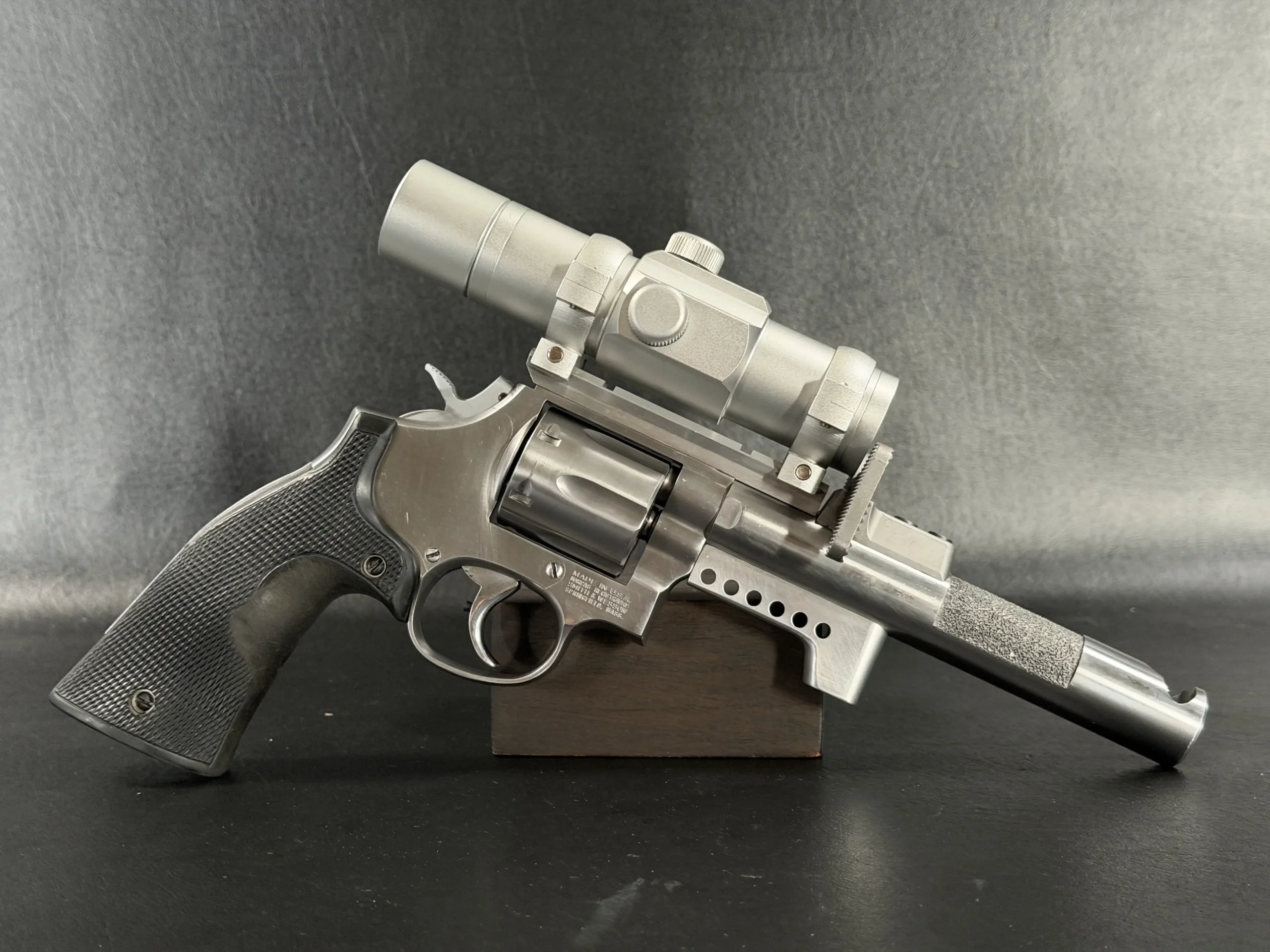
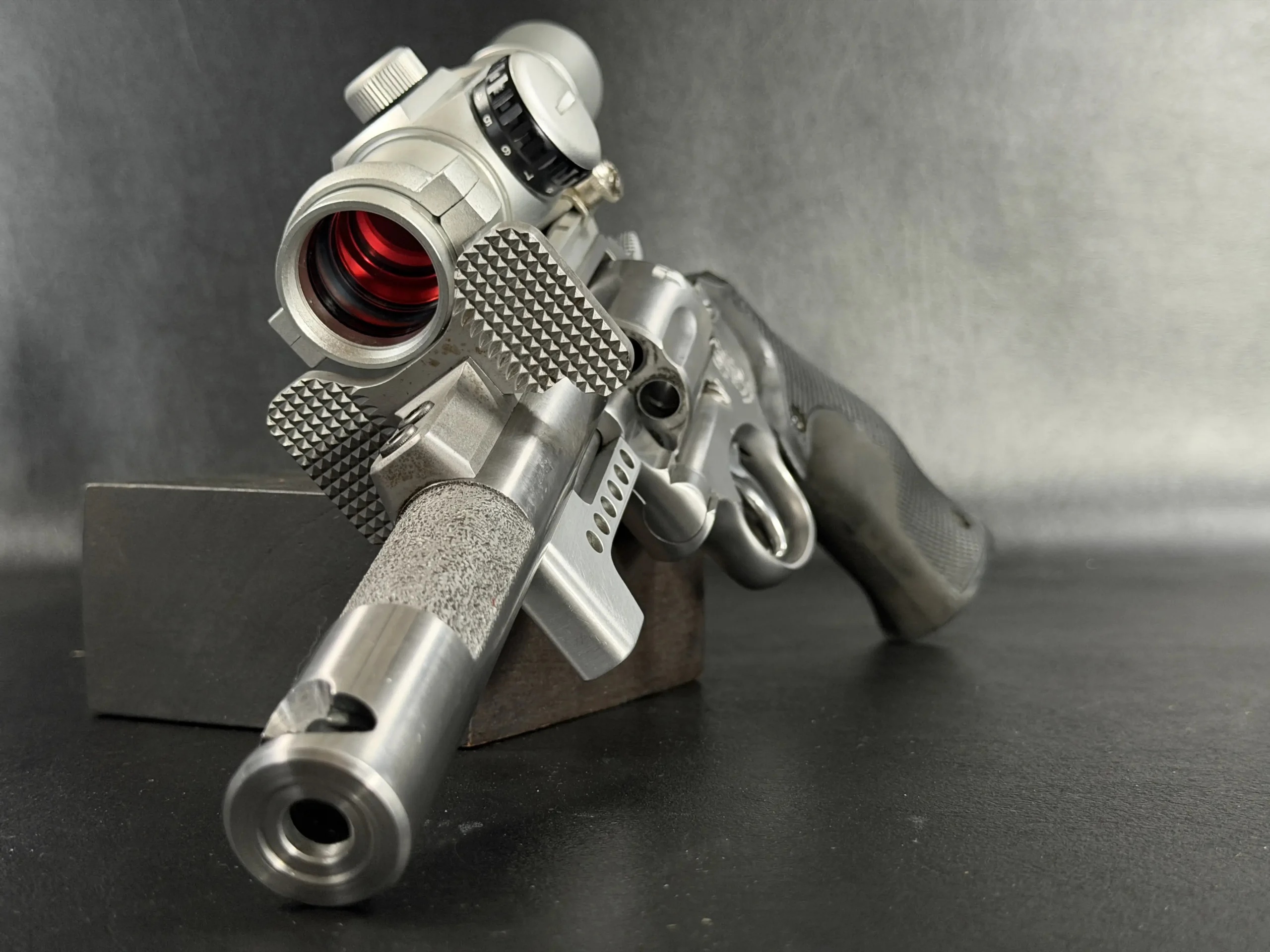
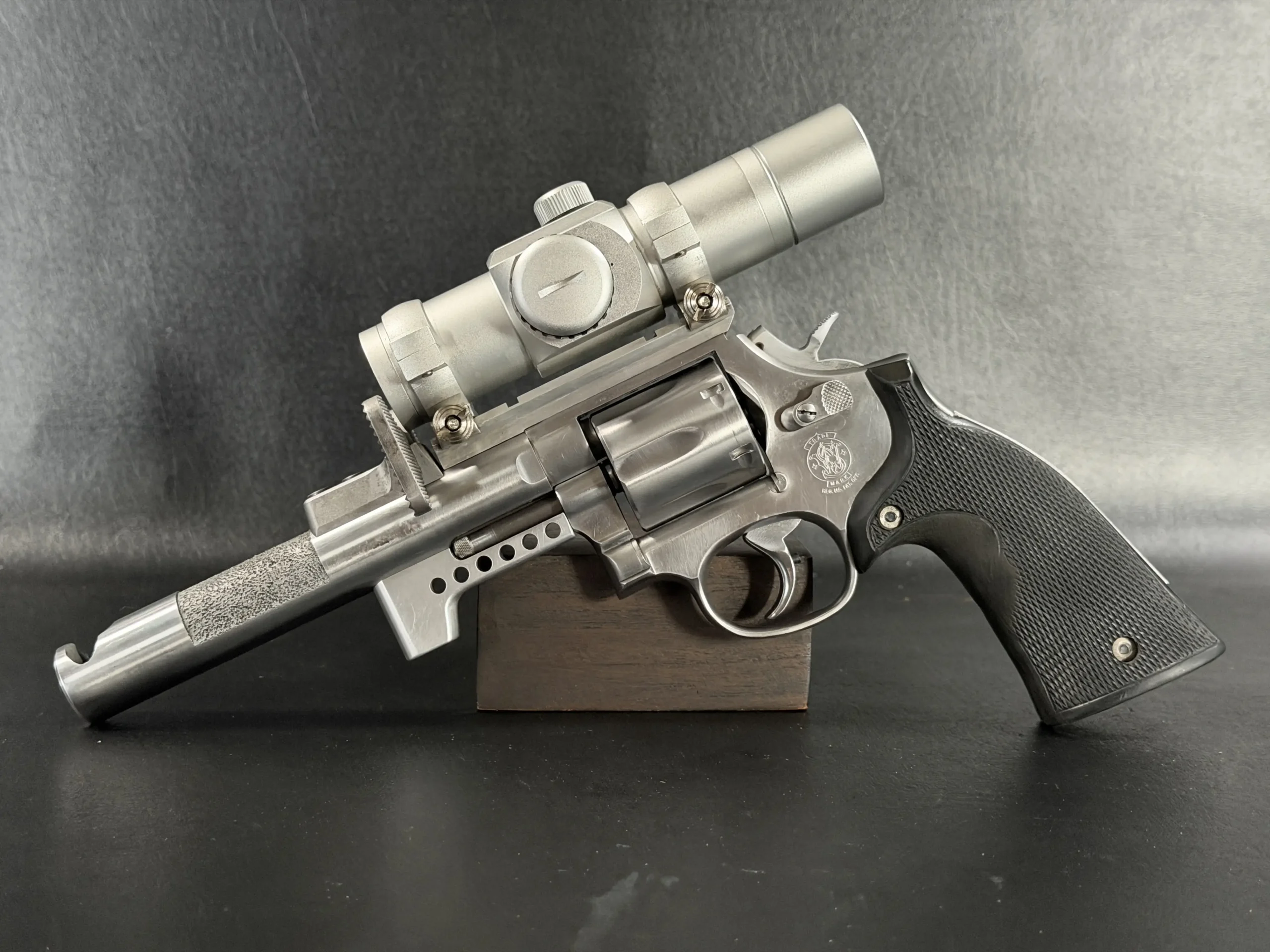
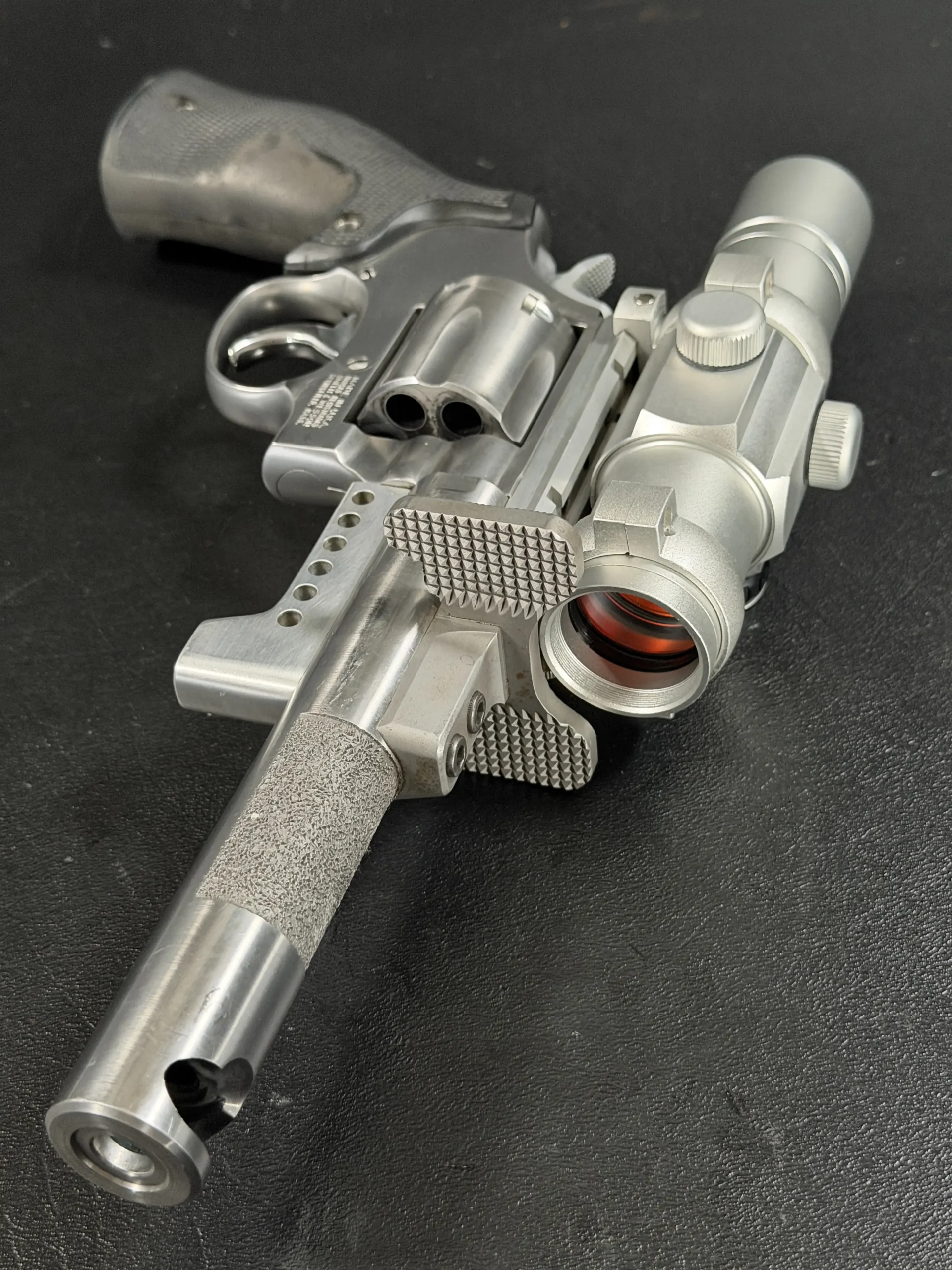
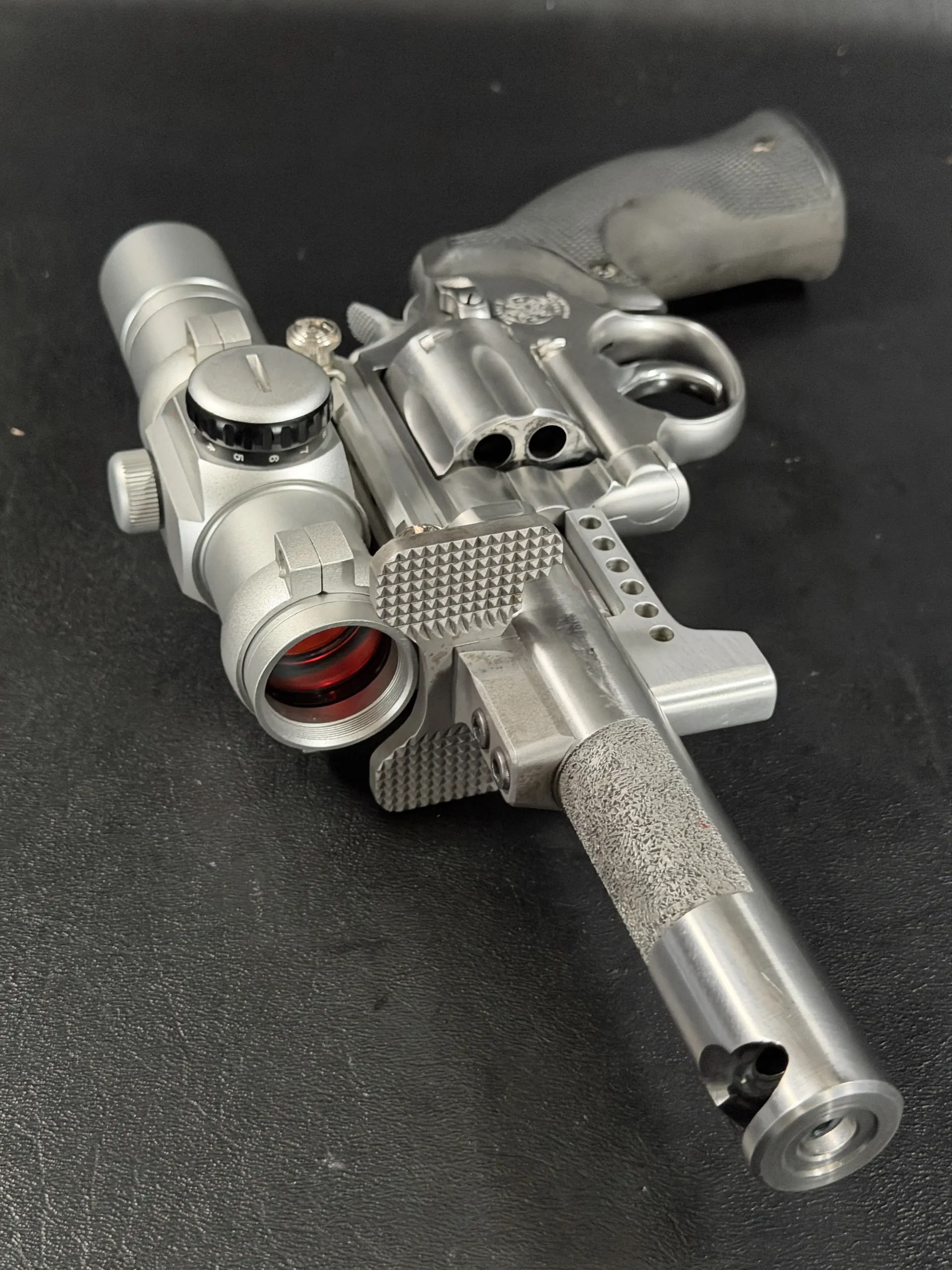
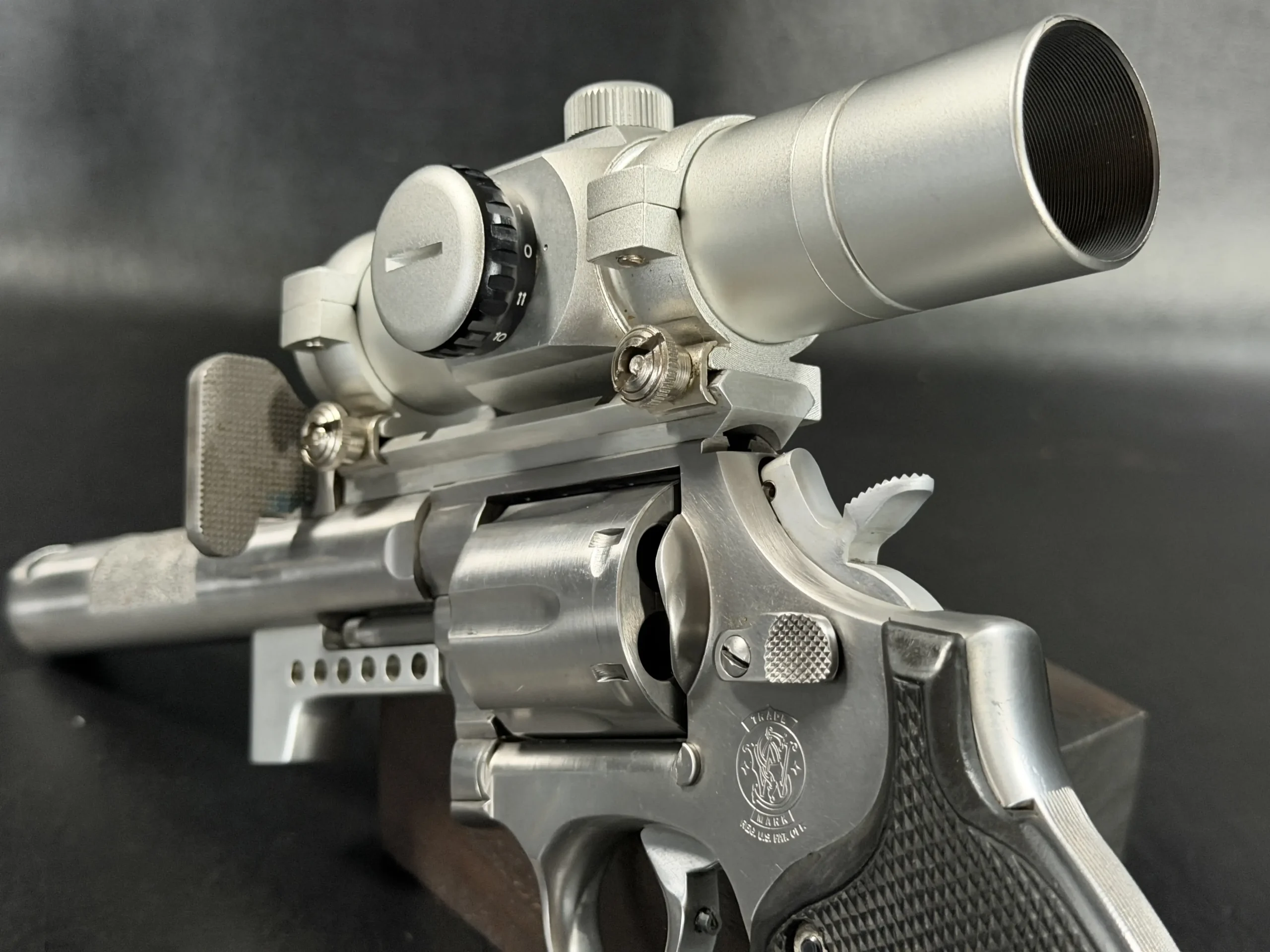
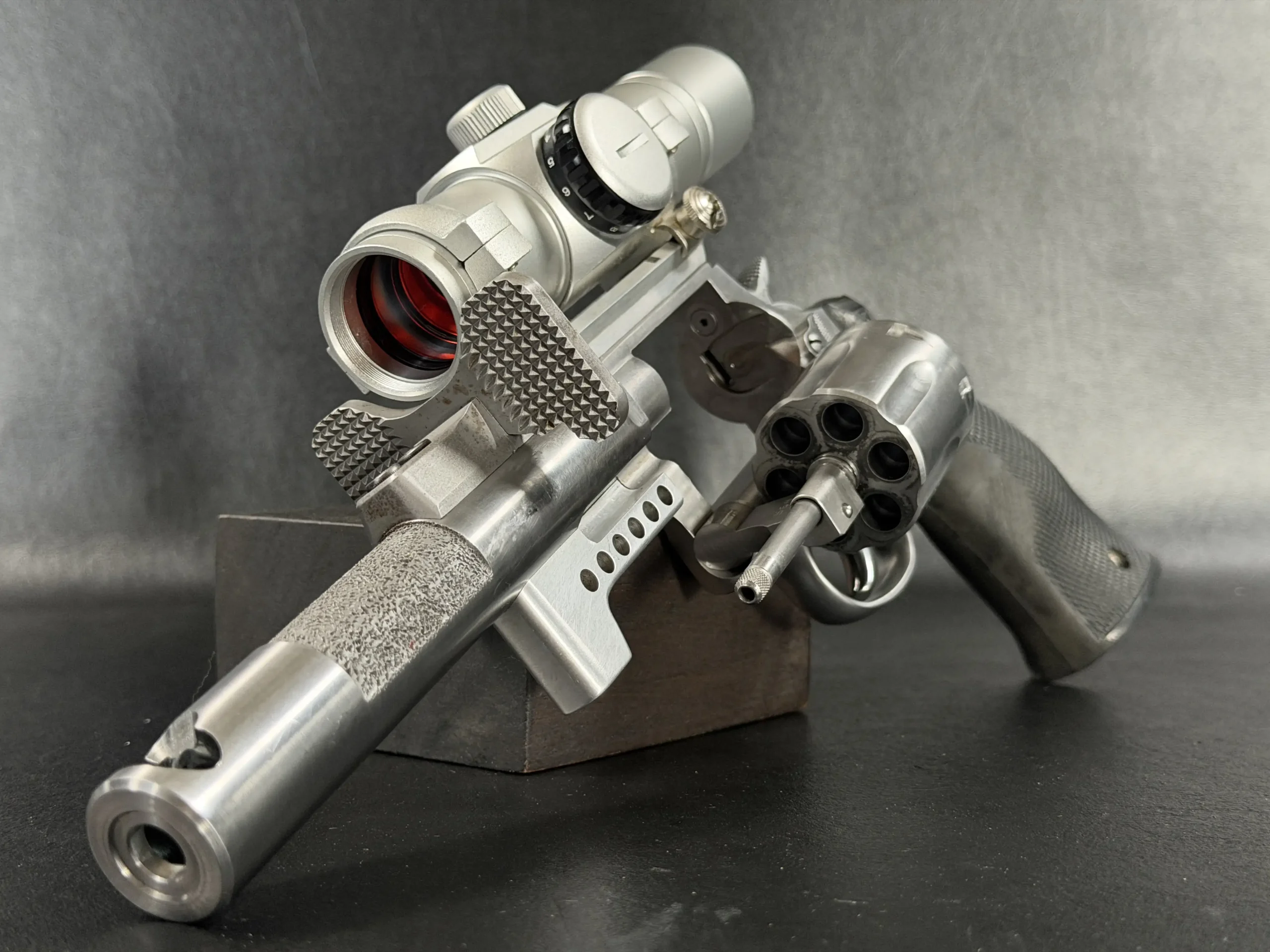
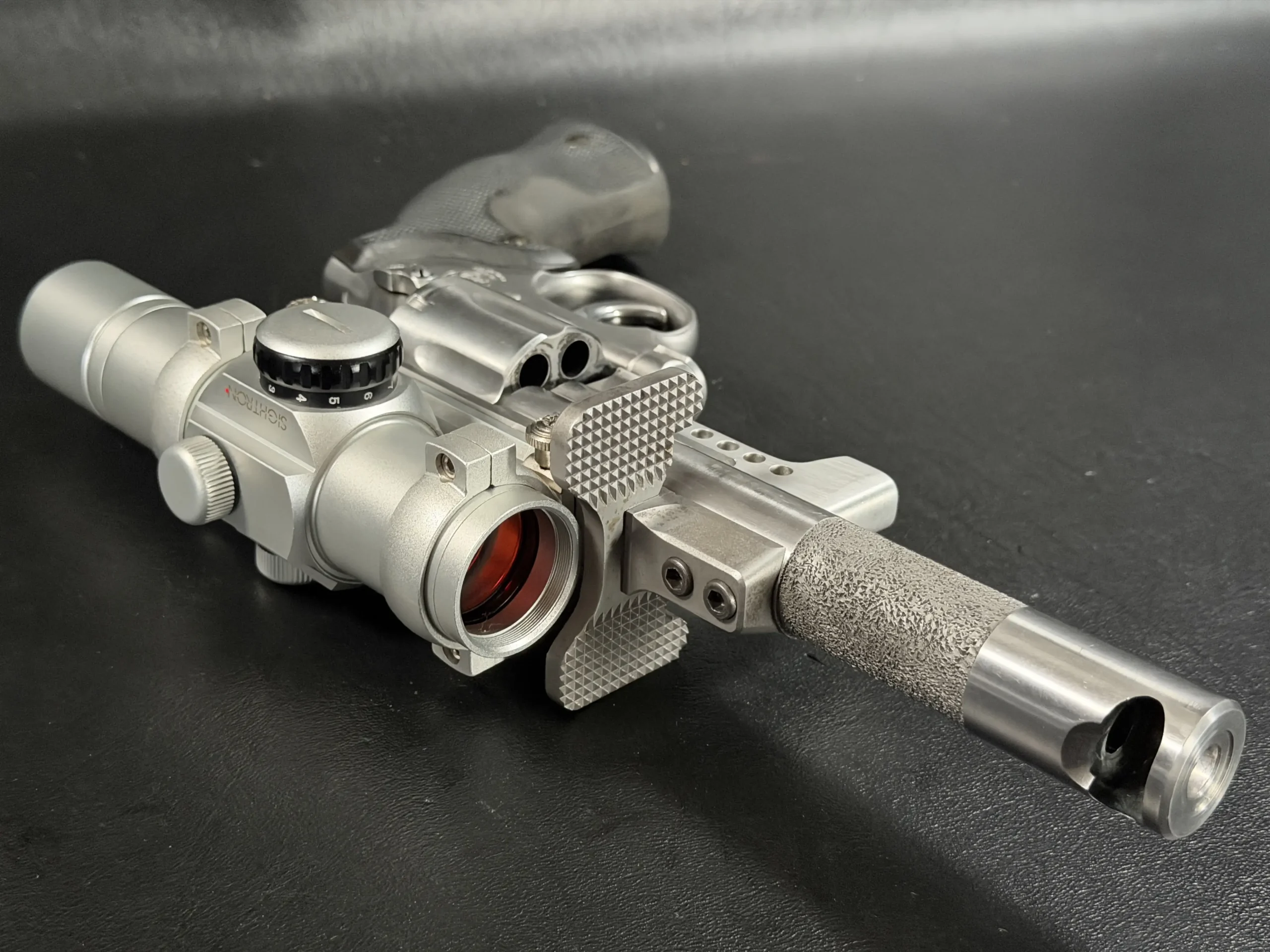
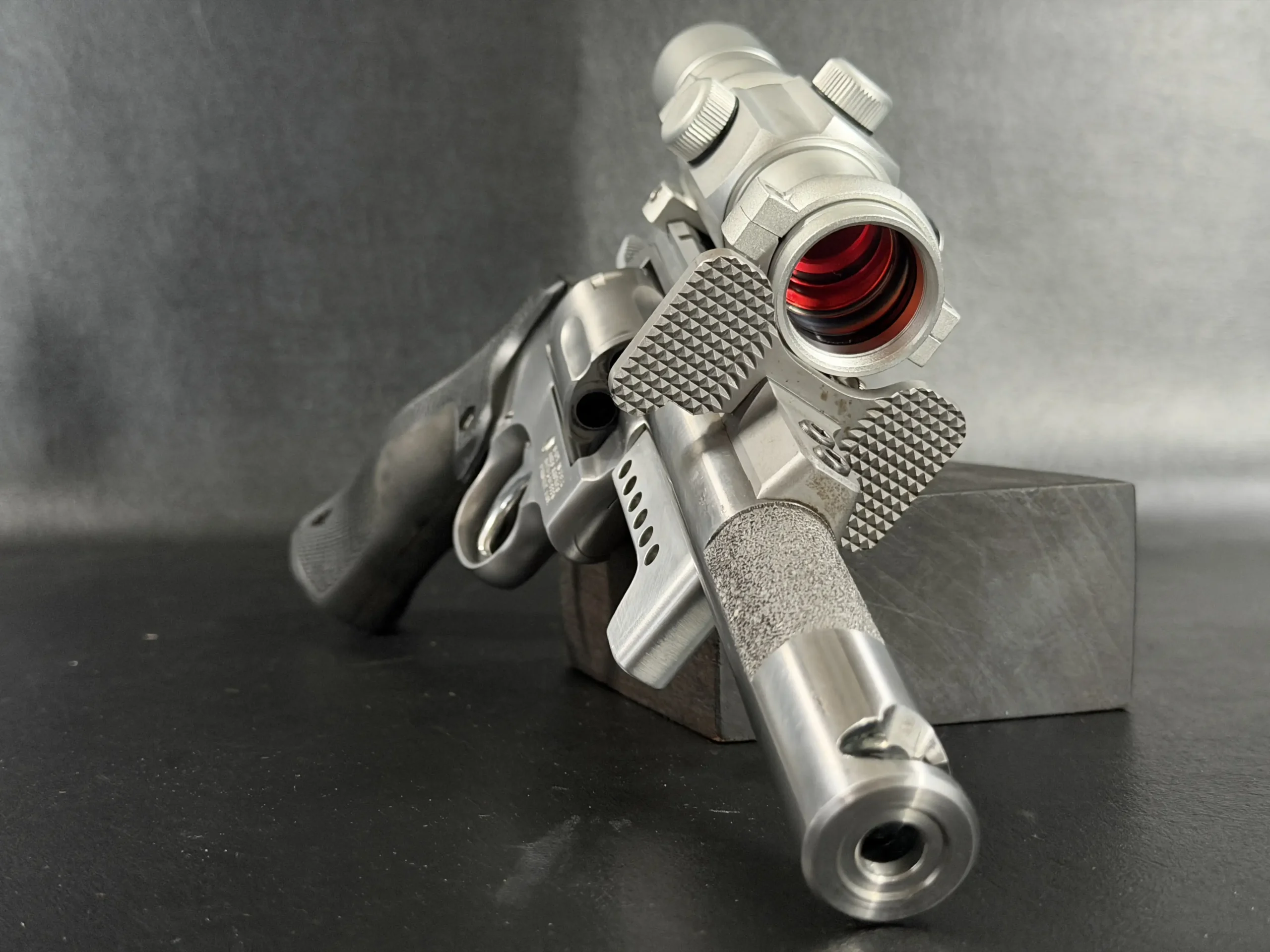
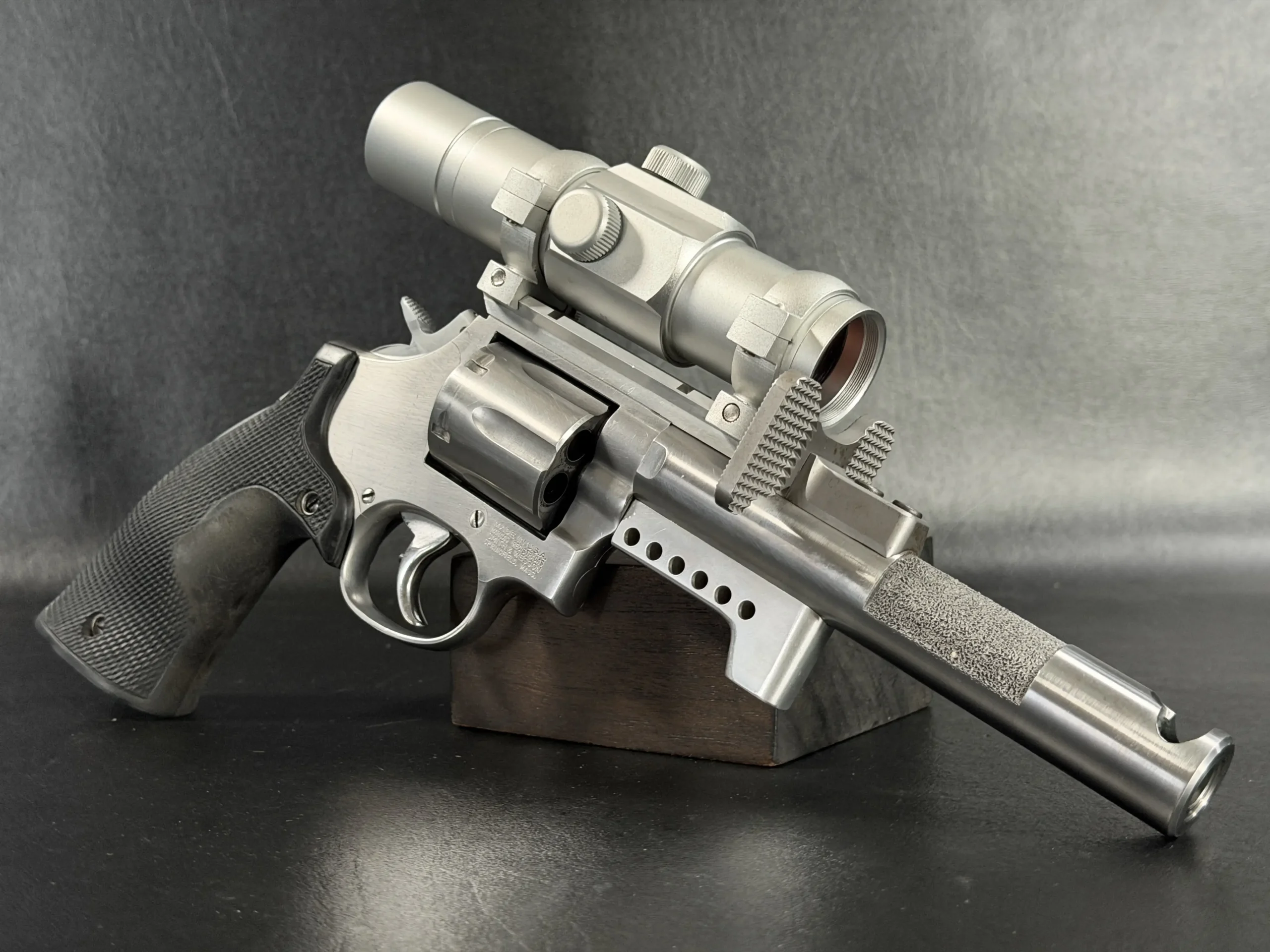
Constructed on the robust Model 686-3 platform, this revolver is chambered in 9mm and showcases a number of distinctive custom features intended to maximize performance, control, and precision. The stainless steel construction provides durability and balance, while the heavy 6-inch barrel enhances stability and sight radius, critical factors in precision handgun competition.
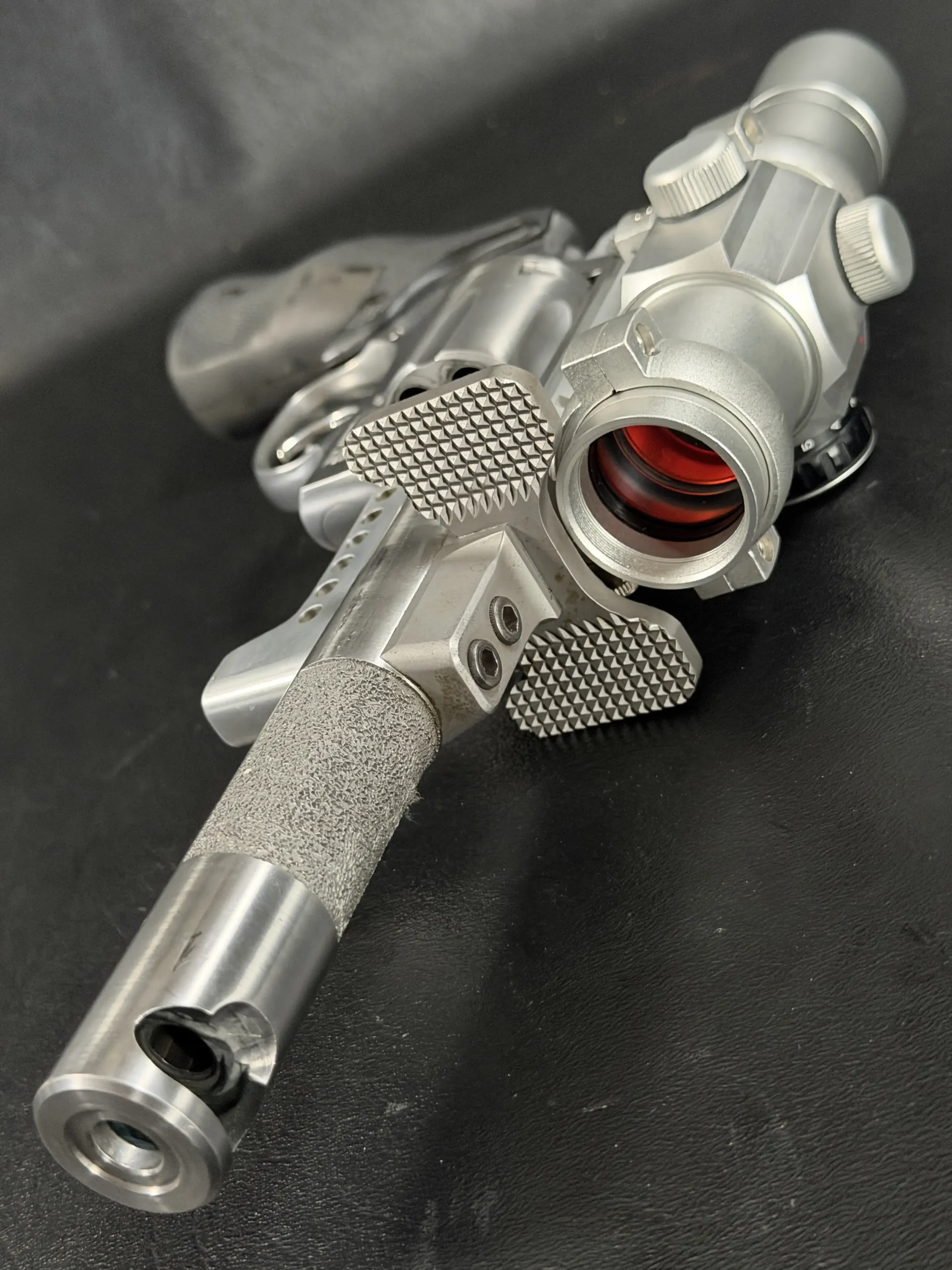
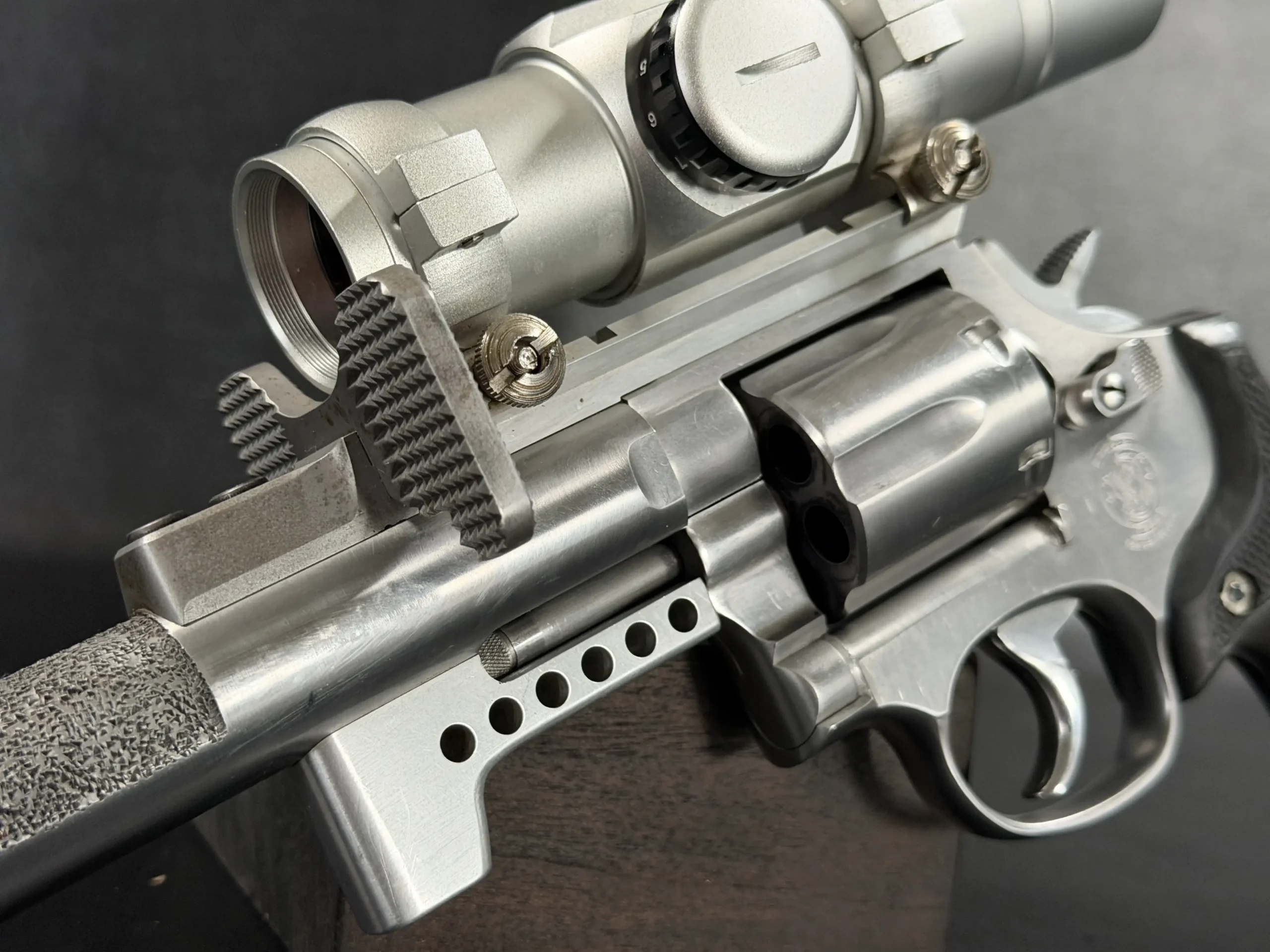
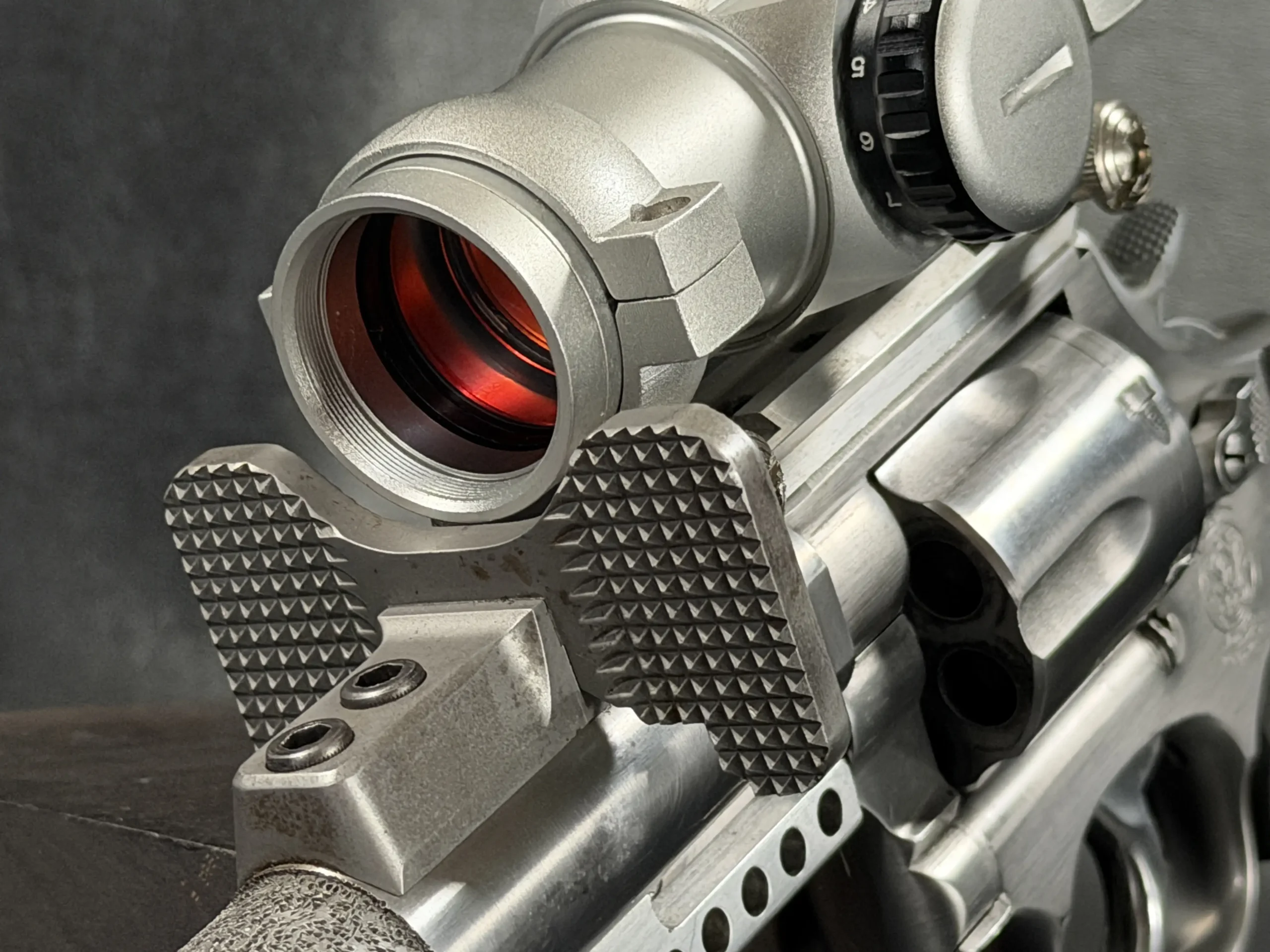
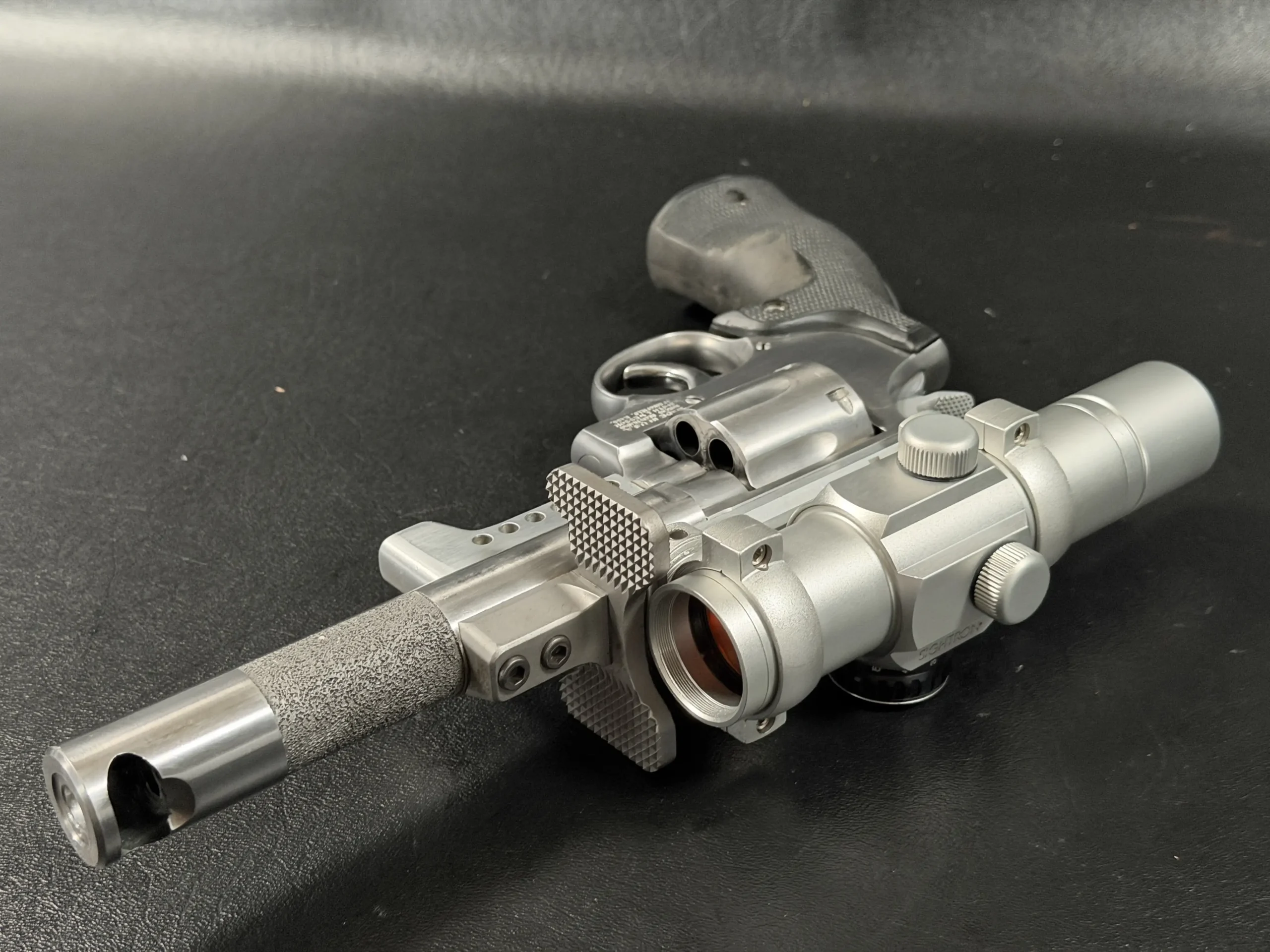
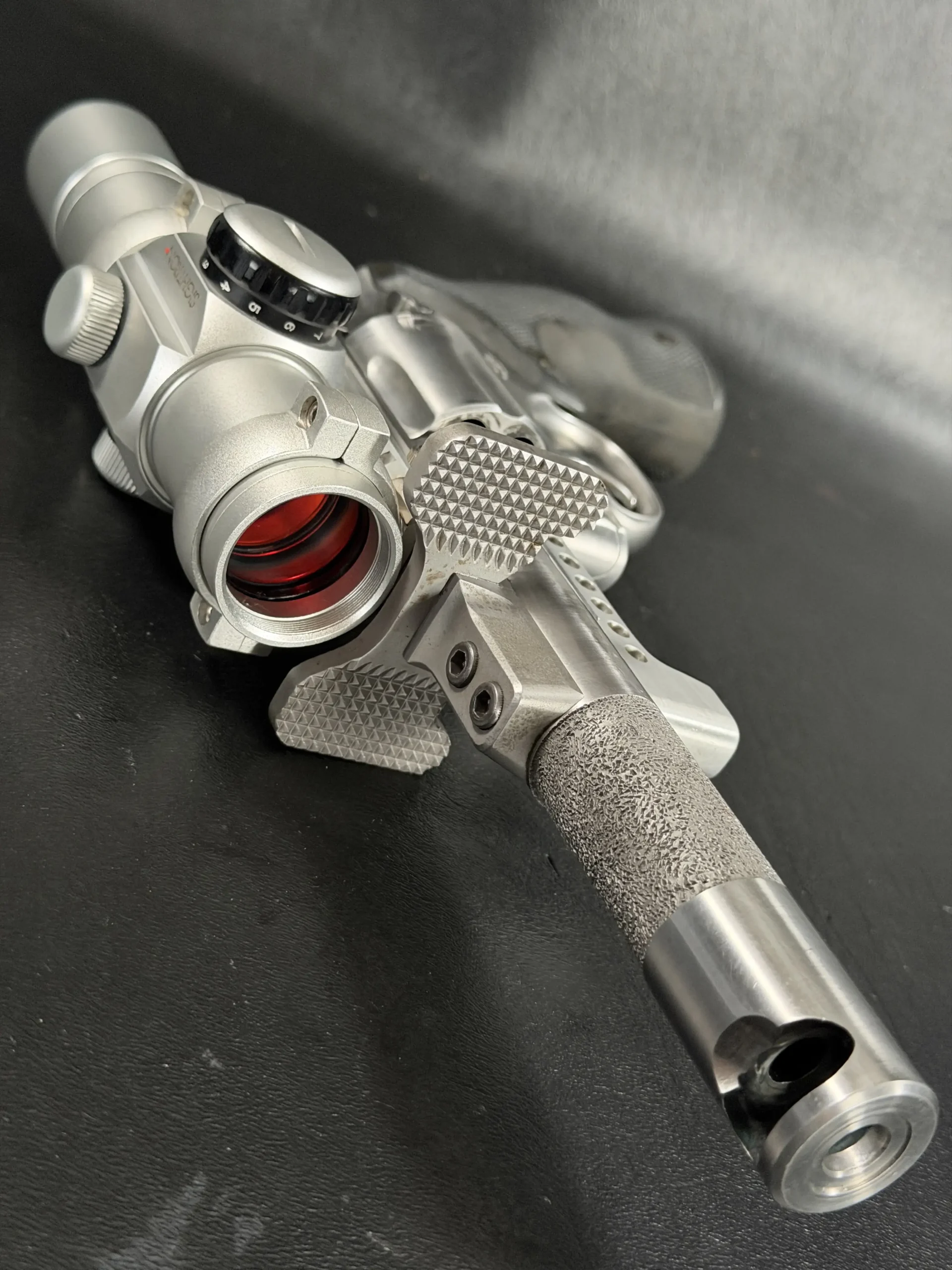
One of the most visually striking and functional elements is the integrated compensator system, designed to mitigate muzzle rise and improve shot-to-shot recovery. This allows competitive shooters to maintain tighter shot strings and faster target transitions. The barrel also features textured forward treatment and precision machining typical of Performance Center prototypes of the era.
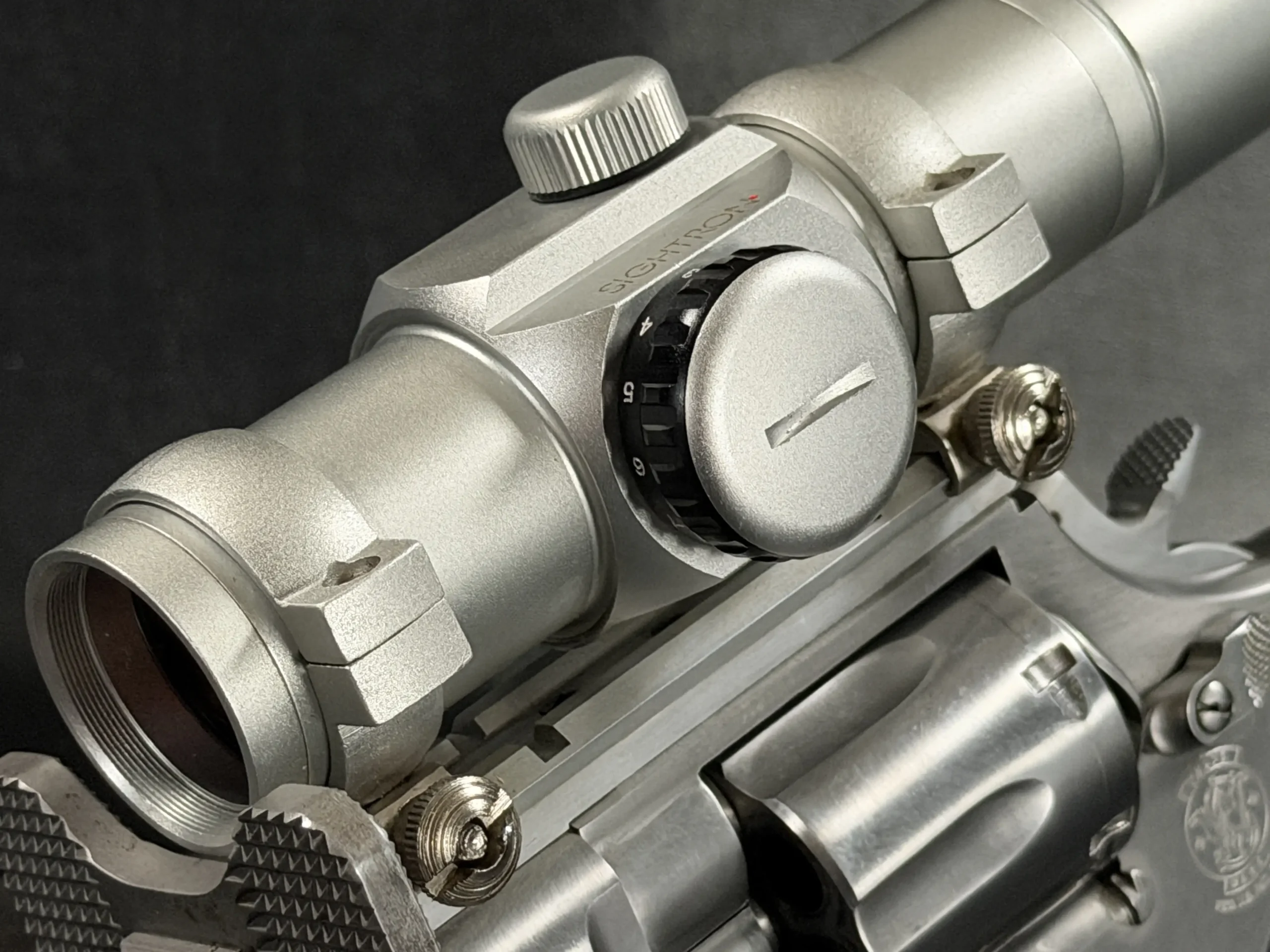
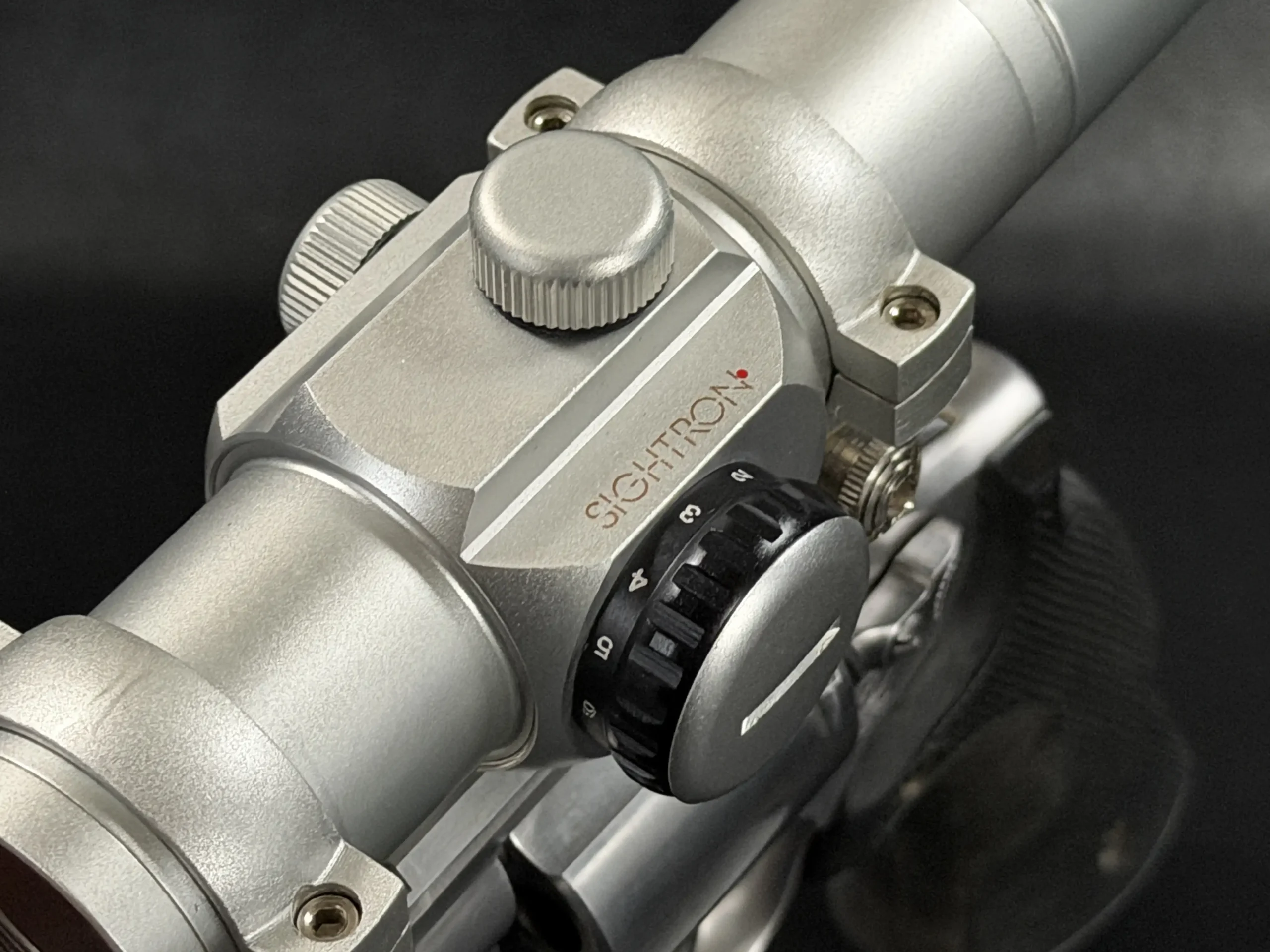
The revolver is further equipped with scope mounts and a mounted optic, reflecting its configuration for precision match shooting. Optical sights became increasingly common on competition revolvers during this period, improving target acquisition and accuracy during timed stages.
Additional refinements include a specially tuned action that delivers an exceptionally smooth trigger pull in both single- and double-action modes. This level of tuning was a hallmark of Performance Center builds, where skilled gunsmiths hand-fit and adjusted components to achieve optimal trigger characteristics and reliability.
Ergonomics remain faithful to Smith & Wesson’s proven L-frame design. The revolver is fitted with checkered grips that provide excellent control while maintaining the classic lines of the 686 series. Combined with the revolver’s balanced weight distribution, these features make it both a formidable competition tool and a compelling collector’s piece.
What truly elevates this revolver beyond a typical Performance Center firearm is its documented provenance. According to the Smith & Wesson Historical Foundation, the revolver was originally shipped directly to Judy Woolley, one of the most accomplished competitive shooters of her era. Woolley earned national recognition for her skill in action pistol shooting and served as a prominent representative of Smith & Wesson in competitive circles.
Firearms built specifically for professional shooters occupy a special place in the collecting world. They often incorporate experimental design features, prototype components, and bespoke tuning rarely seen in commercial production. This revolver embodies that tradition, standing as a tangible link between Smith & Wesson’s engineering team and the competitive shooters who pushed their designs to new heights.
Today, this Smith & Wesson Prototype 686-3 Performance Center revolver represents far more than a finely tuned competition firearm. It is a historic artifact from the formative years of the Performance Center, an era when innovation, craftsmanship, and competitive shooting culture converged to produce some of the most fascinating revolvers ever built.
For collectors of rare Smith & Wesson prototypes, Performance Center firearms, or competition-proven handguns with documented provenance, this revolver stands as an exceptional and historically significant example.