

Description
Few firearms capture a specific moment in competitive shooting history quite like the Smith & Wesson Prototype PC Model 356TSW, a handgun born from the company’s effort to push the limits of IPSC competition in the early 1990s. Developed in 1992 by Smith & Wesson’s Pistol Team in collaboration with the company’s Performance Center, this pistol represents a fascinating intersection of engineering innovation, competitive shooting, and custom craftsmanship.
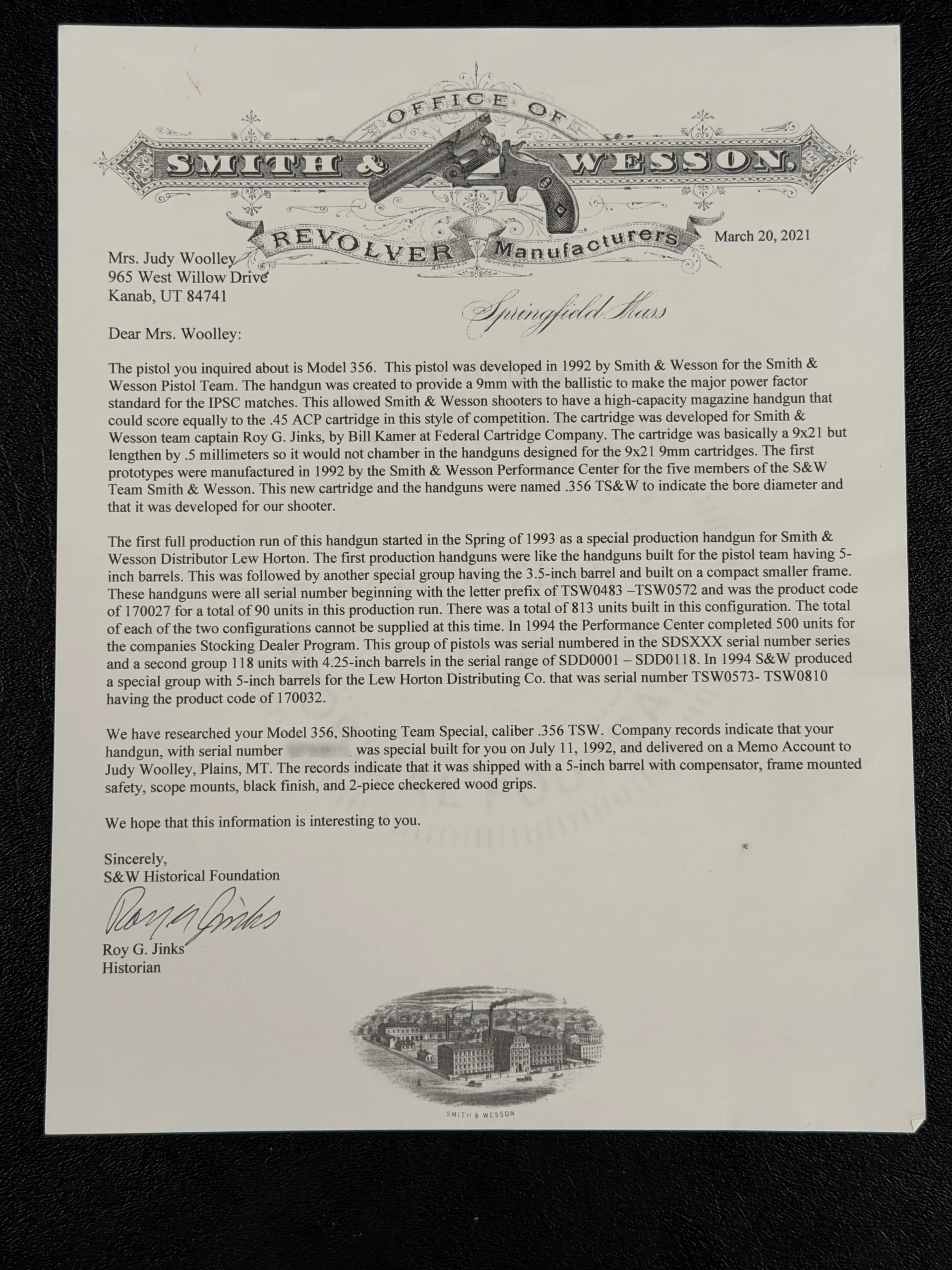
At the heart of the platform is the .356 TSW cartridge, a purpose-built competition round designed to deliver the ballistic performance required to meet the IPSC “major power factor” standard while retaining the advantages of a high-capacity platform. Developed through collaboration between Smith & Wesson pistol team captain Roy Jinks and Federal Cartridge Company engineer Bill Kame, the cartridge is essentially a lengthened 9×21 design, extending the case slightly to prevent chambering in .356 TSW pistols while achieving the desired performance characteristics.
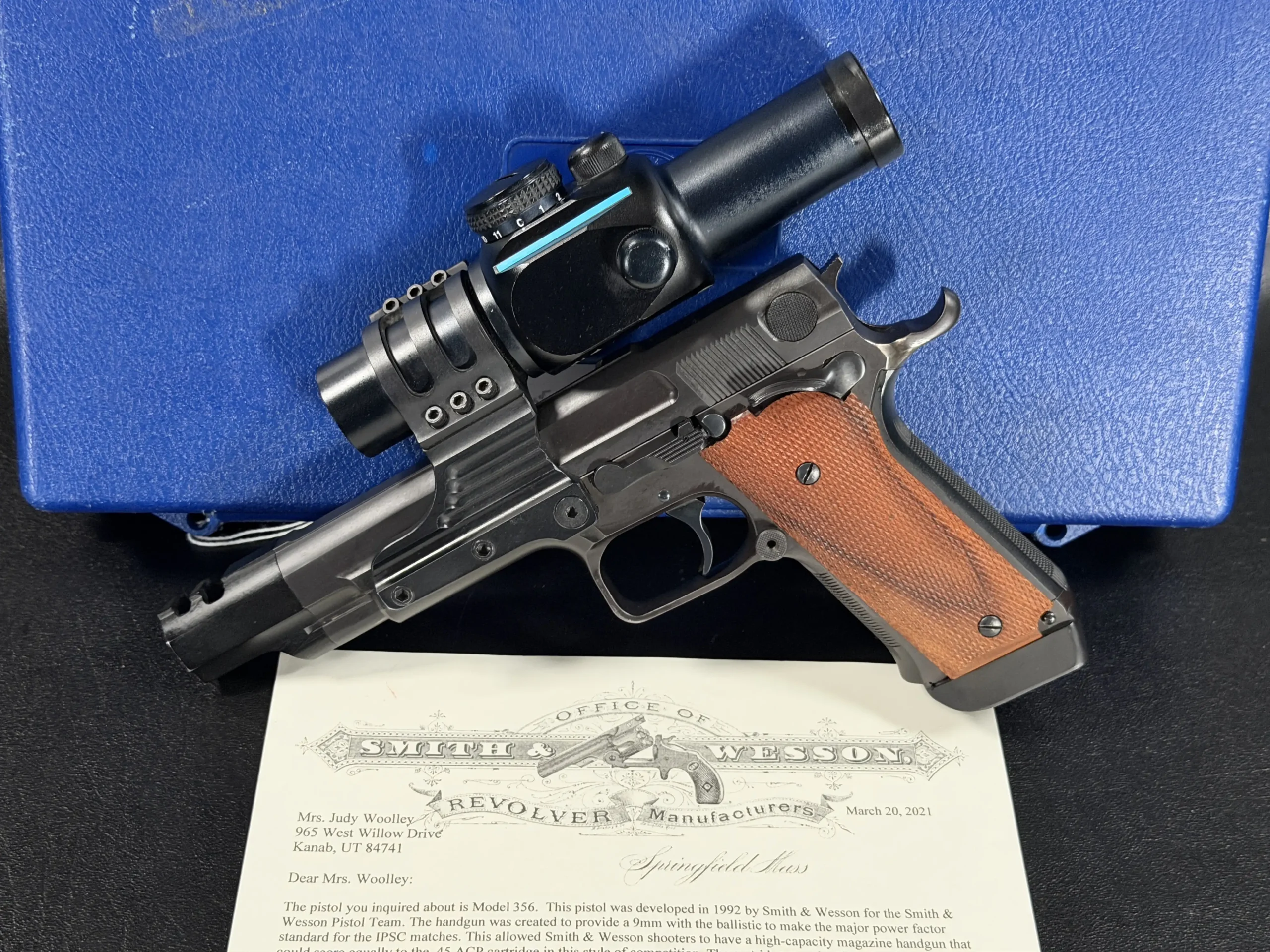
This particular pistol represents an especially significant example of the model. According to Smith & Wesson historical records, it was specially built in July 1992 for champion shooter Judy Woolley, one of the most accomplished competitors in practical shooting at the time. As a prototype Performance Center build created during the platform’s early development, it embodies the experimental spirit and precision craftsmanship that defined Smith & Wesson’s competition program.
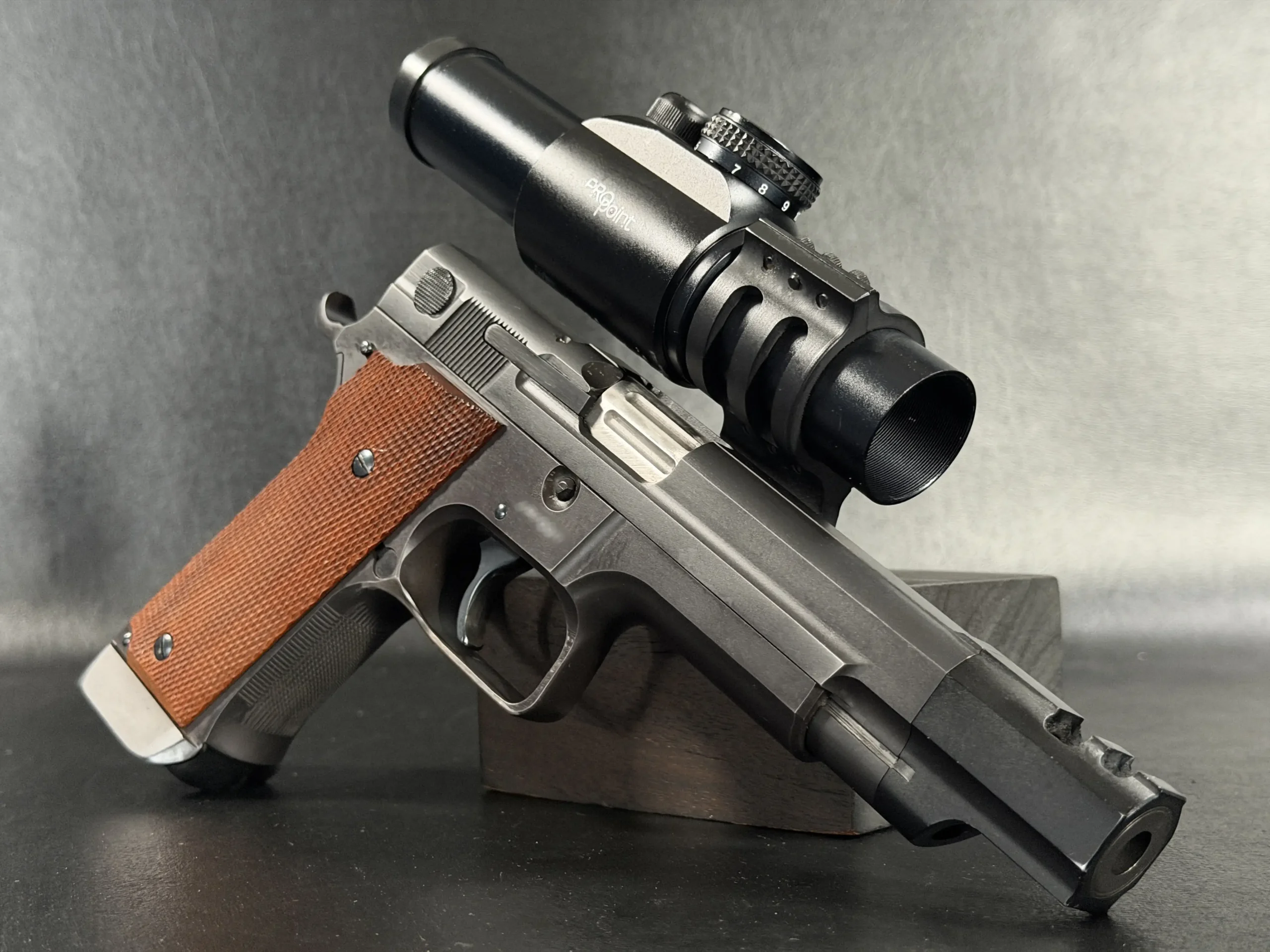
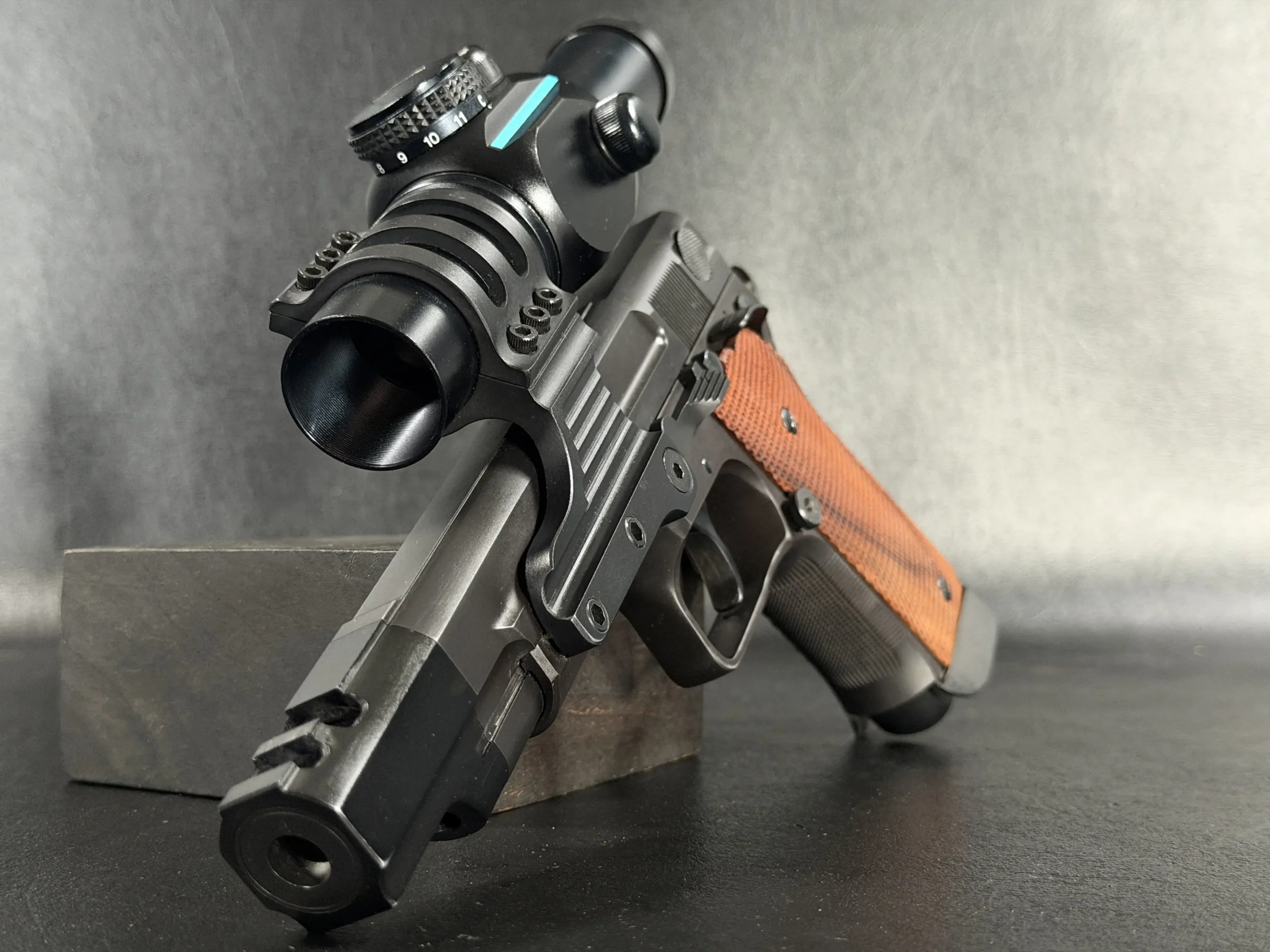
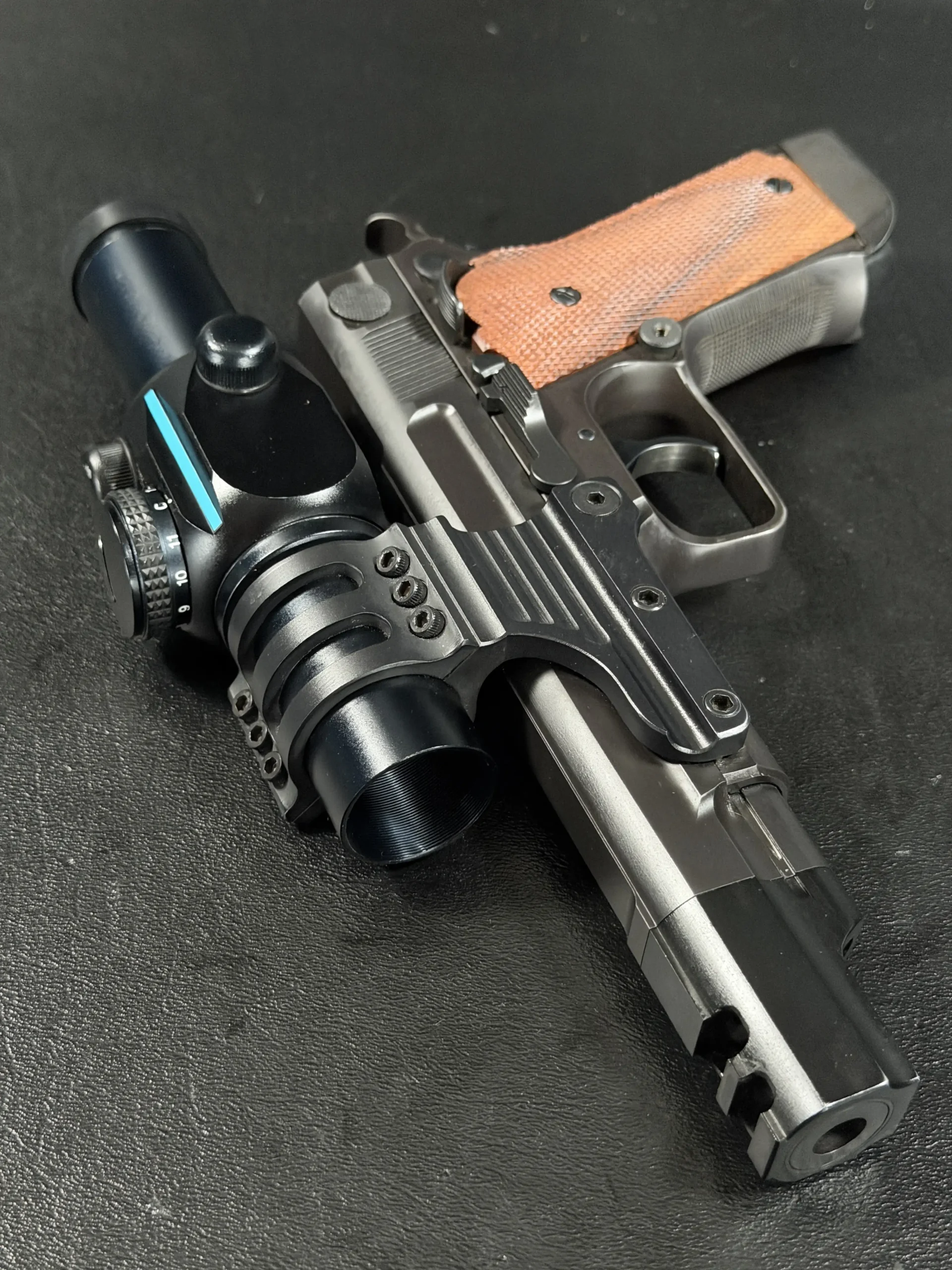
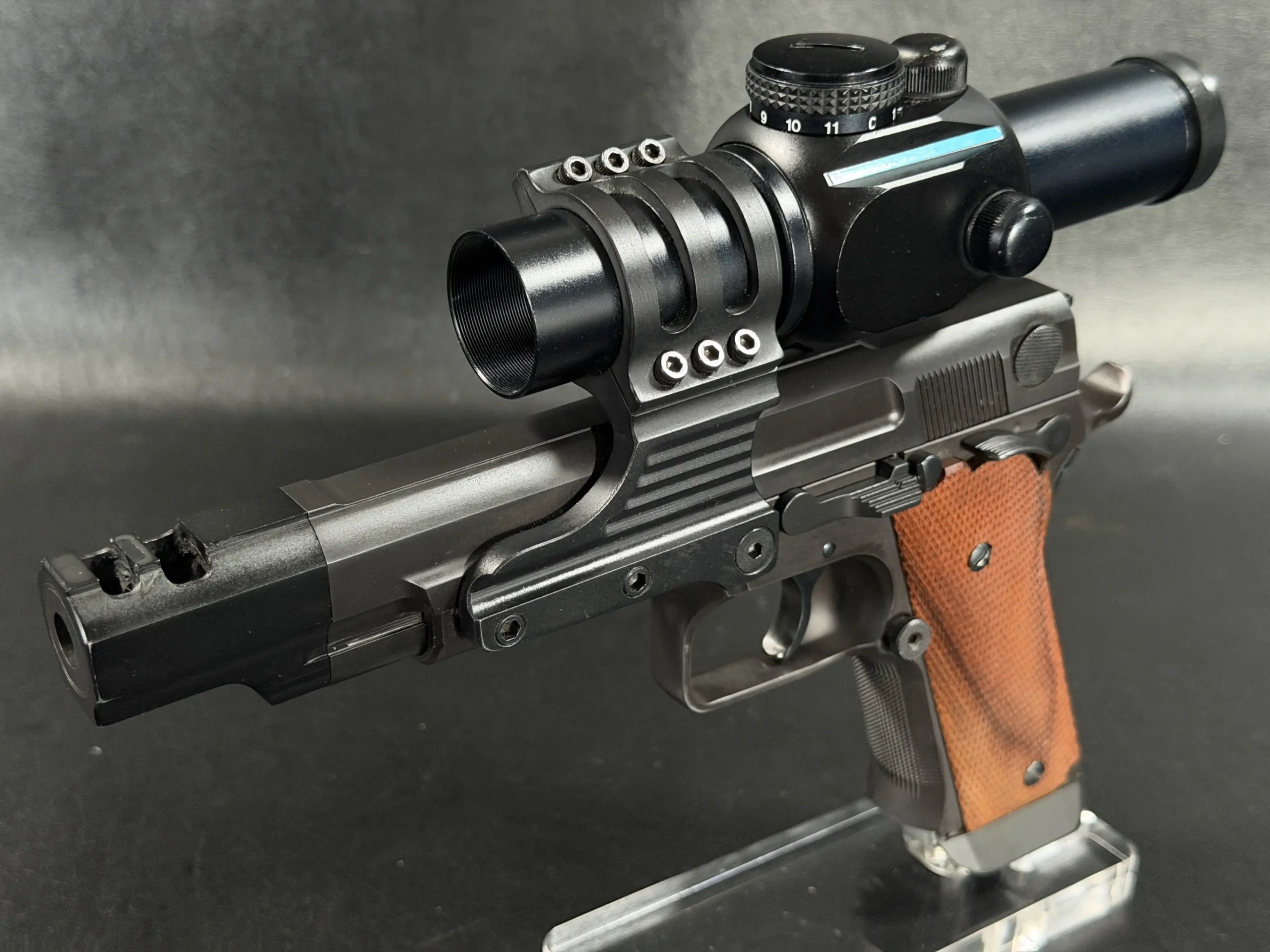
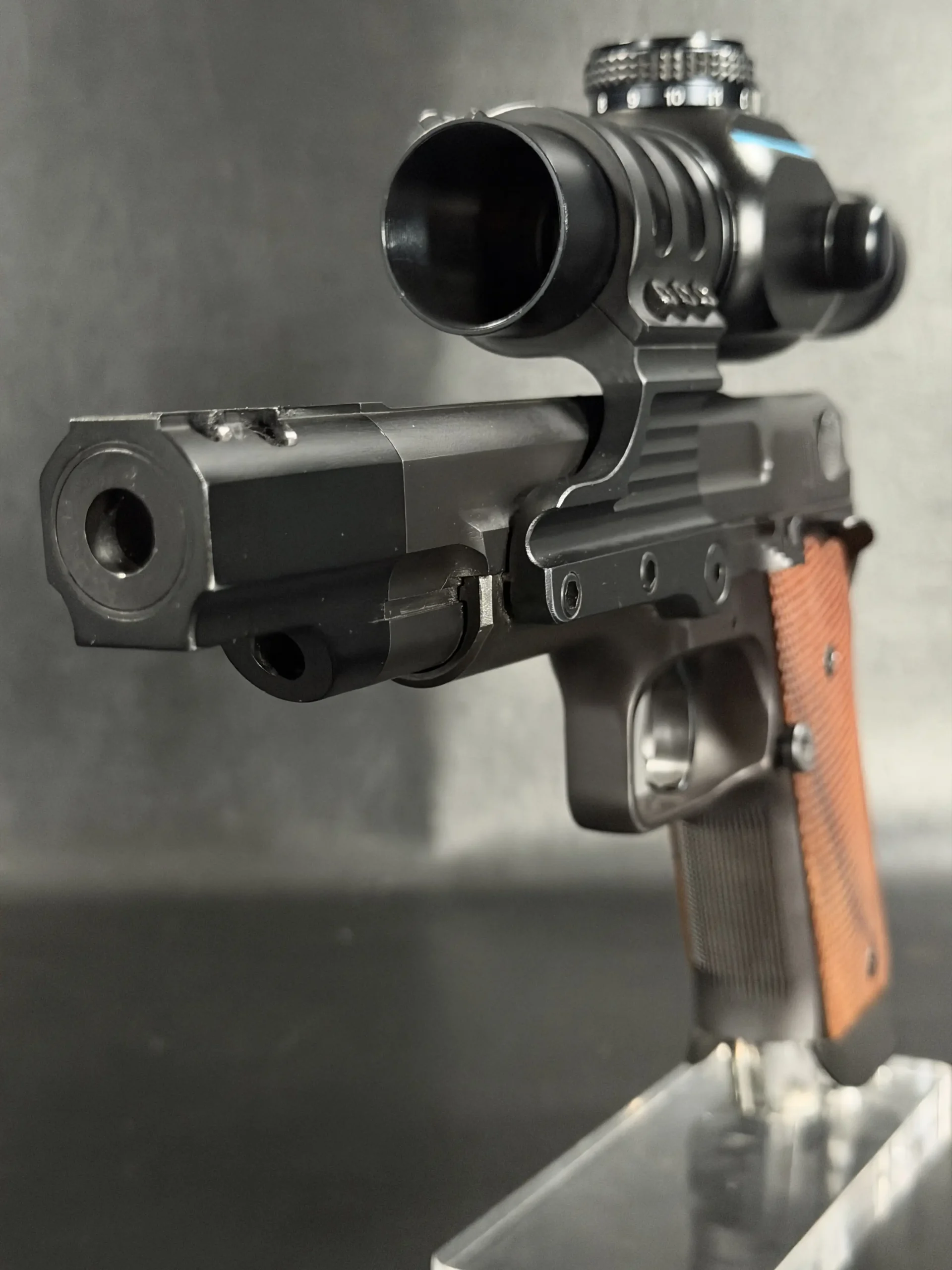
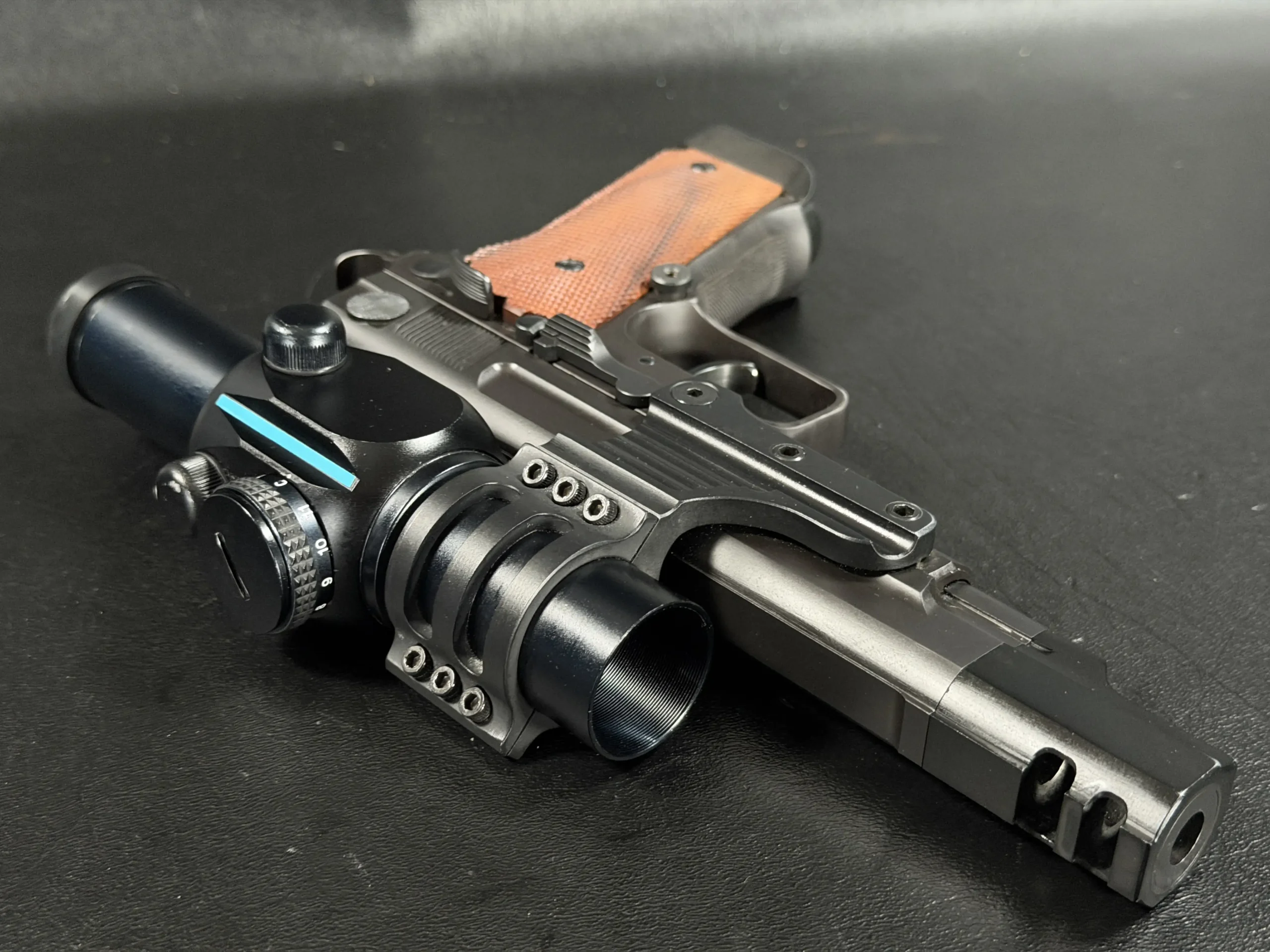
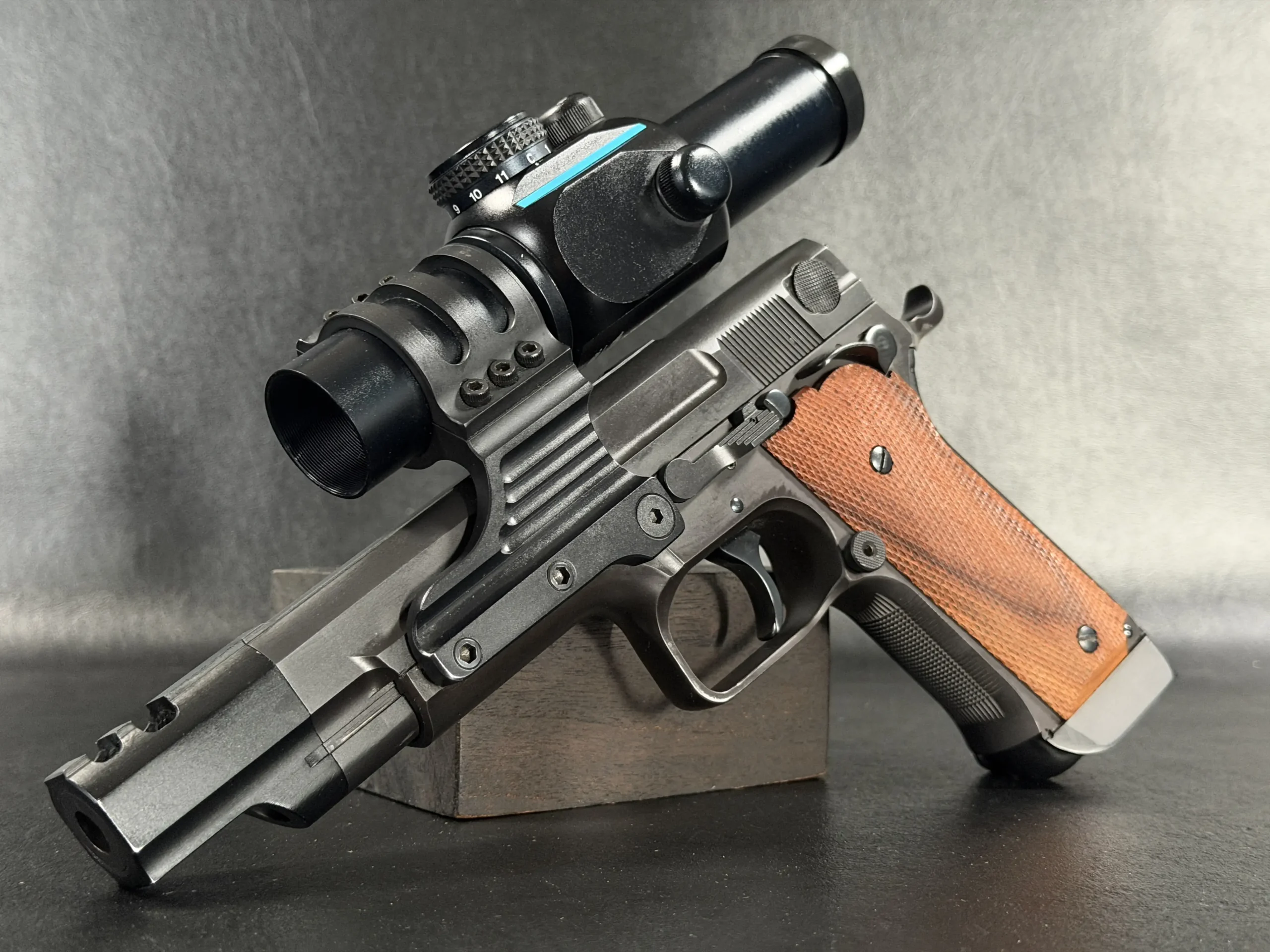
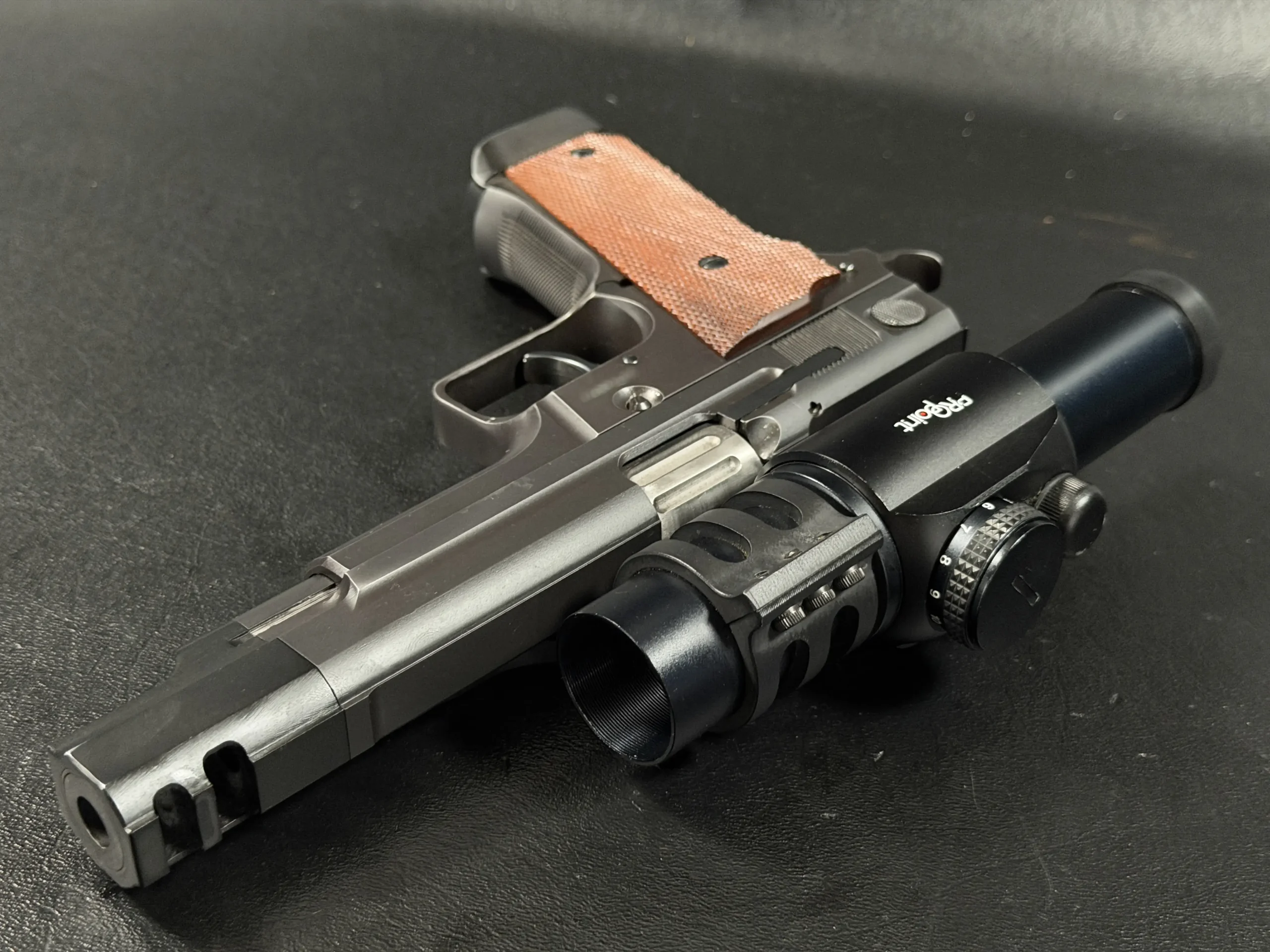
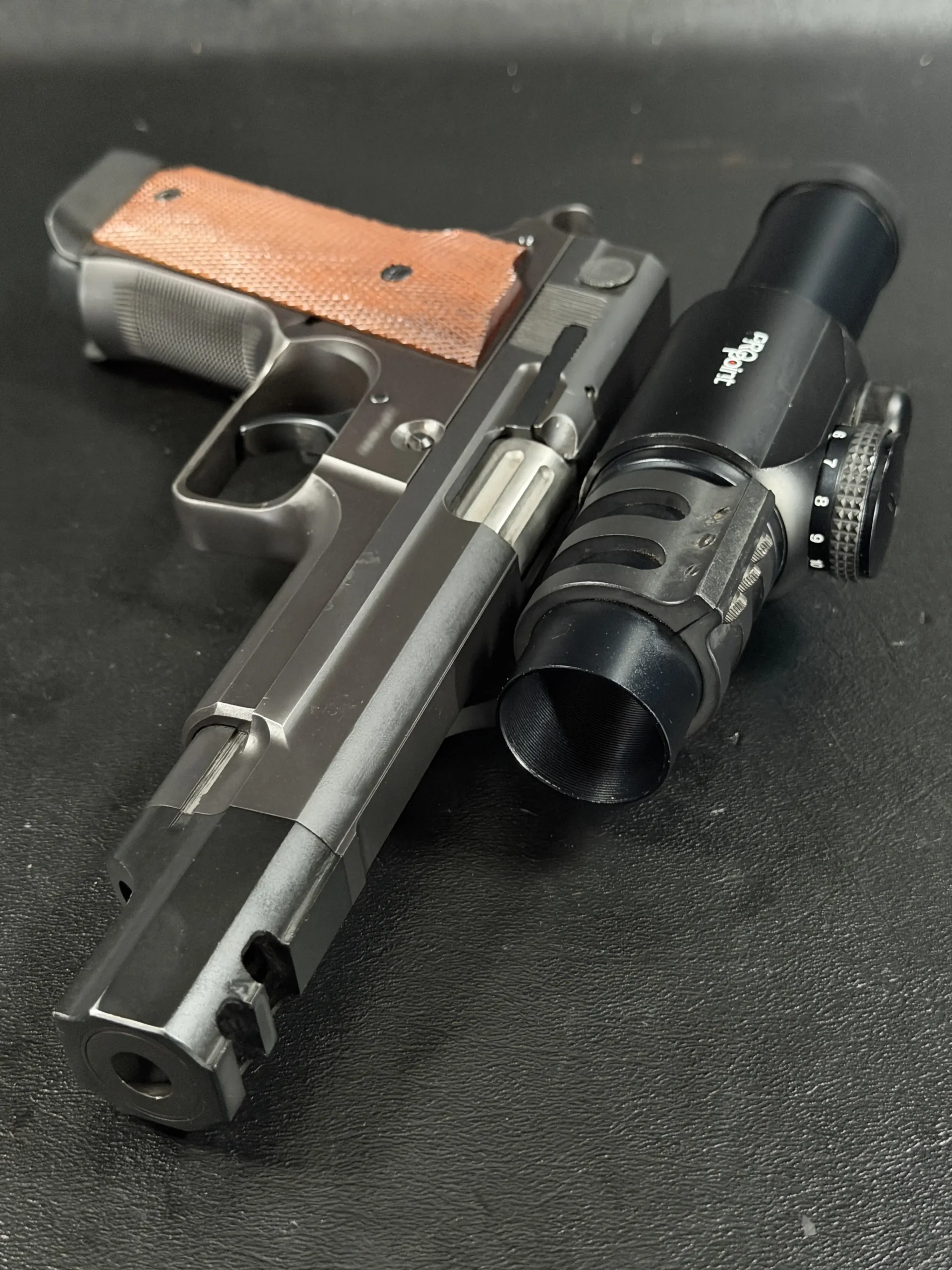
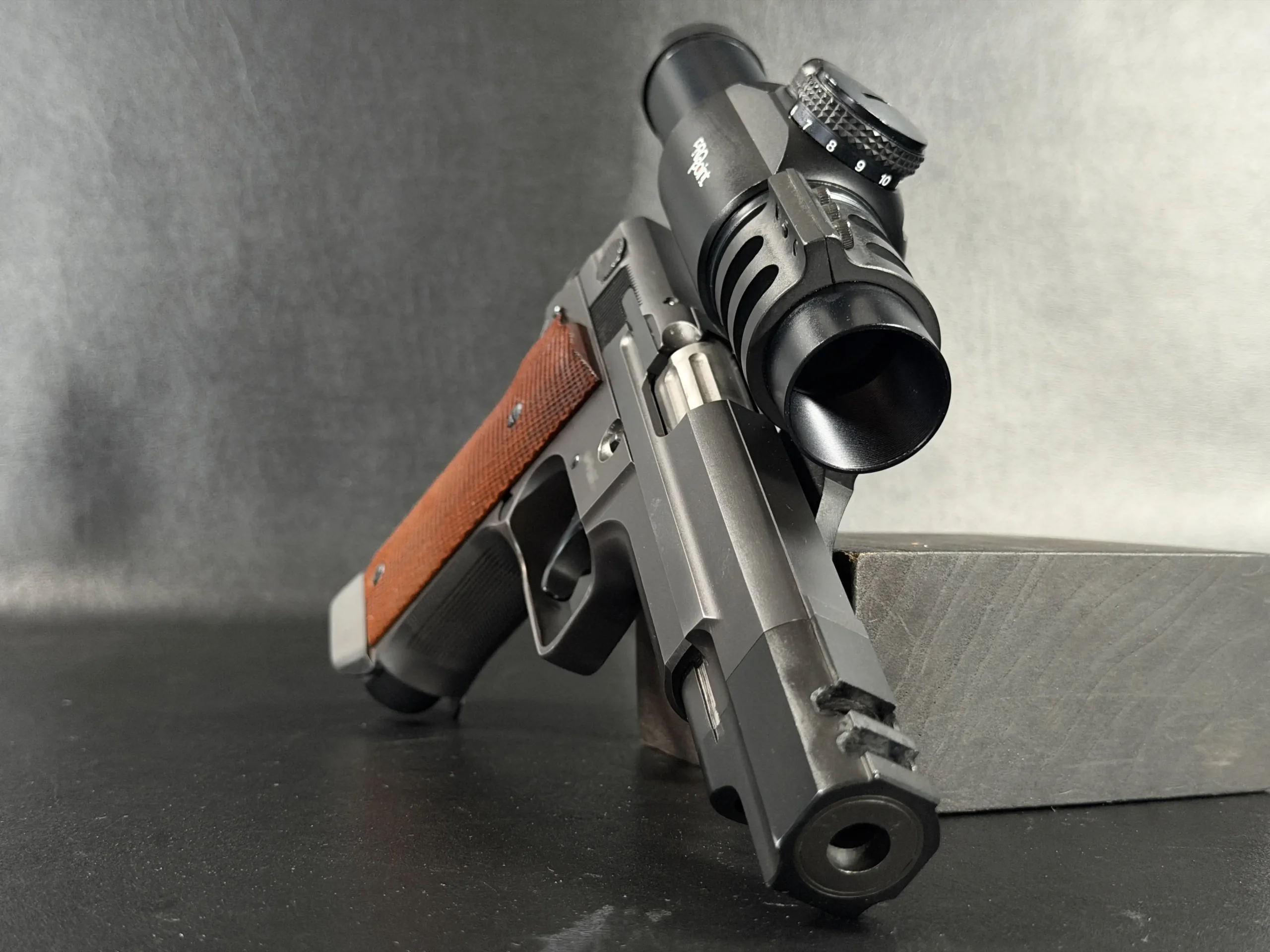
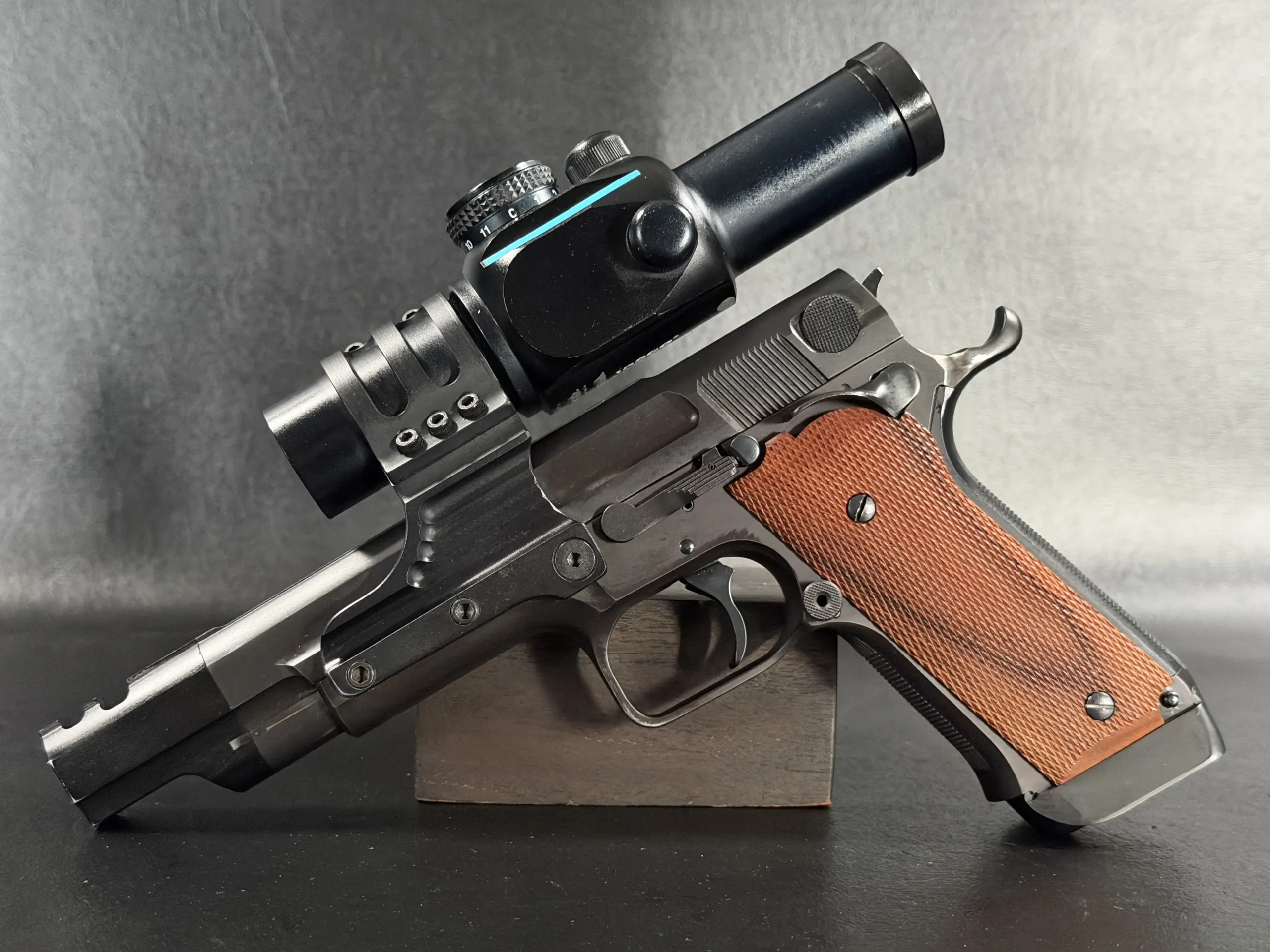
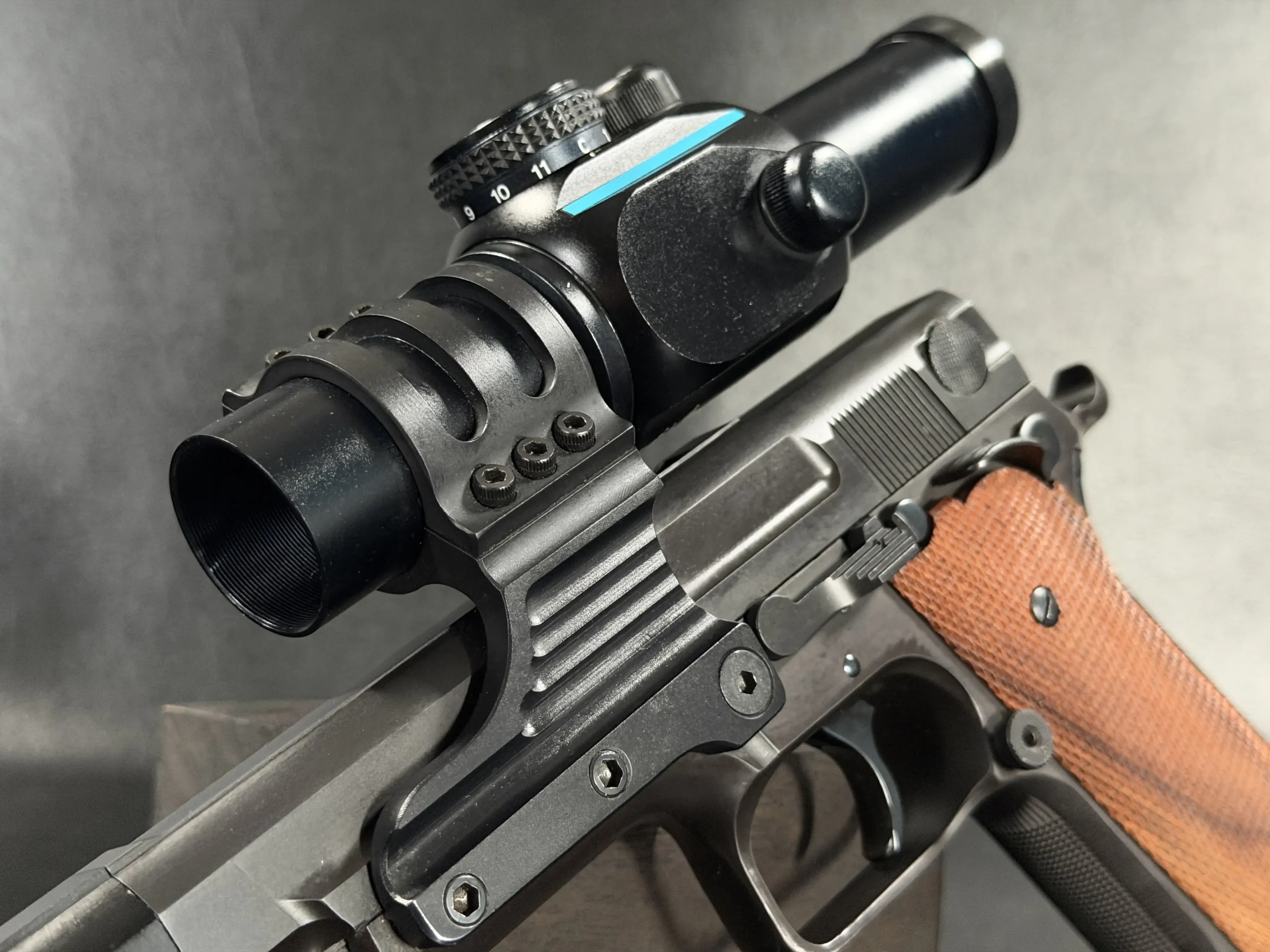
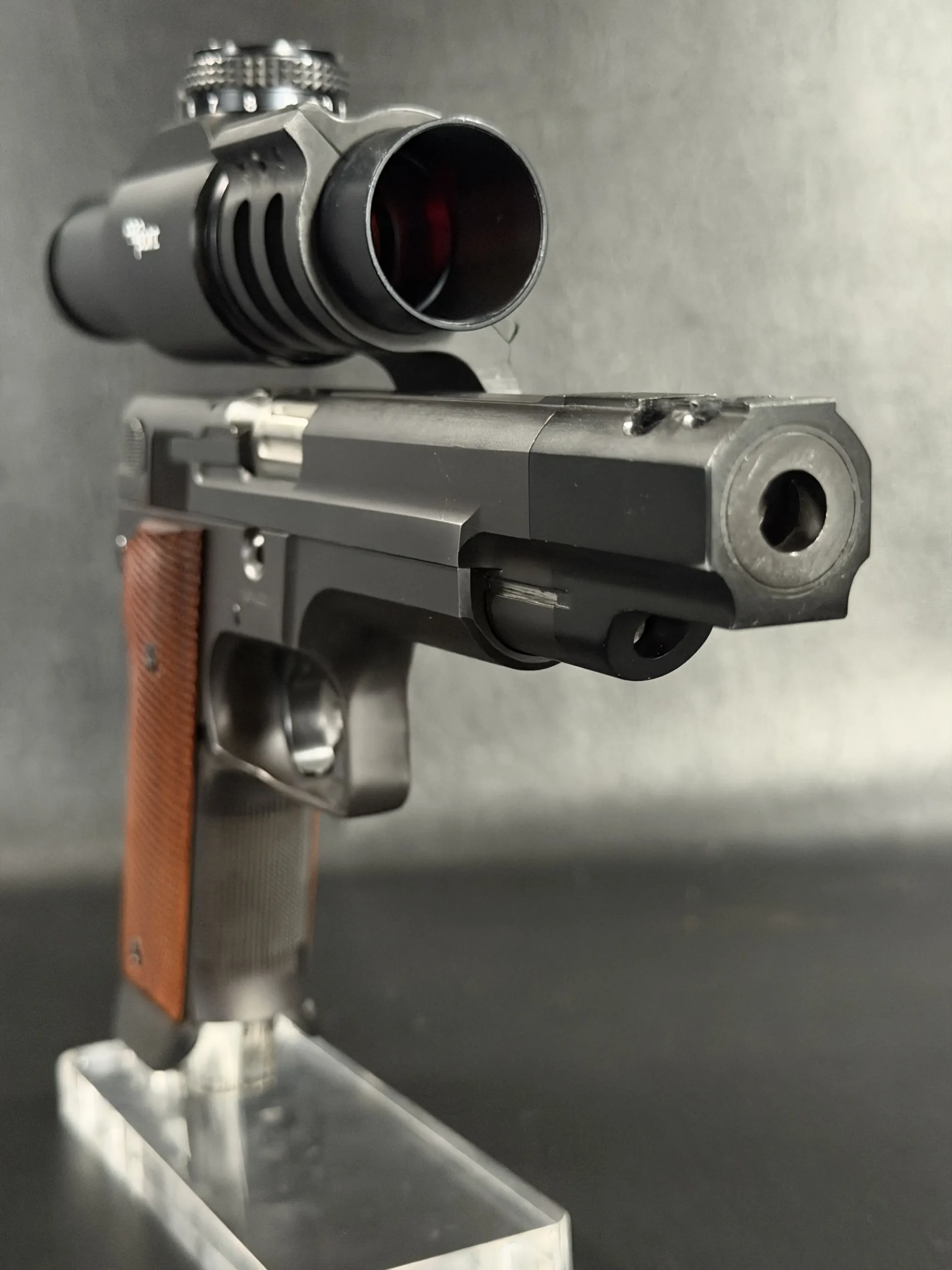
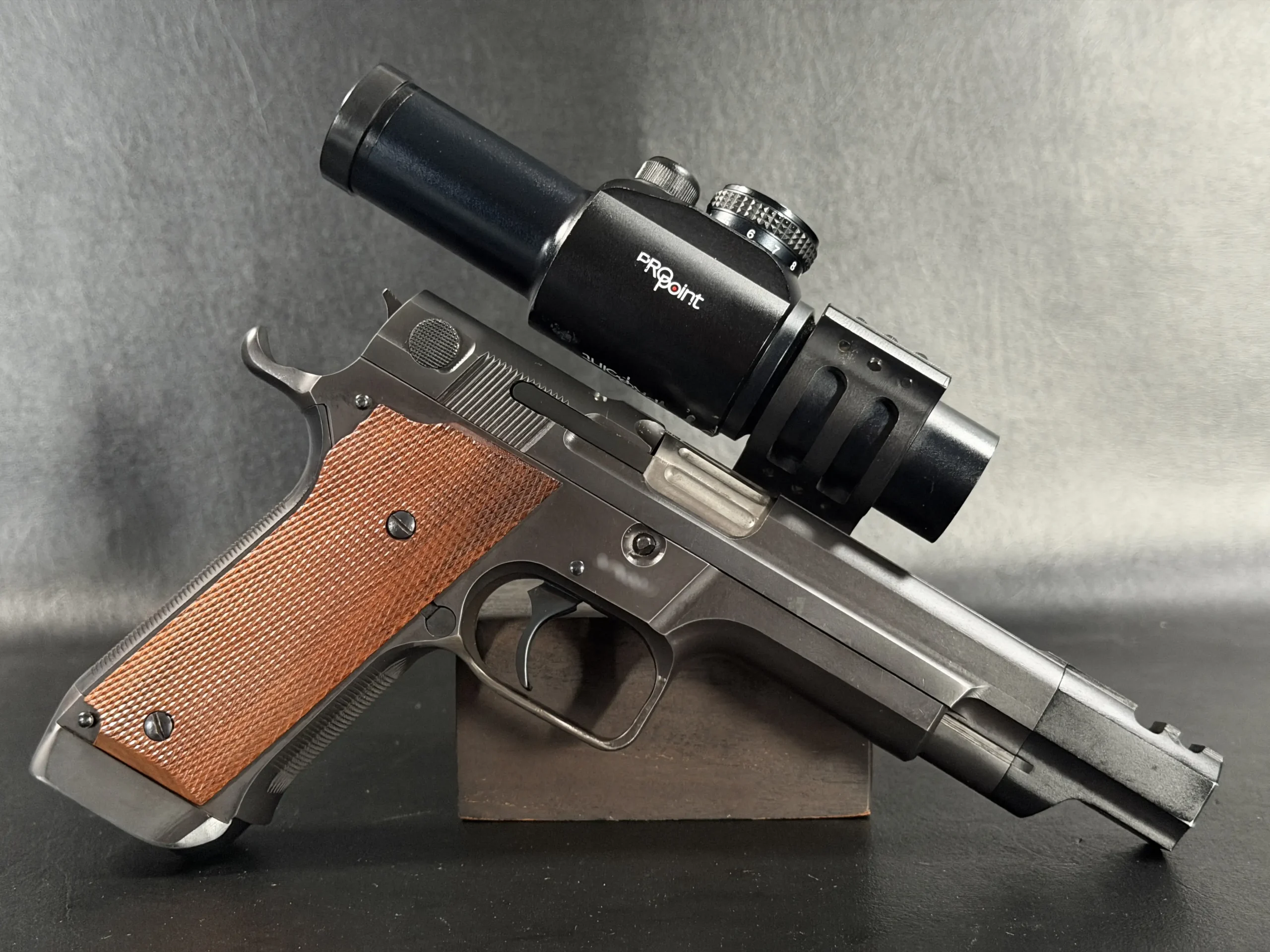
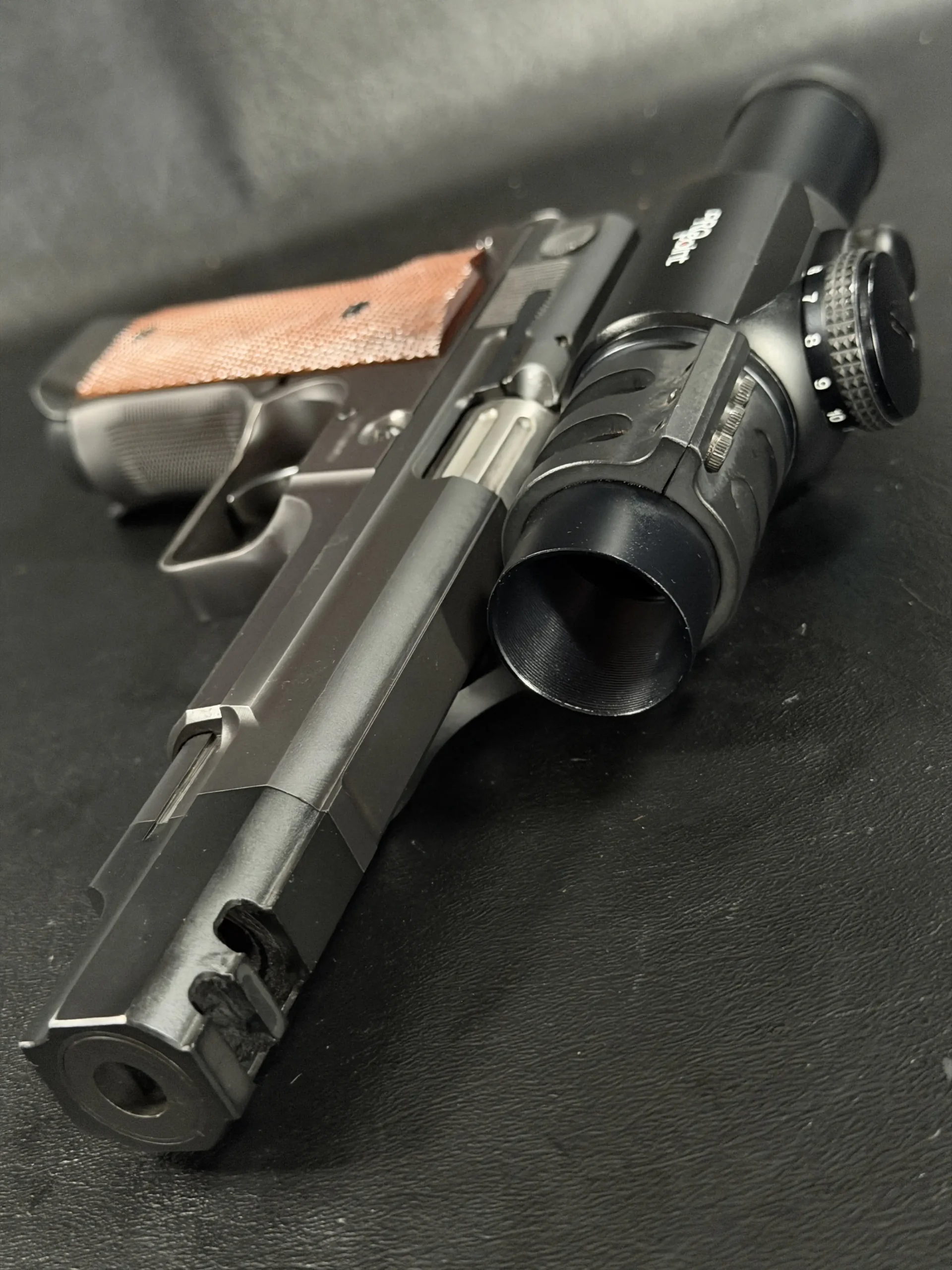
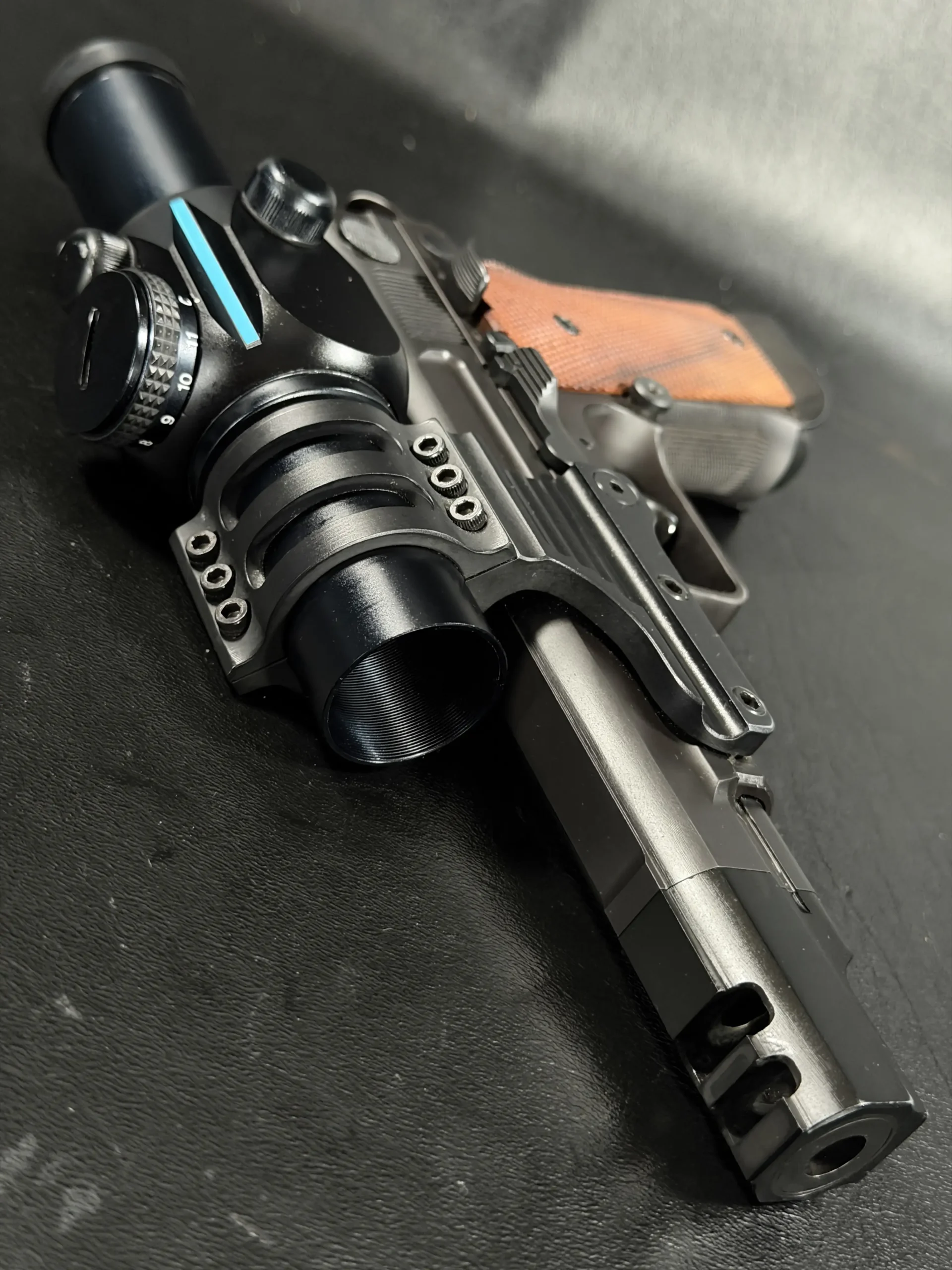
The pistol features a 5-inch barrel fitted with an integrated compensator, a configuration designed to reduce muzzle rise and enable faster follow-up shots in competition. A frame-mounted optic system supports the period-correct Aimpoint ProPoint electronic sight, a hallmark accessory seen on many early IPSC race guns. This mounting system keeps the optic stationary relative to the frame rather than the slide, preserving durability and maintaining a consistent sight picture during rapid fire.
Visually, the pistol carries the purposeful aesthetic of a competition firearm built for performance rather than ornamentation. The black finished steel construction, combined with checkered wood grips, reflects the design language of early 1990s Performance Center builds. The large compensator, extended dust cover profile, and distinctive optic mount create a silhouette that immediately identifies the pistol as a serious competition tool from the golden age of practical shooting.
From a historical perspective, the Model 356TSW occupies a unique place in Smith & Wesson’s development of competition pistols. It represents the company’s attempt to challenge dominant competition platforms of the time while experimenting with new cartridges and performance-driven designs. Although the .356 TSW ultimately remained a niche competition cartridge, it left a lasting impression among collectors and enthusiasts interested in rare performance-center prototypes and the evolution of practical shooting firearms.
Today, examples tied directly to competitive shooters or early prototype development are exceptionally scarce. A pistol built specifically for a champion competitor, and documented by the Smith & Wesson Historical Foundation, adds another layer of importance, transforming this firearm from a mere prototype into a tangible piece of competitive shooting history.
For collectors of rare Performance Center firearms, prototype competition pistols, or historically documented examples connected to notable shooters, the Smith & Wesson Prototype PC Model 356TSW built for Judy Woolley stands as a remarkable artifact from a transformative era in American handgun competition.