
Key Takeaways:
- “Custom” means very different things depending on who’s building the gun. A factory custom starts as a production firearm that gets elevated with better materials and hand-fitting, while an independent maker builds from the ground up, tailored to one specific client. The distinction matters because it shapes everything from craftsmanship details to pricing to how the gun feels in your hands.
- The price gap is real, but it’s not about “better” or “worse.” Factory customs typically run $2,500 to $8,000 and offer genuine quality backed by a brand name and warranty. Independent builds can reach $15,000 to $40,000 or more, reflecting hundreds of hours of a single craftsman’s labor and artistry. Both have their place, and the right choice depends on what you personally value in a firearm.
- Smart collectors think about resale dynamics before they buy. Factory customs from discontinued shops tend to appreciate thanks to scarcity and brand recognition. Independent customs from well-known makers can see dramatic gains, but pieces from lesser-known builders can be tougher to move. Either way, keeping thorough documentation, building photos, and correspondence with the maker are among the simplest ways to protect your investment.
A Collector’s Guide to Understanding Two Very Different Approaches to Gunmaking
If you’ve spent any time around gun shows, online auction sites, or collector forums, you’ve probably heard the debate. Someone pulls out a gorgeous rifle from a big-name factory’s custom shop, and someone else across the table counters with a one-of-a-kind build from a solo gunmaker working out of a small shop in Montana or Pennsylvania. Both firearms are beautiful. Both shoot well. But they’re fundamentally different animals, and understanding why matters if you’re serious about collecting, investing, or just finding the right gun for how you actually shoot.
The differences between factory custom operations and independent gunmakers go deeper than price tags or brand logos. We’re talking about philosophy, craftsmanship, economics, and the very definition of what “custom” means. So let’s break this down honestly, because there’s a lot of nuance that gets lost when people start arguing about it online.
First, let’s Talk About What ‘Factory Custom” actually means.
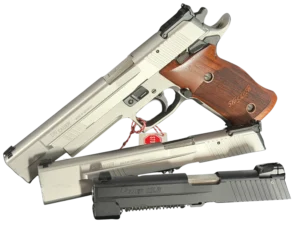
When people say “factory custom,” they’re usually referring to the dedicated custom shops operated by major manufacturers. Think Winchester’s Custom Shop, Remington Custom (back when that was still humming along), the Beretta Premium line, or the various tiers offered by companies like Weatherby, Browning, and Kimber. These divisions exist within larger corporate structures and produce firearms that exceed standard production models in fit, finish, and features.
Here’s the thing, though. A factory custom gun is still, at its core, a production gun that’s been elevated. The base action, receiver, or frame typically starts life on the same manufacturing line as everything else the company builds. What changes is the level of hand-fitting, the grade of wood or materials selected, the attention to cosmetic detail, and sometimes the addition of specific features like upgraded triggers, hand-lapped barrels, or custom engraving.
That’s not a knock against them. Factory custom shops employ genuinely skilled people. Some of the best stockmakers and metal finishers in the country have worked inside these operations at one point or another. The work is real. But the process is shaped by the realities of running a division inside a larger company. There are production targets. There are standardized processes. Materials are sourced in bulk, even if they are high-grade. And the designs, while refined, are usually variations on existing catalog models rather than ground-up original creations.
You know what’s interesting? Many collectors don’t realize that factory custom shops have changed enormously over the decades. The Winchester Custom Shop of the 1960s and 70s operated very differently from what you’d find in later years. Same with the old Remington custom operation. The economics of the firearms industry have squeezed these shops considerably, and some have closed entirely or been scaled back to a shadow of their former selves.
The Independent Gunmaker: A Different World Entirely
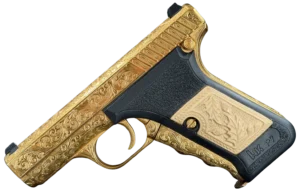
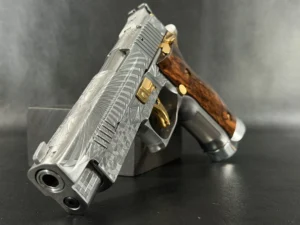
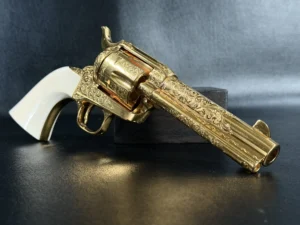
Now flip the coin. An independent gunmaker, sometimes called a bespoke maker or custom builder, is typically a single craftsman or a very small team operating outside the corporate structure. These are people like David Miller, Steve Heilmann, Todd Ramirez, Al Lind, Mark Bansner, or dozens of others whose names circulate in collector circles with something close to reverence.
What makes their work different isn’t just the scale. It’s the starting point. An independent maker often begins with raw materials or semi-finished components and builds the entire firearm from the ground up, tailored to a specific client’s needs and preferences. The stock isn’t selected from a warehouse of blanks graded by a purchasing department. The maker walks into a wood dealer’s shop, personally picks a piece of walnut or maple, and shapes it by hand to fit the customer’s body, shooting style, and aesthetic preferences.
The metalwork follows a similar path. Barrel selection, action truing and blueprinting, custom bolt handles, hand-fitted bottom metal, and surface finishing are all done with a level of individual attention that’s nearly impossible to replicate in a production environment. Some independent makers even build their own actions from scratch, though many work with high-quality commercial actions as starting points (Defiance, Stiller, Bighorn, and others cater specifically to this market).
There’s a patience factor here that can’t be overstated. Wait times of one to three years are common with top-tier independents. Some guys are booked out even further. That might sound frustrating, but it tells you something important: demand for this level of work consistently outstrips supply, a powerful signal of perceived value among knowledgeable collectors.
Craftsmanship: The Devil Really Is in the Details
Let’s get specific about where the craftsmanship diverges, because this is where collectors who are still learning can really sharpen their eye.
Wood-to-metal fit is probably the single most telling indicator of quality in a bolt-action rifle or a fine shotgun. On a factory custom gun, the fit is typically very good. Gaps are minimal. Inletting is clean. But if you look closely, especially with a flashlight angled along the edges, you’ll often find small areas where the fit is acceptable rather than flawless. This makes sense when you consider that even in a custom shop, there are time constraints and efficiency expectations.
On a top-tier independent build, the wood-to-metal fit can be almost eerie in its precision. We’re talking gaps measured in thousandths of an inch, indicating that the wood grew around the metal. It’s the kind of work that stops you in your tracks at a gun show because something about it just looks different, even before you can articulate exactly why.
Checkering is another giveaway. Factory custom checkering, even when hand-cut, tends to follow standard patterns at standard line counts (often 18 to 22 lines per inch for most rifle work). It’s competent and attractive. Independent makers, on the other hand, might run 24, 26, or even 28 lines per inch, with custom-designed patterns that flow with the specific contours of that particular stock. The diamonds are consistently pointed, the borders are razor-clean, and the overall effect has an almost jewel-like quality.
Metal finishing tells a similar story. A factory custom gun might have a nicely polished blue or a well-applied Cerakote finish. An independent maker’s bluing can look like liquid glass, the result of hours of hand-polishing through progressively finer grits before the metal ever touches the bluing salts. Some makers are known specifically for their rust blue or charcoal blue finishes, which are enormously labor-intensive processes that most factory operations simply can’t justify economically.
The Economics: Why the Price Gap Exists (and Whether It’s Worth It)
Let’s be honest about money, because it matters. A factory custom rifle from a major maker might run anywhere from $2,500 to $8,000, depending on the options, the brand, and the level of customization. That’s a significant step up from a standard production gun, and for many shooters and collectors, it represents excellent value. You’re getting a genuinely nicer firearm backed by a factory warranty and a recognized brand name.
An independent custom rifle? You’re looking at $5,000 to $15,000 for a solid build from a respected maker. Top-tier work from the most sought-after names can push past $25,000 or even $40,000, especially if we’re talking about a full-custom rifle with exhibition-grade wood, extensive engraving, and a case-hardened action. Shotguns from the best independent makers can go even higher.
So why the massive difference? It comes down to labor hours, plain and simple. A factory custom shop might allocate 40 to 80 hours of skilled labor to a project. An independent maker might put 200, 300, or even 500 hours into a single rifle. That’s not padding or inefficiency. That’s a single person (or a small team) doing by hand what a factory accomplishes through a combination of CNC machinery, specialized jigs, and division of labor.
Here’s where collectors need to think carefully, though. The relationship between cost and quality isn’t perfectly linear. A $30,000 independent custom isn’t necessarily ten times “better” than a $3,000 factory custom in any measurable performance sense. Both will shoot accurately. Both will function reliably. What you’re paying for at the upper end is artistry, exclusivity, and the kind of hand-executed detail that represents hundreds of hours of a master craftsman’s life. Whether that’s worth it depends entirely on what collecting means to you.
Resale Value and the Collector Market
This is where things get really interesting, and honestly, a little unpredictable. The resale dynamics for factory customs versus independent builds don’t follow a single simple rule.
Factory custom guns from well-known makers tend to hold their value reasonably well, especially if they’re from shops that have since closed or scaled back. A Winchester Custom Shop rifle from the 1990s, for example, has actually appreciated nicely because Winchester closed that operation. Scarcity drives value, and collectors love things they can’t get anymore. The brand recognition also helps; even buyers who aren’t deep into the custom world understand what “Winchester Custom Shop” means on a tag.
Independent customs are a more complicated picture. Guns from the most recognized makers, the names that show up in books and magazine articles and at high-end auctions, can appreciate dramatically. A David Miller rifle, for instance, commands serious money on the secondary market. But here’s the catch: if the maker isn’t well known beyond a small circle, resale can be tough. You might have a technically superb rifle built by a gifted craftsman who never promoted himself, and the broader market simply doesn’t know how to value it.
This creates an interesting dynamic for savvy collectors. Buying from a talented but less-famous independent maker can get you extraordinary quality at a lower price point. The risk is that if you need to sell, you might not easily recoup your investment. Buying from a famous name costs more upfront but carries less resale risk. It’s a classic trade-off, and there’s no single right answer.
One more thing worth noting: provenance matters enormously with independent customs. Documentation, photos of the build process, correspondence with the maker, and any published references to the specific firearm all add value. Smart buyers keep everything. A folder of build photos and letters from the maker can add hundreds or even thousands of dollars to a gun’s resale value.
There’s a parallel here to the art world that’s worth considering. A painting by an unknown but talented artist might be technically superb, yet it sells for a fraction of what a similar piece by a recognized name commands. The same principle applies to custom firearms. The market rewards reputation, published work, and name recognition, alongside (and sometimes above) raw craftsmanship. Understanding this dynamic helps collectors make more informed purchasing decisions, whether they’re buying for love, investment, or both.
Warranty, Service, and What Happens When Something Goes Wrong
Factory customs come with the backing of a corporate entity, and that’s genuinely worth something. If something goes wrong, there’s a customer service department, a repair facility, and established procedures for handling warranty claims. The company has a reputation to protect, and they’ll generally stand behind their products. It might take a while, and the experience might involve some bureaucratic friction, but the safety net is there.
With an independent maker, the warranty is essentially the maker’s personal reputation and commitment to their work. Most serious independents will absolutely stand behind what they build. If something isn’t right, they’ll fix it, often at no charge. But you’re dealing with one person or a small shop, and if that person retires, gets sick, or passes away, the support structure can disappear. This is a reality that collectors need to factor in, particularly with older custom builds from makers who are no longer active.
Honestly, though, quality issues are rare with established independent makers. These people stake their entire livelihood and legacy on every single gun that leaves their shop. The motivation to get it right the first time is enormous.
The Intangibles: Story, Connection, and Soul
Here’s where I’m going to get a little philosophical, but bear with me because this matters to collectors.
A factory custom gun, however beautifully made, is ultimately a product of a system. It’s the output of a process designed to produce consistently high-quality firearms at a certain price point and volume. That’s admirable and valuable, but it doesn’t carry much narrative beyond the brand itself.
An independent custom gun is a conversation between two people. The client describes what they want, what they dream about, how they shoot, and what moves them aesthetically. The maker listens, sketches, suggests, sometimes pushes back, and then goes to work translating all of that into wood and steel. When you hold that finished rifle, there’s a story embedded in it. You can point to the stock shape and say, “I asked for that.” You can admire the checkering pattern and know it was designed specifically for this gun. There’s a human connection that transcends the object itself.
For many seasoned collectors, that’s what ultimately tips the scales. They’ve owned plenty of factory guns, including factory customs, and they appreciate them. But the guns they talk about with the most passion, the ones they’d never sell, tend to be the ones built by an individual craftsman who poured genuine artistry into the work.
There’s also something to be said about watching a craftsman work, if you ever get the chance. Visiting an independent maker’s shop is a completely different experience from touring a factory. You’ll see hand tools alongside precision measuring instruments. You’ll see wood shavings on the floor, and a half-finished stock clamped in a vise. The smell of linseed oil and solvent hangs in the air. It’s a sensory experience that connects you to the centuries-old tradition of gunmaking in a way that a corporate facility simply can’t replicate, no matter how impressive the technology on display.
That said, there’s absolutely nothing wrong with preferring factory customs. Some collectors value the consistency, brand heritage, warranty support, and relative ease of acquisition. These are rational, legitimate preferences. The “best” choice depends entirely on what you value in a firearm.
A Few Practical Tips for Navigating Both Worlds
If you’re looking at factory customs, do your homework on which shops are still operating and which have been discontinued. Discontinued lines often carry a collector’s premium. Ask about specific options and upgrades before ordering. Some factory custom shops allow a surprising degree of personalization that many buyers don’t know about simply because they never asked. And inspect the gun carefully when it arrives. Factory customs are better than production guns, but quality control can still vary.
If you’re considering an independent maker, start by seeing their work in person, if at all possible. Photos don’t tell the whole story, especially with wood-to-metal fit and checkering quality. Talk to previous clients. Ask about wait times, and build in an extra buffer because almost every independent maker runs behind schedule at some point. Discuss the details thoroughly before the build starts, because changes mid-process are expensive and frustrating for everyone. And keep records of everything related to the build.
For collectors who are building a serious collection, the smartest approach might be to have both. Factory customs fill certain roles beautifully: they’re accessible, recognizable, and dependable. Independent customs fill different roles: they’re unique, deeply personal, and represent the highest expression of the gunmaking craft. A collection that includes both tells a richer story about the full spectrum of American (and international) gunmaking.
Something else worth mentioning: don’t overlook the semi-custom space that’s emerged in recent years. Companies like GA Precision, Hill Country Rifles, and others operate in a middle ground, building rifles with a high degree of hand-fitting and customization but at a pace and price point that falls between factory custom and full bespoke. For many collectors and serious shooters, this segment offers a compelling sweet spot. You get individual attention, quality components, and meaningful customization without the multi-year wait or five-figure price tag that comes with the top independent names.
Where Things Are Headed
The landscape is shifting. CNC technology has dramatically raised the floor on production quality, meaning factory guns, in general, are better than they’ve ever been. That puts pressure on factory custom shops to differentiate themselves more clearly from the standard line. Some are responding by offering more personalization options and higher-grade materials. Others, frankly, have struggled to justify their existence as the gap between production and custom narrows.
Meanwhile, the independent gunmaking community is arguably experiencing a renaissance. Social media has allowed makers to showcase their work to a global audience, and younger craftspeople are entering the field with fresh perspectives while still respecting traditional techniques. There’s a growing appreciation for handmade goods across many industries, and firearms are part of that trend.
It’s also worth noting that the lines between categories are blurring a bit. Some factory custom shops now offer levels of personalization that were once exclusive to independents. And some independent makers have grown their operations to the point where they’re essentially small production shops with custom-level quality. The market is more nuanced than the simple “factory vs. independent” dichotomy suggests, and that’s probably a good thing for consumers.
The collector who understands both sides of this equation, who can appreciate a well-executed factory custom for what it is and also recognize the singular artistry of a top independent build, is going to be the best positioned to make smart decisions, whether they’re buying for pleasure, investment, or some combination of both.
Ultimately, it’s your money and your collection. But knowing the real differences between these two worlds gives you the confidence and clarity to buy. And honestly, there are few things better than holding a firearm, whether it came from a factory custom shop or a one-man operation, and knowing exactly what you’ve got and why it matters.
Frequently Asked Questions
It’s essentially a production firearm that’s been upgraded with better materials, hand-fitting, and cosmetic details by a manufacturer’s dedicated custom shop. Think of it as the premium tier within a brand you already know, like Winchester’s Custom Shop or Kimber’s higher-end offerings.
An independent maker builds your firearm from the ground up, often as a single craftsman tailoring every detail to your specific preferences and body. Factory custom shops, by contrast, start with existing production platforms and elevate them within a corporate framework.
It comes down to labor hours; an independent might put 200 to 500 hours into a single rifle, compared to 40 to 80 in a factory custom shop. You’re paying for one person’s undivided skill and time rather than a system built around efficiency.
Generally, yes, especially from shops that have since closed or scaled back, because scarcity and brand recognition both work in your favor. A Winchester Custom Shop rifle from the 1990s, for instance, has appreciated nicely since that operation shut down.