
Key Takeaways:
- Original Condition Is Everything: Fine firearms can appreciate significantly; a Singer M1911A1 more than doubled in value from $166,000 to $414,000 in just seven years. But here’s the thing: refinishing destroys value. A Winchester 1894 rifle lost over $12,000 in worth simply because someone refinished it. Collectors want honest wear and patina, not guns that have been “restored” to look new.
- The Hidden Costs Will Surprise You: Transaction costs alone can hit 30% of your sales price when you factor in auction fees, dealer margins, and shipping. Then there’s storage, at roughly $20-25 per gun per month, and professional cleaning at $75-100 per session. A 20-gun collection could cost you $6,000-7,200 annually just to store properly. Oh, and the IRS taxes collectibles at 28%, not the 15-20% rate you’d pay on stocks.
- Regulatory Risk Is Real and Unpredictable: Remember bump stocks? They went from legal accessories to federally banned contraband in 90 days after the 2018 rule change, making them instantly worthless. State laws are diverging, too, creating essentially two different markets. What’s easily sellable in Texas might be impossible to move in California. You’ve got to stay informed about legal trends because one regulatory shift can crater values overnight.
Let’s get started.
So you’re thinking about putting your money into fine firearms? Maybe you’ve been collecting for years, wondering whether those beauties in your safe are actually a smart investment. Or perhaps you’re new to this world and trying to decide whether collectible guns make sense for your portfolio. Either way, you’re asking the right questions.
Investing in fine firearms in 2026 is a peculiar beast. It’s not like buying stocks or even gold. You’re dealing with objects that carry history, emotion, and, let’s be honest, a whole lot of regulatory baggage. But here’s the thing: when done right, firearms can be surprisingly solid assets. When done wrong? Well, you might end up with an expensive paperweight that nobody wants to buy.
Let me walk you through what you’re really getting into.
The Allure of Holding History in Your Hands
There’s something about a finely crafted firearm that just hits different. You know what I mean? When you pick up a Holland & Holland side-by-side shotgun or a Colt Single Action Army from the 1880s, you’re not just holding metal and wood. You’re holding craftsmanship that doesn’t really exist anymore, at least not at that level.
This tangible quality is actually one of the biggest rewards of firearm investing. Unlike stocks that exist only as digital entries in some database, a collectible firearm is real. You can touch it, admire it, and yes, even use it (though most serious collectors wouldn’t dream of firing their prize pieces). During times of economic uncertainty, when markets are tanking, and everyone’s panicking, your firearms are still sitting there, solid as ever.
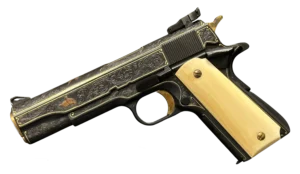
Some high-end models have actually appreciated faster than traditional safe havens like gold. Want a real example? A rare Singer M1911A1 pistol sold for $166,000 in 2010, then resold for $414,000 just seven years later in 2017. That’s more than doubling in value. Or consider the revolver Sheriff Pat Garrett used to kill Billy the Kid; it sold for over $6 million in 2021, setting a record for firearms at auction.
I’m talking about pieces from what collectors call “A-List” makers, Colt, Winchester, Smith & Wesson, Holland & Holland, Purdey, and a few others. A pristine Colt Single Action Army revolver from the 1870s? That could easily fetch six figures today. The same gun might’ve sold for a few thousand dollars back in the 1980s.
The Historical Premium Nobody Talks About Enough
Here’s where things get interesting. The firearms that appreciate the most aren’t necessarily the rarest or the most expensive when new. They’re the ones with stories. Historical significance matters more than almost anything else in this market.
Think about a Winchester Model 1873 that was actually carried during the settlement of the American West. Or a Luger P08 with documented provenance from World War II (though you’ve got to be careful with Nazi-marked pieces, that’s a whole ethical minefield we won’t wade into here). These guns are appreciated because they’re pieces of history that happened to be firearms, not just old firearms.
Documented provenance can multiply a gun’s value many times over. A pair of Napoleonic-era pistols was valued at over $10,000 due to their documented history with the royal guard. The kicker? If those same pistols had been over-cleaned or refinished, their value would have dropped below $1,000. Yeah, you read that right, improper cleaning can destroy 90% of a gun’s value when it has historical significance.
Original condition is king in this world. A gun that’s been sitting in someone’s attic for 80 years, covered in honest wear and patina, is worth way more than the same model that’s been “restored” to look shiny and new. Collectors want authenticity, and honestly, there’s something beautiful about a gun that shows its age gracefully. Those wear marks? That’s character. That’s proof the thing actually lived.
Let me give you a concrete example of how badly refinishing can hurt value. A Winchester 1894 rifle that was poorly refinished appraised at around $1,250 in refinished condition. Had 90% of its original finish been intact? That same rifle would have been worth $14,000 or more. Think about that, refinishing destroyed over $12,000 in value.
There’s an old saying in the collecting world: “An all-original 90% gun beats a 98% refinished gun every time.” The numbers refer to the percentage of original finish remaining, and the saying captures a fundamental truth about this market. Collectors overwhelmingly prefer honest wear over any refinishing, no matter how expertly done.
The Antique Advantage: A Legal Sweet Spot
Now, let me hit you with something that makes antique firearms particularly attractive: the regulatory carve-out. Under federal law, any firearm with a receiver manufactured before January 1, 1899, is legally classified as an “antique” and isn’t considered a firearm for regulatory purposes. Yeah, you read that right.
What does this mean in practice? Essentially, you can buy and sell these pieces without going through the same ATF requirements that apply to modern firearms: no federal background checks, no FFL dealer required for transfers, and no waiting periods. In most states, they can even be shipped directly to your door. It’s as if they exist in a legal time capsule.
State and local laws can still impose restrictions, so buyers should always verify local regulations before assuming an antique firearm can be transferred without additional requirements.
This makes pre-1899 firearms significantly more liquid than their modern counterparts, and liquidity matters in any investment. This increased liquidity refers primarily to legal ease of transfer, not necessarily faster sales at full market value. You can sell a Colt Peacemaker from 1892 a lot easier than you can sell a modern AR-15, especially if you’re dealing across state lines. This legal sweet spot is a key advantage for 19th-century pieces and could become even more valuable if future private-sale regulations tighten.
Death and Taxes (But Mostly Just Taxes)
Speaking of advantages, there’s an inheritance angle that not enough people talk about. When you pass firearms to your heirs, they get what’s called a “step-up” in cost basis to the fair market value at the time of your death.
Let’s say you bought a rare Winchester for $5,000 back in 2000, and by the time you die in 2045, it’s worth $50,000. Your heir inherits it at that $50,000 valuation. If they turn around and sell it for $50,000, they owe zero capital gains taxes on that $45,000 of appreciation that happened while you owned it. Pretty sweet deal, right?
This step-up applies to most inherited assets, not just firearms, but it makes guns particularly attractive for generational wealth transfer, especially if you’re building a collection you plan to pass down anyway. Just make sure you keep good records and get appraisals done periodically to establish that fair market value.
But Let’s Talk About the Other Side
Alright, enough of the good stuff. Time for some cold water: the risks in firearm investing are real and significant.
First up: liquidity. Or rather, the lack of it. Try to sell a collectible firearm quickly, and you’ll understand what I mean. Unlike stocks, where you can hit “sell” and have cash in your account two days later, firearms are a pain to move.
You’ve basically got a few options, and none of them are great for quick sales.
You can sell through an auction house, which might take months and will typically incur a combination of seller’s commission and buyer’s premium that effectively reduces net proceeds by 15–20% or more. You can sell to a dealer, who’ll probably offer you 50-70% of what the gun’s actually worth because they need to make their margin and cover their costs. Or you can try to sell privately, which means finding someone who wants exactly what you have, can afford it, and is willing to go through the transfer process.
When you add up auction fees, dealer margins, transfer costs, shipping, and insurance, it’s not uncommon for transaction costs to eat up 30% or more of the sales price. That’s brutal. It means a gun needs to appreciate by more than 30% just for you to break even on the sale, and that’s before we even talk about holding costs.
Here’s a quick example: You sell a $10,000 gun through an auction. The auction house takes 18% ($1,800). You pay for shipping and insurance ($150). Maybe you need to cover the transfer on your end ($50). You net $8,000. That gun needed to appreciate from around $6,150 to $10,000 just for you to walk away with your original investment back.
The Hidden Costs of Ownership
Here’s something that catches new collectors off guard: firearms are expensive to maintain properly. We’re not talking about a stock certificate that sits in a brokerage account costing you nothing. Fine firearms need care.
Climate-controlled storage is essential. Temperature swings and humidity will destroy value faster than you can imagine. Rust doesn’t care how much you paid for that gun. Professional storage facilities charge roughly $20-25 per firearm per month, plus insurance. Rates vary by region and security level, with major metropolitan facilities often charging more. If you’ve got a collection of 20 pieces, that’s around $500-600 monthly, or $6,000-7,200 a year. Over a decade? You’re looking at $60,000 to $ 72,000 in storage costs alone.
Even if you store at home, you’ve got costs: a quality safe runs several thousand dollars, dehumidifiers need replacing, security systems cost money, and your homeowner’s insurance needs to be updated. Most standard policies only cover around $1,500-2,500 total for firearms in the event of theft. Got a collection worth $50,000? You’ll need to schedule those items separately, which requires appraisals and higher premiums.
Then there’s maintenance. Fine firearms should be professionally cleaned and inspected regularly. Most gunsmiths charge around $75-100 per gun for a thorough deep cleaning. Some collectors do this work themselves, but if you’re dealing with historically significant pieces, you probably want expert hands on them. Even basic maintenance adds up over time.
And here’s the thing: any maintenance on valuable pieces needs to be done carefully. Over-cleaning can damage original finishes. Using the wrong products can strip patina. One careless moment can cost you thousands.
The Regulatory Tightrope
Firearm laws are a moving target. What’s legal today may not be legal tomorrow, and what’s in demand now may be restricted next year. That regulatory uncertainty is likely the single biggest risk in firearm investing.
This isn’t about politics; it’s about risk. Regulatory changes can wipe out value overnight. Bump stocks after the Las Vegas shooting are the classic example: the 2018 federal rule turned them into contraband with 90 days’ notice. Legal accessories instantly became items that had to be destroyed or surrendered. Market value went to zero.
“Military-style” rifles are constantly in lawmakers’ sights. Even talk of new bans can send prices spiking or freezing. Magazine-capacity limits shift. Import rules change. State laws differ dramatically. California’s market looks nothing like Texas’s, and what sells easily in one state might be unsellable in another.
State laws are diverging, not converging, creating effectively two markets. Some states are loosening rules, others are tightening them. You have to understand not just your own laws, but also those that apply to your potential buyers.
More changes are coming. Lead-ammunition bans are expanding: California already bans lead for hunting, and EU/UK moves against lead shot, plus potential future U.S. rules, could affect older, softer-barreled shotguns, reducing both their utility and value. Environmental regulations could quietly reshape which firearms remain practical investments.
Bottom line: you must stay informed about both current law and where policy is headed. That’s tiring, and it’s a level of risk you simply don’t face with traditional investments.
The Tax Hit That Surprises Everyone
Remember those tax advantages I mentioned earlier? Well, there’s a flip side. Under the U.S. tax code, the IRS classifies firearms as collectibles, and collectibles held for more than a year are taxed at a maximum rate of 28% on capital gains.
Compare that to the 15-20% rate you’d pay on long-term capital gains from stocks. If you’re in a high tax bracket, you’ll actually hit that full 28%. On a $20,000 gain, that’s an extra $1,600-2,600 going to Uncle Sam compared to what you’d pay on stock gains.
This tax treatment makes firearms less efficient from a pure investment standpoint than securities. You need meaningfully higher appreciation just to overcome the tax disadvantage. It’s something most people don’t think about until they’re sitting with their accountant doing taxes after a big sale.
When Brands Go Belly-Up
Here’s a risk that’s more relevant than ever: brand and manufacturer stability. If the company that made your firearms goes bankrupt or faces serious legal trouble, the resale value can tank.
Look at what happened with Remington. Once an American icon, the company went through bankruptcy in 2018 and again in 2020, got carved up and sold off, and suddenly, parts and service became questionable. Collectors got nervous. Values on certain Remington models softened significantly because buyers worried about future support.
SCCY Industries is another recent example. This well-known budget handgun maker abruptly ceased most operations and filed for Chapter 11 bankruptcy in 2025. If a manufacturer disappears or becomes unreliable, buyers worry about parts availability, warranty service, and future support. Even if the gun in your safe still functions perfectly, perception matters in the collectibles market.
This is why collectors tend to favor older, established manufacturers whose reputations are well established. A Colt 1911 from the early 20th century doesn’t need factory support; there are plenty of gunsmiths who can work on it, and parts are widely available. But a modern boutique manufacturer without a long operating history or secondary market? That’s a gamble. If the company folds, you might end up with an orphaned product that’s tough to service and even tougher to sell.
So, How Do You Actually Do This Right?
If you’re still interested after all that, and honestly, if you’re a true firearms enthusiast, you probably are, here’s how to approach this intelligently in 2026.
Focus obsessively on originality.
I can’t stress this enough. A refinished gun, even one that’s been beautifully refinished by an expert, is worth a fraction of the same gun in original condition. The market has spoken clearly on this. Buyers want patina, honest wear, and originality. They don’t want guns that have been “restored” or “improved.”
The numbers don’t lie: an all-original gun with 90% of its finish beats a 98% refinished gun every single time in terms of collector value. The examples I mentioned earlier, like the Winchester 1894 that lost over $12,000 in value from refinishing, aren’t outliers. They’re the norm.
Avoid commemoratives (mostly)
Gun manufacturers love putting out “Commemorative Edition” firearms. They look fancy, come in nice boxes, and seem valuable. Most commemorative guns haven’t appreciated much at all; in fact, many are worth less now in inflation-adjusted terms than their original sale price.
The problem is that commemoratives are produced specifically for collectors, which means tons of them get bought and put away unfired. When everyone’s doing the same thing, scarcity doesn’t develop. Meanwhile, working guns from the same era that actually got used are rarer because many got worn out or abused. Even unfired in the presentation case, commemoratives can be very tough to sell.
Some commemoratives do appreciate, but it’s definitely the exception rather than the rule. If you’re going to buy commemoratives, do it because you genuinely like them and want them in your collection, not as an investment strategy. Scarcity and organic history beat manufactured collectability almost every time.
Get expert appraisals for anything significant
This isn’t optional if you’re serious. For high-value items, and I’d say anything over $5,000 qualifies, get a qualified appraisal from reputable firms like Rock Island Auction Company, James D. Julia (Morphy) Auctioneers, or established dealers like Guns.com.
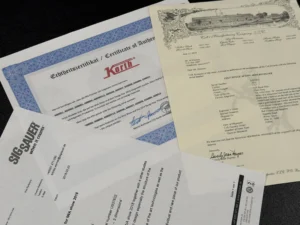
Why? First, you need to establish a tax basis for the step-up we discussed earlier. Second, authentication matters hugely in this market. Fakes exist, “married guns” (assembled from parts of different firearms) exist, and even experts can be fooled. A documented appraisal protects you and gives future buyers confidence.
Third, insurance. If you’ve got a valuable collection, you need proper coverage, and your insurance company will want appraisals. As I mentioned, most homeowners’ policies cap firearms coverage at around $1,500- $ 2,500. Serious collections need specialized coverage with scheduled items, which requires professional documentation of value and provenance.
An appraisal for a significant firearm is a wise investment that serves multiple purposes: estate planning, insurance coverage, and authenticity verification. It’s not an expense, it’s protection.
The Brands That Keep Delivering
You asked which brands are most appreciated. Generally speaking, pre-World War II American manufacturers led the pack: Colt, Winchester, Smith & Wesson, and Marlin for rifles and handguns. Pre-1964 Winchesters and first-generation Colt Single Action Army revolvers are perennial collector favorites.
For shotguns, British makers like Holland & Holland, Purdey, and Boss & Co. are investment grade. German makers like Krieghoff and Merkel hold value well. You might also consider iconic models from Fabrique Nationale (Browning), such as the Browning Hi-Power, or pre-war Mauser rifles, which have dedicated collector followings.
For modern investments, high-end manufacturers like Perazzi or Beretta’s premium lines have track records of holding value, though appreciation is generally slower than with historical pieces.
But brand alone doesn’t determine value. Specific models within a brand’s lineup matter enormously. A Colt Python from the 1960s-70s? Investment grade. A Colt Mustang .380? Not so much. A pre-64 Winchester Model 70 in excellent condition? Absolutely. A mass-produced Winchester from the 1980s? Probably not.
The core message: stick with proven names and models that have demonstrated staying power in the collector market.
Looking Ahead: What Might Change
Nobody has a crystal ball, but there are some trends worth watching. Federal legislation on private sales and background checks could tighten, which might actually increase the value of pre-1899 antiques, since they’d remain exempt from new transfer laws. Conversely, it could decrease the liquidity of modern firearms by making private sales more complicated.
State-level restrictions seem to be diverging more than converging, and we’re essentially watching the formation of two distinct markets. Some states are loosening restrictions while others are tightening them. What’s easily sellable in free-market states might be nearly impossible to move in restrictive states, and vice versa. This creates both geographic arbitrage opportunities and significant complications for interstate sales.
The lead ammunition bans I mentioned earlier could affect the usability of certain firearms, potentially impacting values. Climate change itself might increase the costs of proper storage in some regions as temperature and humidity control become more challenging.
And honestly, cultural attitudes toward firearms are shifting in complex ways, and the demographics of collectors are changing too. The traditional collectors who’ve been driving high-end gun prices have been older: Baby Boomers and Gen-X enthusiasts who grew up hunting and appreciate military history. Millennials and Gen-Z gun owners tend to be less focused on antique collecting and more interested in modern tactical arms or competitive shooting sports.
Over the long term, this generational shift could influence which categories of “investment guns” thrive. Military surplus from WWII that Boomers coveted could soften in value over the long term if younger enthusiasts aren’t as interested. Meanwhile, custom AR-15 builds or artisan-crafted modern firearms might find new favor with younger collectors who value different aesthetics and functionality.
This doesn’t mean fine antiques will crash; quality always finds buyers, but collectors should be mindful of generational tastes when forming an investment thesis. A younger reader might enjoy a different niche than an older one, and that’s completely fine as long as they apply the same principles of quality, condition, and proven collector appeal.
The Bottom Line (Because There Has to Be One)
Investing in fine firearms isn’t for everyone, and it shouldn’t be a large part of anyone’s portfolio. But for collectors and enthusiasts who love these pieces anyway, understanding the investment dynamics makes sense.
The rewards are real: tangible assets, potential for significant appreciation, some tax advantages on inheritance, and the sheer joy of owning beautiful, historically significant objects. The risks are equally real: poor liquidity, high holding costs, regulatory uncertainty, unfavorable tax treatment of gains, and concerns about manufacturer stability.
If you approach this as a collector first and investor second, you’ll probably do fine. Buy quality over quantity. Focus on established makers and significant models. Keep everything original. Get expert help when you need it. Do your homework on each potential acquisition, research the historical background, production numbers, condition grading standards, and market trends before putting serious money on the line.
Stay informed about legal developments at both the federal and state levels. Monitor the market. Build relationships with reputable dealers and auction houses. Learn to recognize quality and authenticity yourself, but don’t be afraid to pay for professional opinions on major purchases.
And maybe most importantly, remember that the best investment is often the one you enjoy, regardless of its financial return. If looking at that pristine Colt Single Action Army or that magnificent Holland & Holland shotgun in your safe makes you happy every day, well, that’s a return on investment that has nothing to do with dollars and cents.
Just don’t forget to keep the humidity below 50%.
Frequently Asked Questions
Under federal law, firearms manufactured before January 1, 1899, aren’t subject to the same ATF regulations as modern weapons, so you can buy and sell them without background checks or FFL transfers in most states. This legal ease of transfer makes them significantly more liquid than modern firearms, though you should always verify local regulations first.
Professional climate-controlled storage runs roughly $20-25 per firearm per month, plus insurance, so a 20-gun collection could cost $6,000-7,200 annually. Rates vary by region and security level, with major metropolitan facilities often charging more.
Collectors overwhelmingly prefer original finishes with honest wear over any restoration, no matter how expertly done. A Winchester 1894 that was refinished dropped in value to $1,250, whereas it would’ve been worth $14,000+ with its original finish intact.
The IRS classifies firearms as collectibles, so you’ll pay up to 28% on long-term capital gains, significantly higher than the 15-20% rate on stocks. That means you need a higher appreciation just to overcome the tax disadvantage.