

Description
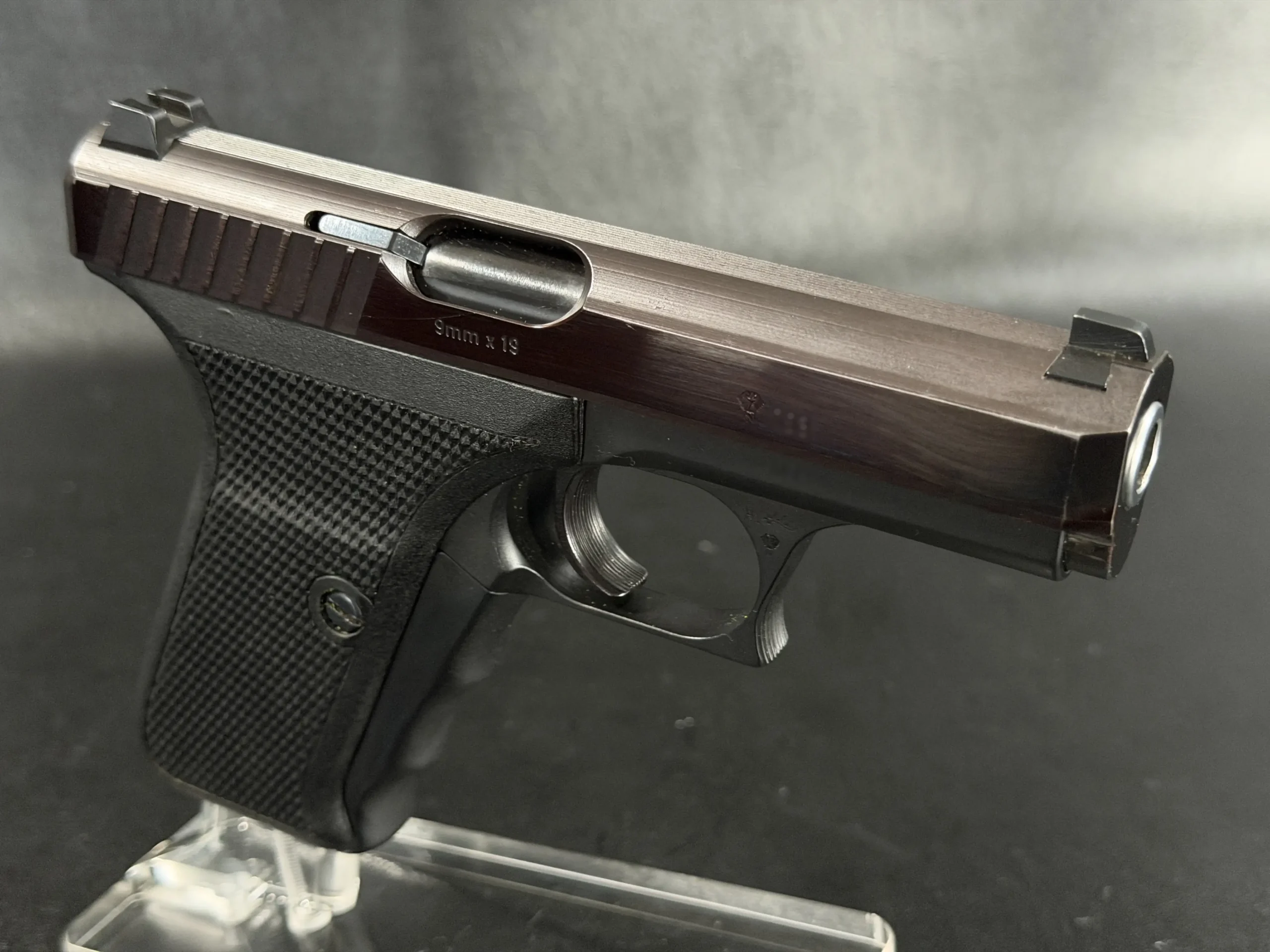
Few modern pistols have earned the reputation for mechanical ingenuity and precision that surrounds the Heckler & Koch P7 series, and among them, early development examples remain some of the most fascinating pieces for collectors. This Heckler & Koch P7 PSP Prototype represents a formative stage in the evolution of one of Germany’s most innovative service pistols, an engineering concept that would ultimately redefine compact defensive handguns in the late twentieth century.
Developed in the 1970s at the famed Heckler & Koch facility in Oberndorf am Neckar, the P7 was designed in response to German police trials seeking a modern, safe, and compact sidearm chambered in 9×19mm Parabellum. The result was a pistol unlike anything else on the market. Rather than relying on traditional locked-breech systems, the P7 employed gas-delayed blowback operation, a clever design that uses expanding gas tapped from the barrel to regulate slide movement. The system allowed the pistol to remain exceptionally accurate while maintaining a fixed barrel and a remarkably low bore axis.
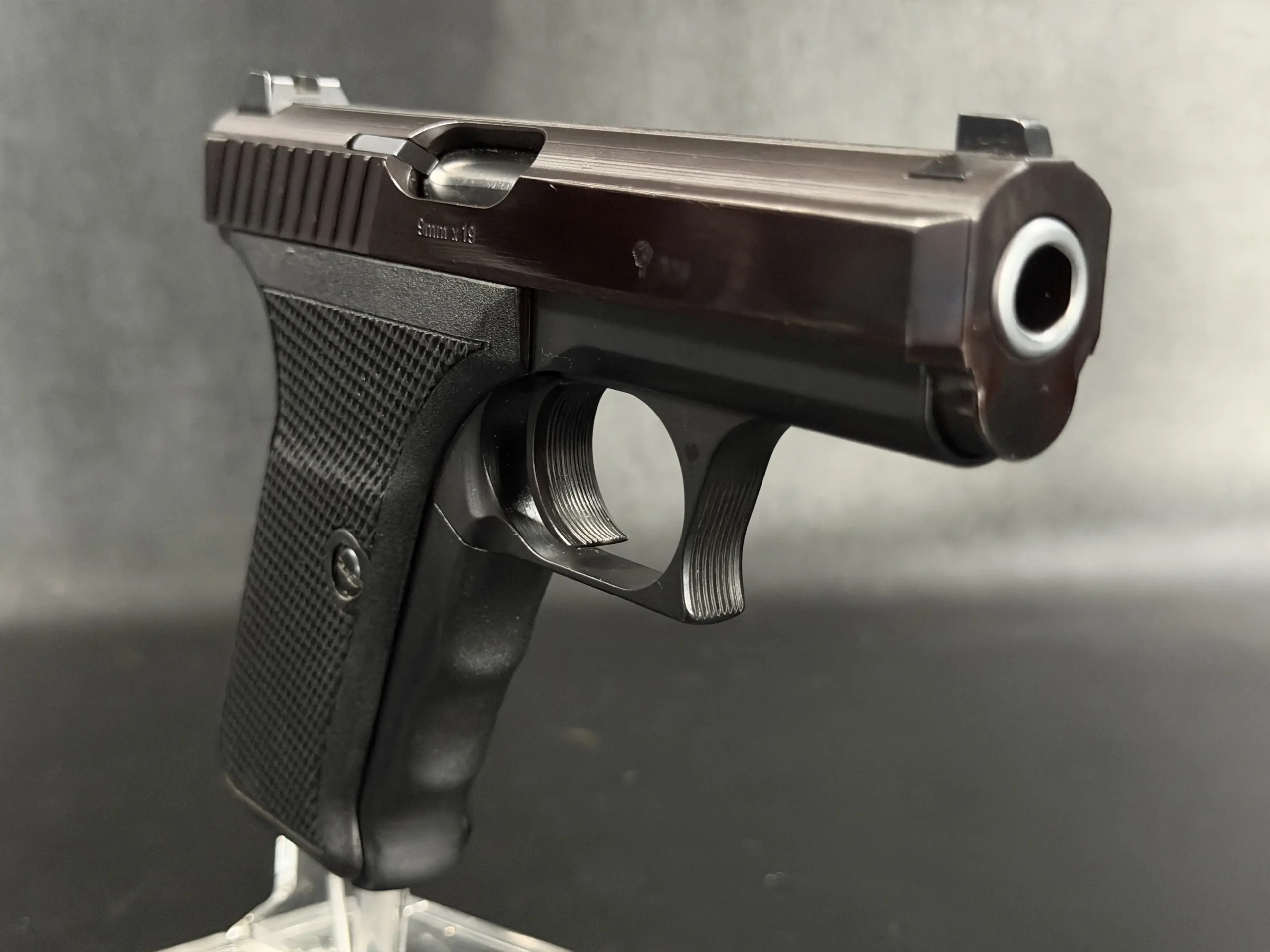
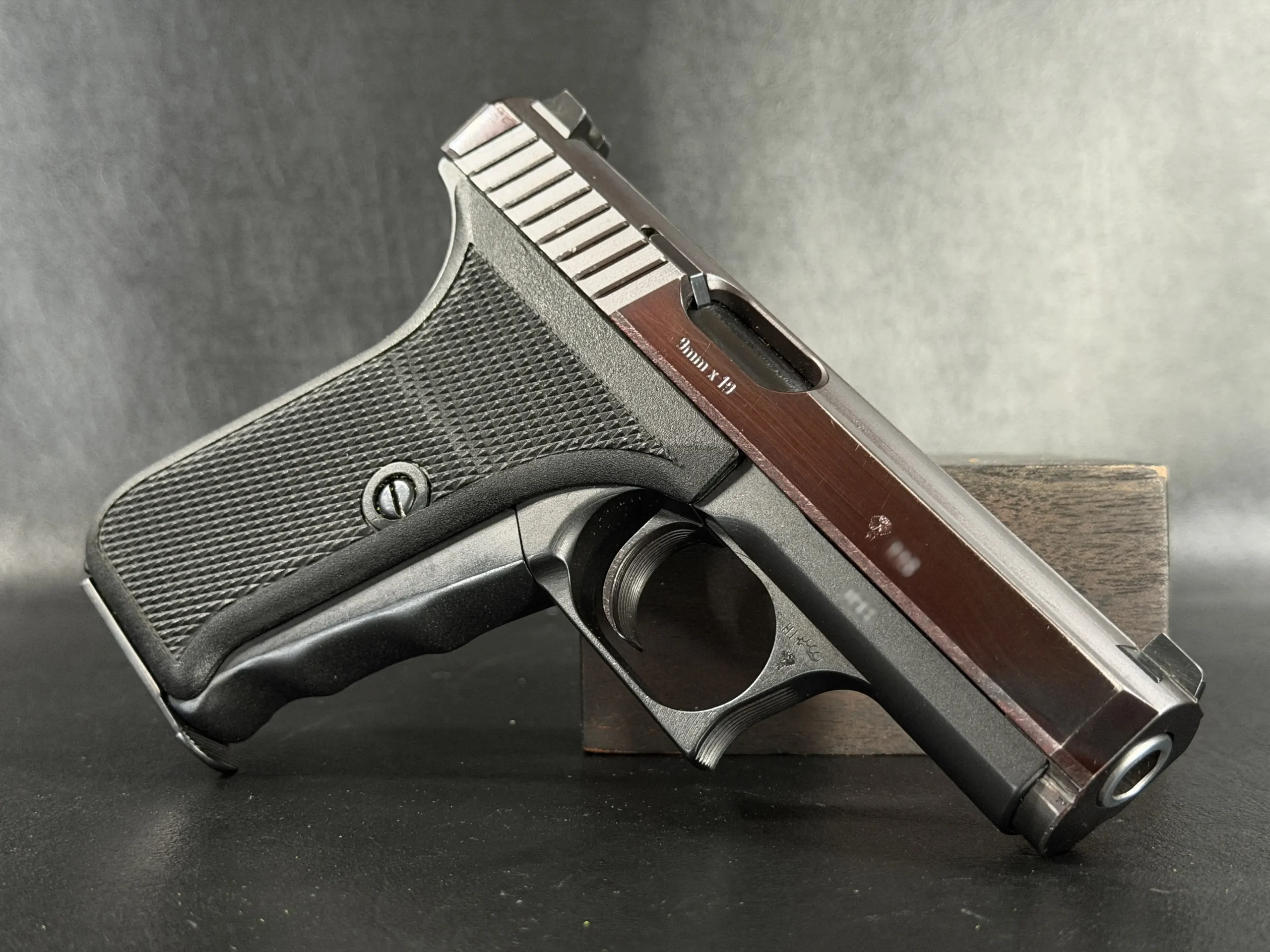
At the heart of the P7’s distinctive handling is the squeeze-cocker mechanism, a front grip lever that both cocks the striker and serves as a passive safety. This elegant solution enables the pistol to be carried safely with a round chambered while allowing immediate readiness the moment the pistol is gripped. For law enforcement agencies evaluating the pistol in the 1970s, the concept offered an appealing combination of speed, safety, and simplicity.
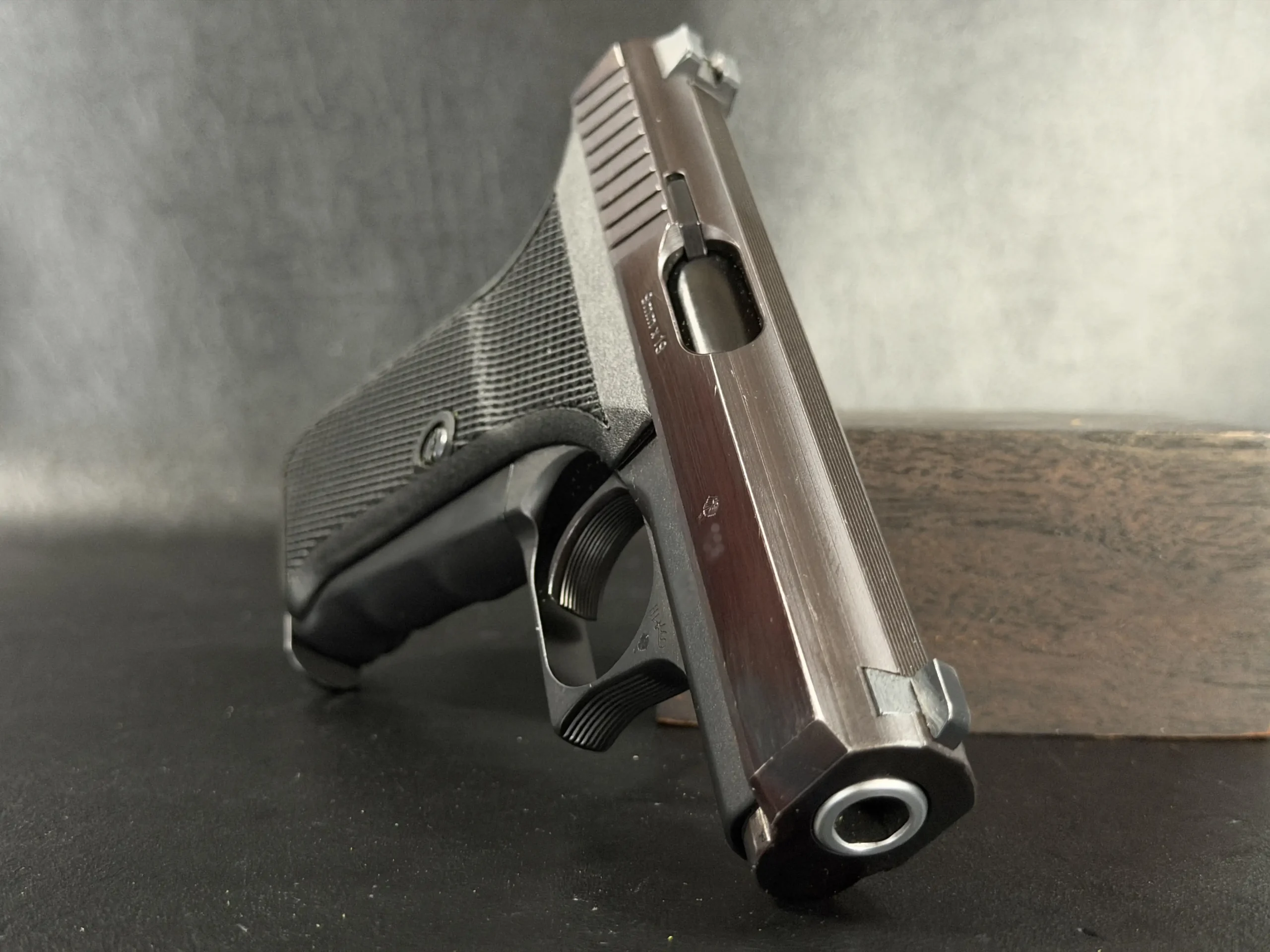
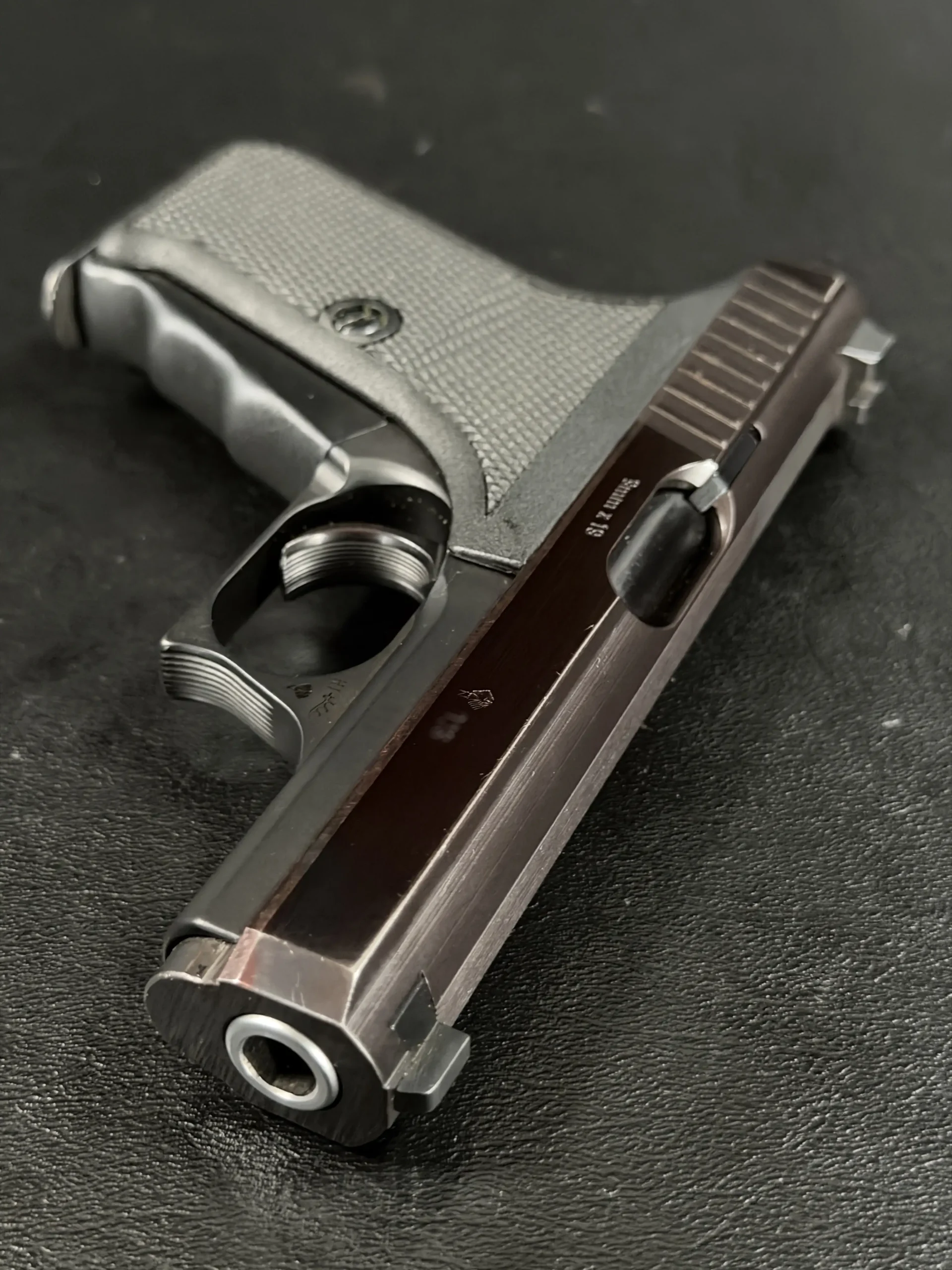
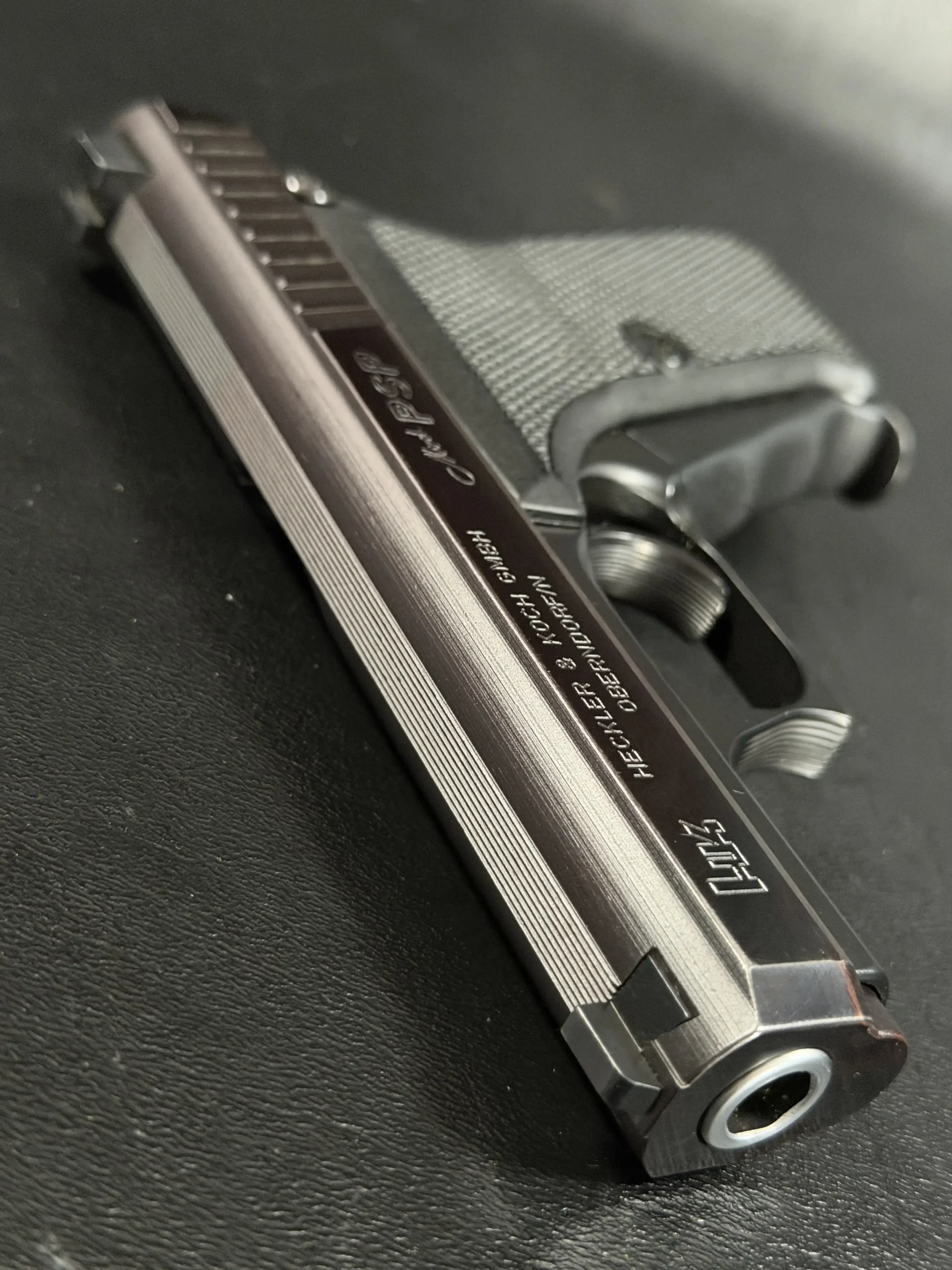
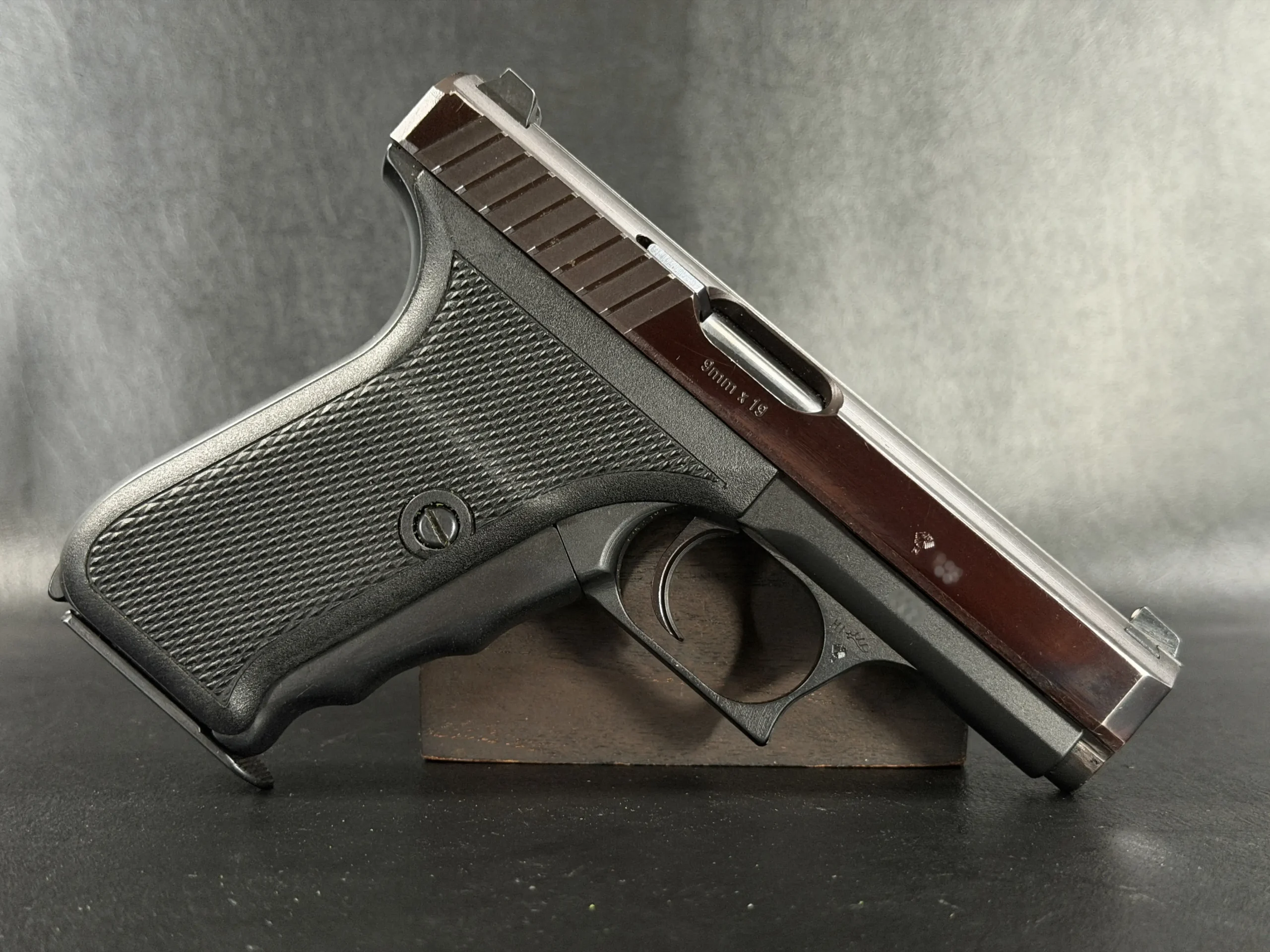
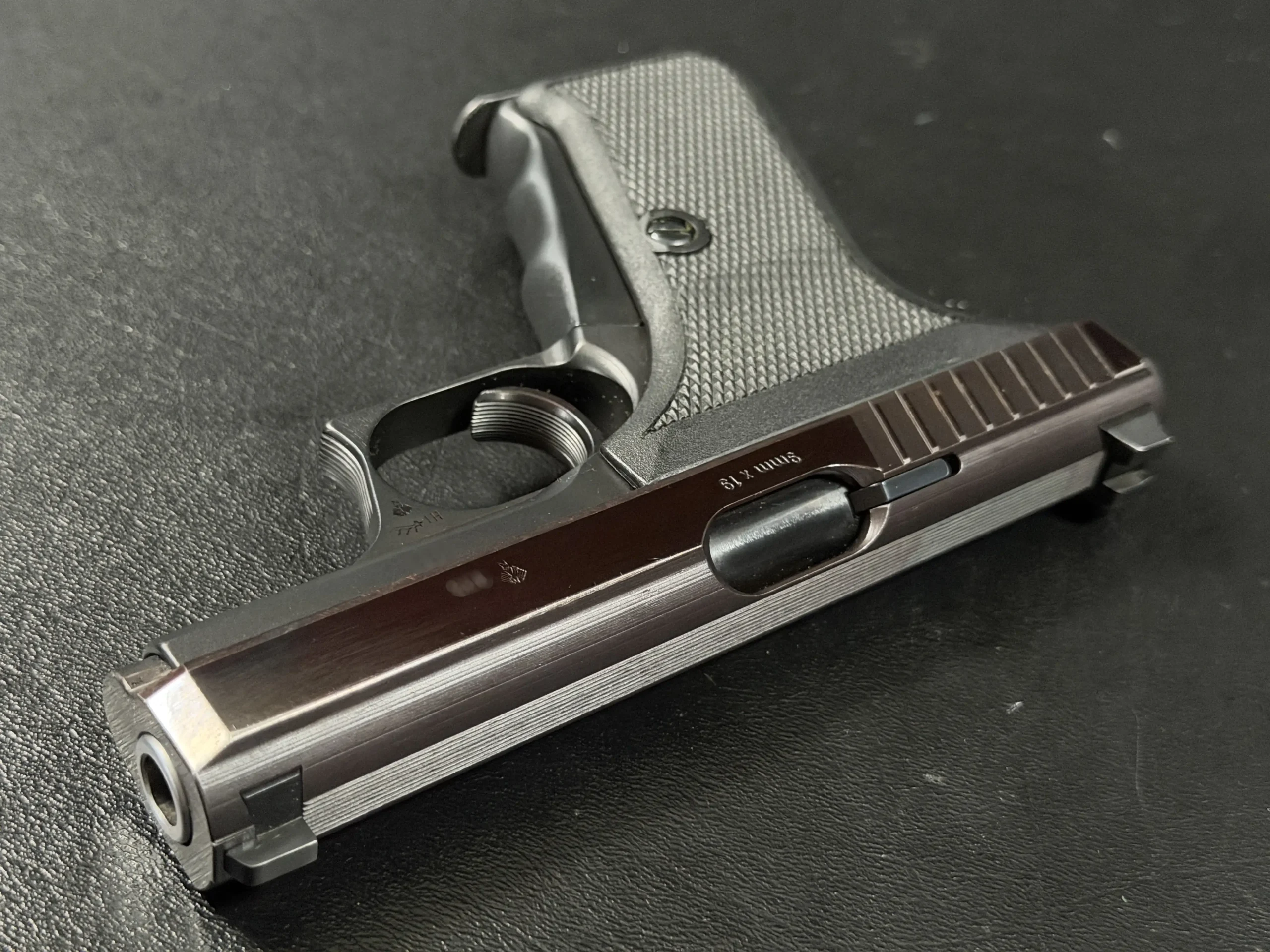
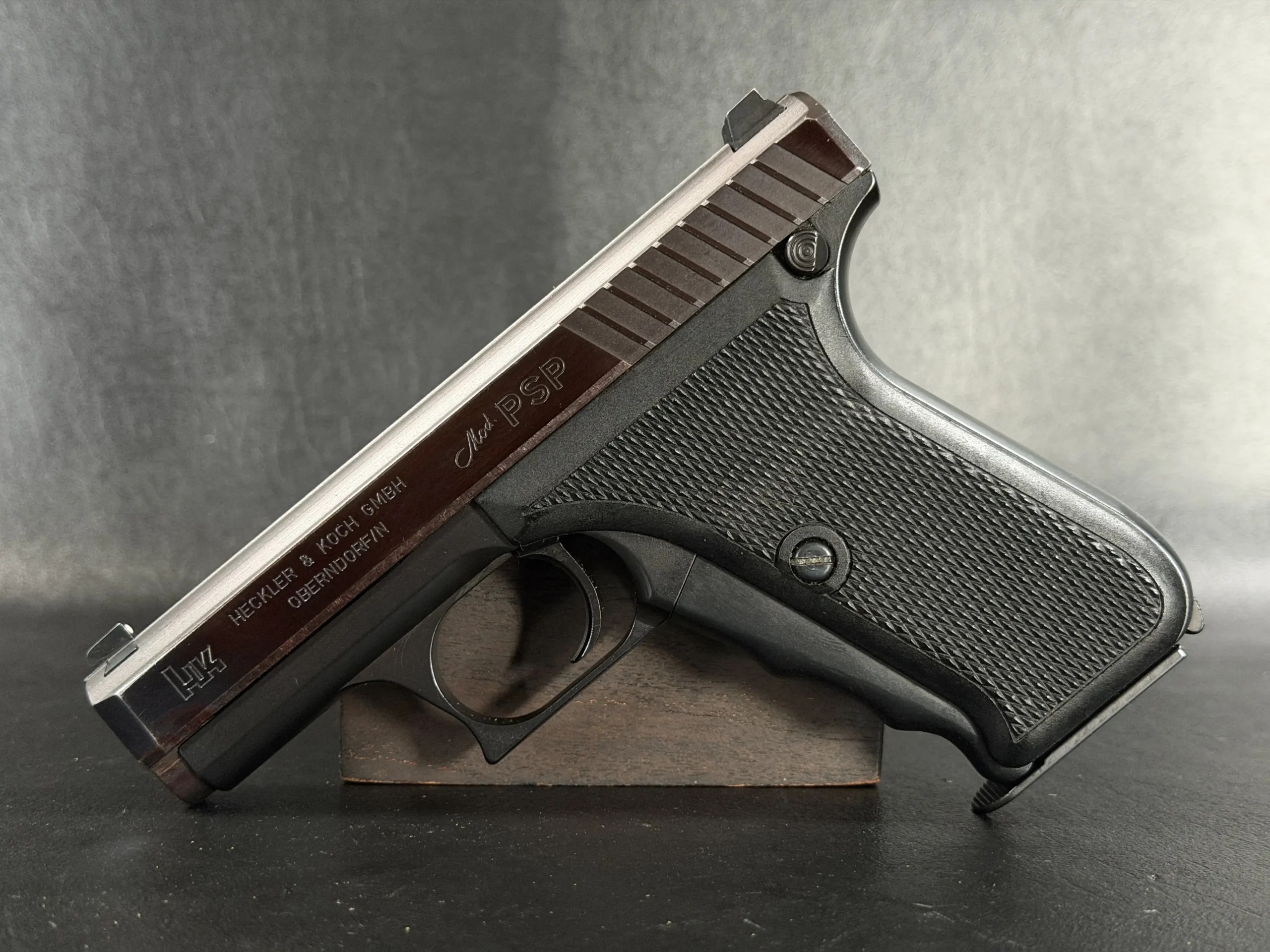
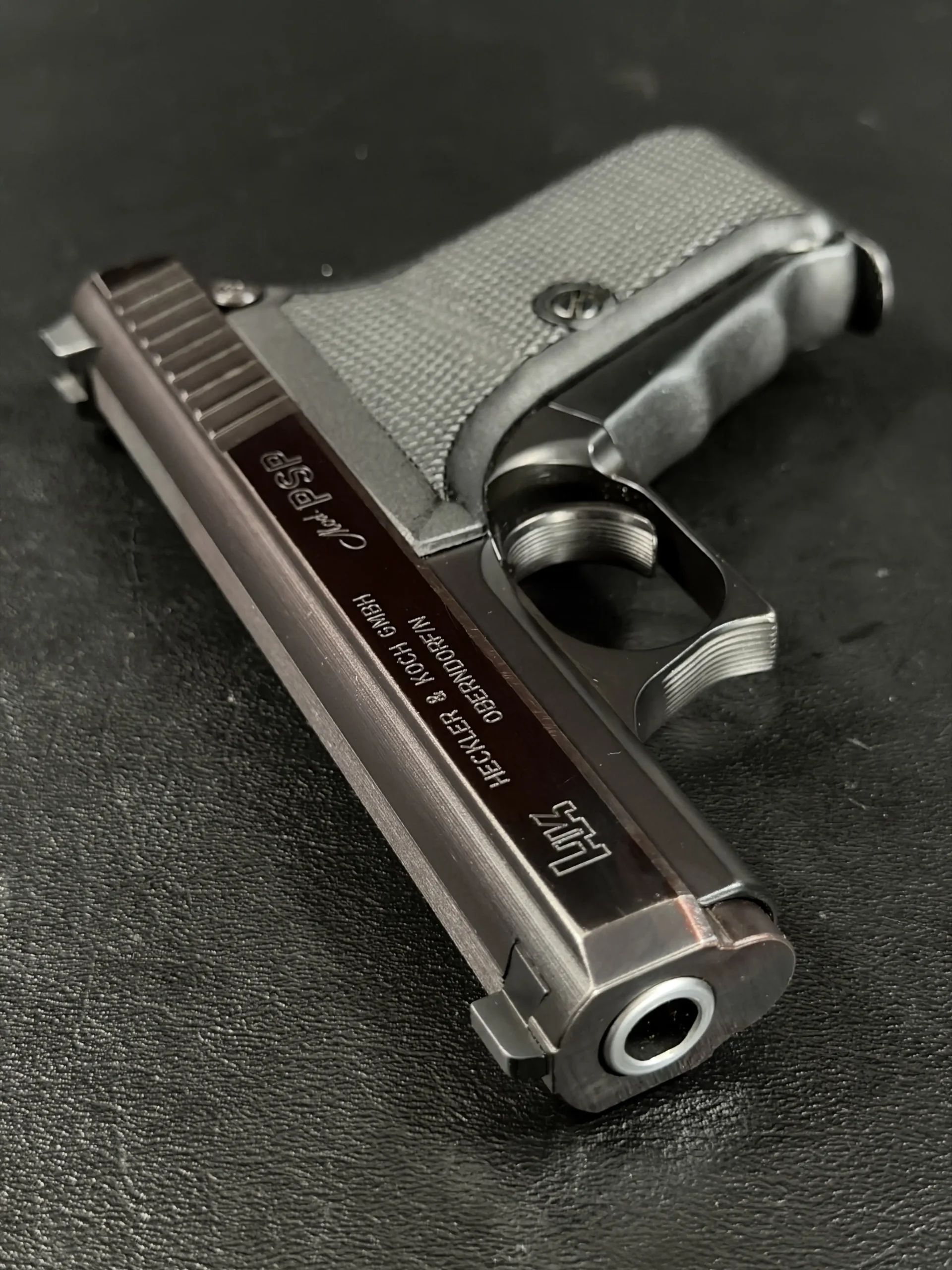
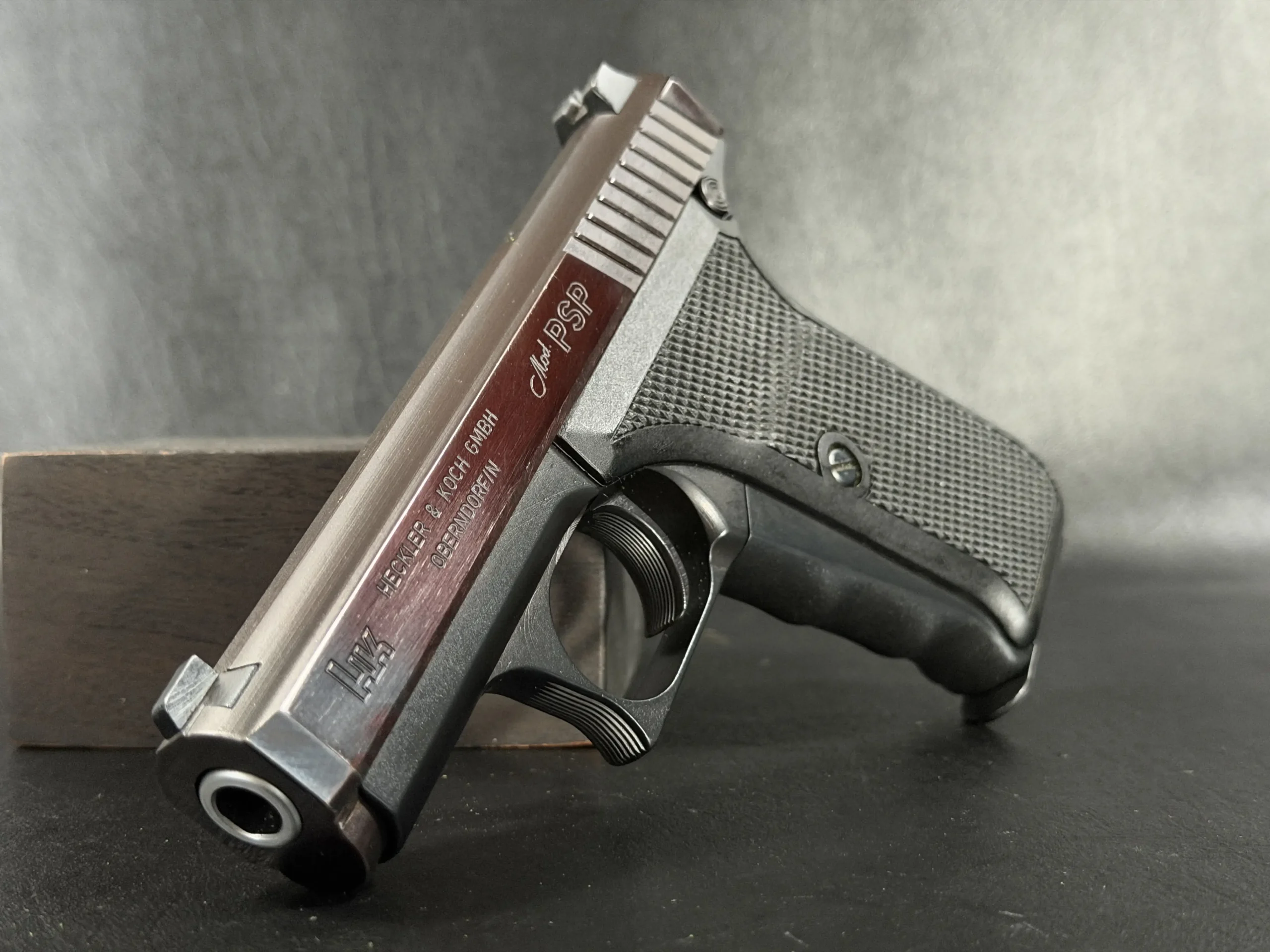
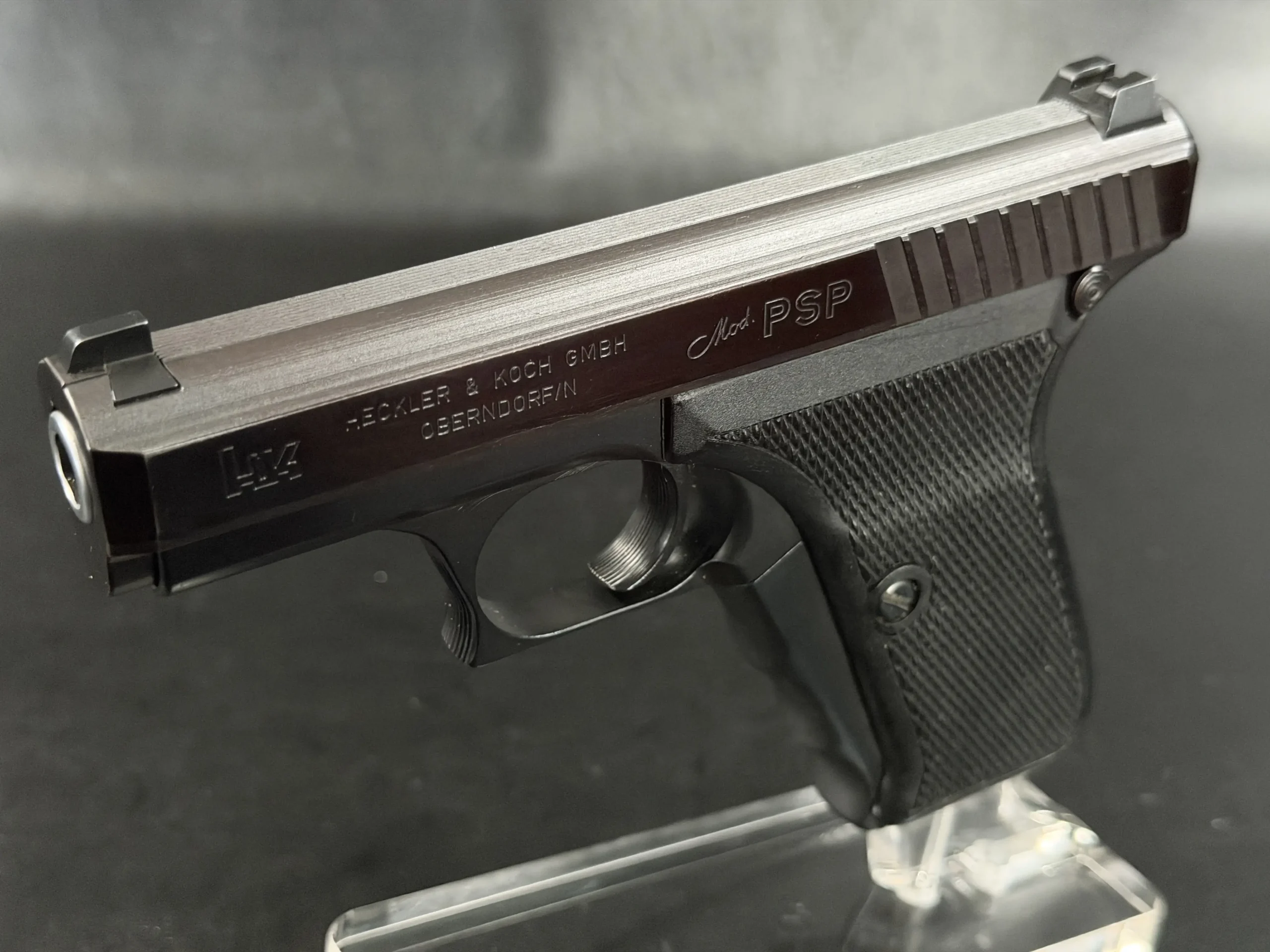
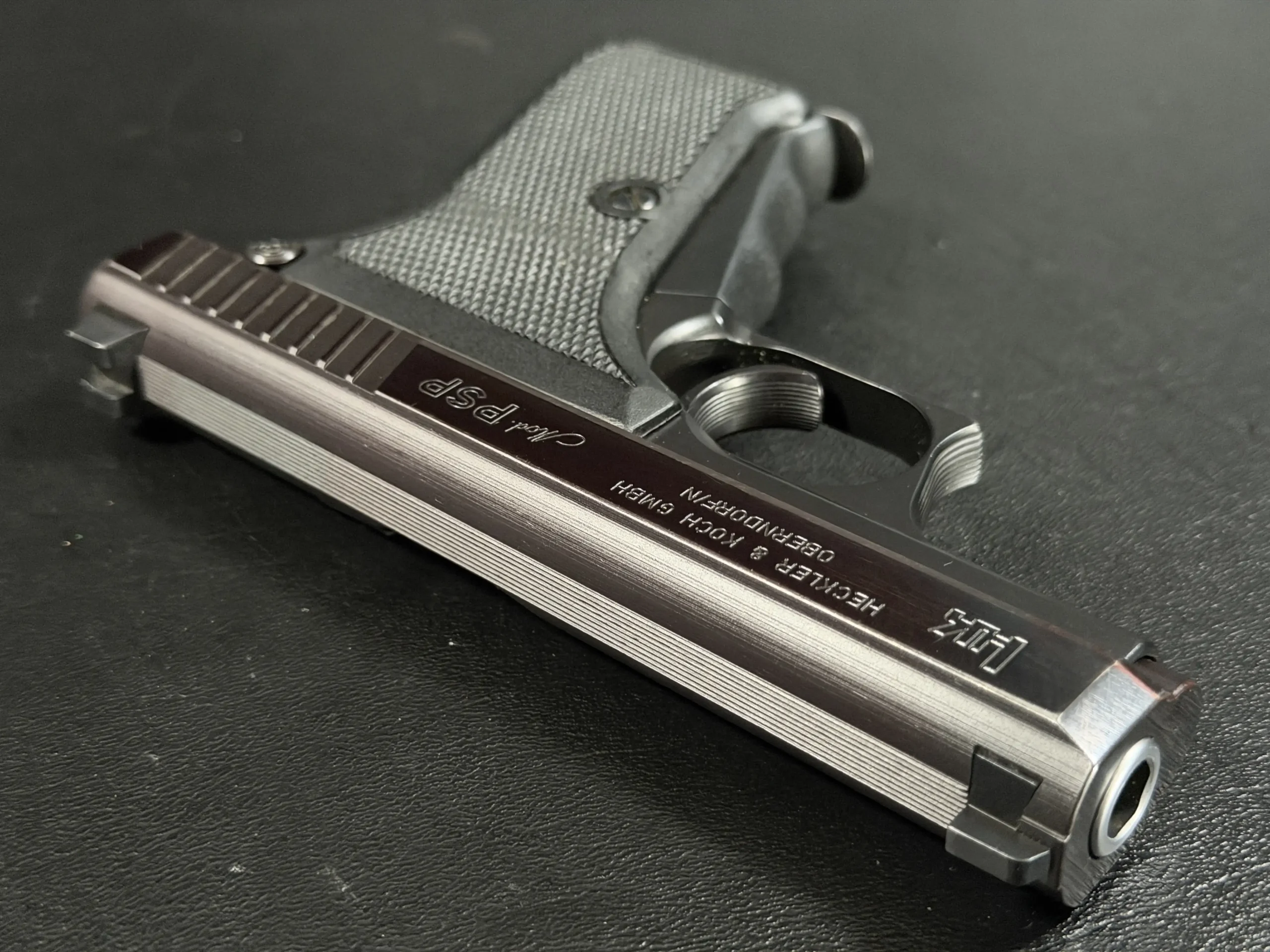
This prototype example reflects the early development characteristics of the P7 PSP (“Polizei Selbstlade Pistole”), the original configuration produced before the later P7M8 and P7M13 variants.
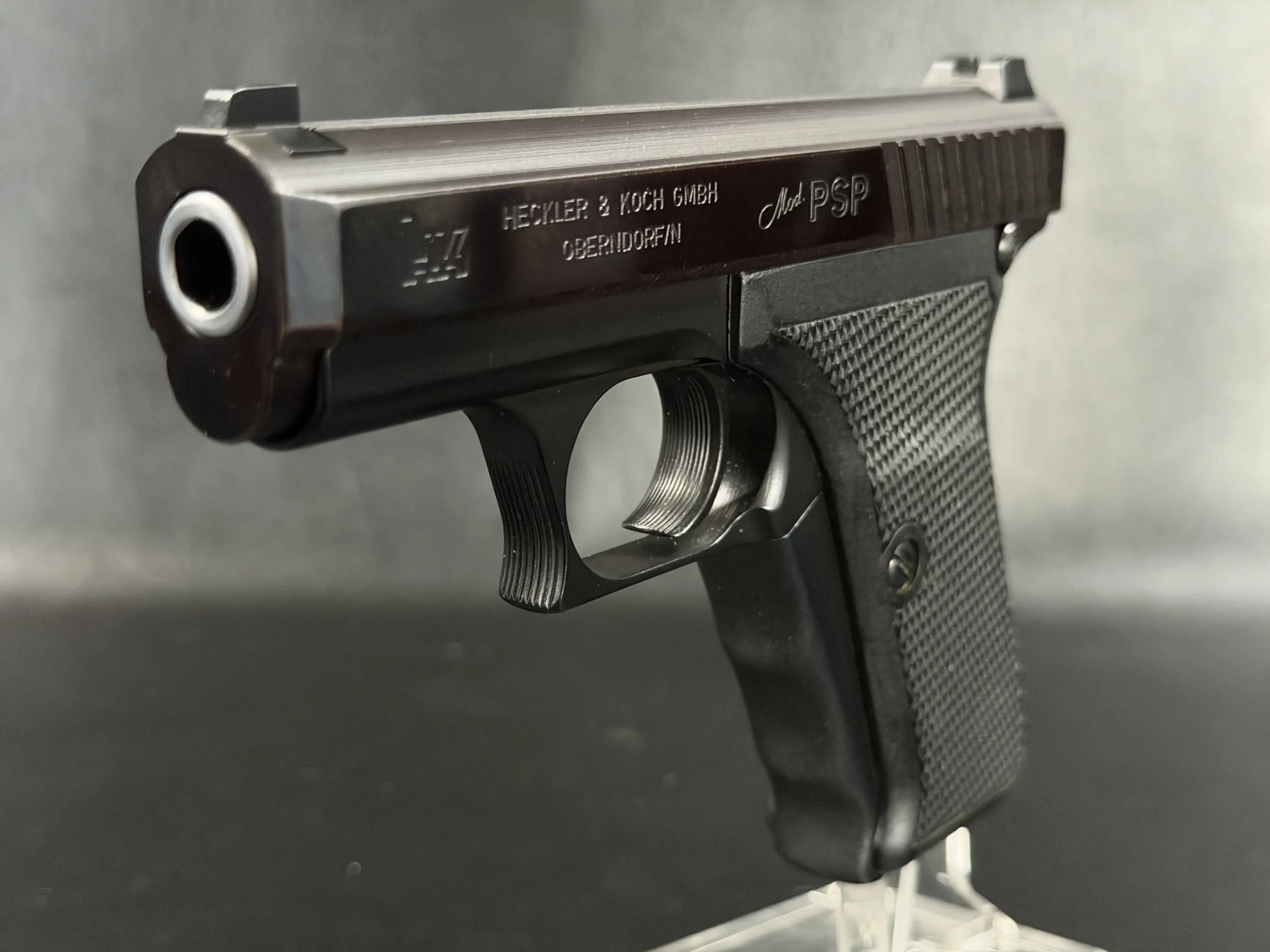
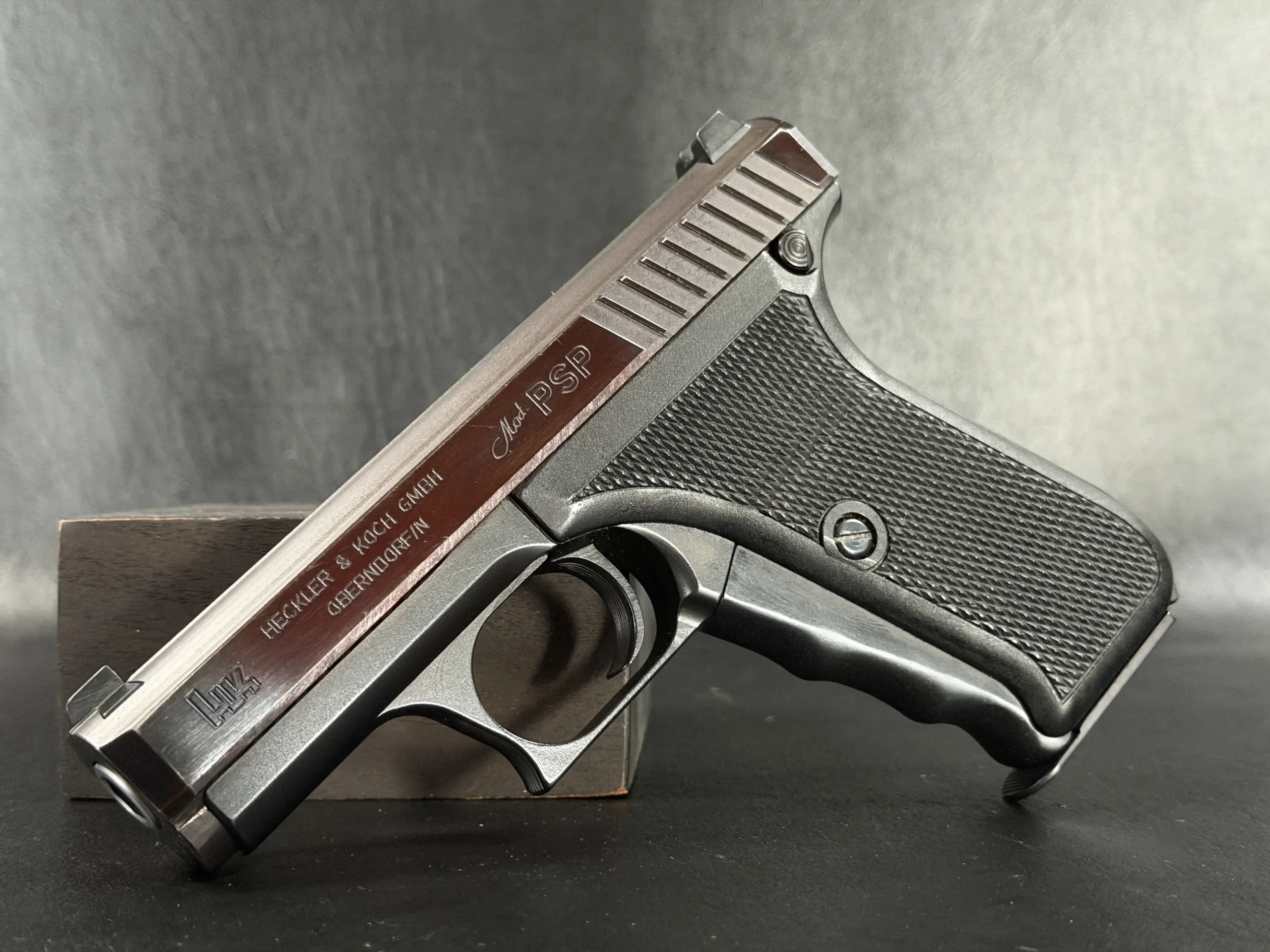
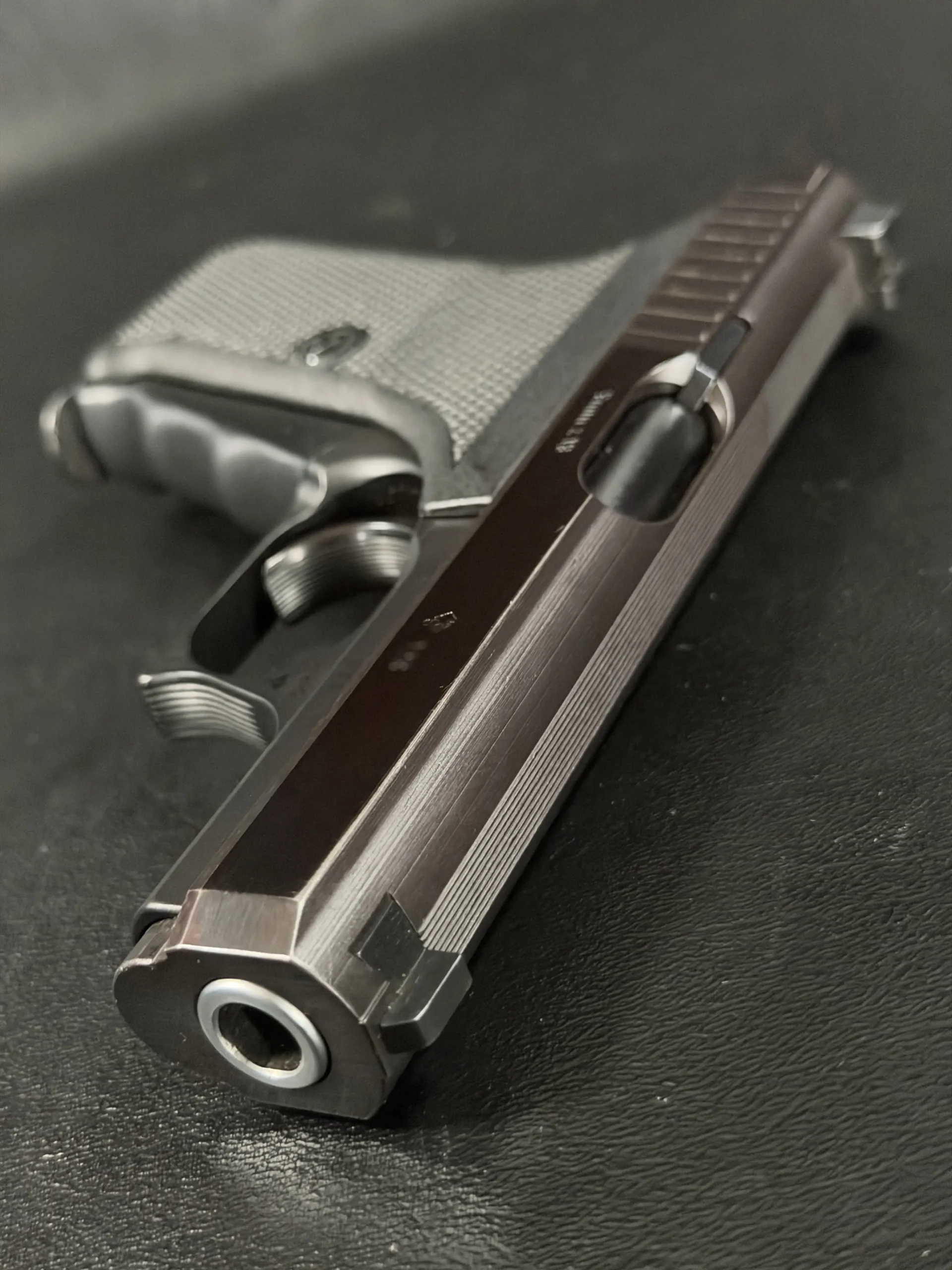
The finish presents a striking contrast between the dark slide surfaces and the matte black frame, highlighting the careful machining typical of Heckler & Koch’s production during this era. The pistol retains its original black grip panels, sharply checkered for positive handling, and exhibits the purposeful engineering aesthetic that collectors often associate with early German service arms.
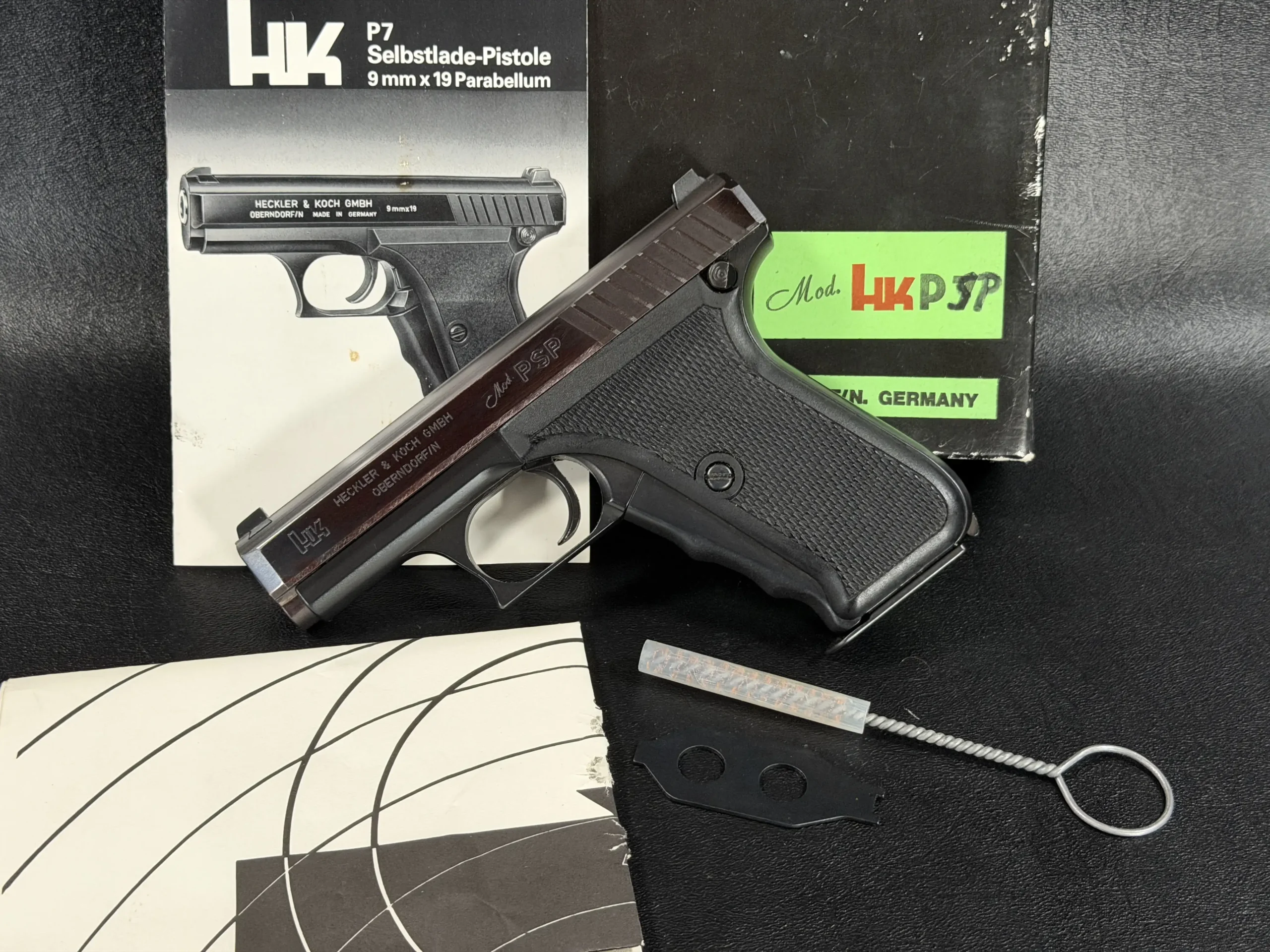
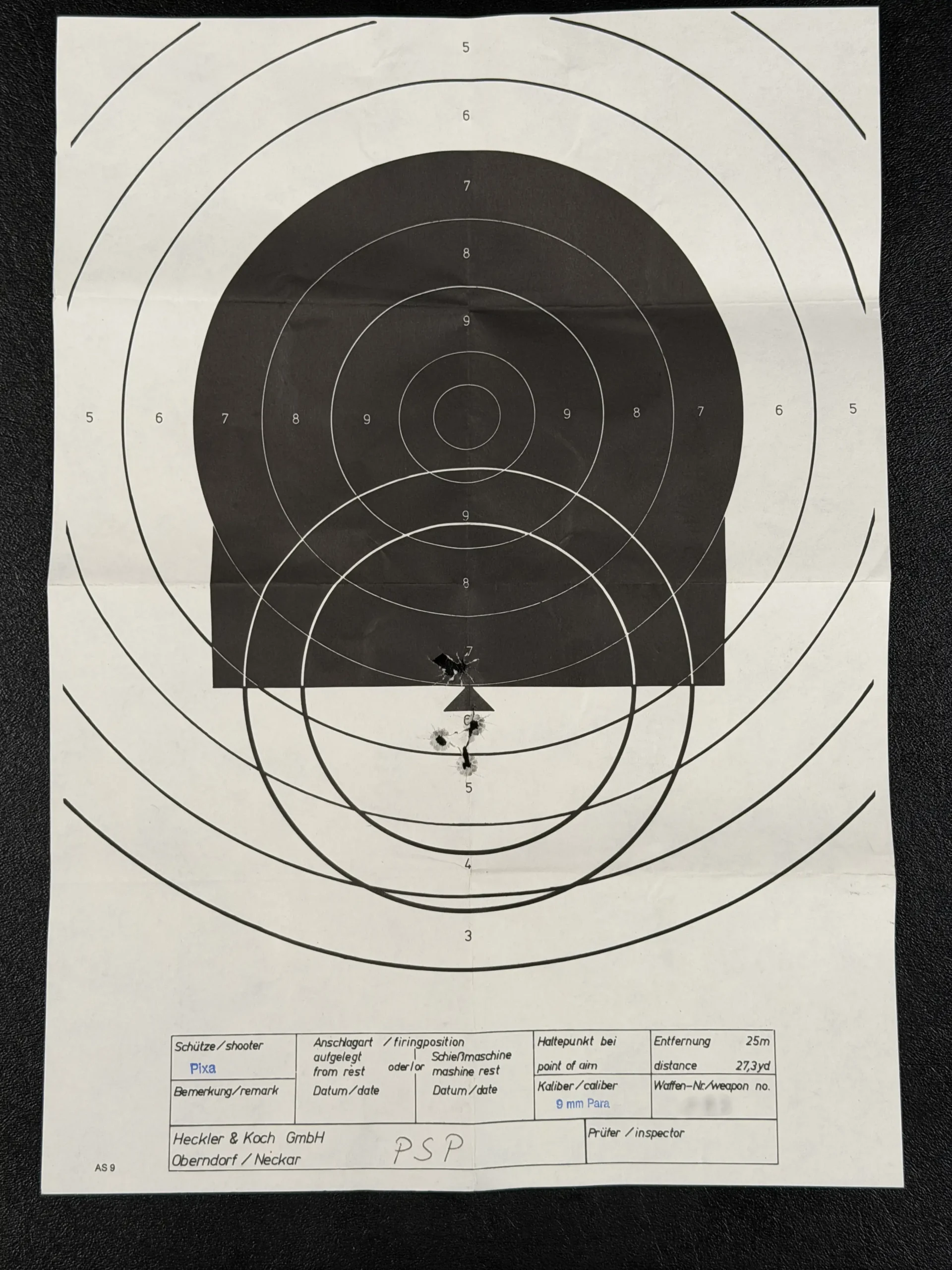
Accompanying the pistol are period items, including the factory box, documentation, and original target, the latter demonstrating the accuracy standard expected from the P7 platform. Even today, the P7 remains widely admired for its inherent precision, smooth trigger characteristics, and mechanical reliability, qualities that made it a trusted sidearm for numerous police agencies throughout Europe and beyond.
For collectors, however, prototype examples hold a special significance. They represent the moment when engineering concepts transition from experimentation into a finished product. Subtle variations, machining details, and early markings provide insight into the developmental stages of one of Heckler & Koch’s most celebrated designs.
Today, the P7 has earned near-legendary status among enthusiasts and historians alike. Its innovative gas system, unconventional ergonomics, and exceptional build quality ensure its place among the most technically interesting service pistols of the modern era. Early development examples, such as this P7 PSP Prototype, stand not only as rare collector pieces but also as tangible reminders of the ingenuity that defined German firearms engineering during the Cold War.
Elegant, mechanically sophisticated, and historically significant, this prototype P7 represents a remarkable opportunity to own an early chapter in the story of one of Heckler & Koch’s most iconic pistols.