
Key Takeaways:
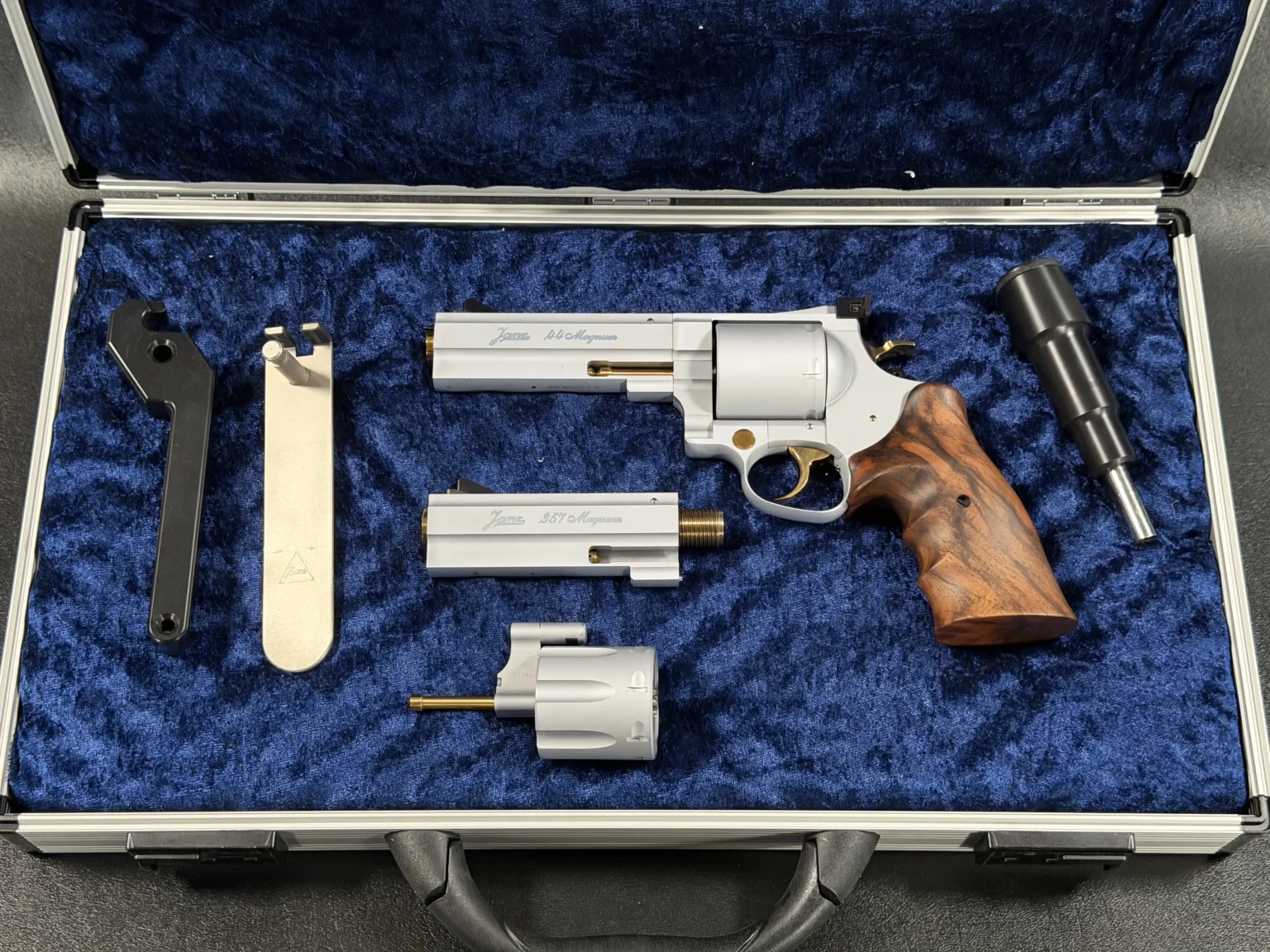
- The Caliber Exchange System Changes Everything: Here’s what sets the JTL apart from virtually every other revolver out there – you’re not locked into one caliber. Janz engineered a system that lets you swap cylinders and barrels, moving between .357 Magnum, .38 Special, 9mm Luger, and sometimes .22 LR. This isn’t just about convenience. It’s about owning a platform that adapts to your needs, whether you’re practicing with affordable ammunition or experiencing full-power loads. Each cylinder is precision-machined and individually fitted to your specific frame, which means this versatility doesn’t come at the expense of accuracy. It’s engineering that prioritizes user experience over manufacturing simplicity, and that makes all the difference.
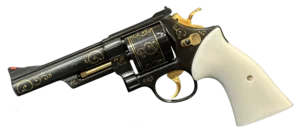
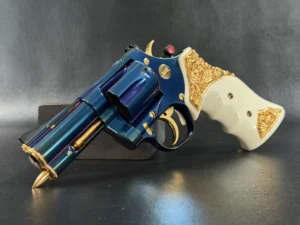
- Customization Reaches Artisan Levels: You’re not buying off the rack here. The JTL offers customization options that border on collaboration between you and the craftsmen at Janz. We’re talking custom grips in exotic woods, finish options from deep traditional blue to modern Cerakote, personalized sight configurations, barrel lengths tailored to your preference, and even trigger tuning to match your exact specifications. Some collectors commission custom grip carvings or unique finishes that make their JTL genuinely one-of-a-kind. This level of personalization transforms the gun from a product into a personal masterpiece – something that reflects your taste and requirements. It’s the difference between buying furniture and having it built for you.
- Rarity Drives Collectibility, But Quality Sustains It: German revolvers are rare animals in the collecting world, and the JTL sits at the premium end of an already scarce category. Janz never mass-produced these guns, and the JTL was their top-tier offering, which means production numbers were exceptionally limited. Factor in all those customization options, and finding two identical examples becomes nearly impossible. Values appreciate over time, particularly for pieces with complete caliber exchange systems and documented provenance. But here’s the real point – you shouldn’t buy a JTL purely as an investment. You buy it because it represents precision German engineering, because it’s a functional work of art, and because shooting something built to such exacting standards is genuinely satisfying. The investment potential is a bonus, not the headline.
There’s something almost mythical about German firearms. Maybe it’s the reputation for engineering perfection, or perhaps it’s the way these pieces seem to exist at the intersection of function and form. The Janz EMS JTL revolver fits squarely into this tradition, but here’s the thing – it takes it several steps further.
If you’re the type of collector who appreciates a Patek Philippe or a limited-edition sculpture, the Janz revolver deserves your attention. This isn’t just another firearm. It’s a statement piece that happens to shoot exceptionally well.
The Janz Story: Small Batch, Big Impact
Let’s talk about Josef Janz for a moment. The man started his operation in Malente, Germany, with a vision that went against the grain of modern firearms manufacturing. While other companies were scaling up production and cutting corners, Janz went the opposite direction. He decided to build revolvers the old way – by hand, with obsessive attention to detail, in numbers so limited that each piece became inherently collectible.
You know what’s interesting? Janz never tried to compete with mass-market manufacturers. That wasn’t the goal. Instead, he carved out a niche for people who wanted something exceptional. Think of it like the difference between a factory-made watch and one assembled by a master horologist. Both tell time, sure, but the experience of owning them is worlds apart.
The JTL model – which stands for “Janz Target Luxury” – represents the pinnacle of this philosophy. It’s not the most common Janz model you’ll find (that would be the JTE, the “Economy” version, though calling any Janz economical feels almost comical). The JTL is where Janz really lets loose with premium materials, enhanced finishing, and customization options that border on the absurd in the best possible way.
The Caliber Exchange System: Engineering as Art
Here’s where things get really interesting. Most revolvers lock you into a single caliber. You buy a .357 Magnum, you shoot .357 Magnum. Simple, right? Janz looked at this limitation and said, “What if we didn’t do that?”
The caliber exchange system on the JTL is genuinely brilliant. With a relatively straightforward process, you can swap out the cylinder and barrel to shoot different calibers. We’re talking about moving from .357 Magnum to .38 Special to 9mm Luger, sometimes even .22 LR, all with the same frame.
Why does this matter? For collectors, it’s about versatility meeting investment. You’re not buying multiple revolvers to experience different calibers. You’re buying one platform that adapts. From a purely practical standpoint, this makes the JTL more shootable. You can practice with cheaper ammunition, then switch to full-power loads when you want to experience the gun’s full capability.
But let me explain the deeper appeal here. The caliber exchange system represents a design philosophy that prioritizes user experience over manufacturing convenience. It would’ve been easier – and cheaper – for Janz to build dedicated revolvers for each caliber. Instead, they engineered a system that requires precision machining and careful tolerancing to ensure each caliber configuration shoots accurately.
The cylinders themselves are works of art. Janz uses high-quality steel, and the machining is so precise that the cylinder gap – that space between the cylinder and the barrel – is incredibly consistent. This isn’t just aesthetics; it affects accuracy, gas seal, and longevity. Each cylinder is individually fitted to the frame, which means you can’t just grab any Janz cylinder and expect it to work. It’s matched to your specific revolver.
The barrel change process is surprisingly elegant. You’re not dealing with complicated tools or gunsmithing procedures. Janz designed it so that an owner could perform the swap with minimal equipment. That said, there’s something ritualistic about it. The first time you change a barrel and cylinder, you realize you’re interacting with the gun on a level that most firearm owners never experience.
Customized Builds: Your Vision, Janz’s Execution
Honestly, this is where the JTL transitions from “excellent revolver” to “personal masterpiece.” The customization options available for these guns read like a menu at a Michelin-starred restaurant. You’re not just picking features; you’re collaborating on a piece that reflects your taste and requirements.
Let’s start with the basics – grip options. Janz offers wood choices that range from classic walnut to exotic options like rosewood or even custom-carved pieces. Some collectors commission grips from independent artisans, and Janz will work with those specifications to ensure proper fit. I’ve seen JTL revolvers with grips that featured intricate checkering patterns, smooth oil finishes that develop character over time, and even inlays that incorporate precious materials.
The finish options are equally extensive. You can go traditional with a deep, rich blue that has that old-world craftsmanship feel. Or maybe you prefer stainless steel with a high polish that catches light like jewelry. Matte finishes are available for those who want something more understated. Some owners have even commissioned custom Cerakote finishes in colors that make their JTL genuinely unique.
Then there’s the sighting system. This might seem like a minor detail, but it’s not. Janz offers adjustable target sights as standard on the JTL, but the customization goes deeper. You can specify sight blade widths, front sight styles (post, ramp, or fiber optic), and even the sight picture you prefer. For someone who plans to shoot their JTL regularly – and many collectors do – this level of personalization makes a tangible difference.
Barrel length is another variable. The JTL typically comes with a 6-inch barrel, which balances velocity and handling beautifully. But Janz has built these revolvers with shorter barrels for those who want something more compact, and longer barrels for collectors who prioritize ballistic performance or simply prefer the aesthetic of an extended sight radius.
Here’s something you might not expect: Janz will even customize the trigger. We’re talking about pull weight, overtravel, and the break characteristics. A good trigger can transform a shooting experience, and Janz understands this. They’ll tune it to your specifications, whether you want a crisp competition break or something with a bit more resistance for deliberate shooting.
The action itself can be customized too. Want a tighter cylinder lockup? Janz can do that. Prefer a smoother double-action pull? They’ll work on the internal geometry until it feels exactly how you want. This level of attention to the mechanical internals is rare. Most manufacturers give you what they give everyone else. Janz treats each build as a custom project.
Rare German Revolvers: Context in the Collecting World
Let’s zoom out for a second and talk about where the Janz fits in the broader landscape of collectible firearms. German revolvers are rare animals in general. Unlike pistols, where Germany has produced legendary designs (P08 Luger, P38, various modern offerings from Walther, HK, and others), the revolver market has been dominated by American and some Italian manufacturers.
This scarcity makes German revolvers interesting from a collecting standpoint. You’ve got historical pieces like the Reichsrevolver from the 1800s, which are more historical artifacts than shootable firearms at this point. Then there’s a gap – a long gap – where German firearms manufacturing focused elsewhere.
Janz emerged in this vacuum. Starting in the 1990s, the company began producing revolvers that competed with the best American target revolvers but with distinctly European characteristics. The fit and finish were exceptional. The attention to ergonomics was different from what American manufacturers were doing. And the customization options put them in a class of their own.
Here’s the thing about rare German revolvers as a collecting category: you’re not just buying into scarcity. You’re buying into a tradition of mechanical excellence that Germany is famous for. Think about German automobiles, precision instruments, or high-end optics. There’s an expectation of quality that’s baked into the national identity. Janz revolvers carry that DNA.
The JTL, specifically, was produced in limited numbers. Janz was never a large operation, and the JTL was their premium offering, which means even fewer were made compared to their other models. When you factor in the various customization options, finding two identical JTL revolvers is nearly impossible. Each one is effectively a limited edition of one.
Production has been inconsistent over the years. There have been periods where Janz was actively building revolvers and periods of dormancy. This adds another layer to collectibility. You can’t just decide you want a new JTL today and order one. You might find one on the secondary market, or you might wait years for production to resume. This uncertainty drives value in the collector market.
Compared to American target revolvers from companies like Smith & Wesson or Colt, the Janz offers something different. The American guns have history and heritage on their side – they’re connected to decades of competition shooting and law enforcement use. The Janz is newer, more boutique, and arguably more refined in its execution. It’s not better or worse; it’s different in a way that appeals to collectors who value craftsmanship and exclusivity.
In the European market, Janz revolvers have a stronger following. They’re appreciated there for being locally made to exacting standards. In the United States, they’re more exotic. American collectors who own one often report that their Janz gets more attention at the range than almost anything else they bring. People are curious. They want to hold it, look at the machining, and understand what makes it special.
Collectibility: Investment Meets Passion
So let’s address the question that’s probably on your mind: Is a Janz JTL a good investment?
The honest answer is complicated, like most things involving collectibles. These revolvers appreciate in value, particularly the more unique or customized examples. But they’re not stocks or bonds. The market for high-end, limited-production firearms is smaller and more specialized than mass-market guns.
What drives value in a collectible Janz? Several factors come into play. Condition is paramount – a JTL that’s been shot extensively but maintained perfectly will hold value better than a safe queen that shows wear. Original documentation matters too. If you have the original box, papers, and any correspondence about custom features, that adds to the provenance.
Customization is a double-edged sword. Unusual custom features make a gun unique, which can increase desirability. But they can also narrow the pool of potential buyers. Someone might love your custom grip design; someone else might want to replace it immediately. The sweet spot seems to be high-quality customizations that enhance function or use premium materials without being too idiosyncratic.
The caliber exchange kits add value in a straightforward way. A JTL with multiple caliber options is worth more than one with just the standard configuration. These kits aren’t cheap to begin with, and they’re not always available separately, so a complete setup with several calibers represents a significant package.
Rarity works in favor of the JTL’s long-term value. As time passes and fewer are available, the ones that exist become more desirable. This is basic supply and demand, but it’s amplified by the fact that Janz revolvers appeal to a specific type of collector who understands what they’re looking at.
But here’s where I need to be real with you: you shouldn’t buy a Janz JTL purely as an investment. The appreciation potential exists, yes, but it’s not guaranteed or rapid. You buy one of these because you appreciate the craftsmanship, you want to own something genuinely special, and you enjoy the experience of shooting a world-class revolver.
Think of it this way – if you buy a sculpture from an up-and-coming artist, you might hope it appreciates in value over time. But the real reason you bought it is because it speaks to you aesthetically and you want to live with it. Same principle applies here.
The JTL is a shooter’s gun first and a collector’s piece second. Many owners use theirs regularly, which actually maintains the mechanical condition if done properly. A revolver that sits unused for decades can develop issues – springs lose tension, lubricants dry out, and seals can deteriorate. A gun that’s fired, cleaned, and maintained stays healthier.
From a pure collection standpoint, the JTL fills a niche. If you’re building a collection of high-end target revolvers or focusing on German firearms, it’s an essential piece. If you’re collecting examples of precision engineering in small arms, same story. It represents a specific moment in firearms history – when a small German manufacturer decided to compete on quality and customization rather than price or production volume.
Insurance and security considerations matter with a piece like this. You’ll want proper coverage that accounts for the replacement value, which may be considerably higher than what you paid if values have appreciated or if replacement becomes difficult. Storage in a quality safe is obvious, but documentation of the custom features and any correspondence with Janz should be kept separately – digital copies in cloud storage aren’t a bad idea.
The Shooting Experience: Why It Matters
I haven’t talked much about actually shooting the JTL, and that’s deliberate. For many collectors, these guns spend more time in safes than on ranges. But understanding what makes it special as a shooting instrument adds depth to why it’s collectible.
The single-action trigger is exceptional. There’s virtually no take-up, a clean break, and minimal overtravel. It’s the kind of trigger that lets you shoot to the limit of your ability rather than fighting the gun. Double-action shooting is equally impressive. The pull is smooth and consistent, without stacking or grinding.
Accuracy is where the JTL really shines. These guns will shoot better than most people can hold. At 25 yards, one-hole groups are achievable with quality ammunition and proper technique. The barrel fit and cylinder lockup contribute to this precision. There’s no play, no wiggle, just solid mechanical unity.
Recoil management is civilized. The weight and grip design distribute forces in a way that makes even full-power .357 Magnum loads manageable. It’s not unpleasant to shoot through a box of ammunition, which you can’t say about every magnum revolver.
Final Thoughts
The Janz EMS JTL revolver occupies a unique space. It’s too specialized to be mainstream, too well-made to be ignored, and too rare to be commonplace. For collectors who appreciate German engineering, fine craftsmanship, and firearms that blur the line between tool and art object, it’s compelling.
Values will likely continue to appreciate, particularly for examples with documented provenance and comprehensive caliber exchange systems. But the real value is in ownership – the experience of handling something built to such exacting standards, the satisfaction of shooting a precision instrument, and the knowledge that you own something genuinely special.
If you’re considering adding a JTL to your collection, do your research. Talk to current owners if possible. Handle one if you can find a dealer or collector willing to show you theirs. These revolvers aren’t for everyone, but for the right collector, they’re perfect.
And isn’t that the point of collecting? Finding those pieces that resonate with your particular interests and values, that represent excellence in their category, and that give you satisfaction every time you open the safe and see them sitting there, waiting.
The Janz JTL delivers on all those fronts. It’s art you can shoot, engineering you can appreciate, and an investment in quality that transcends mere monetary value.
Frequently Asked Questions
This isn’t very easy. Janz production has been inconsistent over the years, with periods of active manufacturing alternating with periods of dormancy. As of recent years, production has been minimal or paused entirely. Your best bet is to contact specialty firearms dealers who work with European manufacturers or to search the secondary market. Some collectors have waited years for production to resume. It’s frustrating, honestly, but it’s also part of what makes these revolvers special. When you find one, you know you’ve found something that isn’t available on demand.
Surprisingly straightforward, actually. Janz designed the system so owners could perform the swap without gunsmithing expertise. You’ll need the appropriate cylinder and barrel for your chosen caliber, plus some basic tools. The process involves removing the existing barrel, swapping the cylinder, and installing the new barrel configuration. It’s not complicated, but it does require attention to detail and following proper procedures. The first time takes longer because you’re learning the system. After that? Maybe 15-20 minutes once you’re comfortable with the process. There’s something almost meditative about it.
Absolutely. These revolvers will shoot better than most people can hold. The JTL was designed as a target revolver, and accuracy was a primary consideration. We’re talking about one-hole groups at 25 yards with quality ammunition and proper technique. The precision machining, tight cylinder lockup, and excellent trigger contribute to this level of accuracy. Many owners use their JTL revolvers in competition, and they perform exceptionally well. That said, if you’re planning to shoot competitively, you’ll want to ensure your specific configuration meets the rules for your chosen discipline.
Standard revolver maintenance applies here – regular cleaning after shooting, proper lubrication, and periodic inspection of moving parts. The quality of materials and precision manufacturing means these guns hold up well over time. However, because they’re precision instruments, you’ll want to be thorough about cleaning and maintenance. Pay attention to the cylinder face, forcing cone, and barrel crown. If you’re swapping calibers regularly, clean between changes to prevent any buildup or contamination. The action should be checked periodically, though Janz actions are robust and don’t typically require frequent adjustment. Think of it like maintaining a fine watch – regular care keeps everything running smoothly.