
Key Takeaways:
- Korth’s obsession with quality is the whole story: Hand-fitted components, impossibly tight tolerances, and steel that outlasts the competition. Korth never chased volume, and that single-minded commitment is exactly why collectors still hunt these guns down decades later.
- 2. Not all Korths are created equal. From the early 1960s Combat Magnums to the Nighthawk-era collaborative models, each chapter of Korth’s history produced distinct pieces worth knowing. The rarest finds, factory-engraved examples, early serial numbers, and the elusive semi-automatic pistols are the ones that disappear fast when they surface.
- These guns are made to be shot, not just admired. Here’s the thing about owning a Korth: it rewards you every time you pull the trigger. The refined double-action pull, the tight cylinder gap, the consistent lockup, none of it means much on a shelf. Put one in your hands, and the engineering speaks for itself.
There’s a conversation that happens at every serious gun show, usually somewhere between the vintage Lugers and the custom 1911s. Someone pulls out a blued revolver with tight, almost surgical tolerances, and the crowd goes quiet. Not because it’s flashy, it isn’t. Because it’s right in a way that’s hard to articulate unless you’ve held one yourself. That’s a Korth. And once you understand what Korth represents, pretty much every other firearm starts looking like a rough draft.
For collectors and serious enthusiasts, Korth occupies a rare space in the firearms world: a manufacturer so committed to quality that production numbers stay deliberately small, prices stay unapologetically high, and the waiting lists stretch long enough to test anyone’s patience. But here’s the thing: nobody who owns a Korth seems to regret the wait.
Where It All Started: Willi Korth and a Post-War Dream
The story begins in Titz, Germany, in 1954. Willi Korth, a mechanical engineer with a background in precision tooling, founded the company with a simple but ambitious vision: build handguns the way fine watches are built. Not fast. Not cheap. Correctly.
In the 1950s, Germany was still rebuilding, and the firearms industry was fragmented and cautious. Most manufacturers were playing it safe, producing serviceable guns for a recovering market. Korth went the other direction entirely. He insisted on hand-fitting components, on tolerances tighter than virtually any competitor, and on a design philosophy that prioritized longevity and mechanical integrity over production efficiency. The early revolvers that came out of his workshop weren’t trying to compete on price. They were making a different argument altogether.
The founding philosophy never really changed. Even as ownership shifted over the decades, Korth went through several transitions, eventually landing under the Nighthawk Custom umbrella in the United States for distribution, the core commitment to hand-fitted craftsmanship stayed intact. That’s genuinely unusual. Most brands that change hands lose something essential in the process. Korth kept the thread.
The Combat Magnum: The One That Made Korth Famous
If you’re going to talk about Korth revolvers, you have to start with the Combat Magnum. This is the gun that established the brand’s reputation internationally, and honestly, it’s easy to see why.
Chambered in .357 Magnum (with cylinders often available in .22 LR for practice), the Combat Magnum brought together a swing-out cylinder with tolerances that feel almost impossible. The cylinder gap, that tiny space between the cylinder face and the forcing cone, is often cited as exceptionally tight on Korth revolvers compared to production revolvers from major American manufacturers. A tighter gap means less gas escapes, which translates to more consistent velocity and, in theory, greater potential for accuracy. It sounds like a small thing until you shoot one back-to-back with something else and notice the difference.
The trigger on the Combat Magnum is where collectors really start to get expressive. Double-action pull is smooth in a way that’s genuinely hard to describe to someone who hasn’t experienced it. There’s no stacking, no gritty surprise, just a clean, progressive arc that breaks where you expect it to. Single-action is even more refined. Gunsmiths who’ve worked on both Korth revolvers and high-end Smith & Wesson custom pieces often note that Korth’s factory trigger work is comparable to, or better than, a professional action job on competing revolvers. That’s saying something.
The Combat Magnum remained in production for decades, with refinements along the way, and original examples in excellent condition are among the most sought-after pieces in the European revolver-collecting community. Finding one in 98% or better condition is genuinely exciting. Finding one with the original box and documentation? That’s a different kind of day.
The Troja: When Korth Went Semi-Auto
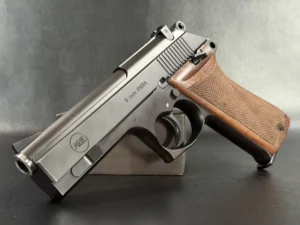
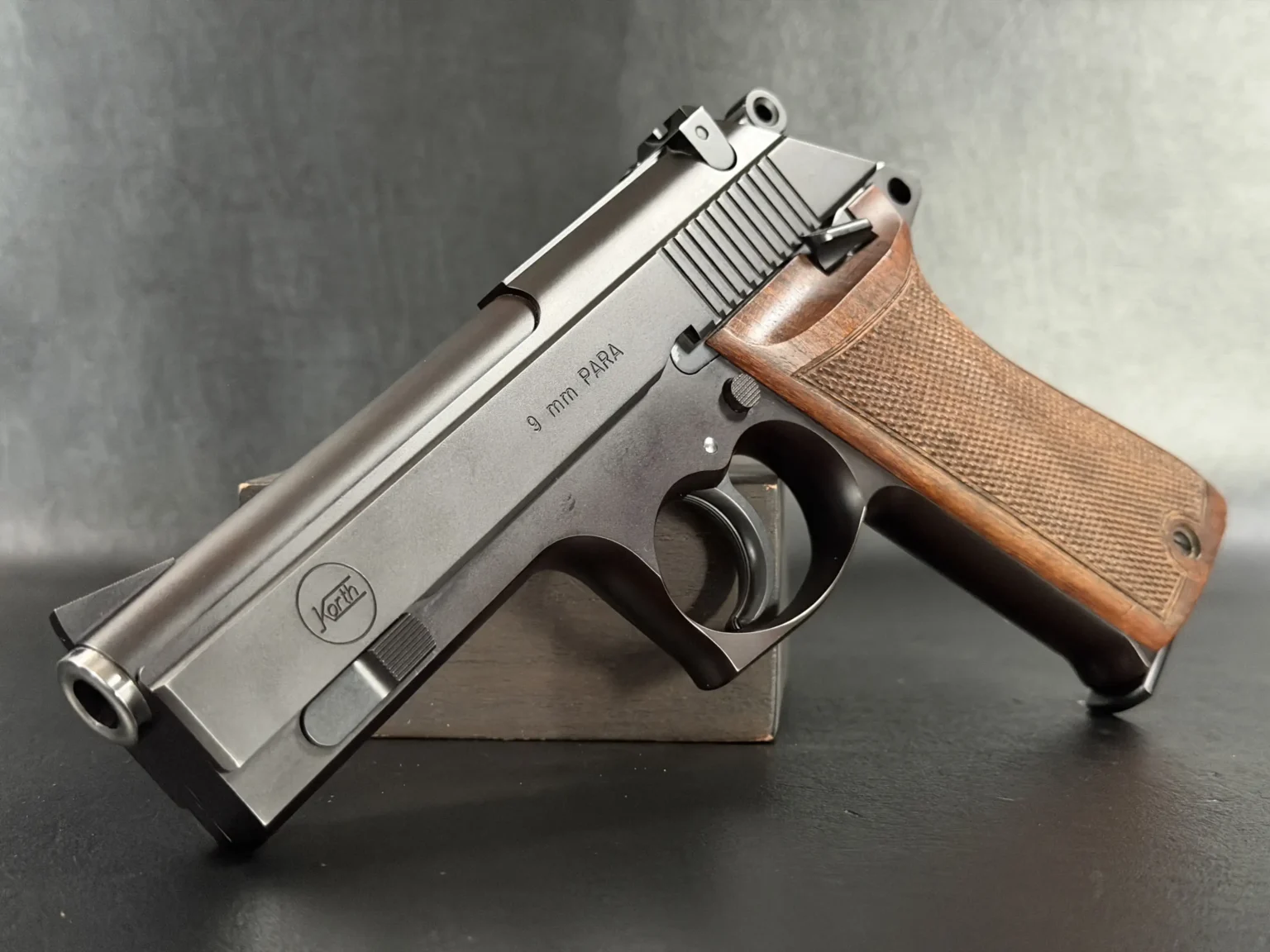
Here’s a fact that surprises many people: Korth made semi-automatic pistols. For a company so closely identified with its revolvers, the foray into semi-auto territory is sometimes overlooked, but it shouldn’t be.
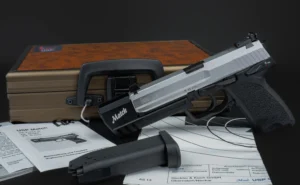
The Korth Combat Pistol, introduced in the 1980s, was a full-size 9mm (later available in .45 ACP and .40 S&W) built with the same obsessive attention to tolerances that defined the revolvers. The design was original, featuring a delayed blowback system and a frame-and-slide fit that felt almost machined as a single unit. Field stripping required a specific technique that took some getting used to, but once you understood the system, its elegance became clear.
Production numbers were tiny. The pistols never achieved the market penetration of Sig Sauer or Heckler & Koch, partly because of price; a Korth pistol in the 1980s cost several times as much as a comparable SIG P226, and partly because Korth wasn’t trying to win law enforcement contracts or military bids. It was making something for people who wanted the best, regardless of cost.
Collector interest in Korth semi-autos is significant precisely because of those low production numbers. Complete examples with original accessories are genuinely rare. If you ever see one at an estate sale or a specialized auction, pay attention to the serial number range and condition. The early production runs are especially interesting from a historical standpoint because they show the development process more clearly than the later, more refined examples.
Sky Marshal and the Stainless Era
In the 1990s, Korth introduced stainless-steel options alongside the traditional blued carbon-steel revolvers. The stainless Combat Magnum variants attracted attention from collectors who appreciated both the aesthetic contrast and the practical durability advantages of stainless.
There was also the Sky Marshal model, a shorter-barreled variant designed for concealed carry. The name references its intended role for security personnel, though in practice, these ended up primarily in collector hands. The compact configuration didn’t sacrifice the trigger quality that Korth was known for, which is always the gamble with short-barreled revolvers. Squeezing that refined action into a snub-nose package without compromise is hard. Korth mostly pulled it off.
What’s interesting about this era is how Korth navigated a shifting market. The 1990s brought enormous changes to the firearms industry globally. Polymer-framed pistols were taking over, the revolver market was contracting, and many manufacturers were chasing volume. Korth didn’t chase. The company stayed relatively small, maintained its hand-fitting processes, and essentially bet that there would always be buyers who valued absolute quality over convenience pricing. That bet was right, though it wasn’t always comfortable.
The Nighthawk Era: American Distribution Changes Everything
The relationship between Korth and Nighthawk Custom represents one of the more interesting developments in the brand’s recent history. Nighthawk, based in Berryville, Arkansas, is itself one of the premier 1911 builders in the United States, a company with its own reputation for obsessive quality. The partnership made a certain kind of sense.
Beginning around 2011-2012, Nighthawk took on exclusive U.S. distribution for Korth revolvers. This opened the American market more systematically than previous distribution arrangements had managed. It also, frankly, raised Korth’s profile among American collectors who might have encountered the name but never had easy access to the product.
The revolvers that came through Nighthawk during this period included both traditional Korth configurations and some collaborative designs that brought a distinctly American flavor to the German platform. The Nighthawk-Korth Sky Hawk and the Ranger models showed what happened when Korth’s mechanical foundation met American aesthetic preferences. The result was something genuinely interesting: guns that felt unmistakably Korth in their operation but wore more aggressive styling, including aggressive frame texturing, fiber-optic sights, and a visual language that spoke to the American custom market.
Collectors have mixed views on this era, which is perfectly normal. Purists sometimes prefer the earlier, more austere German configurations. Others appreciate the expanded options and the increased availability. Both positions make sense; it depends on what you’re collecting for.
The Mongoose: Korth in the Modern Age
The Mongoose is probably the model most likely to be a contemporary collector’s first Korth, and it’s a strong introduction to the brand’s work.
Available in .357 Magnum with an interchangeable .22 LR cylinder, the Mongoose combines Korth’s traditional manufacturing approach with features calibrated for modern shooting preferences: adjustable rear sights, a full underlug barrel profile, and ergonomic grip panels that work for a wider range of hand sizes than some earlier models. The frame is available in steel and, in some configurations, partially in aluminum for reduced weight.
What the Mongoose demonstrates is that Korth’s craftsmanship doesn’t require a museum piece aesthetic. This is a gun you can shoot, shoot hard, and shoot often without treating it as precious. The lockwork is as refined as any Korth before it. The cylinder indexing is precise. The trigger, in both double- and single-action, is what you expect from a gun at this price point and from this manufacturer specifically.
Pricing for a new Mongoose ranges from roughly $3,000 to $4,500, depending on configuration and where you buy it. That puts it in serious “deliberate purchase” territory, not impulse buy territory. But for what you’re getting, the value argument holds up better than it might seem at first.
What Makes Korth Different? (And Why That Actually Matters)
It’s worth pausing here to explain something that pure spec-sheet comparison doesn’t capture. Korth’s differentiators aren’t always measurable in ways that show up in a feature list.
Consider the lockwork. Every Korth revolver is hand-fitted. The term “hand-fitted” is used loosely in firearms marketing, but with Korth, it means something specific: trained craftspeople actually fit each component to each gun. Parts aren’t interchangeable between two Korth revolvers the way they might be between two production revolvers. This is either a selling point or a maintenance concern, depending on your perspective, and honestly, it’s a bit of both. If you ever need warranty work or a part replaced, Korth-specific expertise matters.
The steel used in Korth revolvers is high-grade German steel, typically heat-treated, about which Korth is characteristically quiet about sharing in detail. The result is a frame-and-cylinder combination that shows remarkably little wear even after significant round counts. Collectors who have taken ownership of used examples with substantial firing histories often report that the timing and action quality remain close to original specifications. For comparison, many production revolvers show measurable wear in key areas after similar use.
There’s also something harder to quantify: the sense that every decision in the design was made without compromise. No “good enough.” No, “the customer won’t notice.” This shows up in places you might not expect, in the way the ejector rod seats, in the texture of the grip frame, in the way the cylinder release moves. It’s cumulative. After handling a Korth extensively, going back to a production revolver can feel like stepping out of a well-tailored suit and into something off a rack.
The Rarest Pieces: What Serious Collectors Hunt For
If you’re building a serious Korth collection, certain pieces deserve particular attention. Not all Korths are equally rare or historically significant.
Early serial-number examples: The earliest Korth revolvers, particularly those from the 1960s and early 1970s, represent the foundation of the brand. Original bluing condition, matching numbers, and original documentation dramatically increase value. These rarely come to market in top condition.
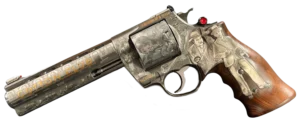
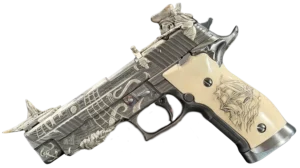
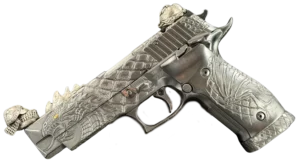
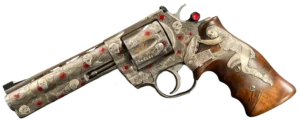
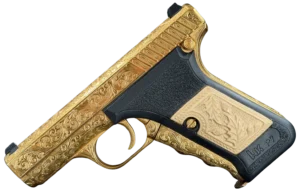
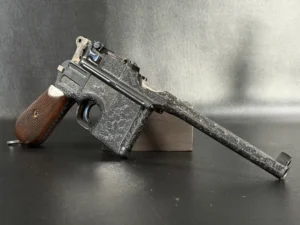
Factory-engraved examples: Korth offered factory-engraving options at a high additional cost. These pieces combined the mechanical excellence of standard production with genuine German gunsmithing artistry. An engraved Korth in documented original condition is a rare find.
Special presentation pieces: Over the decades, Korth produced limited numbers of presentation-grade revolvers for specific occasions or clients. These sometimes surface through estate sales or specialized auctions. When they do, they attract serious attention.
The semi-automatic pistols: As mentioned earlier, production numbers on the Korth semi-autos were very limited. Complete examples with original case, documentation, and accessories are the kind of pieces that show up in collections and stay there.
Limited edition Nighthawk collaborations: Some of the Nighthawk-Korth collaborative pieces were themselves produced in limited numbers. Specific editions with documented serial number ranges and original configurations are already attracting collector attention.
The collecting philosophy around Korth is interesting because it doesn’t require chasing the most obscure variant. The standard production revolvers in excellent condition, bought carefully and stored well, hold their value reliably and represent the core of what the brand means.
Shooting a Korth: Because It’s Not Just for Display
Here’s something that sets serious Korth collectors apart from those who see them as static artifacts: these guns reward shooting. Not as a demonstration, not as a party trick, but as a genuine exercise in understanding what careful manufacturing produces in actual performance.
The .357 Magnum cartridge is unforgiving of mechanical slop. In a lesser revolver, hot magnum loads will expose timing issues, cylinder gap inconsistencies, and trigger irregularities that casual shooting doesn’t reveal. A Korth Combat Magnum fed a steady diet of full-power .357 loads stays composed in a way that teaches you something about the engineering behind it.
The potential for accuracy at 25 yards from a steady position is better than most shooters can exploit. The combination of a tight cylinder gap, consistent lockup, and refined trigger pull creates conditions where the shooter becomes the limiting factor before the gun does. That’s an unusual situation. Most production revolvers have mechanical variables that set an accuracy ceiling below what a skilled shooter can produce. With a Korth, that ceiling is much higher.
The interchangeable cylinder system deserves mention here, too. Switching between .357 Magnum and .22 LR on applicable models lets collectors use the same gun for relaxed plinking without putting full-power magnum wear on the lockwork. It’s a practical feature wrapped in elegant execution.
Caring for Your Korth: A Few Things Worth Knowing
Korth revolvers are robust, but they deserve and reward proper care. A few things to keep in mind:
The tight tolerances that make these guns shoot so well also make them somewhat less tolerant of debris and fouling than looser production revolvers. Regular cleaning after use is more important here than with some other guns. Lead fouling, in particular, should be addressed promptly.
Because of the hand-fitted nature of the components, if you ever need service work, seek out Korth-certified expertise. Nighthawk Custom handles Korth service in the United States and has factory-trained staff. Using a non-specialized gunsmith on a Korth isn’t necessarily a disaster, but it’s a risk that isn’t worth taking on a firearm at this price point.
Original holsters and accessories, when available, are worth keeping with the gun for collection purposes. The provenance documentation that often accompanies European firearms, proof house marks, import marks, and original paperwork adds historical interest and, in some cases, measurable value to a piece.
Storage at stable humidity and temperature, as with any fine firearm, matters. A Korth isn’t going to rust at the first sign of moisture the way some cheaper carbon steel guns might, but long-term storage care affects both condition and collectability.
The Price Question: Is Korth Worth It?
Let’s be direct about this because it’s the question that follows every Korth conversation.
New Korth revolvers are expensive. The Mongoose, one of the more accessible models, runs several thousand dollars. Older combat-grade examples in excellent condition command similar prices in the secondary market. Against a Smith & Wesson Performance Center revolver, which is itself not cheap at $1,200 to $1,800, the price gap is real and substantial.
What you’re paying for is partly manufacturing quality, partly rarity, and partly something more philosophical: the decision to buy the best available example of something, regardless of whether it makes strictly economic sense. Most collectors understand this logic intuitively because it applies to every serious collecting category, not just firearms.
The value retention argument is also reasonable. Korth revolvers in excellent condition don’t lose value the way mass-produced firearms do. The combination of limited production and sustained collector demand keeps prices stable and, for earlier examples, rising. This isn’t investment advice, buy guns because you appreciate them, not as financial instruments, but it’s an honest context for the purchase decision.
Korth’s Legacy: Still Being Written
The most interesting thing about Korth, from a collector’s perspective, is that the story isn’t finished. The brand is actively producing firearms. New models are coming to market. The manufacturing philosophy is intact.
This creates a situation where “collecting Korth” means something different from collecting a purely historical brand. You can buy new production pieces with full warranty coverage and support. You can also draw on historical examples from the 1960s through the 1980s with a genuine archaeological interest. Both pursuits are valid and often complementary.
The contemporary firearms market tends toward extremes: enormous production runs of polymer-framed pistols on one end, and ultra-custom one-off builds on the other. Korth occupies an interesting middle space: consistent, repeatable quality at the absolute top of production standards without crossing into full-custom territory. It’s a position that very few manufacturers worldwide actually inhabit, which is part of what makes the brand’s continued existence something to appreciate.
Closing Thoughts: What Korth Teaches You
Spend enough time handling, shooting, and collecting Korth firearms, and you start to notice something beyond the technical attributes. You start to understand what intentionality in manufacturing actually looks like when it’s consistently applied over decades.
Every Korth revolver is a document of someone’s decision that “acceptable” wasn’t enough. That the standard way of doing things wasn’t the right way. That there was a market, however small, for something made without shortcuts, and that market deserved to be served honestly.
For collectors, this is ultimately the core appeal. Not just the rarity, not just the precision, not just the collectability. The appeal is what these guns say about craft: that the gap between good and exceptional is narrower in specification but vast in execution, and that closing that gap is worth the trouble.
If you’ve never held a Korth revolver, try to correct that. Find a collector who’ll let you operate the action. Shoot one if you can arrange it. The reputation isn’t hype. It’s the accumulated judgment of people who know what they’re looking at and can’t quite find a reason to disagree.
That’s a rare thing in any field. In firearms, it’s genuinely extraordinary.
Frequently Asked Questions
Korth revolvers are hand-fitted by skilled craftspeople, meaning each component is individually matched to its specific gun, a process that takes significantly more time than standard production methods. That level of manufacturing precision, combined with deliberately low production numbers, is what drives the price.
Korth revolvers in excellent condition hold their value reliably, and earlier examples have shown steady appreciation over time thanks to limited production and sustained collector demand. Buy one because you appreciate the craftsmanship, and it’s worth knowing the resale story is solid.
Korth also produced semi-automatic pistols, though most people associate the brand almost exclusively with its revolvers. Production numbers on the pistols were very limited, which makes complete examples with original accessories genuinely rare finds today.
The Mongoose is probably the most accessible entry point; it combines Korth’s refined trigger work and tight tolerances with modern ergonomics and an interchangeable cylinder system. It’s a gun you can actually shoot regularly without treating it like a museum piece.
Nighthawk Custom in Berryville, Arkansas, handles both U.S. distribution and factory-trained service for Korth firearms. They’re the most reliable starting point, whether you’re buying new or need work done on an existing piece.