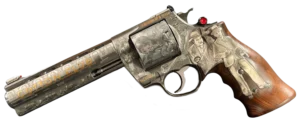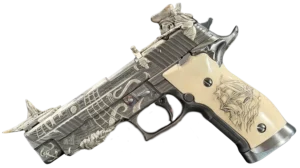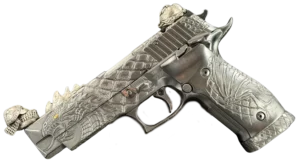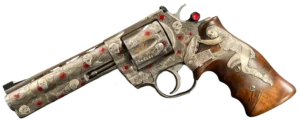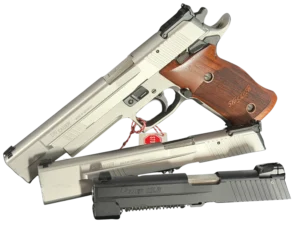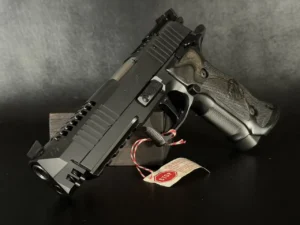

Key Takeaways:
- Originality Trumps Everything Else: Don’t even think about refinishing that vintage firearm. Serious collectors will pay a premium for an ugly, worn original over a beautifully restored piece every single time. Why? Because that patina and those handling marks tell an authentic story that can’t be recreated. A mismatched serial number or professional re-bluing job can slash your firearm’s value by 30% or more, no matter how pretty it looks.
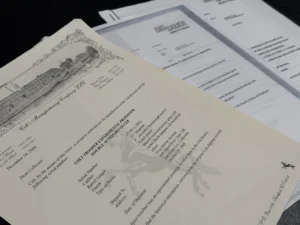
- The Paper Trail Is Worth Its Weight in Gold: You know what transforms a nice old gun into a six-figure investment? Documentation. Factory letters, military records, and verified provenance can multiply a firearm’s value by factors of ten. We’re not talking about family legends here, investment-grade pieces need legitimate historical documentation that proves ownership history or connects them to significant events or figures.
- Scarcity Plus Desirability Equals Appreciation: Here’s the thing: rare doesn’t automatically mean valuable. Investment-grade scarcity occurs when there’s limited production of desirable firearms from respected makers. Pre-1986 transferable machine guns are the perfect example, a legally frozen supply that decreases every year while demand keeps climbing. That’s basic economics working in collectors’ favor, and it’s why certain categories of firearms have outperformed traditional investments over the past few decades.
Let’s get started…
Let’s be honest, most people think of firearms as tools, protection, or maybe sporting equipment. But there’s a whole other world out there, one where a century-old revolver can sell for more than a brand-new luxury car. I’m talking about the realm of investment-grade firearms, where history, craftsmanship, and scarcity converge to create assets that serious collectors guard more carefully than their stock portfolios.
So what exactly separates a “nice old gun” from an investment-grade piece worth tens or even hundreds of thousands of dollars? It’s not just age, and it certainly isn’t about how cool it looks in a display case.
The Foundation: Originality Beats Everything
Here’s something that surprises newcomers to firearms collecting every single time: an ugly, worn original firearm will almost always be worth more than a beautifully refinished one. I know, it sounds backward. You’d think a gun that’s been professionally restored, re-blued to perfection, and made to look factory-fresh would command top dollar. But that’s where you’d be wrong.
Collectors obsess over originality. We’re talking 100% factory finish, matching serial numbers on every component, and zero modifications. When you send a firearm off to be refinished, even if the gunsmith does museum-quality work, you’ve essentially erased part of its history. That patina, those handling marks, the slight wear on the bluing? Those tell a story. They’re proof of authenticity.
Think of it like antique furniture. A refinished Victorian chair might look prettier, but the original piece with its worn varnish and character marks? That’s what serious collectors want. The firearms world works exactly the same way.
Matching serial numbers matters more than most people realize. On higher-end pieces, especially military firearms or limited production runs, every major component should bear the same serial number or follow the manufacturer’s original numbering system. A mismatched bolt or barrel can slash value by 30% or more, depending on the firearm.
Provenance: The Paper Trail That Prints Money
You know what’s better than owning a rare Colt Single Action Army from 1873? Owning one that came with documented proof it belonged to a frontier lawman or saw action in a famous gunfight. Provenance, the verified history of ownership, can multiply a firearm’s value by factors of ten or more.
But here’s the thing: documentation has to be legit. We’re not talking about family stories passed down through generations, though those certainly add color. Investment-grade provenance means factory letters, military records, auction histories, or correspondence from recognized authorities in the field.
Factory letters are particularly valuable. Companies like Colt, Winchester, and Smith & Wesson maintain archives going back more than a century. For a few hundred dollars, you can request a letter that details when your firearm was manufactured, what configuration it left the factory in, and sometimes even who it was originally shipped to. That piece of paper becomes part of the firearm’s permanent record.
Historical significance operates on different levels. A firearm doesn’t need to have belonged to General Patton to be valuable, though that certainly wouldn’t hurt. Sometimes it’s enough that a piece represents an important technological milestone or was part of a limited government contract. Military contract firearms, especially those marked with inspector stamps or special unit designations, often carry premiums over standard commercial variants.
The most valuable firearms in the world? They’re the ones with rock-solid connections to major historical figures or events. General Ulysses S. Grant’s revolvers, firearms recovered from famous battlefields with documentation, presentation pieces given to heads of state, these are the blue-chip investments of the firearms world.
Scarcity: The Economics of “They Don’t Make Them Anymore”
Let me explain something about the firearms market that makes it different from almost any other collectible: certain categories have a legally fixed, finite supply that can never increase.
Take pre-1986 transferable machine guns. Since the Hughes Amendment closed the machine gun registry in 1986, the number of legally transferable automatic weapons in civilian hands has been frozen. Every year, a few get destroyed, lost, or permanently tied up in estates. The supply literally decreases while demand from collectors continues to grow. Basic economics tells you what happens to prices when supply drops and demand rises.
But scarcity alone doesn’t make something investment-grade. Plenty of obscure firearms from defunct manufacturers are rare because nobody wanted them in the first place. Investment-grade scarcity means limited production of desirable firearms from respected makers.
Winchester’s Model 1873 rifle earned the nickname “The Gun That Won the West” for good reason; it was popular, reliable, and produced in significant numbers. But certain variants, like the One of One Thousand rifles, were manufactured in tiny quantities and today command prices that would make your eyes water. We’re talking six figures for a rifle that cost about $100 when it was new.
Limited factory runs matter too. When Colt produces a commemorative series of 500 revolvers, that fixed number creates inherent scarcity. Will all commemoratives appreciate? Not necessarily, there were too many produced in the 1960s and 70s, flooding the market. But the right commemorative, from the right era, with the right documentation? That’s investment material.
Craftsmanship and Artistry: When Firearms Become Art
There’s a reason why pre-World War II firearms often command higher prices than their modern equivalents, even when the modern gun might be technically superior. It comes down to craftsmanship.
Before mass-production techniques and computer-aided manufacturing took over, gunmakers employed skilled craftsmen. These weren’t assembly line workers; they were artisans who hand-fitted parts, carefully finished metal, and took genuine pride in their work. You can see it when you handle these firearms. The action feels different, smoother. The machining shows handwork that no CNC machine can replicate.
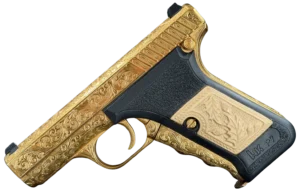
Factory engraving represents the pinnacle of this artistry. The Colt Single Action Army, Winchester Model 1873, or Smith & Wesson New Model No. 3 with period factory engraving aren’t just firearms; they’re functional sculptures. Master engravers like Cuno Helfricht, John Adams-Elder, or the Ulrich brothers created pieces that belonged in museums as much as holsters.
Here’s what’s wild: sometimes the engraving work is worth more than the base firearm. A plain Colt SAA might bring $15,000. That same gun with documented Helfricht engraving covering 75% of the surface? You’re looking at $150,000 or more. The metal underneath is identical; the artistry makes the difference.
Technical innovations also drive investment value. Firearms that represent important mechanical advancements or unique designs tend to appreciate. The Luger’s toggle-lock action, the Browning Hi-Power’s double-stack magazine design, and the first practical semi-automatic pistols are innovations that make firearms historically significant beyond their mere scarcity.
Completeness: The Box, the Papers, the Whole Package
Honestly, the difference a cardboard box can make still amazes me. A Colt Python from the 1970s in excellent condition might sell for $3,000. That exact same revolver, same condition, but including its original factory box, manual, cleaning rod, and warranty papers? Now you’re talking $5,000 or more.
Collectors call this “completeness,” and it’s become increasingly important as the market has matured. The original packaging proves the firearm wasn’t used hard, wasn’t carried daily, and wasn’t treated as a working tool. It suggests careful ownership, proper storage, and preservation of originality.
For certain firearms, completeness extends to accessories. A German Luger P08 from World War I is nice. That same Luger with its original holster, spare magazine, cleaning rod, and tool kit? That’s an investment piece. Military firearms particularly benefit from complete accessory sets, especially when items like magazines or holsters bear matching serial numbers.
Suppressors represent a special category of accessory. Since the National Firearms Act of 1934, suppressors have required federal registration and tax stamps. Original, period-correct suppressors matched to specific host firearms, particularly military items, can be worth as much or more than the firearms themselves. A World War II OSS High Standard HDM pistol with its original integral suppressor is exponentially more valuable than the same model without it.
Condition Grading: Why Percentages Matter
The firearms collecting community uses specific grading systems to evaluate condition, and understanding these matters if you’re serious about investment pieces. The NRA’s scale runs from “Factory New” (100%) down through various grades to “Poor.” Most investment-grade firearms fall into the 95-100% range.
But here’s where it gets interesting: the difference between 95% and 98% condition can mean thousands of dollars in value. We’re talking about minor variations in finish wear, edge sharpness, and metal color. To the untrained eye, both firearms might look essentially perfect. To a serious collector examining them under proper lighting with a magnifying glass? The differences are obvious.
This is why the condition is somewhat subjective and controversial. Two experienced collectors might grade the same firearm differently by a few percentage points. That’s why major auction houses employ specialist graders and include detailed photographs showing any flaws or wear. When you’re bidding five figures on a firearm, those details matter.
Original finish percentage matters more than mechanical condition in most cases. A firearm with 99% original bluing but a slightly loose action will usually sell for more than a mechanically perfect example that’s been refinished to 100%. Remember: originality beats everything.
The Market: Where Investment-Grade Firearms Trade
So you’ve identified what makes a firearm investment-grade. Where do you actually buy and sell these pieces? The market operates differently from most collectibles.
High-end auction houses dominate the upper tier of the market. Rock Island Auction Company, Morphy Auctions, and James D. Julia (now Morphy) regularly sell six-figure firearms. These auction houses provide professional cataloging, condition reporting, and most importantly, bring together serious collectors willing to pay serious money.
Auction results also establish market values. When a rare Winchester 1873 sells for $200,000 at Rock Island, that becomes a comparable for the next similar firearm that comes to market. This is why serious collectors study auction results religiously; they’re tracking their investments in real time.
Private sales between collectors still happen, especially for particularly rare pieces. Sometimes, a collector will offer a firearm directly to someone they know is searching for it, avoiding auction fees and publicity. These deals require significant trust and usually involve references, inspection periods, and escrow arrangements for payment.
Gun shows serve more as networking venues than primary markets for investment-grade pieces. You’re unlikely to find a $50,000 Colt at a gun show table, but you will meet collectors, dealers, and specialists who can connect you to the firearms you’re seeking.
Valuation Resources: Your Research Toolkit
The Blue Book of Gun Values remains the industry standard reference, though it’s better for establishing baseline values than tracking the high-end market. The book provides percentage-of-finish ratings and corresponding values, giving you a starting framework for evaluation.
But honestly? For investment-grade firearms, auction results matter more than book values. A Blue Book might list a firearm at $30,000, but if three similar examples have sold at auction in the past year for $45,000 each, that’s your real market value.
Specialty references exist for particular manufacturers or types. If you’re collecting Colts, R.L. Wilson’s books are essential. Winchester collectors rely on George Madis’s work. These references provide serial number ranges, production data, and detailed information about variations that affect value.
Online resources have revolutionized research. Sites like Proxibid aggregate auction results from dozens of houses, letting you track realized prices across the market. Forums dedicated to specific manufacturers or types host communities of collectors who freely share knowledge, though you have to separate informed opinion from wishful thinking.
The Investment Perspective: Risk and Return
Let’s talk money, because that’s ultimately what “investment grade” means. Can firearms genuinely compete with traditional investments like stocks or real estate?
The data suggests yes, with caveats. Quality firearms from established manufacturers have shown consistent appreciation over decades. Pre-1986 machine guns, for instance, have appreciated at rates that outpace many mainstream investments. A transferable M16 that sold for $1,200 in 1986 might bring $40,000 today.
But firearms investments are less liquid than stocks. You can sell a stock with a mouse click; selling a high-value firearm requires finding the right buyer, which might take months. Transaction costs are higher too; auction houses typically charge 15-20% buyer’s premiums and 10-15% seller’s commissions.
Storage and insurance represent ongoing costs. Investment-grade firearms need climate-controlled storage and specialized insurance coverage. A $100,000 collection requires security measures beyond a basic gun safe.
The regulatory environment adds uncertainty. While the Second Amendment provides some protection, laws affecting firearms ownership and transfer can change. Federal regulations, in particular, can impact values, sometimes positively (e.g., restricted items become more valuable) and sometimes negatively (e.g., if transfer or ownership becomes more difficult).
Building a Collection: Where to Start
If you’re thinking about firearms as investments, start by developing expertise in a specific area. Trying to collect everything means you’ll never develop the deep knowledge that lets you spot undervalued pieces or avoid expensive mistakes.
Pick a manufacturer, era, or type that genuinely interests you. Maybe it’s Colt Single Action Army revolvers, Winchester lever actions from the 1800s, or military semi-automatic pistols. Whatever it is, immerse yourself. Read the books, study auction results, join collector organizations, and examine as many examples as possible.
Buy the best examples you can afford. One $10,000 investment-grade firearm will appreciate better than ten $1,000 guns that are merely “nice.” Quality over quantity isn’t just a cliché in this market; it’s financial wisdom.
Condition and originality matter more than you think they do, and then even more than that. New collectors often compromise on condition to get a cheaper entry point into a particular model. Resist this temptation. That 90% example might seem like a bargain compared to the 98% version, but the 98% will appreciate, while the 90% will stagnate.
Build relationships with reputable dealers and auction houses. The firearms market runs on relationships and reputation. Dealers who know you’re a serious collector will contact you when something special comes in, often before it goes to public auction.
The Bottom Line
Investment-grade firearms combine rarity, originality, historical significance, and exceptional condition. They’re pieces that knowledgeable collectors compete for, that auction houses feature in their premium catalogs, and that appreciate steadily over time.
But here’s the thing: the best collectors aren’t purely motivated by investment returns. They genuinely love firearms, appreciate their history and craftsmanship, and enjoy the hunt for exceptional pieces. The investment returns? Those are the bonuses for pursuing a passion with knowledge and discipline.
Whether you’re drawn to the mechanical elegance of a pre-war Smith & Wesson, the historical weight of a Civil War Colt, or the forbidden fruit appeal of a pre-1986 machine gun, investment-grade firearms offer something unique: tangible assets with intrinsic beauty, historical significance, and potential financial appreciation.
Just remember, buy original, buy quality, do your research, and never underestimate the value of that cardboard box sitting in someone’s attic.
Frequently Asked Questions
It’s all about the combination of extreme scarcity, pristine original condition, and documented historical significance. Think 100% factory finish, matching serial numbers, verified provenance, and condition grades in the 95-100% range.
Absolutely not, you’ll tank its value. An ugly original will almost always bring more money than a beautifully refinished piece because collectors obsess over authenticity, and that original patina tells a story you can’t recreate.
Honestly? It can double the value of your firearm. A Colt Python might sell for $3,000 without the box but $5,000 or more when it includes the original packaging, papers, and accessories.
High-end auction houses like Rock Island Auction Company and Morphy Auctions are your best bet for serious pieces. You’ll also find opportunities through private collector networks and reputable specialty dealers who know the market.
It’s official manufacturer documentation that details when your firearm was made, its original configuration, and, sometimes, who it was shipped to. That piece of paper becomes part of the permanent record and can significantly increase value by verifying authenticity.