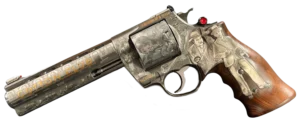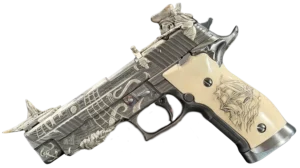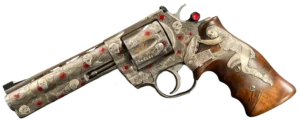

Key Takeaways:
- Two guns, totally different eras, same lasting impact: The Colt Single Action Army (the “Peacemaker”) defined the Wild West in the 1870s, while the M1911 became the military’s go-to sidearm for over 70 years starting in 1911. Both changed firearms technology in their own way – the SAA proved revolvers could be reliable and powerful, while the M1911 showed what semi-automatic pistols could do. Different designs, different purposes, but they both set standards that still influence gun design today.
- These weren’t just weapons – they became symbols: Here’s the thing: the Colt 45 models went way beyond their practical use. They became cultural icons representing American frontier spirit, individualism, and all that mythology. Hollywood ran with it, and suddenly these guns weren’t just tools but symbols of an entire era. That cultural weight is honestly probably bigger than their technical achievements, which is saying something.
- The legacy’s still alive and kicking: People didn’t just forget about these guns once newer models came out. The M1911 is still popular with civilian shooters and collectors. The SAA is a prized piece of history. Gun shows, museums, shooting events – there’s a whole community keeping this legacy going. New generations keep discovering them, adding their own perspective to the story. That’s how you know something really mattered.
Look, when most people hear “Colt 45,” they’re probably thinking of old Western movies or maybe that malt liquor (which, funny enough, has nothing to do with the gun). But the actual firearms that carry this name? They’ve got stories that are honestly pretty wild.
So let’s talk about the Colt 45. Not as some dusty museum piece, but as something that genuinely changed how guns worked and, weirdly enough, how America saw itself.
Where It All Started
The year was 1872. Ulysses S. Grant was president, and the American West was still this chaotic, half-settled frontier where you couldn’t really count on much. That’s when the Colt 45 showed up, and it was kind of a big deal.
The thing about the Colt 45 wasn’t just that it was a gun. It fired the .45 Colt cartridge, which packed serious stopping power. If you were a lawman trying to keep the peace in some dusty town, or honestly, even if you were on the other side of that equation, this was the gun you wanted on your hip.
Samuel Colt had this vision, right? He wanted to create a revolver that could deliver real firepower but wouldn’t be some massive, unwieldy thing. He needed something reliable because out on the frontier, if your gun jammed or misfired, that could be the end of you. Not exactly a margin-for-error situation.
The design process wasn’t quick. There was a lot of testing, a lot of trial and error. They had to make sure this thing could handle the rough life of frontier America, which meant dust, heat, cold, and probably getting dropped in the mud more than once. The result was something that really did set new standards. Pretty impressive for the 1870s.
Once it hit the market, the Colt 45 took off. The U.S. Army adopted it as its standard sidearm, which was huge. But it wasn’t just military guys carrying these. Civilians loved them too. Law enforcement, ranchers, and anyone who needed a dependable weapon. And yeah, the outlaws too. Let’s be real about that.
The Cartridge That Changed Everything
Can we talk about the .45 Colt cartridge for a second? Because this was genuinely revolutionary stuff.
Before metallic cartridges became standard, loading a gun was a whole complicated process. You had to measure powder, load the ball, and cap it off. It took time and left a lot of room for things to go wrong. The .45 Colt was one of the first to use a metallic cartridge design. Just load and go. Simple as that.
But it wasn’t just about convenience. The stopping power on this thing was unmatched. When you needed to put someone or something down, the .45 Colt delivered. That combination of reliability and power? That’s what made it stick around.
This innovation didn’t just help the Colt 45 succeed. It basically set the template for what came after. Future ammunition designs built on what the .45 Colt proved was possible.
The Peacemaker (Yeah, That’s Actually What They Called It)
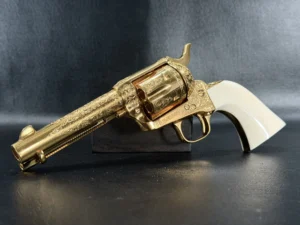
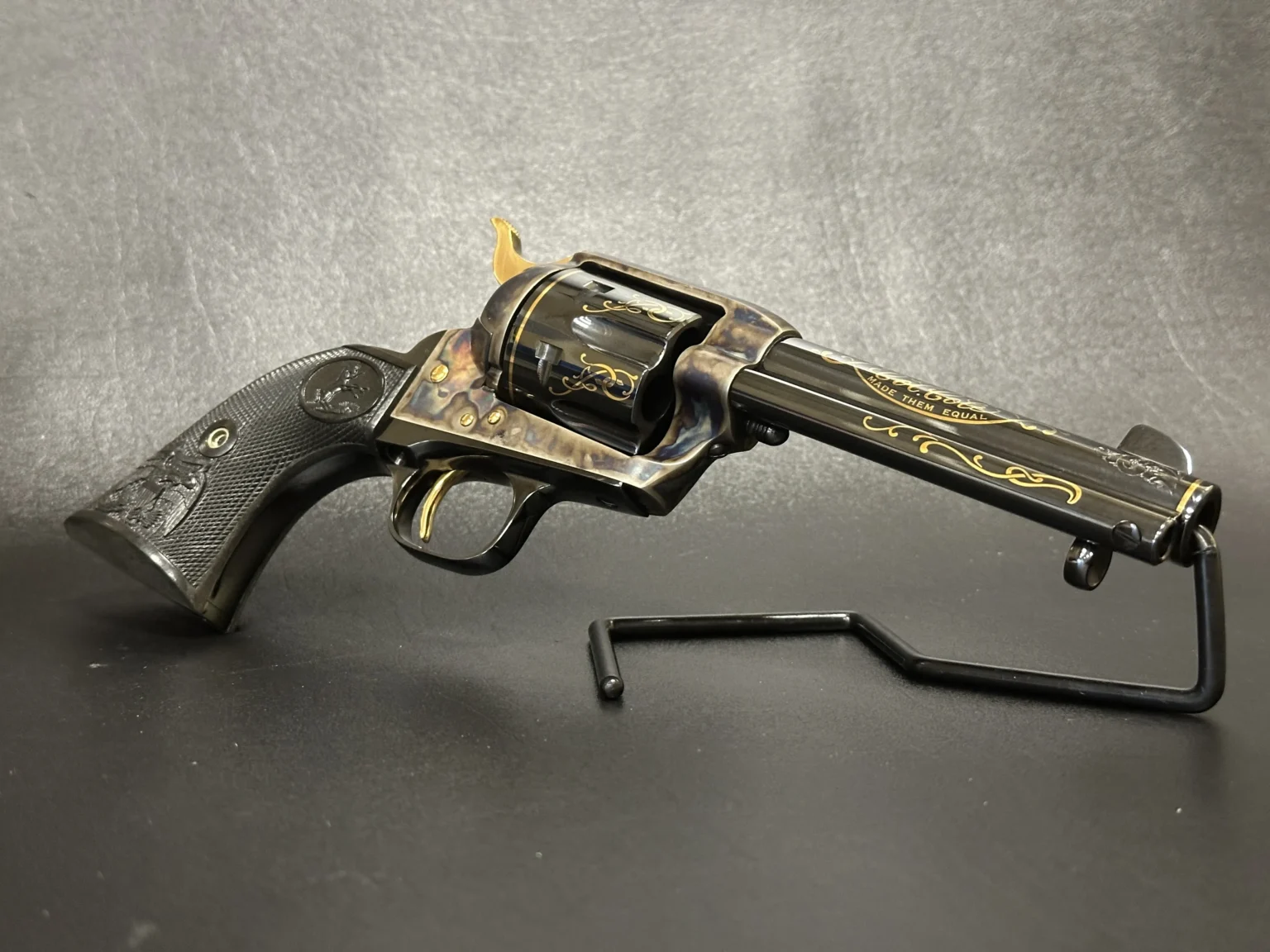
The Colt Single Action Army, introduced in 1873, is the gun most people picture when they think “Colt 45.” It earned the nickname “Peacemaker,” which is kind of ironic when you think about it, considering how many people it probably shot.
This revolver became the symbol of the Old West. And I mean the symbol. Wyatt Earp carried one. Buffalo Bill used one. Every gunslinger worth their salt either had one or wished they did.
Why was it so popular? Well, for starters, it worked. The mechanism was simple but effective. You could fire and reload quickly, which mattered a lot when things got dicey. And in the unpredictable chaos of frontier life, things got dicey pretty often.
The durability was another selling point. These guns could take a beating and keep working. Out in harsh conditions, where you couldn’t exactly run to a gunsmith for repairs, that reliability was everything.
But here’s where it gets interesting. The Colt SAA didn’t just exist in the real world. It became this cultural icon. Hollywood latched onto it, and suddenly every Western film had cowboys wielding these revolvers. The image of a hero with a Colt 45 on his hip became shorthand for American individualism, frontier justice, all that mythology we built around the West.
That cultural impact spread way beyond America, too. Around the world, the Colt 45 became synonymous with the American frontier spirit. It’s funny how a gun can become a symbol like that.
Fast Forward: The M1911
Okay, so jump ahead to 1911. The world’s changed a lot. The Wild West is mostly settled. Cars are becoming a thing. And the U.S. military needs a new sidearm.
Enter John Browning and the Colt M1911.
Browning was basically a genius when it came to firearms design. The guy designed so many influential guns, it’s kind of ridiculous. With the M1911, he created something that would stick around for over 70 years as the military’s standard-issue pistol. Think about that. Seventy years.
The M1911 was different from the SAA in almost every way. It was semi-automatic, not a revolver. It used the .45 ACP cartridge instead of the .45 Colt. Browning introduced features like short recoil operation and a tilting barrel mechanism. If you’re not into guns, that might not mean much, but trust me, it was innovative stuff that made the pistol more accurate and reliable.
This gun saw action in both World Wars. Korea. Vietnam. Countless smaller conflicts. It proved itself over and over in different environments, different conditions, and different kinds of combat. That’s not luck. That’s good design.
And here’s the thing: even after the military officially retired it, the M1911 didn’t go away. Civilians still love this gun. It’s a collector’s item, sure, but people also use it for shooting sports and self-defense. The design is classic. The historical significance is undeniable. It just works.
How These Guns Changed Everything
You can’t really overstate the impact these Colt 45 models had. They influenced firearms technology in ways that still matter today.
The SAA’s design inspired pretty much every revolver that came after it. The construction was solid, the operation was straightforward, and it proved you could make something both reliable and powerful without overcomplicating things.
The M1911’s semi-automatic mechanism changed pistol design completely. Once people saw what was possible with a semi-auto, there was no going back. Modern handguns owe a lot to what Browning figured out with the M1911.
But beyond the technical stuff, these guns became cultural symbols. They represent this idea of American heritage, frontier spirit, and rugged individualism. All those things we tell ourselves about who we are as a country. Whether that’s accurate or not is another question, but the symbolism stuck.
Movies, TV shows, books. The Colt 45 shows up everywhere. It evokes nostalgia, pride, a connection to history. That’s powerful stuff. It keeps the legacy alive even for people who’ve never touched a gun.
And it’s not just an American thing anymore. Collectors and enthusiasts worldwide appreciate these firearms. The craftsmanship, the history, the role they played in shaping not just American history but firearms technology generally. That recognition extends the legacy globally.
Let’s Compare: Different Calibers, Different Jobs
Now that we’ve covered the main models, it’s worth talking about how the .45 Colt and .45 ACP compare to other popular calibers. Because not all .45s are created equal, you know?
45 Colt vs. 44 Magnum
These two get compared a lot since they’re both powerful revolver cartridges. The .45 Colt is older, with that whole Wild West pedigree. It’s got moderate recoil and excellent accuracy. You can shoot it all day without your hand falling off.
The .44 Magnum came along in the mid-20th century (Dirty Harry, anyone?). It’s known for more power and, yeah, more recoil too. Quite a bit more, actually.
The context matters here. The .45 Colt came from an era where versatility and reliability were everything. You needed something that worked in different situations, that you could count on. The .44 Magnum was developed when people wanted more stopping power, more punch. Different priorities for different times.
Performance-wise, the .45 Colt gives you a nice balance. It’s good for target shooting, self-defense, whatever you need. The .44 Magnum, with its higher velocity and energy, is what you want for hunting or situations where you need maximum stopping power. It’s not subtle.
Pop culture has also shaped how people see these cartridges. The .45 Colt is Old West romance and nostalgia. The .44 Magnum is a modern action film, and “Go ahead, make my day.” Both have their mystique.
45 Colt vs. 45 ACP
Even though they share the “.45” designation, these are pretty different animals.
The .45 Colt is a revolver cartridge. It’s got a rimmed design that works perfectly for revolvers, and it can handle a wide range of bullet weights. Cowboy action shooters love it. If you’re into traditional single-action revolvers, this is your cartridge.
The .45 ACP (Automatic Colt Pistol) was designed specifically for semi-automatic pistols like the M1911. It’s got a rimless design that feeds smoothly through a magazine and cycles reliably. The engineering is tailored for a different kind of gun entirely.
In terms of practical use, they serve different purposes. The .45 Colt offers that nostalgic shooting experience, that connection to history. The .45 ACP is all about balanced performance and manageable recoil in a semi-auto package. It’s what you want for self-defense or if you’re in the military.
Both have serious cultural weight, though. The .45 Colt is tied to the frontier, to that legendary status as a Wild West cartridge. The .45 ACP has its own legacy from military history and continued popularity in civilian markets. They’re both classics, just in different ways.
The Legacy Thing
So what does all this add up to? The Colt 45 models left a mark that’s hard to ignore.
From dusty frontier towns to 20th-century battlefields, these guns were there. They shaped history, not just firearms history but actual capital-H History. Military development, civilian use, and technological innovation. The whole package.
But honestly, the cultural impact might be even bigger than the technical contributions. These guns became symbols. They represent adventure, independence, and the American frontier (for better or worse). Literature, film, art. The Colt 45 is everywhere, serving as an icon of American culture.
That symbolism goes beyond just function. These aren’t just tools. They’re representations of resilience, of self-reliance, of this whole mythology we’ve built around certain periods of American history.
And people still care about them. Collectors, historians, enthusiasts. Gun shows, museums, shooting events. There’s this whole community of people who appreciate what these firearms represent and the craftsmanship that went into making them. The legacy lives on because people keep it alive.
Wrapping This Up (But Not Too Neatly)
The Colt 45 models are genuinely fascinating. From the Single Action Army to the M1911, these guns captured imaginations and influenced firearms design for generations.
They represent innovation and craftsmanship, sure. But they’re also time capsules, carrying all these associations and meanings that go way beyond their function as weapons. They’re pieces of history you can hold in your hand.
Looking forward, it’s pretty clear the Colt 45 will keep being celebrated. Whether you’re a serious collector or just someone curious about firearms history, there’s something compelling about these guns. They’re part of our shared heritage, symbols of American history and culture, whatever you make of that.
New generations keep discovering them. The history, the significance, the stories. And each person who gets interested adds to the ongoing narrative. That’s how legacies work. They don’t stay frozen in the past. They evolve, they get reinterpreted, they stay relevant.
So yeah. The Colt 45. More than just a gun. A lot more, actually.
Frequently Asked Questions
Good question, because people mix these up all the time. The .45 Colt is the older one – it’s a rimmed cartridge designed for revolvers back in the 1870s. The .45 ACP (Automatic Colt Pistol) came later, specifically for semi-automatic pistols like the M1911. The ACP has a rimless design that feeds more reliably from a magazine. They’re both .45 caliber, but they’re not interchangeable. You can’t just load one into a gun designed for the other.
Yeah, absolutely. Both the Single Action Army and the M1911 are still manufactured, along with tons of reproductions and variations from other companies. The originals, especially well-preserved ones from the 1800s or early 1900s, can be pretty pricey collector’s items. But if you just want to shoot one? There are modern versions available. Just know that, depending on where you live, there’s a whole process involved in buying any firearm legally.
Right? It’s a gun nicknamed after keeping the peace. The name came from its role in law enforcement during the Wild West era. Lawmen used it to “keep the peace,” even though, you know, that often involved shooting people. The irony isn’t lost on anyone. But the nickname stuck, and now that’s what everyone calls the Colt Single Action Army.
Wyatt Earp is probably the most famous; he carried a Colt SAA during his time as a lawman, including at the O.K. Corral. Buffalo Bill used them, too. Teddy Roosevelt was a fan. Later on, the M1911 was carried by basically every American soldier from WWI through Vietnam, so we’re talking millions of people. General Patton had custom M1911s with ivory grips. It’s kind of a who’s who of American history.