
Key Takeaways:
- Asking prices don’t matter, real sales do: The only numbers that tell the truth are completed transactions where money actually changed hands. If you’re not looking at sold results and total prices paid, you’re valuing hope, not the market.
- Condition, correctness, and demand outweigh raw rarity: A rare handgun only becomes valuable when collectors actually want it, and they want it right. Original finish, correct configuration, and strong collector demand will always matter more than a low production number alone.
- Good valuation is research, not instinct: Smart collectors cross-check multiple data sources, adjust for condition and liquidity, and understand current market momentum before trusting a price. Intuition comes later, after the homework is done.
You know what drives collectors crazy? Walking into a gun show, spotting what looks like a steal on a vintage Smith & Wesson, only to wonder if you’re the one getting taken for a ride. Or worse, passing on a piece because the price seems too high, only to watch it sell for triple that amount at auction six months later.
Here’s the thing: valuing rare handguns isn’t like pricing a new Glock at your local gun shop. There’s no manufacturer’s suggested retail price hanging over the counter. Instead, you’re navigating a market where emotion, history, and scarcity collide in ways that can make a $500 gun worth $5,000, or leave a supposedly “rare” piece gathering dust at $300 because nobody actually wants it.
After years of watching collectors get burned (and occasionally being that collector myself), I’ve learned that smart valuation comes down to separating real market data from wishful thinking. Let me walk you through exactly how to figure out if that rare handgun you’re eyeing is fairly priced, undervalued gold, or an overpriced paperweight.
The Asking Price Trap You Need to Avoid
First things first: that price tag you see? It’s often fiction.
I’m not saying sellers are lying, exactly. But there’s a massive difference between what someone asks for a gun and what it actually sells for. I’ve seen Colt Pythons listed online for $8,000 that eventually sell for $4,500 after sitting unsold for months. The original asking price wasn’t “market value”; it was one seller’s hopeful daydream.
This is why you can’t trust the numbers you see at gun shops or on active online listings. Those figures represent what sellers hope to get, not what buyers are actually paying. It’s like judging home prices by looking only at overpriced listings that never sell, rather than checking what homes actually close for.
The solution? You need completed sales data. Actual transactions. Real money changing hands.
Start with GunBroker’s completed auctions
Most collectors browse GunBroker, but many make a key mistake: they look at active listings instead of completed ones. Use Advanced Search to filter for completed/ended listings, then study what actually sold. That shows real selling prices, not the seller’s wishful thinking.
Don’t just grab the first completed sale you see. Prioritize auctions with multiple bidders. An item that expired with zero bids might be overpriced, but it could also suffer from bad photos, vague descriptions, or poor categorization that buried the listing. Presentation can distort demand just as much as pricing. When pulling comps, normalize for condition, configuration, and timing; a sale from last month is far more useful than one from three years ago.
For truly rare or high-end pieces, GunBroker may not be enough. Serious rarities often bypass online marketplaces and go straight to specialty auction houses like Rock Island Auction, Morphy Auctions, and Amoskeag Auction. They publish “Prices Realized” catalogs, transparent records of actual hammer prices.
These catalogs are gold mines. You can search by manufacturer, model, and condition to find comps, and because these are serious auction houses with serious buyers, the prices reflect genuine market value, not inflated hopes.
When comparing comps, always normalize to the buyer’s total cost (bid + premium + platform fee, plus any payment fee), not just the hammer. Auction houses usually add a buyer’s premium, often in the mid-teens to around 20%, depending on the venue and bidding method, and sometimes an extra charge for online bidding. If a gun was hammered at $5,000 with an 18% premium, the buyer actually paid $5,900. Compare that total against what you’d pay elsewhere.
Better Tools, But Still Just Reference Points
Something changed in the firearms valuation world over the past few years, and it’s a step in the right direction. Today, these platforms function more like searchable online databases and subscription tools than old-school once-a-year books. They can help you set a range quickly, but you still want to confirm your final number against recent, comparable realized prices from major auction houses.
Use them as range-setters, then verify against actual market data. These guides give you a ballpark and help you spot obvious outliers, but they shouldn’t be your only source. Professional collectors treat these tools as useful starting points, baselines for research, not as final authorities on what a specific gun is worth today.
The market moves faster than any pricing guide can keep up with, especially for rapidly appreciating categories or newly discovered rarities. A reference tool might show last year’s range, but if a model just got featured on a major YouTube channel or a celebrity collection just hit the market, current prices could be significantly different.
The Big Three: What Actually Drives Value
Alright, so you’ve got access to real sales data. Now comes the harder part: understanding what makes one rare handgun worth $10,000 while another seemingly similar piece languishes at $2,000.
The value of rare firearms boils down to three major factors, and understanding how they interact is crucial. Let’s call them the “Big Three.”
Condition and Originality: The Heavy Hitter
This is where collectors get serious, and it’s the single biggest value driver for rare handguns. I’m talking about a condition in a specific, technical sense, not just “looks good to me.”
A rare handgun in “as new” condition can genuinely be worth double or triple the same exact model with minor pitting or a refinished frame. Sometimes more. The market for pristine original firearms is ruthless about condition.
The NRA Condition Standards serve as a widely recognized baseline. These standards range from “Factory New” down through “Excellent,” “Very Good,” “Good,” “Fair,” and finally “Poor.” Most collectors also reference the Percentage System, which rates remaining original finish from 0% to 100%.
That said, NRA standards are a starting point, not the final authority for rare guns. High-end collectors often rely more on auction-house grading systems, combined with detailed visual inspection. The language helps establish a common vocabulary, but a serious evaluation goes deeper.
Here’s where people mess up: they think “80% original finish” sounds pretty good. But in the rare handgun market, 80% might drop the value significantly compared to a 98% example. The top end of the condition is where prices spike dramatically.
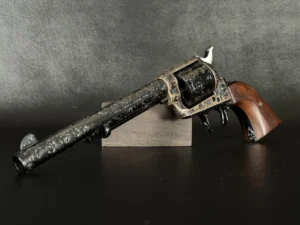
And originality matters just as much as condition. A beautifully refinished Colt SAA might look perfect, but it’s worth a fraction of an original finish gun with some honest wear. Collectors want the original. They want a factory. They’ll pay staggering premiums for it.
This extends to every component. Original grips, original screws, original barrel. Start swapping parts, even period-correct ones, and you’re watching value evaporate.
Rarity vs. Demand: The Misunderstood Relationship
Here’s a truth that surprises many newer collectors: rarity doesn’t automatically equal value.
You could have a handgun that’s legitimately one of only five known examples, but if nobody collects that manufacturer or model, you’ve got a market of… maybe five potential buyers. That’s not a recipe for high prices. That’s a recipe for frustration.
I’ve seen this play out repeatedly. Some oddball Belgian pocket pistol from 1885 might be extremely rare, but if there’s no collector base for it, you’ll struggle to get $400. Meanwhile, a Colt 1911 made in 1918, of which thousands exist, might sell for $2,500 because everyone wants one.
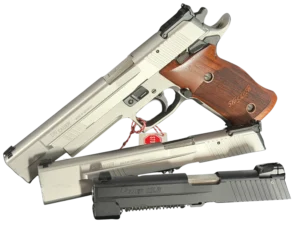
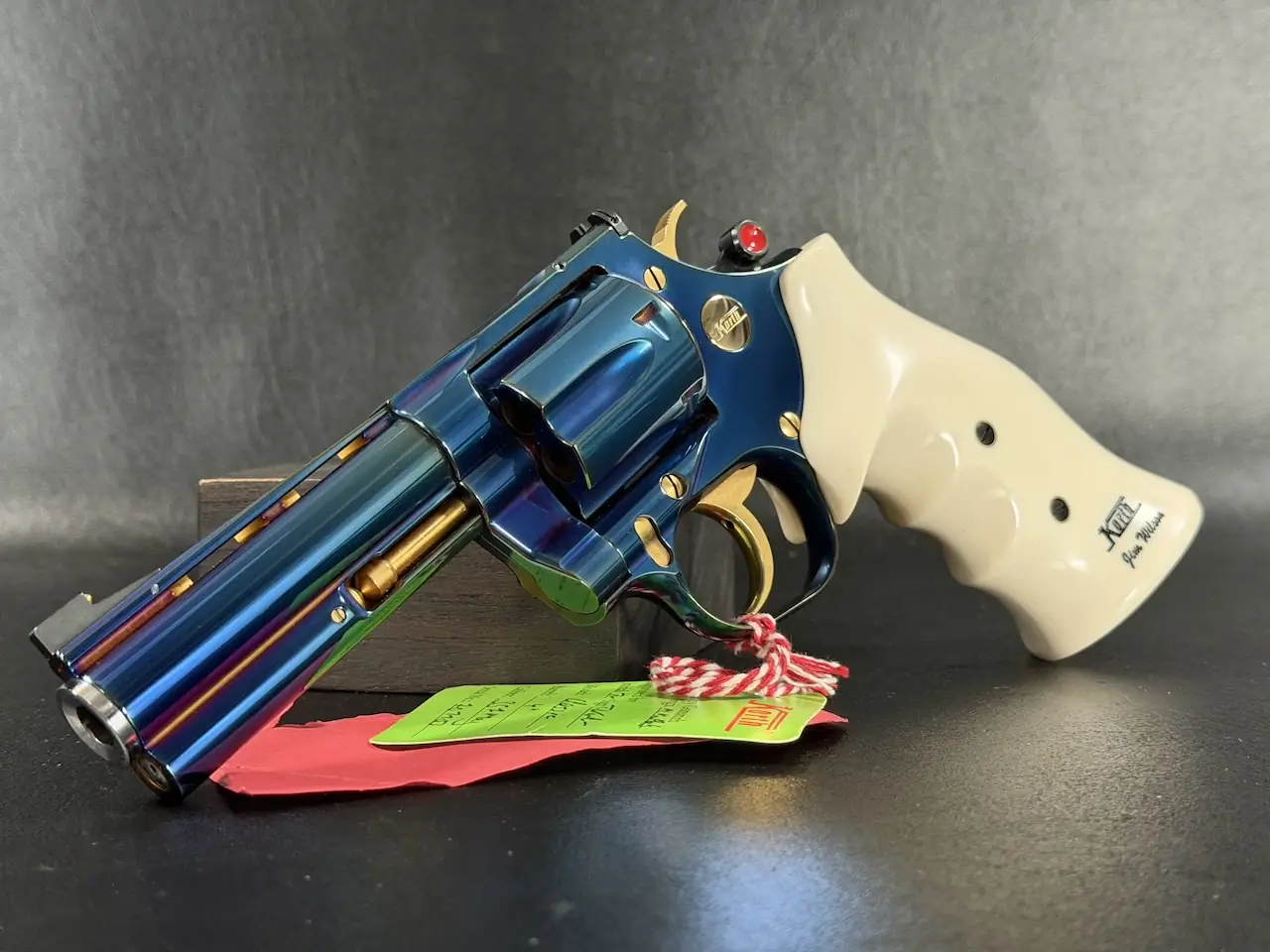
The sweet spot is rarity plus demand. Discontinued models from prestige brands like Colt, Winchester, or Smith & Wesson often see rapid value appreciation precisely because they combine scarcity with an established, passionate collector base. Modern high-end makers like SIG Mastershop or Korth also command premiums when scarcity meets desirability.
Think about it this way: would you rather own one of ten surviving examples of an unknown manufacturer, or one of 500 surviving pre-war Colt Pythons? The Python will be worth more every single time, because demand dwarfs rarity.
Provenance and Documentation: The Premium Multiplier
Provenance, documented and verifiable historical ownership or documentation, can transform a rare handgun’s value when it confirms something meaningful. I’m talking about big premiums, but only when the documentation actually matters.
A Colt Single Action Army is valuable. But a Colt Single Action Army with documented ownership by Buffalo Bill Cody? That’s a six-figure gun. Historical provenance turns a collectible into a museum piece.
Factory letters from the manufacturer also boost value, but here’s the catch: they need to confirm something desirable. A letter that simply verifies the serial number and shipping date might be nice to have, but it won’t dramatically increase value. A letter that confirms a rare configuration, special-order features, or delivery to a notable entity? That’s different. That documentation proves you’ve got something genuinely special.
Original factory packaging is similar. A handgun that comes with its original box, manual, and factory test targets commands significantly more than a “plain” version, but mainly because this complete package confirms authenticity and suggests careful ownership history. Collectors know that a handgun kept in its original box is more likely to be unmolested and correctly configured.
The bottom line: documentation adds value when it verifies desirability, not when it simply exists.
Reading the 2026 Market: Current Trends That Matter
The firearms collecting market isn’t static. Trends shift, sometimes rapidly. If you’re trying to determine fair value in 2026, you need to understand what’s hot right now versus what’s cooling off.
Keep in mind that valuation is category-specific; what drives value for military handguns differs from what matters for antique pocket pistols or modern competition guns. General market trends matter, but niche demand is often more important.
Military handguns are having a moment
Classic military-issued pistols like the 1911, Browning Hi-Power, and Luger have shown stronger value growth trends than many antique firearms categories. There’s something about military history that resonates with collectors, the connection to actual service, actual wars, actual soldiers.
I’ve watched this trend build over the past several years. WW1 and WW2-era service pistols that seemed fairly priced just a few years back have appreciated in many segments and condition tiers. If you’re evaluating a military handgun, factor in this momentum, but understand that growth patterns vary widely depending on model, configuration, and specific condition grade.
There’s also what I call the “Guntuber Effect,” and it’s more significant than you might think. Popular firearms personalities on YouTube have real market influence. When someone like Forgotten Weapons does a deep dive on an obscure Hungarian service pistol, suddenly everyone wants one.
I watched this happen with the French Mle 1935A. These pistols were sleepers for years, interesting but not particularly valuable. Then a few major gun channels featured them, and prices jumped. That’s not artificial hype, exactly. It’s a genuine renewed interest, creating real demand. But it means you need to stay up to date with the community to understand these spikes.
This works in reverse, too. Certain collecting categories have cooled off. Derringers and pocket pistols, for instance, don’t command the premiums they did fifteen years ago. Understanding these shifts helps you avoid overpaying for yesterday’s hot category.
One more thing to consider: liquidity differences. A $2,000 Colt will move quickly if priced right. A $50,000 rarity might take months or years to find the right buyer. A higher value doesn’t always mean it’s easier to sell, which affects negotiating leverage and fair pricing.
When to Bring in a Professional
For run-of-the-mill collectibles, you can probably evaluate value yourself using the methods I’ve outlined. But once you’re looking at genuinely rare pieces, we’re talking potential five-figure values or higher, it’s time to consult a certified firearms appraiser.
Don’t rely solely on online estimates for serious rarities. An appraiser will provide a written report that accounts for all the nuances: specific condition issues, originality of components, market positioning, and current demand. This documentation is essential for insurance, and frankly, it’s worth the few hundred dollars just for peace of mind before you make a major purchase.
Look for appraisers with credentials from organizations like the American Society of Appraisers. If you’re using ASA as a credential check, look for Personal Property appraisers with a specialty in antique firearms, armor, and militaria. They should specialize in firearms, not just know about collectibles in general. And they should be willing to explain their valuation methodology; if they just pull a number from thin air, walk away.
One more thing: watch out for conflicts of interest. An appraiser shouldn’t be evaluating their own inventory or pieces in which they have a financial stake. An independent, third-party assessment is what gives an appraisal credibility and protects you from biased valuations.
Putting It All Together: A Real-World Approach
So you’re standing at a gun show or scrolling through an online listing, and you’re staring at a price. How do you actually determine if it’s fair?
Start by identifying the exact model and configuration. Record the serial number (but keep it private, don’t publish serial numbers online), check for variant features, and research when and where it was manufactured. The more specific you are, the better your comparisons will be.
Then hit those completed auction databases. Find three to five comparable sales within the past year, adjusting for condition differences. If your example is in better shape than the comparables, it should be priced higher. Worse shape? Lower.
Cross-reference with current Blue Book data and professional auction house results. You’re looking for consensus, multiple data sources pointing to a similar value range.
Factor in the Big Three: condition versus comparables, current demand for that model, and any documentation or provenance that confirms meaningful originality. A gun with original box and papers might justifiably be priced 20% to 40% higher than a bare gun, assuming that documentation verifies desirable features.
Finally, consider market timing and regional factors. Is this model currently trending up or stabilizing? Are you seeing strong auction competition or soft interest? And remember that collector demand can vary by region; military arms might be hotter in some markets than others.
If the asking price falls within your researched range, say, within 15% either direction, you’re probably looking at fair value. Significantly below? That could be a genuine deal (or a red flag about authenticity or condition problems). Way above? The seller is either optimistic or knows something you don’t.
The Bottom Line on Smart Valuation
Figuring out if a rare handgun is fairly valued isn’t guesswork; it’s detective work backed by real data. You’re comparing actual sales, evaluating specific condition factors, and understanding market dynamics.
The collectors who consistently find undervalued pieces and avoid overpriced ones aren’t lucky. They’re informed. They know where to find reliable pricing data, they understand what drives value in their specific collecting category, and they stay current with market trends.
Is it more work than just trusting the price tag? Absolutely. But that work is what separates collectors who build valuable collections from those who accumulate overpriced mistakes.
Once you get into the rhythm of researching sales data and understanding value drivers, it starts to feel natural. Over time, you’ll develop a strong intuition for fair pricing in your collecting area. You’ll start spotting good deals before most people even notice them, and you’ll confidently walk away from pieces that feel off—even if you can’t immediately explain why.
That intuition, built on solid research and market knowledge, is what transforms casual buyers into serious collectors. And in a market where the difference between under- and over-valued can be thousands of dollars, that knowledge pays for itself remarkably quickly.
Frequently Asked Questions
Compare recent completed sales of the same model, configuration, and condition, not asking prices. If it’s meaningfully below those results, dig deeper to confirm the condition and originality before assuming it’s a deal.
They’re useful for setting a rough range, but they lag the real market. Always confirm prices with actual listings from sites like GunBroker and major auction houses.
Sometimes, but not always. Poor photos, bad descriptions, or incorrect categorization can kill interest just as fast as bad pricing.
More than most people expect. Small drops at the top end, like 98% to 90%, can mean large drops in value, especially for collector-grade pieces.
In almost all collector markets, yes. Original finish with honest wear is almost always worth more than a perfect refinish.