
Key Takeaways:
- Select a safe with verified fire and burglary-resistance ratings appropriate for the collection.
- Maintain stable, monitored storage conditions and support each firearm without stressing vulnerable components.
- Combine secure storage with controlled access, monitored alarms, current records, and detailed photographs.
Collectible firearms require storage that addresses four separate risks: unauthorized access, fire, environmental deterioration, and physical damage. A locking cabinet may provide basic security, but it does not by itself control humidity, support fragile components, document condition, or protect an entire collection from theft and fire.[1]
Choose the Enclosure Carefully
The National Park Service recommends keeping museum firearms in a locking, fire-resistant gun safe or cabinet within a secure, dedicated storage space. Firearms should be unloaded and separated from unrelated objects.[1]
A safe’s fire rating and its resistance to forced entry measure different forms of protection. A fire rating describes the interior temperature a container is designed to maintain during a specified period of external fire exposure. No safe or vault is fireproof, and a fire-resistant enclosure cannot replace building-level fire detection and suppression.[2]
A product marketed as a gun safe may not have independently tested burglary resistance. UL Solutions classifies qualifying gun safes as Residential Security Containers and tests them under graduated attack levels. The tests differ according to attack time, tools, number of technicians, and the size of the opening that may be created during the test.[3]
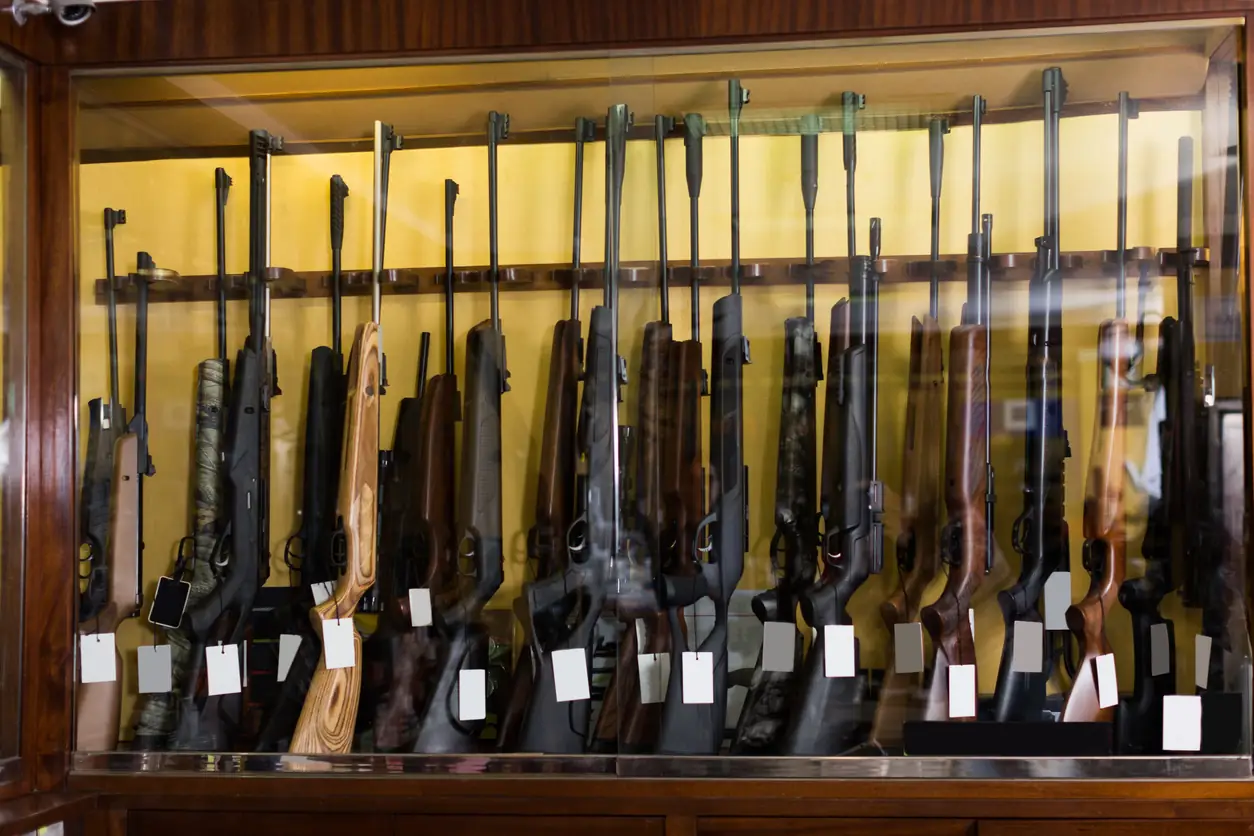
Collectors should examine the specific certifications attached to a safe rather than relying on weight, door thickness, locking-bolt count, or promotional terminology. The enclosure must also fit the collection. Historic muskets and rifles may be too long for cabinets designed around modern sporting firearms.[2]
Installation matters. Large safes can impose substantial loads on a floor, particularly when filled. The National Park Service recommends evaluating structural capacity and anchoring specialized storage furniture where appropriate.[2]
Maintain a Stable Environment
Historic firearms often combine metal, wood, leather, inlay, and later synthetic components. These materials respond differently to temperature, relative humidity, light, dust, and pollutants. Variable conditions can contribute to corrosion, splitting, shrinking, finish damage, loss of inlay, mold, and pest activity.[4]
There is no single environmental setting appropriate for every firearm. The National Park Service recommends maintaining consistent relative humidity and consulting a conservator to determine conditions suitable for the materials and condition of the particular object.[4]
Humidity and temperature should be measured inside the storage area rather than assumed from conditions elsewhere in the building. Garages, attics, and other spaces exposed to pronounced seasonal changes are poor choices unless their environment is controlled and monitored.
Firearms should be kept away from direct sunlight. The National Park Service also recommends filtering ultraviolet radiation from fluorescent lighting and windows in museum storage and exhibition areas.[4]
Support Each Firearm Properly
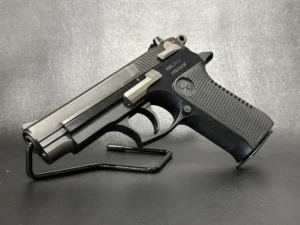
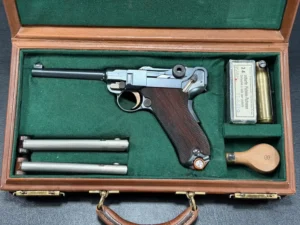
Long arms may be stored vertically or horizontally, depending on their condition. They should be secured with padded mounts that prevent tipping and avoid concentrated pressure on vulnerable components. Handguns should be supported with museum-quality materials that prevent movement inside drawers or compartments.[1]
A long arm should not be lifted or supported solely by the wrist of its stock. This narrow area may be structurally vulnerable, particularly on an old or previously repaired firearm. When moving a firearm, provide adequate space, handle one object at a time, support it with both hands, and use padded surfaces to prevent shifting.[1]
Remove leather slings, holsters, cases, and scabbards and store them separately. Leather can contribute to deterioration of adjacent metal, while buckles, snaps, and swivels can scratch firearm surfaces. Ammunition should also be stored separately from firearms.[1][4]
Keep Maintenance Restrained
Every firearm should be treated as loaded until its condition has been established by a person qualified to evaluate it. During handling, keep the muzzle pointed in a safe direction and keep fingers outside the trigger guard. The National Park Service specifies nitrile gloves when working with museum firearms.[1]
Routine maintenance should be limited. Dust can be removed with a soft-bristle brush and a controlled vacuum fitted with a protective screen. A small amount of lightweight, non-drying oil may be applied to moving parts, but excess oil should be removed with a clean cloth.[4]
Dismantling, corrosion treatment, and extensive cleaning require specialist knowledge. A conservator experienced with firearms should evaluate objects with active corrosion, fragile finishes, damaged mechanisms, loose inlays, or uncertain previous treatments.[1][4]
The firearm’s condition should be recorded before and after maintenance. Records should identify the methods and materials used, while photographs should document markings, finish, existing damage, and other identifying features.[4]
Use Layered Security
A safe is one layer of protection. Effective collection security also includes restricted access, key or code control, physical barriers, intrusion detection, monitored alarms, documentation, and inventory. Multiple layers reduce dependence on any single device.[5]
Intrusion systems should cover likely entry points and the storage area itself. The National Park Service recommends alarms that notify both responsible personnel and a monitoring station. An unmonitored alarm that produces only local noise may delay an effective response.[5]
Maintain a current inventory containing serial numbers, markings, dimensions, provenance records, and photographs of distinguishing features. Documentation and photographs can assist in identifying and recovering stolen objects. Digital records should be backed up securely and kept separately from the collection.[5]
Frequently Asked Questions
Use a locking, fire-resistant safe or cabinet that fits and supports the firearms properly. Confirm its independent fire and burglary-resistance certifications instead of relying on marketing terminology.
There is no single setting appropriate for every firearm because metal, wood, leather, inlays, and synthetic materials respond differently. Maintain stable, monitored conditions and consult a conservator for complex or deteriorating pieces.
Long arms may be stored vertically or horizontally, depending on their condition. Use padded mounts that prevent movement, tipping, and pressure on fragile components.
No. Leather cases, holsters, slings, and scabbards should be stored separately because they can contribute to metal deterioration or scratch firearm surfaces.
No. Effective protection also includes restricted access, key or code control, monitored intrusion alarms, accurate inventory records, and detailed photographs.
Sources
[1] National Park Service. Museum Handbook, Part I, Appendix G: Museum Firearms, Small Arms Ammunition, Munitions, and Artillery. 2022, pp. G:18–G:20.
[2] Ennes, Anne, Shay Henrion, and Casey Oehler. “Conserve O Gram 4/1e: Specialized Museum Storage Furniture.” National Park Service, July 8, 2026.
[3] UL Solutions. “Residential Security Container Standard Revised.” UL Solutions, August 1, 2017.
[4] Montgomery, Allan L. Caring for Historic Longarms: Storage and Handling. National Park Service Conserve O Gram 10/1, May 1999, pp. 1–3.
[5] National Park Service. Museum Handbook, Part I, Chapter 14: Museum Security. 2024, pp. 14:1–14:2, 14:22–14:23, 14:39–14:41.