
Key Takeaways:
- “Museum grade” is not a universally recognized professional classification.
- Documented provenance can establish ownership, authenticity, and historical significance.
- Rarity and pristine condition alone do not make a firearm museum-worthy.
“Museum grade” does not function as a universally recognized professional grade. In the marketplace, the term is often applied to firearms that appear rare, pristine, or unusually valuable. Museums take a broader view.
Ashley Hlebinsky, former curator of the Cody Firearms Museum, has described “museum quality” as a frequently misunderstood term that is also used as a sales tactic. Her central point is important: a damaged or heavily worn firearm can be museum-worthy when it preserves meaningful evidence about a person, event, technology, or period.[1]
Institutional acquisition policies confirm that museums do not rely on a single hierarchy of commercial grades. The Smithsonian evaluates prospective acquisitions by considering factors such as significance, intellectual value, physical condition, provenance, potential use in exhibitions and research, and the institution’s ability to provide appropriate long-term care.[2] A defensible assessment of a firearm should therefore begin with significance, not price, polish, or promotional language.
Historical and Collection Significance
A museum-worthy firearm should contribute something identifiable to the interpretation of history. It may document a manufacturing process, mechanical development, military system, sporting tradition, craft practice, historical owner, or significant event.
Rarity can support that importance, but rarity without context proves little. A firearm produced in small numbers is not automatically historically significant. Conversely, an ordinary production model may become important because of its documented use, unusual survival, or relationship to a specific collection.
The Royal Armouries’ collecting policy illustrates this contextual approach. Its firearms holdings include military and civilian arms, experimental and trials weapons, standard-issue examples, decorated firearms, presentation pieces, and reference patterns once used to control official manufacture. The museum expressly recognizes the research value of both successful designs and technical “dead ends.”[3] What matters is the evidence an object contributes to a larger historical or technical account.
Institutional relevance is equally important. A firearm may be exceptional yet duplicate examples already represented in a museum. Another may be comparatively modest but fill a major gap. “Museum-worthy” is therefore not an intrinsic rank that exists independently of a collection’s purpose.
Provenance: Evidence, Not Storytelling
Provenance is the history of an object’s ownership. It can help establish authenticity, legal title, historical associations, and significance. The Smithsonian cautions that incomplete ownership histories are more common than complete ones and treats provenance research as an ongoing curatorial responsibility.[4]
In firearms collecting, provenance is often weakened by the repetition of an attractive story. Family tradition, a handwritten label, a dealer’s description, or an engraved name may provide a useful lead, but none proves ownership on its own.
Strong documentation may include:
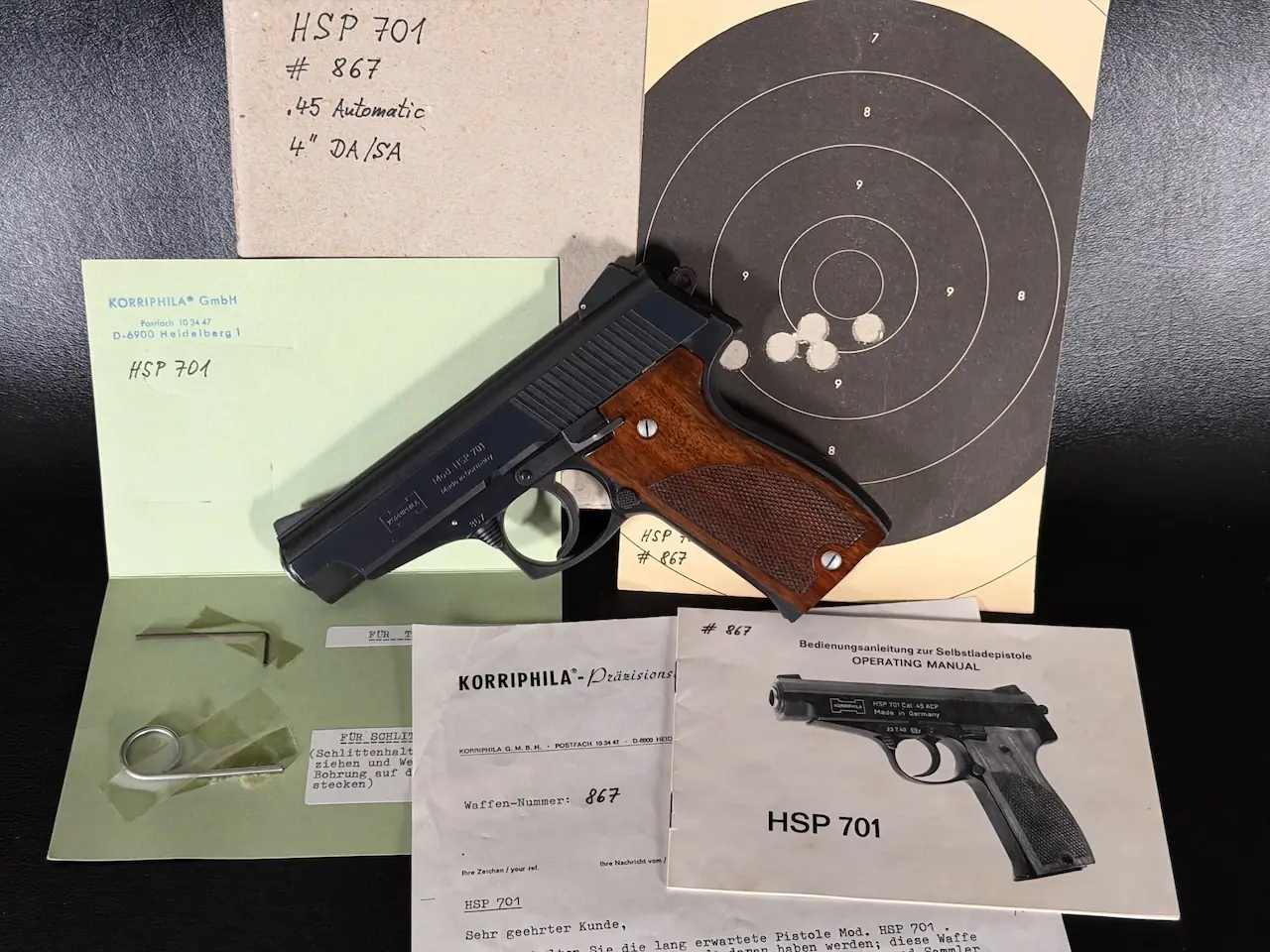
- Original factory ledgers or serial-number records
- Government, military, police, or institutional inventories
- Bills of sale, estate records, and documented transfers
- Period correspondence identifying the firearm
- Photographs showing sufficiently distinctive features
- Contemporary presentation records
- Exhibition catalogs and earlier scholarly publications
- Documented cases, accessories, inscriptions, and markings
Evidence must connect to the specific firearm. A period photograph showing a famous individual with the same model is not enough. A presentation inscription may be genuine, later-added, or deliberately misleading. Serial numbers, dimensions, wear, engraving, and configuration should agree with the documentary record.
Surviving factory records can be especially valuable, but their limits must be understood. The Cody Firearms Records Office uses original manufacturer records to research production dates, shipment information, and factory configuration where those details survive. Records relating to Annie Oakley’s Ithaca single-barrel trap gun, serial number 264501, documented communications with her husband, Frank Butler, concerning the gun’s measurements and provided additional support for its history.[5]
A factory record establishes what the surviving entry actually says. It does not automatically authenticate every component presently fitted to the firearm or explain changes made after shipment.
Condition and Historical Integrity
Condition matters because a firearm’s surfaces and components preserve evidence. Finish, markings, machining, dimensions, wear, repairs, residues, and replacement parts can reveal how an object was manufactured, maintained, altered, and used.
Condition should not be confused with appearance. Hlebinsky used William F. “Buffalo Bill” Cody’s damaged Springfield-Allin conversion rifle, known as “Lucretia Borgia,” to demonstrate why a firearm need not be pristine to have substantial museum value. Despite missing material, its documented association with Cody gives the rifle a historical importance that cosmetic grading cannot capture.[1]
The more useful concept is integrity: how much reliable historical information remains in the object?
Original finish and components generally preserve more evidence than refinished or replaced material. Even so, alteration does not automatically eliminate museum significance. A period repair, arsenal conversion, field modification, or documented replacement may form an important part of the firearm’s history. An undocumented modern refinish is more problematic because it can erase markings, alter contours, remove wear, and obscure evidence.
Any assessment should distinguish among:
- Original manufacture
- Documented period modification
- Documented restoration or conservation
- Undocumented alteration
- Modern replacement
- Unresolved or disputed features
Uncertainty should be recorded, not converted into certainty for the sake of a stronger sales description.
Conservation Is Not Refinishing
Museums distinguish preventive care, stabilization, and restoration. The National Park Service defines stabilization as treatment intended to slow deterioration while maintaining an object’s integrity. Restoration seeks to return an object to a known or assumed earlier state and may involve non-original material.[6]
The difference is critical for collectible firearms. Refinishing a surface to make it look new is not the same as conserving it. The National Park Service specifically advises against treatment undertaken solely to satisfy a subjective aesthetic standard. Its guidance recognizes that design features, materials, manufacturing techniques, wear, repairs, alterations, markings, grime, and residues may all contain evidence worth preserving.[6]
Conservation decisions should therefore be made with a qualified conservator familiar with metals, wood, finishes, and composite objects. Treatments should be minimally invasive, documented, and removable where practicable. Restored areas should remain distinguishable from original material upon close examination.[6]
Firearms also require specialized safety procedures. National Park Service guidance calls for evaluation by an experienced specialist, documentation of unloading, secure storage, and avoidance of permanent or irreversible alterations when rendering firearms temporarily inoperable for display.[7] Responsible stewardship protects both the historical object and the people handling it.
Understanding Rarity
Rarity should always answer a precise question: rare compared with what?
Relevant categories may include:
- Total production
- Surviving examples
- Original configuration
- Factory finish or chambering
- Experimental or trials status
- Documented presentation history
- Identified maker or engraver
- Association with a person or event
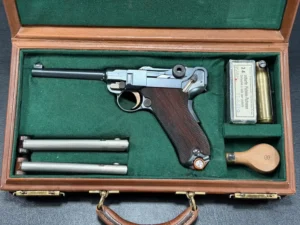
- Completeness with its original case and accessories
A low serial number is not automatically important. Nor is an unusual configuration necessarily a prototype. Both conclusions require supporting factory, archival, or physical evidence.
Reliable rarity statements identify the model, variation, relevant period, known population, and source of the count. Claims such as “one of a kind” or “the only known example” should not be published unless the available records and recognized specialist literature support them.
Firearms as Art and Material Culture
Firearms can be studied simultaneously as weapons, machines, industrial products, personal possessions, and decorative objects. The Royal Armouries has developed its collection along technical, typological, historical, and art-historical lines. Its holdings include highly decorated firearms, presentation arms, experimental designs, service weapons, and official production standards.[3]
Engraving, carving, precious-metal inlay, sculpted mounts, and fitted cases may place a firearm within the history of decorative art. Mechanical design and manufacturing technique can be just as significant. Ornament alone, however, does not establish artistic importance.
Attributions to an engraver, gunsmith, workshop, or former owner should be supported by signatures, factory records, archival documents, documented comparable work, or established scholarship. “Attributed to,” “in the style of,” and “made by” are different conclusions and should never be treated as interchangeable.
Collector Grade, Investment Grade, and Museum-Worthy
“Collector grade” and “investment grade” are market terms. The first usually signals desirability within a collecting field; the second expresses an expectation about financial performance. Neither has a universal threshold, and neither establishes museum significance.
Condition, rarity, and demand may support market value. Museum significance depends on a different combination: authenticity, documentation, historical or technical relevance, research potential, collection context, and the ability to preserve the firearm responsibly.[2]
A disciplined collector should ask:
- What exactly is the firearm?
- Which features are original, modified, restored, or uncertain?
- What primary documentation survives?
- Is the claimed provenance tied to this specific example?
- Is the rarity claim clearly defined and independently supportable?
- What historical, artistic, or technological subject does the firearm illuminate?
- Can it be stored, handled, and conserved without destroying evidence?
A truly museum-worthy firearm does not need inflated language. Its importance should be demonstrable through the object, the records attached to it, and the historical questions it can help answer.
Frequently Asked Questions
“Museum grade” is an informal market term, not a universal professional standard. Museums assess firearms according to significance, provenance, integrity, research value, and collection relevance.
Yes. Documented wear or damage may preserve evidence of historical use and can be more significant than pristine cosmetic condition.
Provenance documents a firearm’s ownership and history. Strong records can support authenticity and historical associations, while an unsupported story cannot.
No. Rarity matters only when it contributes to a documented historical, technological, artistic, or cultural context.
Restoration should not be undertaken solely to improve appearance. Any treatment should be minimally invasive, thoroughly documented, and performed by a qualified conservator.
Sources
- Ashley Hlebinsky, “Junk Guns or Museum Quality?,” Buffalo Bill Center of the West, May 20, 2014.
- Smithsonian Institution, “Smithsonian Collections,” January 2, 2018.
- Royal Armouries, “Collections Development Policy 2025,” policy COL-POL-024, revision 05.
- Smithsonian Institution, “What Is Provenance?,” Smithsonian Provenance Research Initiative.
- Rachel Johnson, “Ithaca Gun Company Records Find a New Home with the Cody Firearms Records Office,” Buffalo Bill Center of the West, November 17, 2020.
- National Park Service, “Museum Handbook, Part I, Chapter 8: Conservation Treatment,” 2012.
- National Park Service, “Museum Handbook, Part I, Appendix G: Museum Firearms, Small Arms Ammunition, Munitions, and Artillery,” 2022.