
Key Takeaways:
- Start with guns that have earned their place in history. The 1911, Glock 19, and Model 29 aren’t just popular by reputation. They mark real shifts in handgun design and in what shooters expect from their pistols. You don’t have to start with these exact models, but choose guns that matter for more than their looks. Historical significance gives your collection depth, rather than making it feel like random purchases.
- Do the boring homework before spending money. It’s easy to buy whatever catches your eye at a gun show, but that’s how you get regrets and an empty wallet. Do your homework: study the history, learn the mechanics, and set a realistic budget. Join forums, talk to experienced collectors, and learn proper storage. The prep work isn’t glamorous, but it’s what separates a true collection from a random pile of expensive metal.
- Build something that actually reflects you, not a checklist. Sure, there are “must-have” guns for any collection. But this is your collection. If you care more about law-enforcement sidearms than military history, lean into that. If revolvers speak to you more than semi-autos, go with it. The best collections have a clear point of view and tell a story that matters to their owner, not one built around someone else’s checklist.
Let’s get started…
Look, I get it. You’re thinking about starting a handgun collection, and you want to do it right. Not just buying whatever looks cool at the gun show, but actually building something meaningful. Something that makes you feel like you’re preserving a piece of history, not just hoarding metal.
Here’s the thing about collecting handguns: it’s weirdly personal. Yeah, there’s the objective stuff like historical significance and mechanical innovation. But the pieces that end up mattering most? They’re usually the ones that speak to you for reasons you can’t quite articulate. Maybe it’s the way the grip feels in your hand. Maybe it’s because your grandfather carried something similar in Korea. Who knows.
Why Handguns Hit Different
Handguns are just… special. They’re compact enough that you can actually display them properly without turning your house into an armory. They’ve got this rich history spanning centuries, from flintlock dueling pistols to modern polymer frames that weigh less than a bag of sugar. And honestly? They’re the centerpiece of most serious firearm collections because they’ve been there for it all. Personal defense, law enforcement, military service, the Wild West, and both World Wars.
Each one carries stories. Not in some cheesy, romanticized way, but real stories about the people who carried them and the times they lived through. That Model 1911 you’re eyeing? It might’ve been standard issue to some 19-year-old kid storming a beach in 1944. Or it could’ve sat in a desk drawer for 80 years and never fired a shot in anger. Both stories matter.
The versatility doesn’t hurt either. You can shoot them, display them, and study their mechanics. They’re practical in ways that, say, a Civil War musket just isn’t. Not that there’s anything wrong with muskets, but you know what I mean.
The Pieces That Actually Matter
Okay, let’s talk about the guns that should probably be on your radar. I’m not saying you need to rush out and buy all of these tomorrow. But if you’re serious about building a collection with some depth, these are worth considering.
The Colt 1911: Yeah, It’s Cliché For a Reason
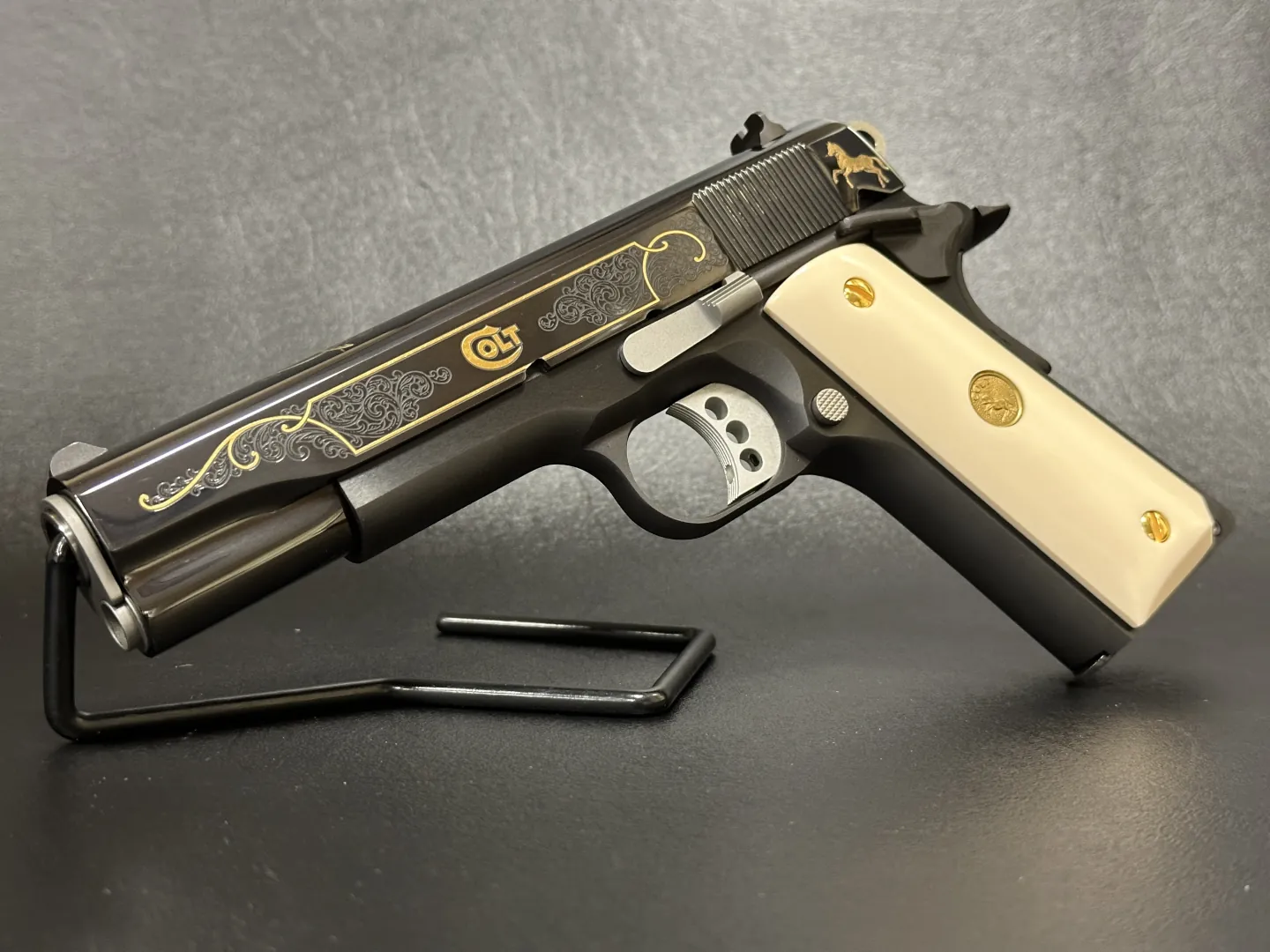
The 1911 is everywhere in collections, and that’s not an accident. John Browning designed this thing in the early 1900s, and somehow it’s still relevant today. That tells you something right there.
It’s chambered in .45 ACP, which hits like a freight train. Single-action, recoil-operated, and built like it could survive a nuclear winter. The U.S. military used it as its standard sidearm for over 70 years. Think about that. Through two World Wars, Korea, Vietnam, and it just kept working. Guns designed in the 1980s can’t always say the same thing.
But here’s what gets me about the 1911: the mechanical precision. When you strip one down and see how all the parts work together, it’s almost beautiful. Everything has a purpose. Nothing’s there just for show. The ergonomics are solid, too, which is why people still compete with them today despite having access to guns with three times the magazine capacity.
And sure, it’s been in every action movie ever made. That might feel like a strike against it, like it’s too mainstream to be interesting. But think about why it ended up in all those movies. Because when someone’s trying to convey power and reliability on screen, they reach for a 1911. That cultural weight matters when you’re building a collection that means something.
The Glock 19: Modern, Boring, Essential
I know, I know. Glocks are about as exciting as beige paint. They’re plastic, they look like bricks, and every cop in America carries one. But that’s exactly why you need one in your collection.
The Glock 19 represents this massive shift in how we think about handguns. Before Glock introduced its polymer-framed pistols in the 1980s, everyone was still stuck on steel and wood. Glock basically said, “What if we made it lighter, simpler, and more reliable?” and the entire industry had to scramble to keep up.
It’s chambered in 9mm, holds 15 rounds standard, and you can drop it in mud, freeze it, run it over with a truck, and it’ll still fire. People have tested this. Multiple times. It’s genuinely ridiculous how durable these things are.
Yeah, they’re not pretty. The trigger feels like snapping a pencil. The grip angle is weird. But law enforcement agencies worldwide picked them for a reason, and that reason wasn’t aesthetics. Sometimes the boring choice is the right choice.
Plus, if you’re putting together a collection that tracks handgun evolution, you can’t skip the gun that dragged the entire industry into the modern era. That’s like trying to explain rock music without mentioning the Beatles.
Smith & Wesson Model 29: When You Want Something With Soul
Now we’re talking. The Model 29 is a .44 Magnum revolver that became famous because Clint Eastwood waved one around in the Dirty Harry movies. “Do you feel lucky, punk?” Yeah, that gun.
But here’s the thing about revolvers in general and the Model 29 specifically: they’ve got character that semi-autos just don’t. Maybe it’s the visible cylinder, or the way the mechanism works, or just the weight in your hand. Whatever it is, there’s something about a well-made revolver that feels substantial. Like you’re holding a piece of actual craftsmanship, not just an efficient machine.
The .44 Magnum is absurdly powerful. More power than most people need or can handle comfortably. But that’s part of the appeal. This isn’t a practical gun for most purposes. It’s a statement.
And the Smith & Wesson build quality? Chef’s kiss. The fit and finish on these things, especially the older ones, puts modern manufacturing to shame. You can see where human hands actually assembled this thing, where someone cared about making the bluing perfect and the action smooth.
Does everyone need a hand cannon that can drop a bear? Probably not. Should it be in a serious collection? Absolutely.
Understanding The Technical Stuff (Without Falling Asleep)
Look, I’m not going to bore you with pages of ballistics tables. But if you’re collecting guns and you don’t understand what makes them tick, you’re missing half the fun.
Caliber is just the diameter of the bullet. 9mm is 9 millimeters across. .45 ACP is .45 inches across. Bigger isn’t always better, despite what some people will tell you. Different calibers excel at different things. 9mm is efficient and manageable. .45 has more stopping power but holds fewer rounds. .44 Magnum will punch through most things you point it at, but will also probably break your wrist if you’re not ready for it.
Action refers to how the gun operates. Single-action means you have to cock the hammer manually before each shot. Double-action means pulling the trigger does everything. Semi-automatic means it cycles automatically using the recoil energy. Each system has advantages and compromises. Single-actions can have amazing triggers. Double-action guns are safer for carrying. Semi-autos hold more ammo. It’s all trade-offs.
Magazine capacity matters if you’re actually using the gun, but for collecting, not so much. It’s more about understanding how capacity evolved alongside technology. Early semi-autos held seven or eight rounds. Modern ones can hold 17 or more. That progression tells a story about what people valued at different points in history.
Actually Starting Your Collection (Without Going Broke)
First things first: do your homework. I can’t stress this enough. Before you drop a couple of hundred (or thousand) dollars on a gun, spend some time understanding what you’re buying. Read about its history. Watch videos of people shooting it. Join some forums and see what actual owners think.
Funny enough, the internet makes this easier and harder at the same time. Easier because information is everywhere. Harder because half of it is wrong, outdated, or just some guy’s opinion stated as fact.
Set yourself a budget. Not gonna lie, collecting can get expensive fast. Especially if you start chasing rare variations or pristine examples. Decide what you’re comfortable spending and stick to it. Your future self will thank you when you’re not eating ramen because you had to have that pre-war Colt.
Learn proper storage and handling. This should be obvious, but I’ve seen too many collections ruined by poor storage. Humidity is your enemy. So is touching metal with bare hands, leaving fingerprints, and letting them rust. Get a good safe. Use desiccant. Keep detailed records of what you have and where it came from.
And here’s something people don’t talk about enough: join the community. Find local collectors, hit up online forums, go to gun shows even if you’re not buying anything. Other collectors are usually happy to share knowledge, and you’ll learn more from them than any book can teach you. Plus, sometimes they’ll give you leads on pieces you’d never find on your own.
The History Stuff Actually Matters
Every gun in your collection should mean something beyond “I thought it looked cool.” And I’m not saying you need a thesis-level understanding of firearms history. But knowing the context makes everything more interesting.
Handguns evolved from simple flintlock pistols that took forever to reload and might explode in your hand, to sophisticated machines that can fire 17 rounds in as many seconds. That progression occurred due to wars, technological breakthroughs, changing social needs, and pure innovation.
The introduction of self-contained cartridges was a huge breakthrough. Suddenly, you didn’t need to carry loose powder and balls. The development of rifling made guns accurate beyond point-blank range. Polymer frames made them lighter and cheaper to produce. Each of these innovations opened new possibilities and changed how people thought about handguns.
Understanding these milestones helps you appreciate why certain guns matter. The 1911 wasn’t just popular because it shot well. It represented a massive leap in semi-automatic pistol design. The Glock wasn’t revolutionary because of its looks. It proved that polymer could be just as reliable as steel while being lighter and cheaper.
Building Something That Lasts
At the end of the day, collecting is personal. You could follow every recommendation in this article and still end up with a collection that doesn’t feel right to you. Or you could ignore all of it and build something amazing based purely on what speaks to you.
The best collections tell a story. It might be the story of handgun evolution throughout the 20th century, a focus on law-enforcement firearms, or a curated set of reproductions of famous movie guns. Ultimately, the right collection is whatever story resonates most with you.
And honestly? Don’t be afraid to make mistakes. Buy something that turns out to be less interesting than you thought. Sell it. Move on. Collections evolve. What matters to you at 25 might not matter at 45, and that’s fine. Let it change as you learn more and your interests develop.
One more thing: share what you’ve built. Not in a showing-off way, but because collections have value beyond the collector. They’re educational. They preserve history. They spark conversations about craftsmanship, design, and innovation. Whether that’s through taking friends to the range, posting online, or just talking to other enthusiasts, sharing amplifies the impact of what you’ve put together.
So yeah. Start with pieces that matter. Learn everything you can. Stay curious. And build something that feels like yours.
Happy collecting.
Frequently Asked Questions
Honestly, you can start with a few hundred bucks for a basic piece, but expect to spend $500 – $2,000 for quality collectible handguns. Set a realistic budget and stick to it, because this hobby can drain your wallet faster than you’d think.
Depends on the gun and what you’re after. If it’s a pristine pre-war collectible, probably leave it alone. But a working Model 1911 or Glock? Shoot it and enjoy what it was made for.
Gun shows, reputable dealers, and online auction sites like GunBroker are your main options. Just do your homework on the seller first, because fakes and overpriced junk are everywhere.
Your homeowner’s or renter’s insurance probably won’t cover the full value, so yeah, look into collectibles insurance once your collection gets serious. It’s not exciting, but neither is losing everything in a fire or theft.
Learn the specific markings, serial number ranges, and manufacturing details for each model you’re interested in. When in doubt, pay an expert to authenticate before you buy anything expensive.