
Key Takeaways:
- Define which parts and services the maker completes in-house and which are handled by outside specialists.
- Use proof marks and surviving factory records carefully, recognizing the limits of what each can establish.
- Confirm documentation against the physical firearm and obtain an independent inspection before a significant acquisition.
Independent gunmakers can be difficult to assess because visibility, craftsmanship, and historical importance are separate matters. A discreet workshop may produce exceptional work, while persuasive marketing may reveal little about how a firearm is actually made. Sound research begins with documentary evidence and physical inspection.
Define the Maker’s Role
Terms such as bespoke, custom, and handmade do not establish a uniform manufacturing standard. Determine exactly what the maker does:
- Is the action made in-house or acquired from another manufacturer?
- Who makes and regulates the barrels?
- Who performs the stocking, engraving, finishing, and final assembly?
- Which operations are completed by independent specialists?
- Who assumes responsibility for proof, warranty work, and future servicing?
Outside specialists have long participated in fine gunmaking. The relevant question is not whether work is outsourced, but whether the division of labor is disclosed and the finished firearm is properly documented.
A maker’s official literature can establish its stated process. Purdey, for example, describes a bespoke commission involving stock-wood selection, barrels, personalized engraving, finishing, and submission to the London Proof House.[1] Such information is useful, but it should be treated as the manufacturer’s account rather than an independent judgment of quality or value.
Examine the Firearm’s Evidence
Record all names, addresses, serial numbers, patent references, caliber designations, proof marks, engravers’ signatures, and other inscriptions. Photograph the markings clearly before attempting to identify them.
Proof marks can help establish the proof authority, applicable standard, and, in some cases, an approximate period. They do not necessarily identify every craftsperson involved or prove that the firearm remains in its original configuration.
The Birmingham Proof House publishes current C.I.P. standard, superior, and steel-proof marks.[2] Collectors should compare marks with the correct official reference and avoid relying on undated charts copied across commercial websites.
Italian firearms require consultation of the Italian proof system. The Banco Nazionale di Prova states that it was established by royal decree in 1910, began operating at Gardone Val Trompia in 1920, and became mandatory under Italian law in 1923.[3] A Gardone proof mark documents proof-house involvement; it should not automatically be interpreted as a manufacturer’s mark.
Alterations, replacement barrels, refinishing, and later reproof can complicate identification. A date inferred from one mark should therefore be checked against the firearm’s construction, serial number, other markings, and available records.
Search Surviving Factory Records
Factory records are often the strongest available evidence for a historical firearm’s original configuration. Depending on what survives, they may document manufacturing dates, serial-number application dates, barrel type, caliber, trigger configuration, special-order features, or customer information.
Coverage is rarely complete. The Cody Firearms Records Office explains that its Winchester records vary by model and production period. Many early records contain configuration details, while some later records provide only serial-number application dates. Winchester Model 21 records may contain final-inspection information and, in some cases, original order sheets.[4]
A factory letter establishes only what appears in the surviving record. It does not prove that the firearm still retains every original component. The recorded configuration must be compared directly with the gun.
Evaluate the Work in Person
Whenever possible, examine several completed firearms by the same maker. One exhibition piece cannot establish consistent workmanship.
Consider:
- Mechanical operation
- Barrel condition and regulation
- Wood-to-metal fit
- Stock dimensions
- Checkering and engraving
- Finish quality
- Balance and handling
- Proof status
- Evidence of repair or alteration
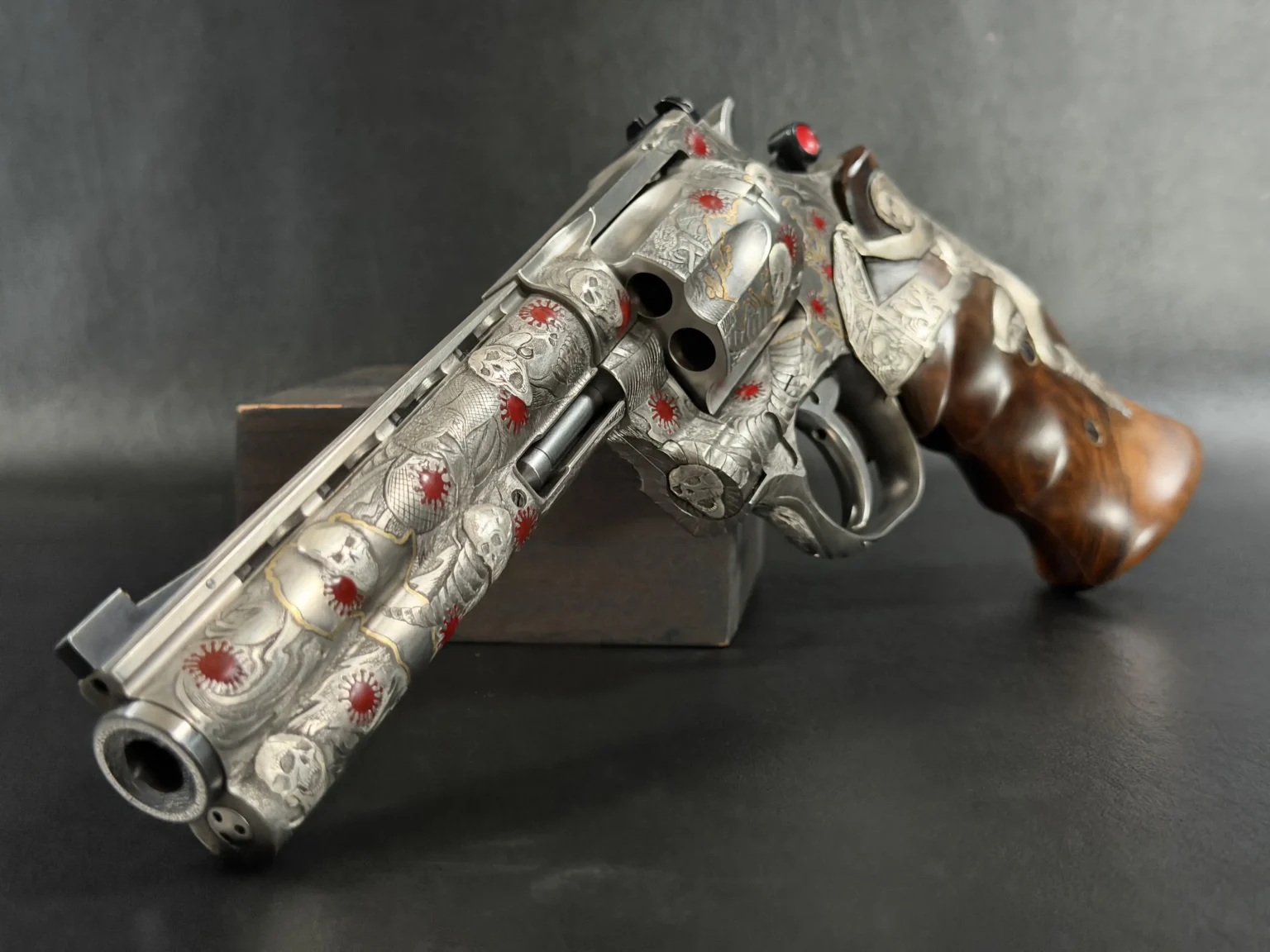
Ornamentation should not be confused with mechanical quality. Elaborate engraving and highly figured wood may increase artistic interest, but they do not prove that the action, barrels, or stocking are superior.
For a significant acquisition, obtain an inspection from a qualified gunsmith or specialist who is independent of the seller. Ask the examiner to identify prior alterations, replacement components, mechanical defects, and any discrepancy between the firearm and its documentation.
Assess Recommendations Carefully
Dealers, gunsmiths, engravers, auction specialists, and experienced collectors can provide valuable introductions to lesser-known makers. Their recommendations should still be tested.
Determine whether the person offering an opinion:
- Represents the maker
- Receives a sales commission
- Owns inventory by that maker
- Has inspected completed examples
- Has commissioned or serviced the maker’s firearms
- Can support the recommendation with specific evidence
Firsthand experience is useful, but it is not automatically impartial. Statements about rarity, production totals, waiting periods, prices, or investment potential require documentation.
Create a Research File
Maintain a separate file for each maker and firearm. Include:
- The maker’s legal name and workshop location
- Names and roles of participating craftspeople
- In-house and outsourced operations
- Serial numbers and identifying marks
- Proof information
- Factory correspondence
- Original specifications and invoices
- Photographs
- Inspection reports
- Ownership history
- Service and restoration records
Record when each piece of information was obtained. Small workshops can change ownership, modify their production methods, suspend commissions, or close. Prices and delivery schedules should always be confirmed directly and in writing.
The objective is not to identify a universally superior maker. It is to establish who performed the work, how the firearm was constructed, whether its history can be documented, and whether its condition and specifications justify the proposed acquisition. Reputation may begin the investigation, but records and physical evidence should determine the conclusion.
Frequently Asked Questions
These terms do not represent uniform manufacturing standards. Ask the maker which components and operations are completed in-house.
Not necessarily. Proof marks generally identify the proof authority and applicable testing standard, not every maker or craftsperson involved.
No. It reports information contained in surviving factory records and must be compared with the firearm’s present configuration.
One showcase firearm cannot establish consistent workmanship. Comparing multiple examples provides a better view of the maker’s execution and quality control.
An independent inspection is advisable before a significant acquisition. A qualified specialist can identify defects, alterations, replacement components, and discrepancies in the documentation.
Sources
- James Purdey & Sons, “The Bespoke Process.”
- Birmingham Proof House, “C.I.P. Standard and Superior Proof Marks.”
- Banco Nazionale di Prova, “History of the Italian National Proof House.”
- Buffalo Bill Center of the West, Cody Firearms Records Office, “Winchester Factory Records.”