
Key Takeaways:
- Start domestic, think C&R first: Your best bet is to hunt for European pistols already in the U.S., as they’ve cleared customs and are ready to transfer. Get that $30 Type 03 Curio & Relic license early. It lets you have qualifying firearms (basically anything 50+ years old or historically significant) shipped directly to you from out-of-state dealers, though state rules and seller policies can still complicate things.
- Importing is possible but rarely worth it: Unless you’ve found something genuinely unobtainable stateside, importing from Europe gets expensive and slow. You’ll need a licensed importer, the pistol must meet the ATF’s sporting purposes criteria, and you’ll pay importer fees, shipping, brokerage, and more. Weeks turn into months when European export permits get involved. Most collectors find better value buying domestically.
- Condition beats everything, relationships run close second: Original finish with honest wear destroys the collector value of refinished guns. Watch for forced-matching numbers and hidden repairs. But here’s what matters long-term: build relationships with specialized dealers and auction houses. The dealer who remembers you’ll give first crack at interesting pieces. You’re not just buying firearms; you’re joining a community.
Let’s get started…
So you’ve caught the bug. Maybe it started with an old war movie, or perhaps you inherited your grandfather’s service pistol and got curious about its origins. Either way, you’re now eyeing those beautiful European handguns, the elegant curves of a Swiss SIG, the mechanical precision of a German Luger, or maybe something more obscure like a Polish Radom. The question is: how do you actually get your hands on one without making expensive mistakes or running into legal headaches?
Important disclaimer upfront: This article provides general information about the collecting landscape, not legal advice. Firearms regulations vary by state and change frequently. Always confirm current requirements with a licensed dealer, importer, or attorney familiar with your jurisdiction before making purchases.
Let me be straight with you, buying rare European pistols in the U.S. isn’t like ordering a book from Amazon. But it’s not rocket science either. Once you understand the landscape, you’ll find there are actually some pretty straightforward paths to building that collection you’ve been dreaming about.
The Two Roads: Domestic Hunting vs. Overseas Adventures
Your journey basically splits into two distinct routes. You can either hunt for pieces already here in the States (the easier path) or you can import directly from Europe (more complex, but sometimes the only way to find that holy grail piece).
Think of it like buying a vintage car. You could visit local classic car dealerships and auctions, or you could arrange to import a specific model from its country of origin. Both get you behind the wheel, but the paperwork and hassle levels? Completely different.
Finding Treasure on Home Soil
Starting with firearms already in the U.S. makes sense for most collectors. These guns have already jumped through the import hoops, cleared customs, and are ready to transfer. No international shipping nightmares, no confusing foreign export permits, no extended waits while the ATF processes your paperwork.
The C&R Advantage
You know what’s beautiful about many European pistols? A good chunk of them qualify as Curios and Relics. The ATF defines C&R firearms using three criteria:
- Firearms manufactured at least 50 years prior to the current date (excluding replicas)
- Firearms certified by curators of municipal, state, or federal museums as having value primarily as curiosities, relics, or museum pieces
- Firearms that derive substantial value from being novel, rare, bizarre, or because of their association with historical figures, periods, or events
This matters because it opens up options that modern firearms don’t have.
Picture this: You’re scrolling through listings late at night (we’ve all been there), and you spot a pristine 1940s Walther PP. With a Type 03 Curio & Relic Federal Firearms License, which costs all of $30 for three years, you can have that beauty shipped directly to your address from an out-of-state dealer under federal law.
But here’s the catch: federal permission doesn’t mean automatic delivery everywhere. Some states impose additional requirements; for instance, California collectors might need a Certificate of Eligibility. Some sellers have their own policies about shipping to non-FFL addresses even when it’s federally legal. And local ordinances can add another layer. Always confirm with the seller that they’ll ship to your location in accordance with your state’s rules before assuming direct delivery is possible.
Getting that C&R license is straightforward. Fill out ATF Form 7CR, send it in with a check, and wait for processing, typically a few weeks, though timelines vary. It’s one of the better investments a collector can make. Plus, it signals to dealers that you’re serious, which sometimes means they’ll give you first crack at interesting pieces.
Specialized Dealers Who Actually Get It
Not all gun shops are created equal when it comes to rare European handguns. Your average sporting goods store might have some modern imports, but for the really interesting stuff? You need specialists.
Here are some examples (not endorsements, do your own research on any dealer):
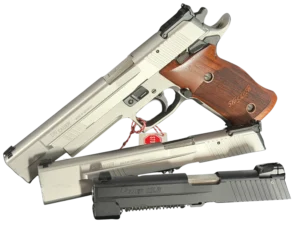
CO Gun Sales has built a reputation around Swiss, German, and Polish firearms. These folks stock SIG P210 variants and understand the nuances between different models.
Empire Arms describes itself as a federally licensed dealer specializing in physically hand-picked historical and collectible military rifles and handguns. When you’re spending serious money on a collectible, that personal curation approach can matter.
Then there’s the auction route, which deserves its own conversation.
When Only the Best Will Do: Auction Houses and Exhibition-Grade Pieces
Let’s say you’ve moved beyond entry-level collecting. You’re no longer interested in shooters or “good condition” pieces. You want museum-quality provenance and rarity. Auction houses come into play here.
Rock Island Auction Company consistently brings incredible European pieces to market. We’re talking engraved Mausers that were presentation pieces to military officers, Steyr Mannlichers with documented histories, matching-numbers Lugers that have somehow survived a century without being modified.
Steve Barnett Fine Guns operates in that same rarefied air, though with a slightly different focus. These aren’t places where you casually browse on a lunch break. Auction participation requires homework, patience, and usually a willingness to invest serious money.
But what I appreciate about high-end auctions: they attract sellers who actually care about proper documentation and condition. You’re far less likely to encounter misrepresented items or frankenguns cobbled together from parts. The auction house’s reputation depends on accuracy, which protects you as a buyer.
High-End Auction Checklist
- Register early and review the catalog thoroughly before auction day
- Request detailed condition reports for items you’re seriously considering
- Factor in buyer’s premium (typically 15-20%) when setting your maximum bid
- Verify that provenance documentation is included or available upon request
- Understand payment terms and transfer timing (some houses require immediate payment, others allow 30 days)
- Arrange for an FFL transfer in advance if you’re the winning bidder
The catch? Competition can be fierce, and prices reflect it. That said, if you’re chasing truly rare pieces, sometimes auctions are your only realistic shot at acquiring them.
The Import Game: When You Need to Go Straight to the Source
Occasionally, you’ll find yourself in a situation where the pistol you want simply isn’t available in the U.S. market. Maybe it’s a regional variant that never made it stateside, or perhaps it’s so obscure that only European collectors have been hoarding them.
Importing comes in here, and things get complicated.
Working with Licensed Importers
First reality check: in most cases, you’ll need to work through a licensed importer who holds the proper FFL and importer’s license. While federal regulations do provide some narrow exceptions for specific scenarios (certain temporary imports, returns of personal firearms, etc.), the standard path for adding a European collectible to your permanent collection involves a licensed importer.
These importers file ATF Form 6 (the importation permit application) on your behalf. They handle the bureaucracy, know the regulations, and deal with customs. You’re essentially hiring their license and expertise.
The Sporting Purposes Hurdle and Points System
The ATF requires that imported firearms be suitable for “sporting purposes.” For handguns specifically, the ATF applies minimum size and safety requirements, along with a point-based criteria system. Pistols must score at least 75 points across various factors, including barrel length, frame construction, weight, caliber, and safety features. Revolvers have their own evaluation criteria, including barrel length requirements and safety testing.
Generally, surplus military firearms are subject to restrictions unless they’re old enough to qualify as C&R items. A World War II-era P38? Probably fine as a curio. A relatively modern military pistol? Could be problematic depending on how it scores.
Your importer should understand the current landscape and advise whether a specific pistol meets import requirements.
Money and Time: The Real Costs
Let’s talk numbers, because import costs can sting. You’re looking at several hundred dollars minimum, potentially climbing into the thousands depending on complexity. There are import service fees and logistics costs, including shipping, customs brokerage, insurance, and storage. The importer needs to get paid for their time and expertise. Shipping across the Atlantic isn’t cheap. Factor in currency exchange rates, and suddenly that “bargain” you found on a German auction site might not look so attractive.
Then there’s the waiting. Processing times are often measured in weeks, sometimes stretching into months when foreign export permits are involved. The seller must also navigate their own country’s export regulations, which add time to the process.
For most collectors, importing only makes sense when you’ve found something genuinely unobtainable through domestic channels, and you’re willing to pay a premium for it.
Import Process Checklist
- Identify the specific pistol and verify it’s legal to import (check C&R status, sporting purposes criteria)
- Locate and vet a reputable licensed importer in the U.S.
- Confirm the European seller can obtain the necessary export permits from their government
- Negotiate the purchase price and agree on terms with the seller
- Work with your importer to file ATF Form 6 for import authorization
- Wait for ATF approval (weeks to months, depending on complexity)
- Coordinate with the seller on European export permit acquisition
- Arrange international shipping through approved channels once all permits are clear
- Importer receives the firearm, handles customs clearance, and compliance
- Complete transfer from the importer to you, following standard FFL procedures
European Export Regulations: The Other Side of the Equation
Something that catches people off guard: it’s not enough that U.S. law allows importation. The seller must also navigate their own country’s export regulations.
Germany, France, Austria, and Switzerland all have different rules about exporting firearms. Some are relatively straightforward; others require extensive documentation. The seller needs to obtain proper country-specific export permits, and if they’ve never done it before, expect delays.
Working with established importers helps because they often have relationships with European dealers who already understand the export process and can move things along efficiently.
The 2026 Regulatory Landscape: What’s Changed
Firearms law never stands still, and 2026 has brought some shifts worth knowing about.
California’s New Requirements
If you’re collecting in California, 2026 brought new compliance requirements. California AB 1263, effective January 1, 2026, implemented stricter identity and age verification requirements for certain firearms-related shipments and deliveries.
Additionally, California AB 1127 targets what the state calls “machinegun-convertible pistols”, handguns that can be readily modified for automatic fire. This law is primarily discussed in the context of striker-fired, Glock-style patterns and aftermarket conversion devices, with an effective date reported as July 1, 2026. While this is a California-only law focused on modern designs, collectors should verify how the California DOJ interprets these restrictions and whether any historical European pistols might be affected under the state’s implementation. California collectors should carefully review state-specific restrictions.
NFA Tax Changes
Here’s actually some good news: under Public Law 119-21, the $200 federal tax for making and transferring most NFA items was reduced to $0 effective January 1, 2026. This applies to NFA firearms except machineguns and destructive devices, which still require the tax payment.
If you’re interested in rare European pistols that happen to fall under NFA categories, like certain short-barreled variants or unusual “any other weapon” classifications, you no longer pay that fee for most categories. Registration requirements and ATF Form filing still apply, so don’t think it’s paperwork-free, but eliminating that financial barrier makes certain collectibles more accessible.
Surplus Programs
The 2026 National Defense Authorization Act included provisions expanding the types of surplus firearms the Civilian Marksmanship Program can transfer, notably adding certain surplus shotguns to authorized categories. While this primarily focuses on U.S. military surplus rather than European imports, it signals continued congressional support for collector access to historical firearms through established programs.
Building Relationships: The Collector’s Secret Weapon
Relationships matter in this world, and I mean genuinely matter.
That dealer who specializes in Swiss pistols? Don’t just buy from them and disappear. Stay in touch. Share your collecting interests. When they get something special in, they’ll remember the collector who actually appreciates fine firearms, rather than the person who just wants whatever’s cheapest.
The same goes for auction houses. Register for their mailings, attend previews when possible, and build rapport with their specialists. They can provide condition insights that don’t make it into catalog descriptions, alert you to upcoming consignments, and sometimes even connect you with private sellers.
The collecting community also includes forums, collector clubs, and shows. Many experienced collectors are genuinely knowledgeable and willing to share expertise if you approach them respectfully.
Condition, Provenance, and Value: The Holy Trinity
When you’re evaluating a rare European pistol, three factors dominate:
Condition seems obvious, but there’s nuance. What to look for: original finish (even with honest wear beats a refinishing job every time), matching serial numbers on major components, proper period-correct parts, and absence of modifications or “improvements.”
Common traps include forced-matching numbers (remarked parts to appear original), poor-quality refinishing that destroys collector value, replacement parts that aren’t period-correct, and concealed damage or repairs.
Provenance means documented history. Can you trace the pistol’s journey? Military unit markings, import stamps, proof marks, documented previous owners, accompanying paperwork, this stuff adds both value and interest. A generic wartime P38 is neat. A P38 with documented service history? That’s a story you can research and appreciate.
Value is where things get subjective. Market prices fluctuate based on rarity, condition, current demand, and whatever collectors are willing to pay at any given moment. Don’t assume thata Gunbroker listing represents fair market value. Research completed sales, auction results, and dealer pricing across multiple sources before establishing your maximum bid or offer.
The Digital Age: Online Resources and Risks
Modern collecting benefits enormously from internet resources. You can research rare variants, identify markings, connect with other collectors, and track market prices, all from your phone.
Sites like eGun give you windows into European markets and pricing. Even if you’re not importing, seeing what’s available overseas helps you understand rarity and value.
Forums dedicated to specific manufacturers or national firearms provide incredible depth of knowledge. Got questions about French MAB pistols? There’s probably a forum thread with photos, specifications, and variant breakdowns.
But the internet also creates risks. Fraudulent listings, misrepresented conditions, outright scams. If a deal seems too good to be true, it probably is. When buying remotely, use dealers with established reputations and payment methods that offer buyer protection.
What Makes This Hobby Worth It?
Look, I could spend another thousand words on arcane import regulations or specific dealer recommendations, but let’s step back for a moment.
Why do people collect rare European pistols? It’s not just about owning guns. It’s about holding pieces of history, appreciating engineering excellence, understanding different national approaches to firearms design, and connecting with stories from another era.
That Czech CZ-52 in your safe? Somebody carried that during the Cold War. That Swiss SIG P210? It represents a small nation’s commitment to precision manufacturing. These objects tell stories if you know how to listen.
Plus, there’s satisfaction in the hunt. Tracking down a specific variant, negotiating a fair price, and finally adding it to your collection scratches an itch that goes back to our hunter-gatherer ancestors. Except now we’re gathering blued steel and walnut instead of berries.
Getting Started: Practical First Steps
If you’re new to collecting rare European pistols, start simple. Don’t immediately chase the most exotic, expensive pieces. Build knowledge first.
Get that C&R license. Join collector forums. Visit gun shows and handle different firearms. Talk to dealers. Read collecting guides and historical references. Start with more common examples to learn what you like.
Maybe begin with German police trade-ins or surplus Swiss revolvers, pieces with historical interest but accessible pricing. As your knowledge grows, so can your collection’s sophistication.
And keep records. Document what you paid, where you bought it, condition notes, and research findings. Future you will appreciate this when you’re trying to remember details about pieces acquired years earlier.
The Road Ahead
The market for rare European pistols continues evolving. Import regulations change, availability shifts, and collector interest waxes and wanes for different variants. What’s affordable today might be expensive tomorrow, and vice versa.
But the fundamental appeal endures. These firearms represent mechanical artistry, historical significance, and cultural heritage. Whether you’re attracted to German engineering, Swiss precision, or the quirky designs from smaller European nations, there’s always something new to discover.
Navigating the U.S. market requires patience, research, and sometimes significant investment. But for those who catch the collecting bug, the journey itself becomes part of the reward. Every acquisition tells a story, every detail learned deepens appreciation, and every connection made enriches the experience.
So yes, buying rare European pistols in America takes work. It requires understanding regulations, finding reputable sources, and investing time and money. But that’s what separates collectors from casual buyers—the willingness to do it right, learn continuously, and appreciate the historical and mechanical significance of these remarkable firearms.
Welcome to the obsession. Trust me, it beats most hobbies.
Frequently Asked Questions
No, but a Type 03 C&R license can simplify interstate purchases of qualifying firearms and reduce transfer friction. It does not override state or local laws.
Under federal law, yes, if both the firearm qualifies as C&R and your state allows it. Some sellers and states impose additional restrictions, so confirmation is always required.
ATF recognizes firearms that are at least 50 years old, museum-certified, or historically significant due to rarity or association. Age alone is not the only qualifying factor.
In most cases, permanent importation must be handled through a licensed importer. Personal importation is limited to narrow exceptions and should not be assumed.
ATF Form 6 is the import permit required for bringing firearms into the United States. A licensed importer typically files it as part of the import process.
ATF evaluates handguns using a factoring criterion that considers size, weight, caliber, safety features, and overall configuration. Pistols that fail to meet the threshold may be denied import unless they qualify as C&R.
Timelines vary, but imports are typically measured in weeks and can stretch into months if foreign export permits are required. Delays are common and should be expected.