

Key Takeaways:
- A collection without documentation is fragile, no matter how valuable the pieces are. Knowing exactly what you own, where it came from, and how it’s been cared for is what turns ownership into stewardship and removes uncertainty from the equation.
- Completeness, condition, and provenance aren’t small details; they’re the substance of serious collecting. Boxes, papers, accessories, photographs, and honest notes are what separate a group of firearms from a curated collection with lasting value.
- Organization isn’t about control or perfection; it’s about peace of mind. When your collection is clearly documented, properly stored, and backed up, you’re free to enjoy it, grow it, or pass it on without anxiety or guesswork.
The end of the year naturally calls for a pause. It’s a chance to reflect and tie up loose ends. It’s also the perfect time to look beyond holiday clutter and focus on what you’ve gathered throughout the year.
I’m talking about your collection.
You know the collection. The pieces you deliberately chose over the years. Firearms that are more than metal and wood, they’re stories, investments, history, worth the same reverence as a Rodin or a first edition manuscript. If you appreciate fine art, you already know organization is part of the appreciation itself.
Let’s focus on ending your year by thoughtfully organizing your firearms collection. This central task brings peace of mind, which is the true benefit of proper collection care.
Why This Matters More Than You Think
Organization may feel tedious, spreadsheets and detailed records rarely seem exciting. Yet, making your collection easy to manage and understand is the key message here. Could you stick with me to see why it matters?
Your collection, whether it includes a pre-war Winchester, a custom 1911, or that stunning Italian shotgun with engraving that could rival Renaissance metalwork, represents a significant investment. Financial investment, sure, but also emotional investment. These aren’t just tools. They’re expressions of craftsmanship, engineering, and sometimes centuries of tradition.
Treating them with a curatorial mindset shifts everything. You’re preserving legacies, not just storing guns. There’s peace in knowing what you own, where it came from, and that you care for it properly.
The Foundation: Building Your Collection Database
Let me share a moment that changed my view of collection management. Years ago, a gallery owner showed me her catalog, each piece documented with photos, provenance, condition, and insurance values. It was meticulous. Even beautiful.
That’s when it clicked. Why should firearms be any different?
Creating a database isn’t complex, but it requires intention. Make it your personal museum’s definitive guide. Capture these essentials:
The Essential Details
Start with a basic spreadsheet, Excel, Google Sheets, or specialized software. The tool matters less than the information.
Document the manufacturer and model for each piece. Details blur over time; a “Smith & Wesson revolver” means more when listed as a Model 29, 6.5-inch barrel, nickel finish, made in 1979. Details always matter.
Serial numbers are essential. Write and photograph them. These identifiers matter for insurance, ownership, and, if needed, recovery. In collectibles, serial numbers also reveal production and provenance.
Build the Spreadsheet You’ll Actually Use
You may groan, spreadsheets? Yet done right, they’re peace-of-mind generators. It’s not a boring file, but a living digital catalog that grows with you.
If something is lost, stolen, sold, or inherited, this reference provides meaning and legitimacy. Seeing your mapped collection is oddly satisfying, a forest and its trees.
So what should you actually track? Here’s what works:
- Item Name: Be specific. Don’t just write “Colt 1911.” Try “Colt 1911 Custom Shop, David Wade Harris Engraving.” The details tell the story.
- Caliber: Helps for sorting and insurance, plus it’s just good to know at a glance.
- Purchase Date: Useful for valuations and estate planning. Time has a funny way of adding value.
- Purchase Price: You’ll thank yourself later, trust me.
- Seller / Dealer: Include name and location. That chain of custody matters.
- Condition Notes: “Unfired,” “Light cylinder turn line,” whatever tells the truth about where it stands today.
- Special Features: Custom grips, engraving, and skeletonized hammer. This is where the magic lives.
- Matching Accessories: Original box, manual, test target, tools. We’ll talk more about this in a minute.
- Serial Number: Keep it for reference, but be smart about where you share it.
- Photos: At least the filename or link to your archive. Visual memory fades faster than you think.
- Appraisal / Insurance Value: If applicable, and it should be for anything significant.
- Personal Notes: History, story, why you bought it. The stuff that makes it yours.
Use Google Sheets or Excel, then export a copy as a PDF once a year and email it to yourself. Simple backup strategy, but it works.
Following the Paper Trail
Here’s where your inner art collector really gets to shine. Provenance matters just as much with firearms as it does with paintings or sculpture.
Where did you purchase each piece? Was it from that reputable dealer in New England who specializes in antique firearms? An estate sale where you felt like Indiana Jones discovering treasure? An online auction? Document it all. Include the dealer’s name, location, and contact information if you still have it. This creates a chain of custody that adds legitimacy and value to your collection.
Purchase dates matter too. Not just for your records, but because they can affect value assessments, especially with pieces that appreciate over time. That custom rifle you bought in 2015? Knowing exactly when you acquired it helps establish its journey through your collection.
And the purchase price, yes, I know some of us would rather forget what we spent on that impulse buy at a gun show. But recording the original purchase price serves multiple purposes. It helps you track investment performance, provides baseline data for insurance, and, honestly, it keeps you accountable. Sometimes seeing the numbers in black and white makes you think twice before the next acquisition. Sometimes it makes you feel brilliant for investing when you did.
The Devil’s in the Details
Now we get to the fun part, the deep dive into what makes each piece special. This is where you channel your inner curator and really document what you own.
Condition notes are essential. Is it factory new in the box? Gently used? Show honest wear? Has it been refinished or modified? Be thorough but realistic. Just like an art appraiser noting restoration work on a painting, you want an honest assessment. Take photographs, lots of them. Overall views, close-ups of any wear or damage, and detail shots of engraving or special features.
Speaking of special features, this is your chance to note what makes each piece unique. Custom grips? Period-correct accessories? Original box and papers? A particularly fine example of the maker’s craft? These details matter enormously. They’re the difference between “a Colt revolver” and “a Colt Single Action Army with ivory grips, factory letter, and original shipping box from 1898.”
Completeness deserves its own column in your spreadsheet. Does the piece include everything it should? Original manual, warranty cards, extra magazines, factory test targets, and carrying case? I learned this lesson the hard way when I went to sell a piece and realized I’d misplaced the original case years ago. It cost me negotiating power. Don’t be me.
Completeness Isn’t a Bonus, It’s the Point
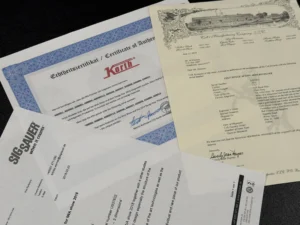
Let’s be real about something collectors already know but sometimes forget: the box matters. So does the manual, the test target, those original grips, that tiny hex wrench, and sometimes even the plastic bag it all came in.
Why? Because completeness signals something beyond the item itself. It shows provenance and care. When someone sees a complete package, they’re not just looking at the firearm. They’re seeing the entire legacy of ownership. They understand that this piece has been valued, protected, and maintained. That story matters, especially if you’re ever thinking of reselling or passing things down to someone who’ll appreciate what you’ve built.
So if you’ve got accessories floating around in drawers or boxes, now’s the time to reunite them with their rightful counterparts. Match things up. Get them together. Document what goes with what. Your future self will appreciate the effort, and honestly, there’s something deeply satisfying about seeing a complete set properly organized.
The Notes Section: Your Collection’s Story
This might be my favorite part, and collectors of fine art understand it instinctively. Every piece has a story, and those stories deserve to be recorded.
Why did you buy this particular piece? Maybe it was to complete a series, you know, like collecting all the variations of a particular model. Maybe it represents a milestone, purchased to commemorate a life event. Perhaps it’s connected to family history or fills a gap in your understanding of a particular era of gunmaking.
These notes become invaluable over time. They’re the narrative that transforms a list of objects into a collection. Five years from now, you might not remember why you just had to have that particular shotgun, but your notes will remind you. And if you ever decide to sell or pass pieces along to the next generation, these stories add context and value.
Use this space to note maintenance performed, rounds fired, any issues encountered, and resolved. Did you take it to a gunsmith for trigger work? Note that. Has it been refinished? Record it. This maintenance history is like the service records for a vintage car, proof that the piece has been properly cared for.
The Notes Section: A Hidden Gem
Here’s where you can really elevate your documentation beyond just numbers and dates. Because while the statistics matter, stories last. That humble “notes” field? It’s where the magic happens.
This is your space to mention things like:
- “Purchased from Rock Island Auction, Fall 2022, Lot #3412” – gives context and verifiability
- “Rumored to be a prototype shown at SHOT Show 2015” adds intrigue and historical significance
- “Custom work by Vivian Mueller, inspired by Fabergé motifs” – connects craftsmanship to artistic legacy.
- Part of a consecutive pair (see Record #38) – shows thoughtful curation
It’s also the perfect place to add links to factory letters, PDFs of original listings, or screenshots of authentication documents. If you’re lucky enough to have something engraved by someone like Alvin A. White or Ray Viramontez, this is where you celebrate that. These aren’t just little details. They’re what transform a “nice gun” into a documented piece of history with a story worth telling.
Organization Beyond the Spreadsheet
Here’s something they don’t always tell you: a great database is only part of the equation. The physical organization of your collection matters just as much.
Think about how museums store artwork. Climate control, proper support, and protection from environmental damage. Your collection deserves similar consideration. Whether you use a safe, vault, or specialized storage system, consistency is key.
Consider organizing your storage to match your database. Maybe you group by manufacturer, era, type, or how frequently you use each piece. Whatever system makes sense to you, document it. In your spreadsheet, add a location field. “Safe, top shelf, left side” is infinitely better than spending twenty minutes trying to remember where you put something.
And while we’re talking about physical organization, let’s address something important: accessories and ammunition. Create separate tracking for these elements. Which holster goes with which pistol? Where are the period-correct accessories for your military collection? Are cleaning supplies for specific finishes organized logically?
Don’t Just Take Photos, Create a Visual Archive
Quick question: if you had to prove ownership of your most valuable firearm today, could you? I mean, really prove it, with documentation that would satisfy an insurance company or, heaven forbid, law enforcement?
Photographs aren’t just for showing off your collection to friends or posting on forums. They’re a quiet insurance policy, a visual record that backs up every claim you make about what you own. And if you’re going to photograph your collection anyway, you might as well do it right.
Here’s what actually works:
- Natural light or controlled lighting: No harsh flash that washes out details or creates weird shadows
- Left and right side profiles: Capture the full story of each piece
- Close-ups of serials, engravings, controls: The details that prove authenticity
- Accessories laid out cleanly: Show what came with it, all together
- A photo of the complete set as it came: Box, papers, tools, the works
Name your files intelligently, too. Something like “Colt_SAA_150th_David_Wade_Harris_Blue_Plasma_357_Full_Set.jpg” tells you everything at a glance. Match the naming structure to your spreadsheet, and suddenly you’ve got a searchable, logical archive that actually makes sense six months from now.
Store them in Dropbox, iCloud, or a dedicated NAS drive. Just don’t keep everything in one place. More on that redundancy thing in a minute.
Store It as It Belongs in a Museum
Let me say something that might ruffle a few feathers: too many people treat $20,000 firearms like $600 beaters. And I get it. Once something’s in your safe, it feels protected. But protection isn’t just about preventing theft.
Temperature matters. Humidity matters. Airflow matters. You want the environment your collection lives in to be clean, consistent, and secure. Not just locked up, but actually cared for.
That means paying attention to:
- Dehumidifiers: Especially in safes where air doesn’t circulate well
- Silica gel packs: Change them often. They’re cheap insurance against moisture damage.
- Gun socks or archival bags: They’re not just for looks. They actually protect finishes.
- Foam cut cases: Great for accessibility and protection, especially for pieces you handle regularly
- No direct sunlight: Fade is the silent killer of fine finishes
And here’s something people don’t talk about enough: access matters. If you’re constantly reaching past three other guns to get to one, you’re more likely to nick something or start skipping regular checks. Organization isn’t just about knowing where things are. It’s about being able to properly care for them without creating a hassle.
Pro tip? Label your storage trays or drawers with small tags that match the entries in your spreadsheet. Yeah, it’s a bit nerdy. But it saves you from second-guessing yourself later and makes the whole system actually work, instead of something you set up once and then ignore.
The Insurance Conversation Nobody Wants to Have
I know, I know. Insurance paperwork ranks somewhere between dental work and tax preparation on the excitement scale. But stay with me.
Your detailed database becomes your insurance policy’s best friend. Most standard homeowner’s policies have relatively low limits for firearms, sometimes as low as $2,500. If your collection has any real value, you need a separate policy or rider specifically for collectible firearms.
And guess what insurance companies love? Documentation. Your meticulously maintained spreadsheet, complete with photographs, serial numbers, and purchase prices, makes getting appropriate coverage so much easier. It also streamlines claims if the unthinkable happens.
Review your coverage annually. As your collection grows or values appreciate, your insurance should keep pace. This year-end organizational push is the perfect time to have that conversation with your insurance agent.
Maintenance: The Ongoing Commitment
Organizing your collection isn’t a one-and-done activity. It’s more like maintaining a garden; regular attention prevents problems and keeps everything thriving.
Set aside time quarterly to update your database. New acquisitions need to be added, obviously, but also note any maintenance performed, changes in condition, or accessories added. Think of it as preventive care for your collection’s documentation.
Physical maintenance matters too. Even pieces you don’t shoot regularly need periodic attention. Check for rust, inspect storage conditions, and ensure everything’s properly lubricated. This is where the condition notes in your database serve as reference points. Has anything changed since you last checked?
The Digital Backup Strategy
Let’s talk about something crucial: redundancy. Your beautifully organized database is only as good as your backup strategy.
Store your spreadsheet in multiple locations. Cloud storage, external hard drive, or maybe even email a copy to yourself periodically. Those photographs you took? Back them up separately. Consider printing a hard copy to keep with your collection or in a safe deposit box.
This might sound paranoid, but here’s the reality: hard drives fail, clouds get hacked, houses catch fire. Having multiple copies means your years of careful documentation aren’t vulnerable to a single point of failure.
Some collectors go a step further and create a “vault document, a comprehensive PDF that includes all the spreadsheet information plus photos, stored in multiple secure locations. When you’ve invested time in proper organization, protecting that work just makes sense.
Sharing Your Collection’s Legacy
Here’s something that gets overlooked: at some point, someone else will need to understand your collection. Maybe you’re planning to pass it on to family members, thinking about estate planning, or just want your spouse to understand what you have.
Your organized database becomes an instruction manual. It tells the story of what you’ve collected and why. It provides values for estate planning. It helps heirs make informed decisions.
I’ve seen too many valuable collections dispersed for pennies because nobody understood what they were worth or where they came from. Don’t let your careful curation end up as mystery lots at an estate sale. Your documentation ensures your collection’s story continues even when you’re not around to tell it.
The Peace of Mind Factor
Let’s circle back to where we started: peace of mind. That’s really what this whole exercise is about.
When you know exactly what you own, where it is, how much it’s worth, and that it’s properly protected and insured, something remarkable happens. The low-level anxiety that comes with managing valuable possessions just… evaporates.
You can enjoy your collection more fully when you’re not worried about forgetting details or losing track of things. You can make better acquisition decisions when you can see at a glance what you already have. You can share your passion with others more effectively when you have information at your fingertips.
There’s luxury in the organization itself. It’s the same satisfaction that comes from a well-curated art collection or a perfectly arranged library. Everything in its place, every piece documented and understood, the whole greater than the sum of its parts.
Making It Happen This Year
So here we are, end of the year approaching, perfect time for this project. How do you actually make it happen?
Block out time. This isn’t something you’ll finish in an hour. Depending on your collection’s size, you might need a full weekend or several evening sessions. Put it on the calendar. Treat it like the important project it is.
Gather your tools: a camera or smartphone, a measuring tape, a notebook, and a laptop or tablet. Create a comfortable workspace where you can safely handle pieces and take good photographs.
Start simple. You don’t need to document everything at once. Begin with your most valuable pieces, or your newest acquisitions, or whatever makes sense for your collection. Build momentum by getting something on paper rather than being paralyzed by the scope of the whole project.
And remember, perfect is the enemy of done. Your database will evolve. You’ll think of new fields to add, better ways to organize information, and additional details worth capturing. That’s fine. Start with the basics and refine as you go.
Looking Forward
As you wrap up this year and look toward the next, a well-organized collection positions you perfectly for whatever comes next. Maybe you’re planning to add specific pieces to round out certain areas. Maybe you’re thinking about focusing your collection, possibly selling pieces that no longer fit your direction.
Whatever your goals, having comprehensive information about what you currently own makes every decision easier and more informed. You’re not just a collector anymore. You’re a curator, an archivist, a steward of pieces that matter.
And isn’t that what collecting is really about? Not just accumulating things, but understanding them, appreciating them, and ensuring they’re properly cared for. Whether you’re drawn to the engineering beauty of a pre-war Luger, the folk-art engraving on an antique revolver, or the modern precision of a custom rifle, each piece deserves the same thoughtful attention you’d give any valued collectible.
This year-end, give yourself the gift of organization. Give your collection the documentation it deserves. And give yourself the peace of mind that comes from knowing you’ve done right by the pieces you’ve so carefully chosen.
Your future self will thank you. Your collection will be better for it. And you’ll head into the new year with one less thing to worry about, and one more thing to be genuinely proud of.
Because excellence in collecting isn’t just about what you acquire, it’s about how you care for what you have.
Frequently Asked Questions
You don’t need a spreadsheet because it’s fashionable; you need it because memory fades. Once your collection reaches a certain size or value, relying on recall alone becomes a liability, not a badge of honor.
Start with identification and proof: manufacturer, model, serial number, photographs, and purchase source. Everything else can be layered in, but those basics anchor ownership, insurance, and provenance.
Honest and specific, not poetic. Light wear, refinishing, replaced parts, document what’s there, not what you wish were there. Accuracy protects you later, especially if the piece is ever sold, insured, or inherited.
Yes. Not because they’re sentimental, but because they demonstrate care and completeness. In many cases, missing accessories are worth more than a minor cosmetic flaw ever would.
At a minimum, once a year. Ideally, whenever something changes, such as a new acquisition, maintenance, appraisal update, or storage move. A record that isn’t current slowly loses its usefulness.