
Key Takeawys:
- Variety isn’t just nice to have, it’s the whole point: Look, you could buy ten variations of the same gun, but a collection that spans different eras, styles, and technologies tells a way more interesting story. A Luger P08 next to a Glock 17? That’s not just two guns – that’s basically a timeline of how we went from toggle-lock artistry to polymer practicality. The contrast is what makes it compelling.
- The “essential four” are essential for actual reasons: The Colt 1911, Smith & Wesson Model 29, Glock 17, and Luger P08 aren’t just famous because collectors decided they should be. Each one represents a genuine turning point – whether it’s the 1911’s 70-year military run, the Glock proving polymer could work, or the Luger’s connection to major historical events. You don’t need every gun ever made, but these four give your collection serious depth.
- The maintenance and documentation stuff isn’t boring, it’s what keeps this whole thing worthwhile: Honestly? Regular cleaning, proper storage, and keeping detailed records might not be the most exciting part of collecting, but they’re what separate a real collection from a pile of gradually deteriorating metal. Plus, that documentation you’re keeping now could be the difference between “cool old gun” and “documented historical piece” twenty years from now. Future you will appreciate the effort.
Let’s get started…
Look, if you’re into guns, you already know there’s something magnetic about handguns. Maybe it’s the history. Maybe it’s the engineering. Or maybe it’s just that feeling you get holding a piece that’s been around longer than your grandparents. Whatever pulls you in, building a handgun collection is one of those hobbies that can completely take over your life in the best way possible.
I’ve spent way too much time thinking about this stuff, and honestly? Every gun tells a story. Some were carried into battles that changed the world. Others revolutionized how we think about firearm design. A few just look so damn good you can’t help but want one on your shelf.
So if you’re just getting started or you’ve been at this for years and want to fill some gaps, let’s talk about the pieces that really matter. Not just the famous ones (though yeah, we’ll cover those), but the guns that give your collection depth, character, and that spark of “holy shit, look at this thing.”
Why Even Collect Handguns?
Fair question. I mean, you could collect stamps, vintage watches, or whatever. But handguns? They’re different.
History You Can Hold
There’s something weirdly intimate about holding a firearm that was actually present during a major historical moment. These aren’t just objects behind museum glass. They’re tools that people relied on, weapons that shaped outcomes, pieces of engineering that pushed boundaries when they came out.
Handguns have this way of connecting you directly to the past. A Colt 1911 isn’t just metal and wood. It’s the standard sidearm for American forces from two World Wars through Korea and Vietnam. That M1911 your grandfather might’ve carried? It saw things. It has weight beyond its physical mass.
And you know what? Every era of handgun design tells you something about the people who made it and used it. The mechanics, the materials, even the aesthetics – they’re all reflections of their time. You can trace technological progress, military strategy, and even cultural attitudes through these things.
The Engineering Angle
Not gonna lie, the mechanical side of handguns is absolutely fascinating if you’re into that sort of thing. And if you collect, you’re probably.
Early revolvers were elegantly simple. Six shots, a rotating cylinder, done. But then you get into semi-automatics with their recoil-operated actions, tilting barrels, striker-fired systems. It’s problem-solving made tangible. Each design represents someone sitting down and thinking, “How do I make this work better?”
The Luger P08’s toggle-lock action? That’s just wild engineering. The Glock’s polymer frame? Revolutionary when it dropped. These weren’t inevitable developments. They were leaps that required real innovation.
Collectors who geek out over mechanics (and I count myself here) appreciate that every model tackles the same basic problem – make a reliable, accurate handgun – in a completely different way. It’s like comparing architectural styles, except deadlier.
The Thrill Part
Let’s be real for a second. There’s a rush to this hobby.
Finding a rare model at an estate sale. Landing a bid at an auction for something you’ve been hunting for years. Even just showing a friend your collection and watching their reaction when you pull out something genuinely special. It’s addictive.
You’re not just buying guns. You’re becoming a curator of history, a student of engineering, and yeah, a bit of a storyteller. Every piece gives you something to talk about, something to research, something to preserve for people who’ll care about it after you’re gone.
Plus, and I can’t stress this enough, the community is incredible. Gun collectors are some of the most knowledgeable, passionate people you’ll meet. Everyone’s got their thing, their specialty, their white whale they’re still chasing.
Why Variety Actually Matters
If you’re building a collection, don’t just buy five versions of the same thing because you like it. I mean, you can, it’s your money. But hear me out.
A collection with range tells a bigger story. You want pieces from different eras, with different design philosophies and purposes. That’s how you show the evolution of handgun technology and use.
Think about it this way: having only modern semi-autos is like having a music collection of only the last five years. You’re missing context. You’re missing the foundation on which everything else is built.
Different Eras, Different Worlds
Handguns from the 1700s versus the 1900s versus today? Completely different universes. The materials changed. The manufacturing processes changed. The very way people thought about what a handgun should do was all different.
Flintlock pistols are gorgeous works of craftsmanship, but they’re also fiddly as hell and take forever to reload. Fast forward to modern polymer-framed semi-autos, and you’ve got 17+1 capacity, drop-in mags, and reliability that would blow an 18th-century gunsmith’s mind.
Collecting across eras gives you this incredible timeline. You can literally see progress happening.
Styles That Define Moments
Some handguns are sleek and elegant. Others are blocky workhorses. Both are valid, both are cool, and both tell you something about what people valued when they were designed.
The Luger P08 looks like Art Deco had a baby with German engineering. Smooth lines, that distinctive profile, the kind of gun that just photographs well. Meanwhile, something like the Smith & Wesson Model 29 is all business – heavy, powerful, built like it could take a beating and come back for more.
Collectors who care about aesthetics (and most do, even if they won’t admit it) want that visual variety. It makes your collection interesting to look at, not just interesting to shoot or study.
Tech Jumps That Changed Everything
Certain innovations completely rewrote the rulebook. Rifled barrels. Metallic cartridges. Smokeless powder. Semi-automatic actions. Polymer frames.
Each of these represents a moment where someone figured out how to do something previously impossible or impractical. And certain guns exemplify those moments.
Including pieces that showcase major technological shifts? That’s how you build a collection with actual educational value. It becomes a hands-on history lesson in firearms development.
The Must-Haves (According to Pretty Much Everyone)
Alright, let’s get into specific guns. These are the ones that appear in almost every serious collection for good reason.
Colt 1911
If you don’t have a 1911, do you even collect handguns? I’m kidding (mostly), but seriously, this is the one.
Why It Changed Everything
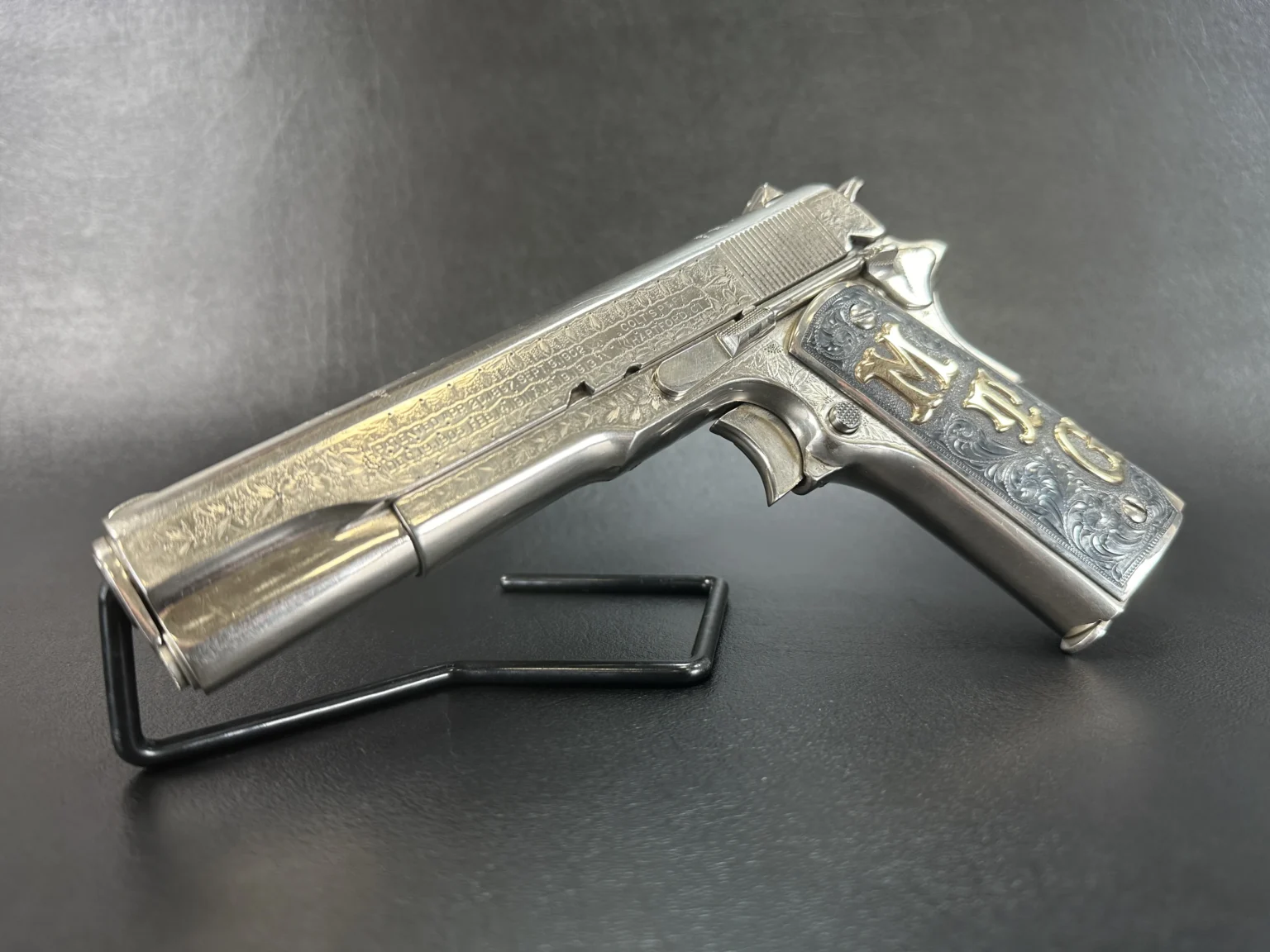
The 1911 was adopted by the U.S. military in 1911 and stayed in service until the 1980s. That’s insane longevity for a military sidearm. It was carried through two World Wars and countless smaller conflicts, and became so common that when people say “pistol,” many picture this.
John Browning designed it, and the man was an absolute genius. The .45 ACP round it fires has serious stopping power. The single-action trigger is crisp. The grip angle just works for most people. It’s one of those designs that was so right the first time, everyone else spent decades trying to improve on it or copy it.
Design That Just Works
Here’s the thing about the 1911: it’s mechanically elegant. Not simple, exactly – there are a decent number of parts. But the way it all works together, the way the slide reciprocates, the way the barrel tilts – it’s beautiful if you’re into that.
Collectors love this gun because it represents a high point in firearm design. Yes, there are more modern guns with higher capacity and lighter weight. But the 1911 has this timeless quality. It’s still being made today, over a century later, because the design is just that good.
Plus, there are approximately eight million variations out there. Different manufacturers, different configurations, different finishes. You could collect only 1911s and have plenty to keep you busy.
Cultural Icon Status
The 1911 shows up everywhere in movies, TV, and video games. It’s the gun heroes use. It’s the gun tough guys carry. That cultural cache matters to collectors because it reflects just how deep this gun’s influence runs.
Whether you’re into military history, engineering, or just want one of the most iconic handguns ever made, you need a 1911 in your collection. Full stop.
Smith & Wesson Model 29
“Do you feel lucky, punk?”
Yep, this is that gun.
Dirty Harry’s Legacy
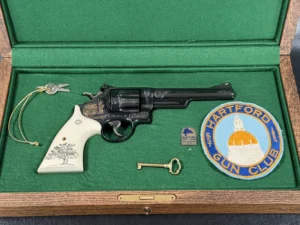
The Model 29 was around before the Dirty Harry movies, but let’s be honest, that’s what made it famous. Clint Eastwood waving around “the most powerful handgun in the world” (not actually true, but it sounded great) created instant legend status.
The .44 Magnum round it fires is genuinely impressive. It’s a big, heavy revolver built to handle serious power. After the first Dirty Harry movie dropped in 1971, demand went through the roof. Smith & Wesson couldn’t make them fast enough.
For collectors who appreciate the intersection of firearms and popular culture, the Model 29 is essential. It’s a piece of cinema history as much as it is a piece of firearms history.
Built Like a Tank
This thing is robust. The frame is beefy, the cylinder is huge, everything about it screams “I can handle whatever you throw at me.” The double-action trigger pull is smooth for a gun this big, and the accuracy is legitimately impressive.
Revolver enthusiasts often prefer the Model 29 over semi-autos because there’s something pure about the mechanics. No magazines to worry about. No failure to feed issues. Just six rounds of serious firepower and a gun that’ll outlast you if you treat it right.
Collectible Variations Galore
Smith & Wesson has released the Model 29 in so many configurations over the years. Different barrel lengths, different finishes, commemorative editions. Some have become seriously collectible in their own right.
Hunting down specific variations can become its own mini-hobby within the hobby. And honestly? That’s part of the fun.
Glock 17
Modern. Practical. Revolutionary. And yes, it belongs in your collection even if you’re a traditionalist.
The Polymer Revolution
When Glock introduced the 17 in the early 1980s, many people were skeptical. Plastic frame? Striker-fired instead of hammer-fired? No manual safety? It broke all the rules.
Then, police departments started adopting it. Military units picked it up. Civilians loved it. Turns out, Gaston Glock’s design worked really, really well.
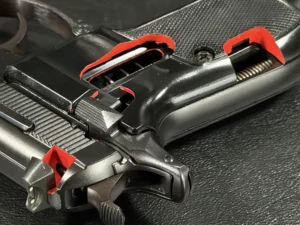
The polymer frame made it lighter. The striker-fired system made it simpler and more reliable. The safe-action trigger system meant it was safe to carry with a round chambered. And with a 17-round magazine (hence the name), it hada capacity that revolvers and traditional semi-autos couldn’t match.
For collectors interested in the evolution of modern firearms, the Glock 17 represents a turning point. It proved polymer could work. It influenced countless designs that came after.
Worldwide Adoption Says Something
The Glock 17 is everywhere. Police in dozens of countries carry it. It’s in military arsenals around the world. Civilians buy them by the millions. That kind of success doesn’t happen by accident.
It’s reliable to an almost boring degree. It’s not the most aesthetically pleasing gun (some people call it ugly, and you know what, fair), but it works. Every time. In mud, sand, water, extreme cold, extreme heat – it just keeps functioning.
That reliability is why it belongs in any serious collection. It’s a case study in what happens when function is absolutely prioritized over form.
Endless Customization
The aftermarket for Glock parts is absurd. Want different sights? Done. New trigger? Easy. Different frame texture? Yep. You can build a completely custom Glock that’s barely recognizable as factory.
Some collectors love this aspect. Others prefer keeping things stock. Either way, the Glock 17’s modularity is part of its appeal.
Luger P08
Now we’re getting into the really cool historical pieces.
German Engineering Meets History
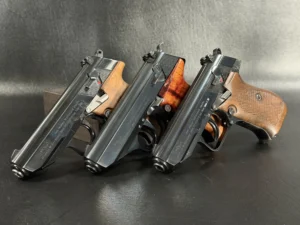
The Luger P08 (or Parabellum-Pistole) was the standard German military sidearm through both World Wars. That alone makes it significant. But it’s also just a fascinating piece of engineering.
The toggle-lock action is unique. Instead of a slide that reciprocates straight back, the Luger’s toggle mechanism rises up and then retracts. It’s mechanically complex, which made it expensive to manufacture. But it’s smooth to operate and genuinely innovative for its time.
Collectors who care about military history can’t skip the Luger. It’s too important. Too iconic. Too connected to major world events.
Mechanical Oddity in the Best Way
Shooting a Luger feels different from shooting pretty much any other semi-auto. That toggle action, the grip angle, the balance – it’s all distinctive.
Some people call it finicky. And yeah, compared to modern guns, it’s not as forgiving of ammo quality or lack of maintenance. But that’s part of its character. It’s a gun from a different era, built with different priorities.
For collectors who geek out over unique mechanisms, the Luger is irresistible. There’s nothing else quite like it.
Drop-Dead Gorgeous
Let’s be superficial for a moment: the Luger P08 is beautiful. Those clean lines, that distinctive profile, the way everything fits together. It’s the kind of gun that looks good just sitting there.
Collectors who appreciate aesthetics alongside function often cite the Luger as one of the best-looking handguns ever made. And you know what? They’re not wrong.
Finding one in good condition with matching numbers and original parts? That’s a genuine score. Prices reflect that, but if you can swing it, it’s worth having in your collection.
What to Think About When You’re Buying
Okay, so you’re ready to add something new to your collection. Here’s what matters.
Historical Weight
Some guns are just more historically significant than others. A firearm that was actually used in a major battle or owned by a notable figure? That’s going to be more interesting (and valuable) than an identical model without that provenance.
This is where documentation becomes huge. If you can prove a gun’s history, you’re adding serious value and interest to your collection. Without that documentation, you’re just claiming stories.
Collectors who prioritize history often focus on military-issue firearms, police service weapons, or pieces with verifiable connections to significant events or people.
Condition Is King
A beat-up gun with replaced parts isn’t worth nearly as much as one in original condition. That’s just how it works.
Originality matters. Matching serial numbers on all the parts, original finish still present, minimal wear – these things affect both value and desirability. Collectors want pieces that are as close to how they left the factory as possible.
That said, a gun that’s been tastefully restored by a professional can still be valuable. But modifications or poor-quality repairs? Those kill value fast.
Always, always verify authenticity before you buy. There are fakes out there, and some are pretty good. Do your research. Ask experts. Don’t get burned.
Rarity Adds Spice
Limited production runs, unique features, and discontinued models – these things make collectors competitive.
If something was only made for a year or two, or if it has an unusual characteristic that most don’t, that scarcity drives interest. Everyone wants something that not everyone can have.
The chase is part of the fun. Finding that rare variation at a gun show, recognizing something special that others walked past, landing a piece you’ve been hunting for years – that’s the good stuff.
Taking Care of Your Collection
You’ve spent time and money building this collection. Don’t let it go to hell through neglect.
Clean Your Guns
This seems obvious, but you’d be surprised how many people let it slide. Firearms need regular cleaning to prevent corrosion and keep them functioning properly.
Every gun is a little different in terms of what it needs, so follow manufacturer guidelines where available. Use proper solvents, good brushes, and appropriate lubricants. Don’t cut corners with cheap cleaning supplies.
How often? Depends on whether you’re shooting them, where you’re storing them, and environmental factors. But err on the side of more frequent cleaning rather than less.
Storage Matters More Than You Think
Climate control is non-negotiable if you care about long-term preservation. Humidity is the enemy. Extreme temperatures aren’t great either.
A quality gun safe is worth the investment. It protects against theft, sure, but it also creates a more stable environment for your firearms. Add a dehumidifier or some desiccant packs, and you’re in good shape.
If you want to display some pieces, that’s fine, but make sure your display case offers protection from dust and environmental factors. And don’t put them in direct sunlight – finishes can fade.
Document Everything
Keep records. Purchase receipts, serial numbers, provenance information, maintenance logs, everything.
This serves multiple purposes. It helps with insurance claims if something happens, adds value when you eventually sell pieces, and helps you remember the details of each gun that might otherwise fade over time.
Some collectors keep physical files. Others use digital systems. Whatever works for you, just do it systematically.
Growing Your Collection
Once you’ve got the basics covered, where do you find more pieces?
Gun Shows and Auctions
These are where the magic happens. You’ll find stuff at gun shows and auctions that never shows up in regular retail channels. Rare pieces, unusual variations, estate collections being liquidated – it’s all there.
Shows are great for browsing, learning, and networking. Auctions add the element of competitive bidding, which is exciting but also requires discipline. Set a budget before you start bidding and stick to it, or you’ll end up paying way more than you intended.
Both venues let you inspect pieces in person before buying, which is huge. Photos only tell you so much.
Join Collector Groups
Seriously, do this. Collector clubs and organizations give you access to people who know way more than you do. They offer exclusive events, educational resources, and a built-in community of people who get why you’re excited about finding a minty Luger.
The networking alone is worth it. You’ll hear about pieces coming up for sale before they hit the open market. You’ll learn about authentication tricks and historical details you’d never find on your own.
Plus, it’s just fun to geek out about this stuff with people who care as much as you do.
Final Thoughts
Building a handgun collection isn’t a race. It’s a long-term journey where every piece you add should mean something to you.
Focus on variety, prioritize historical significance when it matters to you, take care of what you acquire, and keep learning. Every gun has a story, and part of collecting is uncovering those stories and making them part of your own narrative.
Whether you’re drawn to the classic profile of a Colt 1911, the raw power of a Smith & Wesson Model 29, the revolutionary design of a Glock 17, or the historical gravitas of a Luger P08, each piece adds depth to your collection.
The best part? You’re never really done. There’s always another piece out there waiting to be discovered, another story to uncover, another addition that’ll make your collection feel more complete.
So get out there. Hit the gun shows. Browse the auctions. Connect with other collectors. Keep building something that reflects your interests and passions.
And enjoy the hell out of it. That’s the whole point.
Frequently Asked Questions
Honestly? It varies wildly. You can find decent starter pieces for a few hundred bucks, or you can drop thousands on a rare Luger with documented history. My advice: start with what you can afford and focus on guns that actually interest you. A $500 gun you’re excited about beats a $2,000 gun you bought just because someone said you should.
Totally up to you. Some collectors never fire their pieces, especially rare or historically significant ones. Others believe guns are meant to be shot and enjoy them at the range. There’s no wrong answer here; it’s your collection. Just know that shooting does add wear, which can affect value down the line.
This is where you really need to do your homework. Learn the specific markings, serial number ranges, and manufacturing details for whatever you’re buying. Bring an expert if you’re dropping serious money. Check online forums and collector groups. And yeah, if a deal seems too good to be true, it probably is.
Read everything. Books, forums, auction catalogs, manufacturer histories. Join collector clubs where people actually know their stuff. Go to gun shows and ask questions. Handle guns whenever you get the chance; you learn a ton just from seeing how different models feel and operate.