
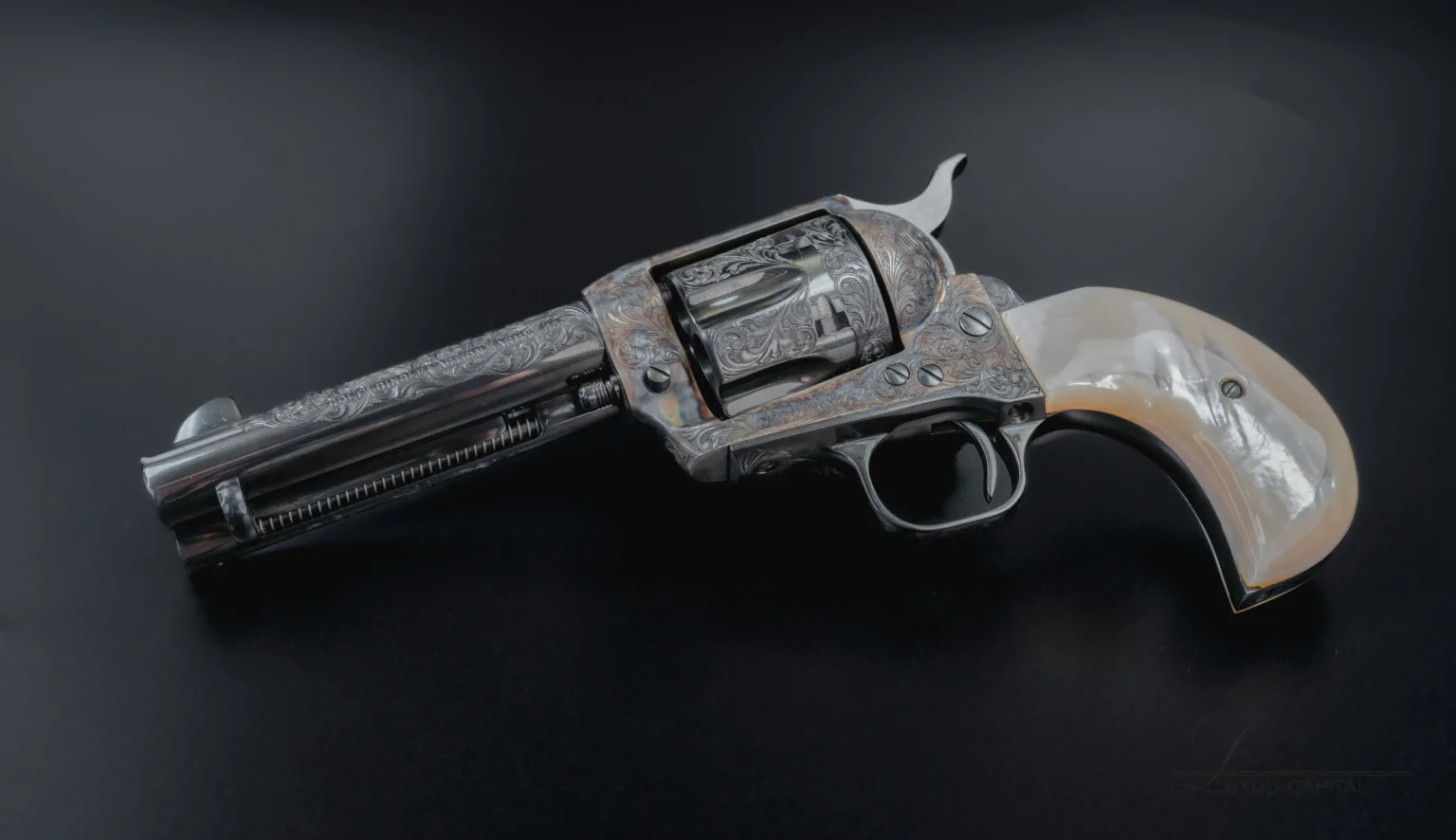
Key Takeaways:
- Factory engraved only means the manufacturer added the work before the gun shipped. It has nothing to do with whether the engraver was a salaried employee, and Colt won’t retroactively call later work factory just because a Custom Shop engraver did it.
- A known independent engraver’s name can carry as much weight as a factory stamp, sometimes more. Nimschke, Kornbrath, and today’s FEGA-certified engravers built reputations entirely outside any single manufacturer’s payroll.
- Coverage grade, hand versus machine cutting, and whether a gun letters as original all matter more than a signature alone. On an otherwise untouched original gun, undocumented later engraving can hurt value instead of adding to it.
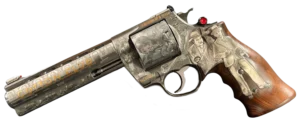
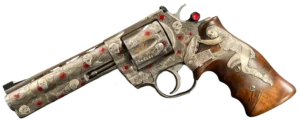
A few years back, a friend of mine found a Colt Python at a regional gun show, cylinder and frame covered in tight scrollwork, a punch dot background winking under the fluorescent lights. The seller called it “factory engraved” and priced it like one. My friend paid a deposit, then called Colt’s archives department before paying the rest. The letter came back with no mention of engraving at all. The gun had shipped blued and plain in 1978. Somewhere in the decades since, somebody very good with a graver had gotten hold of it.
That story has a happy enough ending. The Python was still a beautiful gun, and the seller adjusted the price once the letter came back. But it’s a useful stand-in for the whole subject because most of what confuses new collectors about engraved firearms comes down to one question: who actually cut the metal, and does it matter as much as people think?
What “factory engraved” is supposed to mean
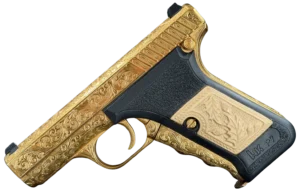
The short version: a gun is factory engraved if the manufacturer decorated it before it ever left the plant, as part of the original order. That’s the whole definition. It doesn’t require the engraver to be a salaried employee, nor does it require the work to happen inside the building.
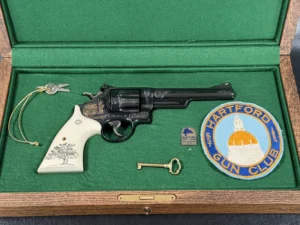
That second part surprises people. Colt’s most celebrated 19th-century engravers, men like Gustave Young and his successor Cuno Helfricht, worked out of leased space at the Hartford factory rather than as employees on the payroll. Young took on outside clients too, including Smith & Wesson and other makers, right alongside his Colt work. He’s remembered as “Colt’s engraver” mostly because Colt was where most of his output ended up, not because of some formal employment contract.
Herbert Houze’s book on Colt’s 19th-century engravers dug through the company’s own records and found that much of the traditional lore doesn’t hold up. Some of the engraving long attributed to famous names couldn’t have been done by those men because they weren’t in the country or weren’t working for Colt yet when the guns in question were supposedly finished. Houze credits lesser-known figures like Herman Bodenstein and John Marr with plenty of work that had been pinned on bigger names for decades. It’s a good reminder that engraver attribution in this hobby has always rested partly on tradition and partly on paperwork, and the paperwork doesn’t always agree with the tradition.
Winchester’s story runs along similar lines. Louis D. Nimschke, Gustave Young again, and Samuel J. Hoggson handled most of the earliest Winchester engraving, and the Ulrich brothers, Conrad and Herman, joined the company in 1870 (their younger brother John came on shortly after as an assembler). Collectors on the Winchester Arms Collectors Association forum have debated for years whether the Ulrichs took side work home, engraving rifles outside the factory on their own time for extra money. The consensus among longtime members seems to be that it happened occasionally, but not often, and that most of what’s out there attributed to “off the books” Ulrich work is probably something else entirely.
How the modern factory programs actually work
Colt still runs a Custom Shop, and it still accepts engraving orders for 1911-pattern pistols and Single Action Army revolvers. The current structure breaks into three tiers. Colt Factory Engraved carries the stamp “Colt Engraved” and isn’t attributed to an individual. Colt Expert Engraved and Colt Master Engraved are both signed by the engraver who did the work, with Master sitting well above Expert in both price and hand finishing. Layered over all three is a coverage scale running from A through D, with roughly 25 percent of the surface at full coverage, which is the biggest single factor in the final price.
Here’s the detail that trips people up: none of this work happens with Colt engravers punching a clock at the factory. It’s contracted out to independent master engravers who run their own shops and take Colt’s orders alongside private commission work. That’s not a scandal. It’s been the arrangement for well over a century, going back to Young leasing his bench space in Hartford. What makes a gun “Colt factory engraved” isn’t where the engraver sat while doing the work. It’s whether the order went through Colt and the gun shipped that way.
Which is also why Colt won’t retroactively call a gun factory engraved just because a Custom Shop engraver did the work later on a gun you already owned. If it didn’t ship engraved, it doesn’t letter as engraved, no matter who held the graver. Collectors on the Colt Forum have run into this directly: guns bearing the small “COLT” stamp used by Custom Shop engravers, done on customer-owned pistols after the fact, that Colt’s archive department still won’t certify as factory work.
A Colt factory letter itself is a separate purchase from the gun, and it isn’t automatically about engraving. A basic letter confirming shipping details runs in the neighborhood of $75 through Colt’s archive. Getting confirmation of engraving specifics, when it exists in the shipping ledger, can run several times that. It’s worth paying for before you pay a premium for the gun, not after, since a letter that comes back silent on engraving is exactly what happened to my friend with the Python.
The independent engravers, and why their name can carry the gun
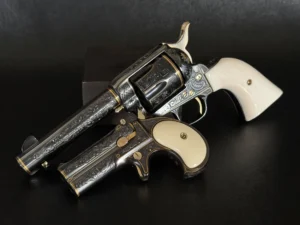
Plenty of the best-known names in firearms engraving never depended on a factory relationship at all. L.D. Nimschke spent decades cutting scrollwork for Colt, Smith & Wesson, Winchester, Sharps, and half a dozen smaller makers, all as an independent operator taking commissions as they came. Rudolph Kornbrath worked the same way. Neither man needed a factory badge to be considered a master of the craft, then or now.
That tradition is very much alive. Jeff Flannery, working out of Union, Kentucky, marks his pieces with a small “JF” and has built a reputation that collectors watch for regardless of what gun he’s working on. Kelly Laster came up through the jewelry trade, studied engraving in Italy at Bottega Incisioni Cesare Giovanelli, and now specializes in cattle brand work, full coverage built from ranch brands over a punch dot ground. Neither is a factory employee of anything. Both command real money on the strength of their own names.
Pachmayr Custom Gunsmiths, the shop Frank Pachmayr built and that most shooters know for grips and recoil pads, kept engravers like Richard Boucher on staff through the 1960s and 70s, doing one-of-a-kind work on 1911-pattern pistols. That’s aftermarket engraving in the strict sense, since it occurred after the gun left Colt, but nobody serious would call Boucher’s work any the worse for it.
The Firearms Engravers Guild of America, founded in 1981, exists partly because this independent tradition needed an organizing structure as the postwar generation of European-trained engravers began to thin out. FEGA runs a jury process for its Master Engraver title, requiring members to submit sample work for review by previously certified masters, and it’s one of only two credentialing bodies anywhere in the world doing this for engravers (the other is the UK’s Guild of Glass Engravers, working a different craft entirely). Roughly 50 people hold the FEGA Master title today, out of several hundred guild members. None of that certification has anything to do with which manufacturer, if any, an engraver’s day job involves.
The European factory tradition ran a little differently
Fabrique Nationale in Belgium took the opposite approach from Colt’s looser arrangement. FN hired Felix Funken in 1926 specifically to build and run an in-house engraving department, train apprentices, and standardize the company’s output. Before Funken, FN had farmed out engraving to local Belgian craftsmen on a per-order basis for guns like the early Auto-5, with little consistency from one gun to the next.
Once the department existed, FN organized its shotgun engraving into a clear ladder. The European market saw six standardized patterns, called Types, ranging from simple scroll and leaf work to gold-inlaid animal scenes. North American sales used a parallel but not identical four-grade system, which is part of why comparing a European-market Auto-5 to an American-market one by grade name alone can get confusing fast.
The Superposed, over-and-under John Browning’s last design, followed with its own tiers: Grade 1 at the bottom, then Pigeon, Diana, and Midas, each adding engraving coverage and better wood. When the Superposed’s cost structure stopped making sense for mass production in the 1970s, Browning shifted it to a genuinely limited run of Presentation Models, P1 through P4, before moving the gun into custom shop only territory by the mid 1980s, where a version of it still exists today through Browning’s operation in Belgium. Higher-grade Superposeds by recognized Belgian engravers can carry a real premium over an unremarkable example of the same grade, which is the European mirror of the Nimschke effect on this side of the Atlantic.
What actually moves the needle on value
Ask five experienced collectors what matters most in an engraved gun, and you’ll get five answers, but a few things come up again and again.
Coverage grade matters in a fairly linear way. A gun with 25 percent coverage costs less to commission and generally sells for less than one with full coverage in the same style, whether the work is Colt Custom Shop or an independent engraver’s private commission.
Whether it is factory-original matters more to some collectors than to others. Older collectors, the ones who came up buying and selling before the internet made research easy, tend to place greater weight on a factory letter. Younger buyers and a fair number of serious students of the craft argue that a documented piece by a known master engraver working independently should stand on its own merits, just as a private commission from a well-known jewelry engraver would. One Colt Forum poster put it as a Renoir painting: nobody discounts a genuine Renoir because it wasn’t commissioned through a gallery.
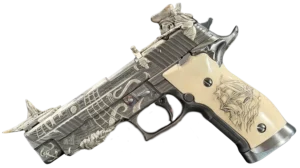
Hand-cut work versus machine or laser work is its own dividing line, and an increasingly important one as CNC engraving and laser etching have gotten good enough to fool a casual glance. A loupe and some daylight usually settle it. Hand-cut lines vary slightly in depth and width as the graver moves through the metal. Machine work tends toward mechanical uniformity that, once you’ve seen it side by side with hand work a few times, becomes easy to spot.
Originality can cut the other way entirely on certain guns. A pre-1964 Winchester or an untouched, original-condition Colt that would otherwise be a strong, honest, all-matching example can actually lose value if someone added engraving to it decades after the fact, precisely because that engraving disturbs an otherwise original gun without any documentation to back it up. This is the case where “somebody did beautiful work on this” and “this is now worth more” pull in opposite directions. Collectors chasing original condition guns treat undocumented later engraving as a flaw, not an upgrade, no matter how good the scrollwork looks.
Signatures matter less than people assume. Longtime Colt collectors on the forums will tell you that even entry-level engravers sign their work today, and that the level of the engraving itself, not the presence of a name, tells you what you’re looking at. A signature helps confirm attribution. It doesn’t substitute for judging the work.
A short buyer’s checklist
Before paying a premium for engraving on an old or expensive gun, a few steps are worth the time and modest expense.
Get a factory letter if the manufacturer offers one, and read it for what it actually says about engraving, not just what the seller told you it says. Look for engraver marks or initials on the frame, grip strap, or barrel flat, and check them against known engravers active in that era. Ask whether the coverage grade matches what’s being claimed, since a “Master” level price tag on what’s clearly A-grade coverage is a mismatch worth questioning. Look closely, ideally with magnification, for the small irregularities that separate hand work from machine work. And if the gun would be desirable in unmolested original condition anyway, weigh whether undocumented engraving really adds value or just adds a complication for the next buyer down the line.
None of this is meant to talk anyone out of buying an engraved gun they love. Some of the finest firearms ever made carry engraving that has nothing to do with a factory order and everything to do with an artist’s private commission. The point is just to know which one you’re holding and to pay for it accordingly.
Frequently Asked Questions
Not automatically. A well-documented piece by a respected independent engraver can outsell mediocre factory work of the same coverage grade.
Generally no. Colt, for example, won’t letter engraving as factory work unless it left the plant that way, even if a Custom Shop engraver did the job later on a customer’s own gun.
Look closely with a loupe. Hand-cut lines vary slightly in depth and width, while machine work tends toward a uniformity that becomes easy to spot once you’ve compared the two side by side.
Not by itself. Even beginner engravers sign their work today, so the level of the engraving matters more than whether a name is present.
Usually not. On a gun that would otherwise be a strong, all-matching original, undocumented added engraving tends to work against value rather than for it.