
Key Takeaways:
- Craftsmanship Has a Price, and Collectors Know Why Hand-fitted pistols cost more because they take longer, require greater skill, and carry a story that no factory floor can replicate. That premium isn’t arbitrary; it reflects real decisions made by real people, and serious collectors have always been willing to pay for that distinction.
- Rarity Alone Won’t Cut It. Scarcity matters, sure, but the custom pistol market rewards something more specific: rarity combined with maker reputation, documented provenance, and condition. A limited-run model from a respected builder, in pristine condition, will hold and grow in value. A rare gun nobody particularly cares about? Not so much.
- This Is About More Than Guns. Honestly, the hand-fitting tradition is a form of cultural preservation. The techniques, the mentorship chains, the craft knowledge passed between generations of gunsmiths; these things don’t sustain themselves automatically. Collectors who invest in this work are, whether they think about it this way or not, helping keep something genuinely irreplaceable alive.
There’s something almost counterintuitive about the most coveted firearms in the collector world. You’d think the rarest, most technologically refined guns would come out of the biggest factories, armed with CNC machines and quality-control departments the size of football fields. And sure, modern production has given us remarkably consistent, reliable pistols. But the pieces that get collectors genuinely excited? The ones that start bidding wars at Rock Island Auction and show up in hushed conversations at gun shows? Those tend to come from a tiny shop somewhere, built by a handful of people who spent more time fitting a barrel than most factories spend on an entire batch.
Small-batch, hand-fitted pistols occupy a fascinating corner of the firearms world, one that’s equal parts craft tradition, investment vehicle, and genuine passion project. Let’s talk about why.
What Does “Hand-Fitted” Even Mean?
Here’s the thing: that phrase gets thrown around a lot, and not always honestly. Walk through any gun show, and you’ll see “custom” applied to pistols that had a grip panel swapped out and a trigger job done on a Saturday afternoon. That’s not what we’re talking about.
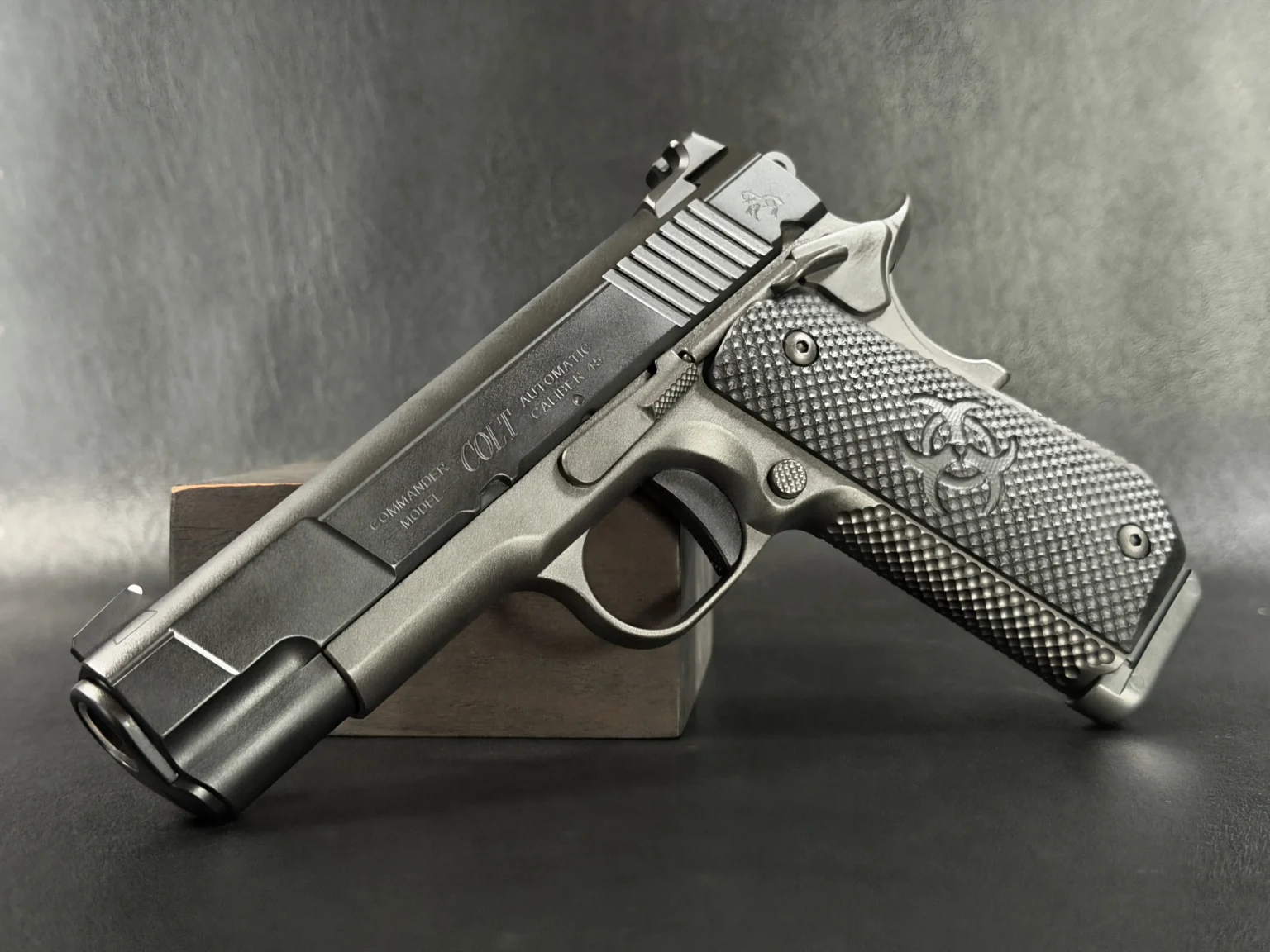
Genuine hand-fitting is a process in which individual components are measured, matched, and sometimes hand-lapped or stoned to achieve tolerances that mass production simply can’t meet consistently. On a well-fitted 1911, for instance, the slide-to-frame fit has almost zero lateral play, the barrel bushing locks up without any wobble, and the fit between barrel hood and slide is tight enough that you can feel the difference when you cycle the action. It’s tactile. You know it when you feel it.
The makers who do this kind of work, think names like Ed Brown, Les Baer, Wilson Combat, and smaller custom shops like Nighthawk Custom or the one-man operations scattered across the country, are essentially doing what gunsmiths did before mass production became the norm. They’re fitting one gun at a time, by hand, to a standard that’s partly technical and partly aesthetic.
And collectors notice. They absolutely notice.
Why Collectors Gravitate Toward the Small and the Rare
Let’s be honest: most high-end production pistols are genuinely excellent. A Sig P210 or a current-generation CZ Shadow 2 is, by almost every measurable standard, a superb handgun. So why does a limited-edition 1911 from a small custom shop fetch two, three, sometimes four times that price?
Part of it is rarity, obviously. The laws of supply and demand haven’t been repealed. When a maker produces 50 guns a year instead of 50,000, the number of people who can actually own one is dramatically smaller. That scarcity has real value in a collector market.
But scarcity alone doesn’t explain it. There are plenty of rare guns that nobody particularly wants. The magnetism of the best small-batch pistols comes from something harder to quantify: the sense that a person made this thing, deliberately, with intention. There’s a difference between a serial number stamped by a machine and a build that somebody sweated over. Collectors, at least the serious ones, can feel that difference.
You know what also matters? The story. Every handmade pistol carries a narrative. Who built it? Why? What decisions did they make along the way? A pistol built by a retired Special Operations armorer who developed specific techniques over 20 years of practical use has a story attached to it that no factory pistol can replicate. That story has value, and it compounds over time as the maker’s reputation grows.
The 1911: Still the Heart of the Custom Market
You can’t talk about hand-fitted pistols without spending some real time on the 1911. John Browning’s design, now well past its centennial, remains the dominant platform in the serious custom pistol world, and for good reason.
The 1911’s design is almost uniquely suited to customization. The geometry is simple, the parts are interchangeable within limits, and the platform has enough built-in mechanical slack that a skilled gunsmith can tighten tolerances significantly without causing reliability issues, provided they know what they’re doing. That last part is important. A poorly hand-fitted 1911 can be worse than a factory gun. But a properly done one is a different animal entirely.
Makers like the late Armand Swenson, Jim Clark Sr., and later figures like Virgil Tripp and the team at Baer Custom essentially developed the modern custom 1911 tradition, establishing standards for fit and finish that still define the category. The top builders today, people like Steve Nastoff or the artisans at Cabot Guns, are working within a tradition that goes back decades and draws on techniques that remain relevant.
What’s interesting is how this tradition continues to attract new talent. Young gunsmiths who could be working on polymer striker-fired guns are choosing to apprentice in 1911 shops. There’s something about the platform that keeps pulling people in, a combination of mechanical elegance, historical significance, and the sheer ceiling of what skilled hands can achieve with it.
Beyond the 1911: Other Platforms Getting the Hand-Fitted Treatment
The 1911 dominates, but it’s not the whole story. The revolver world has its own robust custom tradition, particularly around the Smith & Wesson N-frame and L-frame platforms. Action jobs by makers like Hamilton Bowen or the late Larry Seecamp turn already-capable revolvers into tools of almost surgical precision. The trigger pull on a Bowen-worked Model 29 is a revelation if you’ve never experienced it; it’s like comparing a factory acoustic guitar to something that came out of a luthier’s shop.
The Hi-Power, Browning’s other masterpiece, has its devoted custom following, too. Even with production of the original having wound down, talented smiths continue to work on these pistols, tightening everything up, fitting match-grade barrels, and, in some cases, performing frame modifications that transform them into genuinely world-class target guns.
More recently, the CZ 75 and its variants have attracted serious attention from custom builders. The platform’s excellent ergonomics and inherent accuracy make it a natural candidate for hand-fitting work, and builders like Angus Hobdell have elevated what’s possible with these guns considerably.
What you’re seeing, essentially, is a pattern: wherever there’s a mechanically sound, historically significant platform with room to improve, skilled hands will find it. They always have.
The Investment Angle: Are These Guns Actually Worth the Money?
This is where things get genuinely interesting, and a little complicated. Let me explain.
The collector firearms market doesn’t behave exactly like the stock market or even like the art market, though it shares characteristics with both. Values are driven by a combination of condition, provenance, rarity, and that ineffable factor of desirability, which is partly subjective and partly consensus-driven. A pistol that the collector community deems significant will hold its value and appreciate. One that falls out of fashion can stagnate.
For hand-fitted, small-batch pistols specifically, the investment case is strongest when several factors align. First, the maker needs to have an established reputation. A pistol from Wilson Combat, Les Baer, or Brown will retain value reliably because those names carry weight in the community, and new collectors keep discovering them. Second, condition matters enormously, perhaps more for these guns than for historical antiques. A pristine, unfired custom 1911 in the original case with all paperwork commands a significant premium over the same gun with holster wear.
Third, and this is where it gets interesting, special configurations hold value better than standard catalog guns. If a maker produced a run of 25 pistols for a specific event or built a series on commemorative themes, those tend to appreciate faster. The combination of rarity within rarity creates compounding scarcity.
Rock Island Auction’s results over the last several years tell a pretty clear story here. Well-documented custom pistols from recognized makers have consistently tracked upward, often outperforming standard production guns at similar price points. That’s not a guarantee, obviously. Nothing in the collector market is. But the trend is real.
Craftsmanship as Cultural Preservation
Here’s a thought worth sitting with: the hand-fitting tradition in gunsmithing isn’t just about making better guns. It’s also about preserving a way of working that predates industrialization and could easily disappear without active effort to maintain it.
Most of the techniques used by top-tier 1911 builders trace back to pre-WWII gunsmithing practices, refined through military contracts and subsequently transferred into the civilian custom market by veterans and armorers who brought those skills home. That’s a chain of knowledge that runs back generations, and it’s not infinitely self-sustaining. It requires people to commit to learning it and to treat it as a craft worthy of years of apprenticeship, rather than something you can pick up from YouTube videos.
The shops that do this work, the small operations where the owner is also often the primary builder, serve a cultural function beyond just producing fine pistols. They’re keeping a form of knowledge alive. Collectors who invest in these guns are, in a modest but real way, participating in that preservation.
It’s similar to what happens with fine watchmaking, or traditional Japanese bladesmithing, or hand-rolled cigars from small family operations in EstelÃ. There’s a recognition among connoisseurs that some things are worth paying more for, not just because they’re better, but because the making of them matters.
What Separates Good from Great: The Details That Define a Serious Build
For collectors new to the custom pistol world, it can be genuinely confusing to know what separates a truly fine hand-fitted gun from one that’s mostly marketing. So here’s a practical breakdown.
The barrel-to-bushing fit is often the first thing to check. In a properly fitted single-stack 1911, the bushing should require moderate effort to remove and should have essentially no slop when locked. You shouldn’t be able to wiggle the muzzle end of the barrel around when the gun is in battery. If you can, the fitting work is incomplete or mediocre.
Slide-to-frame fit matters just as much. The slide should cycle smoothly but with a certain… authority. There’s a word some gunsmiths use: “tight-smooth,” meaning the tolerances are close but everything is properly polished so there’s no gritty resistance. A rough, tight slide is a poorly fitted slide. A properly fitted one moves with confidence.
The trigger work on a serious build is another tell. Factory 1911 triggers are often serviceable; on a proper custom build, the trigger should break cleanly, with a consistent pull weight and minimal overtravel. Makers like Bill Laughridge at Cylinder & Slide have written extensively about what a good action job entails, and the standards they describe are exacting.
Then there’s the fit of smaller components: the thumb safety that clicks into position with satisfying positive engagement, the grip safety that doesn’t interfere with the trigger until properly depressed, the rear sight dovetail that’s cut cleanly and fitted precisely. These are the details that add up to the overall impression that you’re holding something made with genuine care.
The Community Around These Guns
One thing that often surprises people outside the custom pistol world is how strong the community is. This isn’t just a market; it’s a culture with its own forums, traditions, vocabulary, and social structures.
Online communities like 1911Forum and the various maker-specific groups on social media have created spaces where collectors and enthusiasts debate the merits of different builders, share photos of new acquisitions, and discuss the philosophy of what makes a pistol truly excellent. The conversations there can get surprisingly technical and occasionally heated, in that affectionate way that passionate hobbyists argue about things they love.
Gun shows, particularly larger ones like the SHOT Show or the big regional events, serve as gathering places where the collector community physically manifests. Spending an afternoon at a show talking to serious 1911 collectors is an education in itself: you’ll hear histories, opinions, valuations, and stories that don’t exist in any book.
What strikes you, if you spend real time in this community, is how seriously people take the craft dimension. These aren’t just buyers of expensive objects; many of them have real technical knowledge, can discuss the geometry of a ramp feed or the physics of a linkless barrel conversion intelligently, and take genuine pride in understanding what they’re collecting. That depth of knowledge drives quality upward because the market rewards builders who actually deliver.
Challenges Facing the Small-Batch World
It would be incomplete to talk about this market without acknowledging the genuine challenges it faces. The economics of hand-fitting work are brutal, honestly. Building a pistol to a high standard takes time, and time is expensive. The builders who do this work competitively tend to either operate on waiting lists stretching years (a testament to their reputation but also a real strain on the business) or maintain prices that put their work out of reach for many enthusiasts.
The talent pipeline is another concern. Building these skills takes years of dedicated practice under the guidance of experienced mentors, and the number of young gunsmiths choosing to specialize in this kind of work is smaller than the community would like. Some of the best-known custom shops have faced succession challenges when founding gunsmiths age out.
Material costs have risen as well. The steel, springs, and components that go into a high-end build aren’t cheap, and quality has become harder to source consistently as some traditional suppliers have consolidated or shut down.
None of these challenges is insurmountable. The market for fine hand-fitted pistols appears healthy by most measures, and new talent continues to emerge. But the community is wise to take the question of long-term sustainability seriously.
Starting a Collection: Practical Thoughts for the Serious Newcomer
If you’re coming to this world fresh and want to start building a meaningful collection, a few thoughts from those who’ve been around for a while are worth keeping in mind.
Start by educating yourself before you spend significant money. The 1911Forum archives alone contain years of discussion about makers, builds, and values. Handling as many guns as you can at shows and shops will calibrate your sense of what good fit and finish actually feel like, as opposed to what you imagine they feel like.
Build relationships with dealers who specialize in custom work. These aren’t the big-box sporting goods stores; they’re typically smaller operations whose owners have deep personal knowledge of the makers they carry. Those relationships lead to information about upcoming builds, fair valuations, and honest assessments of condition.
Think about what you actually want from a collection before you start acquiring. Some collectors focus on specific makers; others collect by era, or by configuration, or by some personal aesthetic logic. Having a coherent vision makes a collection more satisfying and often more valuable than a random accumulation of individually fine guns.
And buy the best condition examples you can afford. In the custom pistol market, condition premium is real and tends to compound over time. A pristine Wilson Combat Protector from 2005 in its original packaging is meaningfully more valuable than a well-worn example, and that gap tends to widen rather than narrow over time.
The Future of Small-Batch Pistols in a Polymer World
There’s a broader question hovering over all of this: Does the hand-fitted pistol tradition have a future in a market increasingly dominated by striker-fired polymer guns? It’s worth asking, even if the answer is more nuanced than either side of the debate usually acknowledges.
The practical shooting world and the everyday carry market have clearly shifted toward modern designs. Glocks, Sig P320S, and Springfield Hellcats dominate sales because they’re reliable, relatively affordable, and serve the practical needs of most shooters extremely well. Nobody needs a hand-fitted 1911 to protect their home or carry for personal defense.
But the collector market and the practical market aren’t the same thing, and they’ve never really been. People who collect fine watches don’t do it because a Patek Philippe keeps better time than a Casio. People who commission handmade furniture from small craft shops aren’t doing it because they can’t find a chair at IKEA. The value of craftsmanship exists on its own terms, separate from the question of pure function.
The small-batch pistol world will almost certainly continue to narrow in terms of mainstream market share while simultaneously deepening in knowledge, quality, and cultural significance of what it produces. That’s actually a fairly healthy trajectory. It means the work gets more serious, the community gets more engaged, and the best builders have room to push further toward what’s genuinely possible with steel and skilled hands.
That sounds like a future worth being part of.
Final Thoughts
Small-batch, hand-fitted pistols represent something increasingly rare in modern consumer culture: objects made with unhurried intentionality, by people who have spent years learning to do one thing extraordinarily well. The collector market for these guns reflects a broader human appetite for craft, provenance, and the particular satisfaction of owning something that couldn’t have been made any other way.
Whether you’re a seasoned collector with a vault full of custom 1911s or someone just starting to wonder why certain guns command such intense devotion, the answer lies in that quality of attention. The best of these pistols are made by people who care deeply about what they’re doing, for buyers who care deeply about what they’re acquiring. That mutual seriousness creates objects that reward close attention, that improve with familiarity, and that hold meaning in a way that production guns, however excellent, simply don’t.
The market is smaller than the firearms industry as a whole. The knowledge required to participate meaningfully takes years to develop. The best pieces are hard to find and expensive to acquire. And yet, for the people in it, there’s genuinely nowhere else they’d rather be.
That should tell you something.
Frequently Asked Questions
A genuinely hand-fitted pistol has individual components measured, matched, and stoned to tolerances that mass production can’t hit consistently. Think near-zero slide play, a barrel bushing with no wobble, and a trigger break that feels deliberate rather than accidental.
They can be, but only when the right factors line up: established maker reputation, documented provenance, and condition that’s as close to pristine as possible. A well-kept Wilson Combat or Les Baer in original packaging has historically held and grown in value; a worn example from an unknown builder, not so much.
Its geometry is simple enough that skilled hands can tighten tolerances significantly without breaking the design, yet complex enough that the ceiling of what’s achievable keeps pulling talented gunsmiths back. It’s also a century of accumulated craft tradition, and that kind of momentum doesn’t just disappear.
The everyday carry and practical shooting markets have clearly shifted toward striker-fired designs, but the collector market operates on entirely different logic. People don’t commission hand-fitted pistols for the same reason they buy Glocks; the value lies in the craft, not the convenience.
Handle as many guns as you can before spending serious money, because good fit and finish is something you feel before you fully understand it. Then build relationships with specialist dealers who know the makers personally, because that access to information is worth more than any price guide.